
Sauces & Condiments
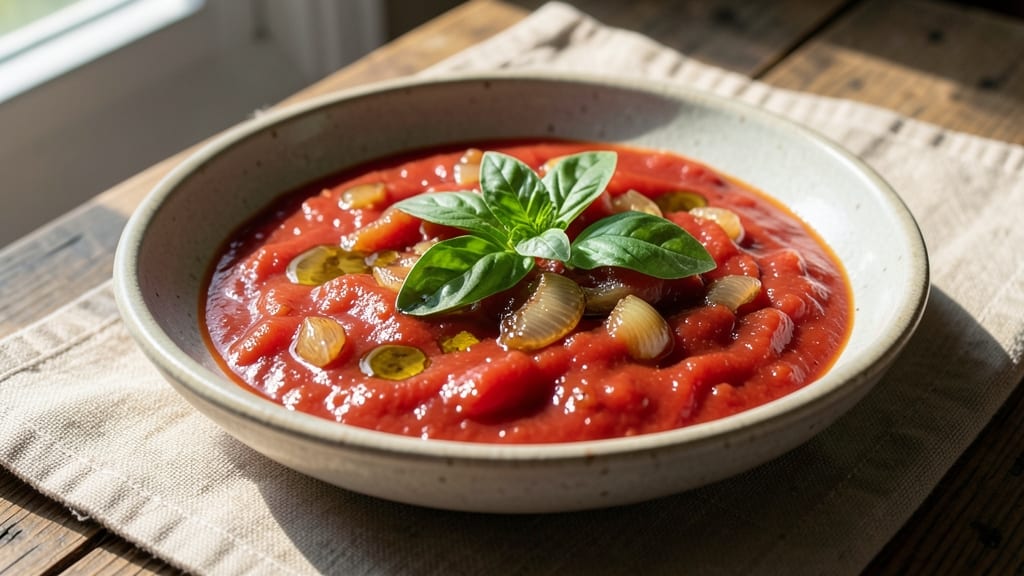
Transforming simple canned tomatoes into rich, pantry-friendly Italian sauce is one of the most rewarding kitchen projects you’ll ever tackle. This canned tomato sauce recipe delivers restaurant-quality flavor with just a few ingredients and a little time—perfect for stocking your pantry with homemade goodness that lasts for months.
The beauty of canning lies in its simplicity: no fancy equipment, no complicated steps, just fresh-tasting sauce in jars ready for any meal.
What sets this recipe apart is its foolproof method for sterilizing jars and lids, ensuring your sauce stays safe and delicious for up to a year. We’ll focus on a classic tomato sauce base—simmered with garlic, onions, and herbs—before sealing it in jars for long-term storage.
The process is straightforward, but the results are undeniably professional, turning basic canned tomatoes into a versatile sauce for pasta, pizza, or braising.
By the time you’re done, you’ll have jars of vibrant, aromatic sauce with deep, caramelized flavors that develop as they simmer. The texture is just right—smooth yet rich—with a balance of acidity and sweetness that makes every bite sing.
This isn’t just a pantry staple; it’s a labor of love that elevates any dish it touches.
Whether you’re prepping for a busy season or simply love the idea of homemade sauce on demand, this recipe is your go-to. Let’s get started with the ingredients and step-by-step instructions to turn your kitchen into a canning station.
Ingredients for canned sauce
Nine simple ingredients transform basic canned tomatoes into restaurant-quality Italian sauce perfect for pantry storage.
| Ingredient | Amount | Notes |
|---|---|---|
| San Marzano Canned Tomatoes 🍅 | 28 oz | Crushed or whole, no salt added |
| Yellow Onion 🧅 | 1 whole | Medium size, finely chopped |
| Garlic Cloves 🧄 | 4 cloves | Fresh, minced or pressed |
| Extra-Virgin Olive Oil 🫒 | ¼ cup | High quality, fruity |
| Dried Basil 🌿 | 1 tbsp | Or 0.25 cup fresh basil |
| Dried Oregano 🍃 | 1 tsp | Italian or Mediterranean blend |
| Salt 🧂 | 1 tsp | Kosher or sea salt |
| Black Pepper 🌶️ | ½ tsp | Freshly ground preferred |
| Granulated Sugar 🍚 | 1 tbsp | Balances acidity |
| Dried Red Pepper Flakes 🔥 | ½ tsp | Optional for heat |
San Marzano tomatoes are the gold standard here—their sweetness and low acidity make all the difference. Grab a can from Trader Joe's or any Italian market if you want to splurge, but regular no-salt-added crushed tomatoes work fine too. The onion and garlic are your flavor foundation, so don't skip chopping them finely—they'll dissolve into the sauce. Fresh garlic is worth the extra minute to mince, but jarred minced works in a pinch. For the olive oil, look for something fruity and peppery—none of that cheap cooking oil. The dried herbs might seem basic, but Penzeys or bulk bins have the freshest options.
No San Marzano? Any no-salt-added crushed tomatoes will do—just add an extra pinch of sugar to balance. Fresh basil? Use it, but dried works at one-third the amount. Short on time? Pre-minced onion from the jar is fine, but chopping fresh gives better texture. Want more depth? Add a splash of red wine (about 2 tbsp) when simmering. The sugar is key—it rounds out the acidity from the tomatoes, so don't skip it. For heat, red pepper flakes are flexible—start with half, then adjust to taste. If you're making a big batch, double the herbs but keep the sugar ratio the same.
This sauce keeps beautifully—up to 1 year in properly sterilized jars. I always make a double batch and freeze extras in ice cube trays for quick portions. For canning, use pint-sized jars and process in a water bath for 75 minutes. Once cooled, store in a cool, dark place. The flavors actually improve over time, so don't be afraid to make more than you need. Reheat gently on the stove or microwave until steaming. Perfect for pasta, pizza, or braising—just stir in a splash of water if it thickens too much.
Why You'll Love This Recipe
- No-Fuss Pantry Staple: I swear by this sauce because it lives in my fridge for weeks. The San Marzano tomatoes keep it rich without needing fresh ingredients—just open, simmer, and store. Honestly, I make a double batch every time because it disappears faster than I can say "pasta night."
- Garlic-Basil Magic: That first spoonful? Pure flavor payoff. The low-and-slow caramelization of onions with garlic cloves creates this deep, sweet base, while the dried basil adds a bright, herby punch. It’s the kind of taste that makes you pause mid-spoonful—like, "Wait, I made this?"
- Weeknight Workhorse: This sauce is my secret weapon for lazy nights, potlucks, or when I’m feeding a crowd. Dump it over grilled chicken, toss it with orzo, or slather it on bruschetta—it’s the unsung hero that turns simple meals into something special. (Yes, even on a Tuesday night.)
- Budget-Friendly Luxury: I spend about $3 for a jar of San Marzano tomatoes, and that’s it. No fancy ingredients, no last-minute grocery runs—just a pantry staple that tastes like you spent hours simmering. Between us, this is how I keep my grocery bill low while still eating like I’m at a trattoria.
Step-by-step instructions for canned tomato sauce
Here's how to transform simple pantry staples into rich, restaurant-quality tomato sauce.
Sauté the Onion and Garlic
Heat the 0.25 cup extra-virgin olive oil in a large saucepan over medium heat. Add the 1 whole yellow onion, chopped into small pieces, and cook for 5-6 minutes until softened and starting to turn translucent. You'll see the onion pieces become more pliable and lose their sharp edges.
Lower the heat to medium-low and add the 4 cloves garlic cloves, minced or pressed. Cook for another 30 seconds until fragrant—this releases the garlic's sweet, aromatic oils. Be careful not to let it brown, or it'll turn bitter. Stir constantly to prevent burning.
Add Tomatoes and Seasonings
Pour in the 28 oz San Marzano canned tomatoes, crushing them lightly with your hands if they're whole. Add the 1 tbsp granulated sugar, 1 tbsp dried basil, 1 tsp dried oregano, 1 tsp salt, and 0.5 tsp black pepper. Stir well to combine everything with the onion and garlic.
If you like a bit of heat, sprinkle in the 0.5 tsp dried red pepper flakes now. The sugar helps balance the acidity of the tomatoes, while the dried herbs build depth of flavor. Let the mixture simmer gently for 10 minutes—this allows the flavors to meld together.
Simmer Until Thickened
Reduce the heat to low and let the sauce simmer uncovered for 20-25 minutes. Stir occasionally to prevent sticking at the bottom of the pan. You're looking for a sauce that coats the back of a spoon and has thickened noticeably—this indicates the natural starches in the tomatoes have broken down.
Taste the sauce and adjust the seasoning if needed. If it's too acidic, add a pinch more sugar. If it needs more depth, a splash of water or a pinch of salt can help. The sauce should be vibrant red with a rich, aromatic smell—this is your cue that it's ready.
Finish and Serve
Once the sauce reaches your desired consistency, remove it from the heat. Let it cool slightly—this helps the flavors settle. The sauce can be used immediately or stored in an airtight container in the refrigerator for up to 5 days or frozen for up to 3 months.
This sauce is incredibly versatile—use it over pasta, as a base for meatballs, or as a topping for bruschetta. The key to its success lies in the quality of the San Marzano tomatoes and the patience of simmering. Don't rush it; the longer it cooks, the more complex the flavors become.
Pro Tips For Making Canned Sauce
- CRUSH THE ONIONS: Don’t just chop—pulse them in a food processor until they’re almost paste-like. This melts into the sauce faster and gives you that silky texture without burning. I used to sweat over slow-cooking onions, but this cuts the time in half while keeping the sweetness intact.
- SWEAT GARLIC LOW: Once you add garlic, drop the heat to medium-low and stir constantly. Garlic burns faster than you think, and once it’s bitter, there’s no fixing it. My grandmother swore by this: "If it smells like a hospital, you waited too long."
- SALT THE TOMATOES FIRST: Tear open the San Marzano cans and sprinkle a pinch of salt directly into them before crushing. This breaks down the skins faster and seasons the sauce from the start—no need to add salt later and risk over-salting. Sounds weird, but it works.
- STIR THE SAUCE EARLY: After the tomatoes hit the pot, give them a good stir within the first 2 minutes. The bottom layer can scorch before the rest cooks, and once it’s stuck, you’re fighting a losing battle. A quick scrape with a wooden spoon keeps everything smooth.
Make-ahead tips for this recipe
Prep Ahead Sauce
Make a big batch of this sauce and store it in pint-sized mason jars for up to 1 year—just like grandma used to do. I always double the recipe and can 4 jars at once.
Label each jar with the date using a permanent marker so you can track freshness. The longer it sits, the more the flavors meld together beautifully. 🌟
Freeze for Convenience
If canning isn’t your thing, freeze the sauce in ice cube trays for single-serving portions. Once frozen, pop the cubes into a ziplock bag and flatten them to save space.
Thaw overnight in the fridge or microwave for 30 seconds on defrost mode. This method works perfectly for quick pasta meals or last-minute pizza toppings.
Sterilize Jars Properly
Before filling jars, sterilize them by boiling in water for 10 minutes or running through a dishwasher cycle. Use a jar lifter to avoid burns and place jars upside down on a clean towel to dry.
Sterile jars prevent spoilage and ensure your sauce stays safe for long-term storage. I always sterilize my jars and lids together to keep everything ready at once.
Test for Doneness
To check if your sauce is ready for canning, perform a headspace test: fill jars to 1 inch below the rim, leaving space for expansion.
Use a clean wooden spoon to remove air bubbles, then wipe the rim with a damp cloth. This ensures a proper seal when processing. 💫
Process in a Water Bath
Place filled jars in a boiling water bath canner and process for 75 minutes for pint-sized jars. Adjust the time if using quart jars—90 minutes is the standard.
Keep the water 1-2 inches above the jar tops to maintain proper pressure. After processing, let jars cool for 12 hours before checking seals.
Reheat with Care
When ready to use, reheat canned sauce on the stovetop over low heat to avoid curdling. If it thickens too much, stir in 1-2 tablespoons of water to restore consistency.
Microwave reheating works too—just heat in 30-second intervals, stirring between each, until steaming hot. Always check the internal temperature reaches 165°F for safety. 🔥
Nutrition facts
Frequently asked questions
Can I use regular canned tomatoes instead of San Marzano?
Yes, you can substitute regular no-salt-added crushed tomatoes, but expect slightly less sweetness and depth. For best results, add an extra ½ tablespoon of sugar to balance the acidity. San Marzano tomatoes are prized for their natural sweetness and low acidity, which makes them ideal for canning.
How do I know when my sauce is ready for canning?
Your sauce is ready when it coats the back of a spoon and has thickened noticeably after 20-25 minutes of simmering. It should also smell rich and aromatic. For canning, ensure it’s at least 180°F before filling jars to prevent spoilage.
What if my jars don’t seal after processing?
If a jar fails to seal, refrigerate it and use it within 5-7 days. Check the seal by pressing the center of the lid—it shouldn’t pop back up. Common causes include dirty rims, insufficient headspace, or lids not tightened properly.
Can I add meat or vegetables to this sauce before canning?
Try adding finely chopped mushrooms, sautéed ground beef, or diced bell peppers before simmering. Just ensure the sauce still meets the 180°F requirement for safe canning. For added safety, process meat-infused sauces for an extra 5 minutes in the water bath.
How should I store canned sauce if I don’t plan to use it immediately?
Store sealed jars in a cool, dark place like a pantry or cellar. Label each jar with the date and use within 1 year for best quality. If you have extra sauce, freeze it in ice cube trays for single-serving portions.