
Sauces & Condiments
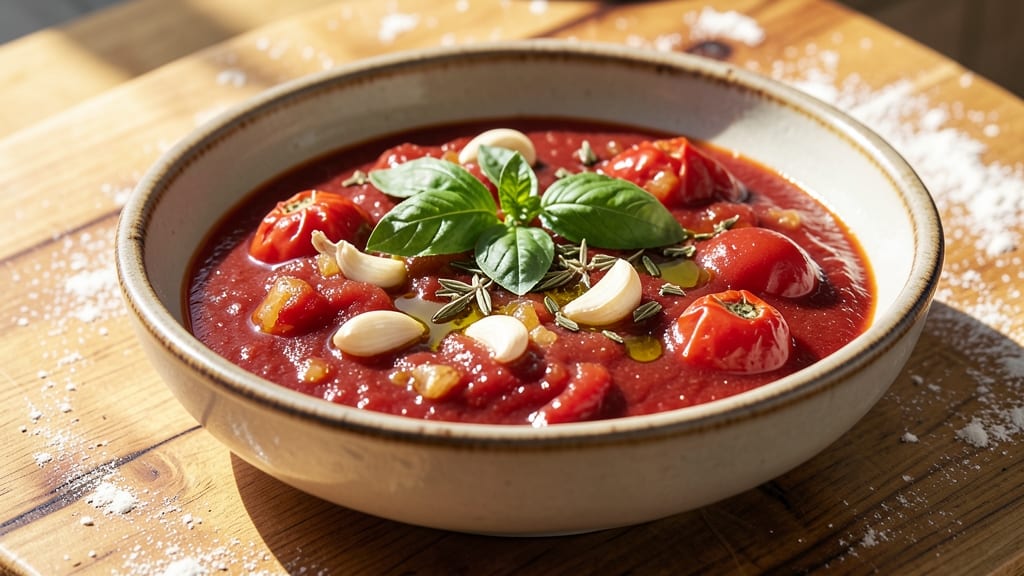
Transforming fresh tomatoes into rich, slow-simmered canned Italian tomato sauce is one of the most rewarding kitchen projects you'll ever tackle. This recipe delivers a deep, umami-packed sauce that's perfect for preserving in glass jars—ideal for pantries, gifts, or stocking up before winter.
The key lies in a long, gentle simmer that develops complex flavors while maintaining that authentic Italian character.
What sets this sauce apart is the balance of acidity and sweetness, achieved through careful ingredient ratios and precise canning techniques. You'll work with high-quality canned tomatoes, aromatic garlic, fresh herbs, and a touch of citric acid for safety and shelf stability.
The process requires patience—simmering for hours to break down the tomatoes into a velvety consistency—but the results are worth every minute.
By the time you're done, you'll have jars of vibrant, deeply flavorful tomato sauce that's ready to elevate pasta dishes, braises, or pizza bases. The sauce develops an intense, concentrated flavor that's far superior to store-bought versions.
Each jar contains about 16 ounces of sauce, giving you enough for multiple meals or thoughtful gifts for friends and family.
This recipe includes clear instructions for both water bath and pressure canning methods, ensuring your sauce stays safe and delicious for up to a year. Whether you're a seasoned canner or trying it for the first time, the step-by-step process makes it accessible while delivering professional results.
Ingredients for canned italian tomato sauce
Pantry staples plus a few fresh touches—everything you need for homemade Italian sauce that beats store-bought.
| Ingredient | Amount | Notes |
|---|---|---|
| San Marzano Canned Whole Tomatoes 🍅 | 48 oz | Crushed by hand for best texture |
| Extra-Virgin Olive Oil 🫒 | ½ cup | High quality, fruity variety |
| Yellow Onion 🧅 | 1 whole | Diced, about 1.5 cups |
| Garlic Cloves 🧄 | 6 cloves | Peeled, roughly chopped |
| Fresh Basil Leaves 🌿 | 1 cup | Packed, stems removed |
| Fresh Oregano Leaves 🍃 | ¼ cup | Packed, chopped |
| Tomato Paste 🍅 | ½ cup | High quality, unsweetened |
| Citric Acid 🧪 | 1 tsp | For safety and shelf stability |
| Sea Salt 🧂 | 1 ½ tsp | Adjust to taste |
| Black Pepper 🌶️ | ½ tsp | Freshly ground |
San Marzano tomatoes are non-negotiable here—they're sweeter and less acidic, giving your sauce that authentic Italian depth. Trader Joe's and Whole Foods stock them year-round, but if you can't find them, any high-quality canned tomatoes will work. The olive oil should be fruity and peppery—California extra-virgin brands like Corto or Filippo Berio are my go-tos. Fresh basil and oregano are ideal, but if you're canning in summer when herbs are scarce, dried works at half the amount. Just make sure they're vibrant and fragrant, not wilted or dusty. The tomato paste? Rao's or Barilla are solid choices—avoid the squeeze tubes if you can, as they often contain additives.
No San Marzano tomatoes? Crushed tomatoes in cans work, but you'll need about 68 oz total to compensate for the water content. Short on fresh herbs? Dried basil and oregano are fine, but reduce to one-third the amount. The citric acid is crucial for safe canning—it's not for flavor, so don't skip it. If you're worried about the taste, rest assured it's undetectable in the final sauce. For the onion, yellow or red both work, but yellow has a slightly sweeter profile. The garlic can be roasted ahead of time for a deeper flavor—just toss whole cloves in olive oil at 400°F for 20 minutes, then peel and chop. The tomato paste is your flavor booster, so don't skimp on quality.
This sauce is all about patience—simmering for hours develops that deep, umami-rich flavor. Once canned, it keeps for up to a year in a cool, dark pantry. I like to label my jars with the date and contents so I can track freshness. The sauce thickens as it cools, so don't worry if it looks a bit loose right after canning. Reheat gently on the stove or microwave, adding a splash of water if it's too thick. Leftovers? Store in the fridge for up to 5 days—it's even better the next day as the flavors meld. Freezing isn't recommended for canned sauce, but if you must, use airtight containers for up to 3 months.
Why You'll Love This Recipe
- No-Chop Nightmare: I swear by this sauce because the onions and garlic barely need a knife—just a quick pulse in the food processor or a rough chop. The San Marzano tomatoes handle the rest, turning into a velvety base with zero fuss.
- Garlic-Basil Magic: That first hit of sizzling garlic in olive oil? It’s the kind of aroma that makes your kitchen smell like a Tuscan trattoria. Fresh basil at the end? Pure satisfaction—bright, fragrant, and impossible to resist.
- Pasta Party Ready: Slap this sauce on spaghetti for a weeknight win, but it’s also my go-to for lazy Sunday brunches or potlucks. (Yes, even on a Tuesday night.) The richness balances perfectly with crusty bread or grilled chicken.
- Fridge Goldmine: This sauce only gets better after a day or two—deeper flavor, smoother texture. I make a big batch on Sundays, freeze half, and still crave the leftovers. Budget-friendly? Absolutely. Waste-free? Even better.
Step-by-step instructions for canned Italian tomato sauce
This slow-simmered sauce builds rich flavor layer by layer—here's how to make it perfect.
Sauté Aromatics in Olive Oil
Heat the 0.5 cup extra-virgin olive oil in a large, heavy-bottomed pot over medium heat. Add the 1 whole yellow onion and cook for 8-10 minutes until the onions soften and turn translucent, stirring occasionally. This step develops their natural sweetness before adding stronger flavors.
Next, add the 6 cloves garlic cloves and cook for 1-2 minutes until fragrant. Here's where it gets important: don't let the garlic brown—just until you can smell that wonderful aroma. Browned garlic will turn bitter and overpower the delicate tomato flavor we're building. Keep the heat at medium to prevent burning.
Build the Tomato Base
Pour in the 48 oz san marzano canned whole tomatoes and stir to combine with the onions and garlic. Add the 0.5 cup tomato paste, spreading it around the pot to coat the bottom. This creates a flavorful crust that forms the foundation of your sauce. Bring everything to a gentle boil, then immediately reduce heat to low and let it simmer uncovered.
Simmer for 45-60 minutes, stirring occasionally. You'll see the sauce thicken as the tomatoes break down and release their juices. Partially cover the pot if the sauce reduces too quickly—you want slow evaporation to concentrate the flavors. The sauce should reduce to about 4 cups by the end of this time.
Season and Acidify
After the initial simmer, add the 1 tsp citric acid, 1.5 tsp sea salt, and 0.5 tsp black pepper. The citric acid brightens the tomatoes and helps preserve the sauce—it's what gives store-bought Italian sauces that tangy kick. Stir well to distribute the seasoning evenly throughout the sauce.
Add the 1 cup fresh basil leaves and 0.25 cup fresh oregano leaves. Let the sauce simmer for another 15-20 minutes to allow the herbs to infuse their flavors. Taste the sauce now—it should be rich and balanced, with a touch of acidity cutting through the sweetness. If it needs more salt, add it now while you can still adjust the flavor.
Finish and Jar for Storage
Once the sauce has thickened to your desired consistency (it should coat the back of a spoon but still be spoonable), remove it from heat. Let it cool slightly, then carefully ladle it into clean, sterilized glass jars. Leave about ½ inch of headspace at the top of each jar to allow for expansion during processing.
Seal the jars immediately using a water bath canner. Process pint jars for 85 minutes or quart jars for 90 minutes in boiling water. This ensures your sauce will keep safely for up to 1 year in a cool, dark place. The slow simmering and proper canning create that restaurant-quality depth you crave in Italian dishes.
Pro Tips For Making Canned Italian Tomato Sauce
- CRUSH THE TOMATOES FIRST: San Marzano whole tomatoes release juice and break down faster when you crush them by hand with your fingers before adding them to the pot—no blender needed. I learned this the hard way after making two batches where the sauce stayed chunky despite simmering. Two minutes of squeezing does half the work.
- SWEAT THE ONION LOW: Cook the diced onion in olive oil over medium-low heat until it’s translucent but not browned—about 8-10 minutes. Rushing this step burns the onions and turns the sauce bitter. (Yes, even if you’re impatient like me.)
- SALT THE TOMATOES: Add a pinch of salt to the crushed tomatoes before they hit the pot—it helps draw out excess liquid and seasons them evenly. Skipping this means your sauce will taste flat until you remember to add salt later, and by then it’s too late to fix.
- RESERVE SOME BASIL: Chop half the basil leaves and stir them into the sauce at the very end, then set the rest aside to garnish. The heat kills basil’s bright flavor if you cook it too long, and fresh leaves on top make all the difference—especially when serving over pasta.
Storing and reheating this recipe
Refrigerator Storage
Store your freshly made Italian tomato sauce in an airtight glass container (like a Pyrex or Le Parfait jar) in the fridge for up to 5 days. The flavors actually deepen overnight as the herbs infuse further.
I always let the sauce cool completely before transferring to avoid condensation, which can dilute the flavors. For best results, press plastic wrap directly onto the sauce surface to minimize oxidation. 🌿
Freezer Preservation
While canning is ideal for long-term storage, you can freeze this sauce for up to 3 months in silicone molds or freezer-safe bags. Portion into 1-cup servings for easy use—just thaw overnight in the fridge. Avoid freezing in glass jars as they can crack.
When ready to use, thaw in the fridge and reheat gently on the stove with a splash of water if needed. The texture remains smooth, though slightly thicker after freezing. ❄️
Reheating from Canned Jars
Directly from a sealed jar, heat your canned sauce on the stovetop over low-medium heat for 10-15 minutes, stirring occasionally. For microwave reheating, transfer to a microwave-safe bowl and heat in 30-second intervals, stirring between each, until warmed through.
Never microwave directly from a sealed jar—it can cause pressure buildup. Always check the internal temperature reaches 165°F for safety. 🔥
Reviving Thickened Sauce
If your sauce thickens too much during storage, simply stir in 1-2 tablespoons of water or broth while reheating. For a smoother texture, blend briefly with an immersion blender (like the Ninja MagiChef) for 10 seconds.
Avoid adding too much liquid—this sauce is meant to be rich and concentrated. The slight thickening is normal and actually enhances its depth when reheated. 💫
Shelf Life and Safety
Properly canned sauce in a cool, dark pantry stays safe for up to 1 year. Always check for seal integrity before opening—press the lid center; if it doesn't pop back, discard. Once opened, refrigerate and use within 5 days.
For extra safety, add a pinch of citric acid (½ tsp per pint) when reheating if storing opened jars longer than 3 days. Never taste-test potentially spoiled sauce—trust your senses and discard if anything seems off. 🧪
Gifting and Travel Tips
For gifting, wrap jars in kraft paper tied with twine and include a handwritten note with reheating instructions. The sauce makes a thoughtful holiday or housewarming gift. When traveling, pack jars in a cooling towel or insulated bag to maintain temperature.
If shipping, use USPS Priority Mail with "This Side Up" labels—glass jars are fragile but worth the care. The recipient will appreciate the homemade touch! 🎁
Nutrition facts
Frequently asked questions
Can I use fresh tomatoes instead of canned ones for this recipe?
Fresh tomatoes work, but you'll need to handle them differently. Peel, seed, and chop 8-10 pounds of ripe tomatoes (about 10 cups) and simmer them first to break down the texture. The canned version is more convenient as it's already concentrated, but fresh tomatoes give a brighter acidity if you prefer. Just be prepared for more prep work and potential mess!
How do I know if my canned sauce is safe to eat?
Always check for proper sealing first—press the jar lid center; if it doesn't pop back, discard it. After opening, look for signs like mold, off odors, or bubbles. If the sauce tastes sour or fermented, it's spoiled. When in doubt, throw it out—food safety is non-negotiable. Properly canned sauce should stay good for up to 1 year unopened.
What's the best way to use this sauce in cooking?
This sauce is incredibly versatile! Use it as a base for pasta dishes (like spaghetti bolognese), pizza sauce, or braised meats. For extra richness, simmer it with ground meat or mushrooms before serving. It also works beautifully in soups or as a marinade. The concentrated flavor means you'll need less than store-bought versions.
Can I adjust the spice level in this sauce?
Add ½-1 teaspoon of red pepper flakes or 1-2 chopped fresh chili peppers during the final 15-20 minutes of simmering. For a smoky depth, include 1 teaspoon of smoked paprika with the tomato paste. Taste as you go—you can always add more spice but can't remove it once it's in!
Why does my sauce look too thin after canning?
This is completely normal! The sauce will thicken as it cools. If it's still too thin after reheating, simmer it uncovered for 10-15 minutes to reduce. For immediate thickening, mix 1 tablespoon of cornstarch with 2 tablespoons of water, stir into the sauce, and simmer until it reaches your desired consistency.