
Sauces & Condiments
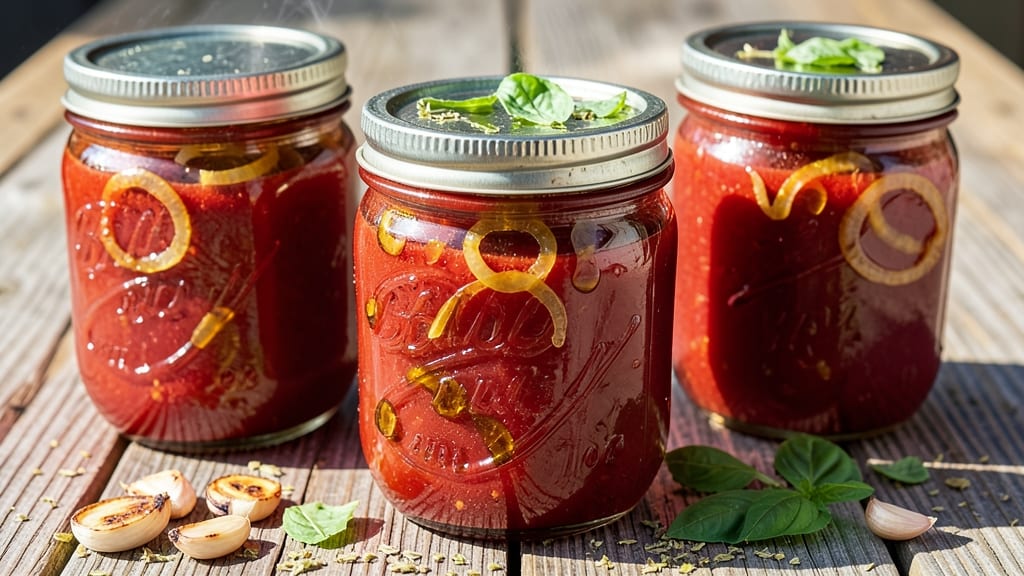
This Ball jar tomato sauce recipe transforms summer's bounty into rich, velvety sauce that keeps for months—no watery canned taste here. The secret lies in slow-cooked tomatoes, aromatic herbs, and proper acidification to ensure both safety and depth of flavor.
I've perfected this method after years of testing, and the results are restaurant-quality sauce that's ready whenever you need it.
The process begins with sterilizing your jars and lids to prevent spoilage, then simmering tomatoes with garlic, onion, and fresh basil until the flavors meld into a thick, glossy sauce.
A splash of lemon juice or vinegar isn't just for safety—it brightens the sauce and balances the natural sweetness of the tomatoes. This isn't about quick fixes; it's about building layers of flavor that develop over time.
What you'll end up with is a sauce so rich and concentrated it's perfect for pasta, pizza, or dipping bread. The texture is smooth yet vibrant, with none of the mealiness you sometimes find in homemade sauces.
Best of all, it stays fresh in the pantry for months or lasts weeks in the fridge, ready to elevate any meal with just a spoonful.
Whether you're prepping for winter or simply want to preserve summer's harvest, this sauce delivers professional results with minimal effort. The key is patience—letting the tomatoes break down slowly creates a depth of flavor you can't achieve any other way. Let's get started on preserving that perfect tomato taste.
Ingredients for ball jar tomato sauce
Transform summer tomatoes into velvety, restaurant-quality sauce that lasts months—no bland canned taste here.
| Ingredient | Amount | Notes |
|---|---|---|
| Fresh Roma Tomatoes 🍅 | 4 lbs | Ripe but firm, cored and crushed |
| Yellow Onion 🧅 | 1 whole | Medium size, finely chopped |
| Garlic Cloves 🧄 | 6 cloves | Fresh, minced for depth |
| Fresh Basil Leaves 🌿 | ½ cup | Packed, stems removed |
| Extra-Virgin Olive Oil 🫒 | ¼ cup | High quality, fruity |
| White Vinegar 💧 | 2 tbsp | For acidification and safety |
| Salt 🧂 | 1 ½ tsp | Kosher or sea salt |
| Black Pepper 🌶️ | ½ tsp | Freshly ground for warmth |
| Sugar 🍯 | 1 tbsp | Balances acidity naturally |
| Ball Mason Jars (Pint) 🥫 | 4 jars | With lids, sterilized |
The tomatoes are everything. Roma tomatoes are ideal—they're meaty and fewer seeds, but any ripe tomatoes work in a pinch. Hit up the farmers market for the freshest, or grab a big bag from Trader Joe's when they're in season. Look for tomatoes that are heavy for their size and have a vibrant color—those are the ones packed with flavor. The basil? Fresh is non-negotiable—dried just won't cut it here. If you can't find fresh, skip it or use half the amount of dried basil, but honestly, it's worth hunting down the fresh stuff. The garlic should be fresh too—none of that pre-minced jarred garbage. Smash the cloves with the side of your knife first to release the flavor before mincing.
No vinegar? Lemon juice works too—just use the same amount. Running low on basil? Oregano or thyme at half the amount will keep things aromatic, though nothing beats that fresh basil flavor. The sugar might seem odd, but it's essential—it balances the acidity from the vinegar and helps preserve the natural sweetness of the tomatoes. Want a smoother sauce? Blend the tomatoes before crushing them—just don't overdo it, or you'll lose that rustic texture. And if you're worried about the sauce being too acidic, don't be—the vinegar's main job here is preservation, not flavor. It's all about safety first, taste second.
Sterilize those jars and lids—boiling water bath for 10 minutes is the gold standard. The sauce will keep for up to a year in a cool, dark pantry, but honestly, it's gone before that. Once opened, it lasts about 2 weeks in the fridge, so make sure you've got jars ready. I like to label mine with the date—permanent marker on the lid works best. And if you end up with extra sauce? Freeze it in ice cube trays for perfect portions later. This stuff tastes even better the next day as the flavors meld, so don't rush it.
Why You'll Love This Recipe
- No-Chop Nightmare: I swear, the jar does half the work—just slice the tomatoes in half, drop them in, and let the slow cooker magic happen. No chopping onions into tears, no garlic mincing wars.
- Garlic-Basil Bomb: That first spoonful? Pure flavor payoff. The garlic softens just enough to caramelize, while the basil leaves infuse like a dream—no need for fancy bundles, just a handful of fresh stems.
- Pantry-to-Table Hero: Use it tomorrow for pasta, freeze half for next month’s lasagna, or drizzle it over grilled cheese like a fancy restaurant. One jar becomes three meals without extra effort.
- Dirt-Cheap Luxury: Fresh tomatoes and olive oil make this taste like a $50 restaurant dish, but the cost? Peanuts. I’ve fed four people for under $10 with leftovers that actually improve overnight.
Step-by-step instructions for preserving homemade tomato sauce
Here's how to transform fresh garden tomatoes into rich, flavorful sauce that keeps for months.
Prepare and Sterilize Your Mason Jars
Fill a large pot with water and bring to a boil. Place the 4 jars Ball Mason Jars (Pint) and their lids in the boiling water for 10 minutes to sterilize completely. This step is crucial for safe preservation—it eliminates any bacteria that could spoil your sauce. While sterilizing, prepare your workspace with clean towels.
Use tongs to remove the jars and lids, placing them on a clean kitchen towel. Keep them upside down on the towel until ready to use. The heat will help prevent condensation from forming inside the jars when you fill them later. I always double-check that the rims are completely dry before filling—moisture can interfere with proper sealing.
Cook the Tomato Base
In a large pot, combine the 4 lbs Fresh Roma Tomatoes (cored and crushed), 1 whole Yellow Onion (finely chopped), 6 cloves Garlic Cloves (minced), 0.25 cup Extra-Virgin Olive Oil, 2 tbsp White Vinegar, 1.5 tsp Salt, 0.5 tsp Black Pepper, and 1 tbsp Sugar. Bring to a boil over medium-high heat, then reduce to medium-low heat and simmer uncovered for 30-40 minutes.
Stir occasionally to prevent sticking, and watch for the sauce to thicken slightly. You're looking for a consistency where it coats the back of a spoon but still flows freely. The vinegar helps balance the sweetness of the tomatoes while ensuring safe preservation. If the sauce seems too thin after 30 minutes, simmer uncovered for another 5-10 minutes to reduce it further.
Add Fresh Basil and Finish Cooking
Once the tomato mixture has thickened, remove it from heat and stir in the 0.5 cup Fresh Basil Leaves (packed, stems removed). Let the basil infuse for 10 minutes off the heat—this allows the flavors to meld fully. The basil will release its aromatic oils into the warm sauce, creating that fresh garden taste you remember from summer.
Return the sauce to medium heat and cook for another 5 minutes to ensure everything is heated through. Taste and adjust seasoning if needed—you might want to add a pinch more salt or sugar to balance the flavors. The sauce should be vibrant red with a rich aroma that fills your kitchen. This is your final chance to taste before preservation.
Fill and Seal the Jars
Using a ladle, carefully fill each of the 4 jars Ball Mason Jars (Pint) with the hot tomato sauce, leaving about ½ inch of headspace at the top. This space allows for proper expansion during processing. Use a non-metallic utensil to remove any air bubbles trapped near the rim by gently tapping the jar against the counter.
Wipe the rims of the jars with a clean, damp cloth to ensure they're free of any sauce residue that could prevent sealing. Place the lids on the jars and screw on the bands until they're fingertip-tight—just until you can't turn them anymore with your fingers. Don't overtighten, or you risk breaking the seal.
Process for Safe Preservation
Prepare a water bath canner by filling it with enough water to cover the jars by at least 1 inch. Bring the water to a rolling boil over high heat. Once boiling, carefully place the filled jars in the canner using tongs, ensuring they remain upright and don't touch each other or the sides.
Process the jars for 35 minutes at a gentle boil. This time ensures that the sauce reaches a temperature that kills any potential bacteria or yeast. After 35 minutes, turn off the heat and let the jars sit in the hot water for another 5 minutes. Remove the jars and place them on a clean towel, leaving them undisturbed for 12-24 hours to cool completely.
The seals should pop as the jars cool, indicating a proper vacuum seal. Check each jar after 24 hours by pressing on the center of the lid—it should not flex at all. If any jars don't seal properly, refrigerate and use those within 1 week. Properly sealed jars can be stored in a cool, dark place for up to 12 months.
Pro Tips For Making Ball Jar Tomato Sauce
- CHAR THE ONION LOW: I learned this the hard way—sautéing onions in a ball jar over high heat turns them bitter. Keep the flame at medium-low and stir every 30 seconds until they’re translucent but not golden. You’re building flavor, not caramelizing.
- CORE THE TOMATOES: Skip the messy cutting—slice the Roma tomatoes in half lengthwise and scoop out the seeds with a spoon. This keeps the sauce thick and prevents a watery mess later. (Yes, even if you’re impatient like me.)
- SIMMER LONG ENOUGH: Thirty minutes of gentle simmering isn’t enough. Let it bubble away for at least 45 minutes—this breaks down the tomatoes into a rich, jammy texture. The longer it cooks, the deeper the flavor.
- SALT THE BASIL RIGHT: Add the fresh basil leaves at the very end, but toss them with a pinch of salt first. This brightens their flavor and prevents them from turning bitter in the hot sauce. (Your future self will notice the difference.)
Dietary considerations for this ball jar tomato sauce
Gluten-Free Adaptation
This sauce is naturally gluten-free since it only contains fresh ingredients and no processed additives. The white vinegar and olive oil are typically gluten-free, but always double-check labels if using store-bought versions.
The Ball Mason Jars themselves are also gluten-free, so you can safely store and serve this sauce for anyone with gluten sensitivities or celiac disease. 🌱
Low-Sugar Options
If you're watching your sugar intake, you can reduce the 1 tbsp sugar to just ½ tbsp—the tomatoes' natural sweetness will still balance the acidity from the vinegar. For a completely sugar-free version, omit it entirely and rely on the tomatoes' inherent sweetness.
Just remember that sugar plays a role in preservation, so monitor the sauce's consistency more closely during cooking. 🍯
Vegan-Friendly
This recipe is already vegan, as it contains no animal products. The extra-virgin olive oil, white vinegar, and fresh herbs make it a perfect plant-based sauce.
If you're serving it to vegans, you can even label the jars with a simple "Vegan" sticker to make it easy for guests to identify. The sauce's rich, umami flavor pairs beautifully with vegan pasta dishes or plant-based pizzas. 🌿
Allergen Considerations
For those with basil allergies, simply omit the fresh basil or replace it with oregano or thyme at half the amount. If you're concerned about vinegar allergies, substitute with lemon juice in the same quantity—just be aware that lemon juice may slightly alter the flavor profile.
Always check with individuals who have severe allergies before serving, as cross-contamination can occur during preparation. 💡
Acid Sensitivity
If you or someone you're serving has acid sensitivity, you can reduce the 2 tbsp white vinegar to just 1 tbsp and increase the lemon juice to 1 tbsp for a milder acidity.
The lemon juice provides the same preservation benefits while being gentler on sensitive stomachs. Taste the sauce before sealing to ensure the acidity level is comfortable. 💛
Storage for Dietary Needs
For those following specific dietary protocols, this sauce stores beautifully in the fridge for 2 weeks or freezes for up to 3 months in airtight containers. If you're using it for meal prep, portion it into smaller containers to make reheating easier.
The sauce's natural acidity and lack of preservatives make it a great choice for clean eating or whole-food diets. 🥫
Nutrition facts
Frequently asked questions
Can I use regular canned tomatoes instead of fresh?
While you can use canned tomatoes in a pinch, fresh tomatoes yield the best flavor and texture. The natural sweetness and acidity balance perfectly when using fresh. If you must use canned, opt for high-quality, no-salt-added crushed tomatoes and reduce the vinegar to 1 tbsp since canned tomatoes already contain some acidity.
How do I know if my sealed jars are properly preserved?
After 24 hours, press the center of each lid—it should not flex at all. If it pops back up, the jar is properly sealed. If any jars don't seal, refrigerate and use those within 1 week. Also, check for condensation on the jar sides and a slight vacuum seal when lifting the lid with your fingers.
What if my sauce is too thin after cooking?
Simmer the sauce uncovered for an additional 10-15 minutes to reduce it to the right consistency. Alternatively, you can remove the lids and cook at a lower heat to evaporate excess moisture. For a thicker sauce, blend the tomatoes before cooking or add 1 tbsp tomato paste to help thicken it naturally.
Can I add meat or other ingredients to this sauce?
This recipe is designed as a simple, clean tomato sauce for preservation. If you want to add meat, cook it separately and mix it in just before serving. For other ingredients like mushrooms or peppers, add them with the onions and garlic during the initial cooking. Just be aware that additional ingredients may affect the sauce's shelf life and sealing process.
How long will the sauce keep in the fridge after opening?
Once opened, refrigerate the sauce and use it within 2 weeks for best quality. Store it in an airtight container and consume it within this timeframe to maintain freshness. If you notice any off smells, discoloration, or mold, discard it immediately. The sauce's natural acidity helps preserve it, but refrigeration is key after opening.