
Sauces & Condiments
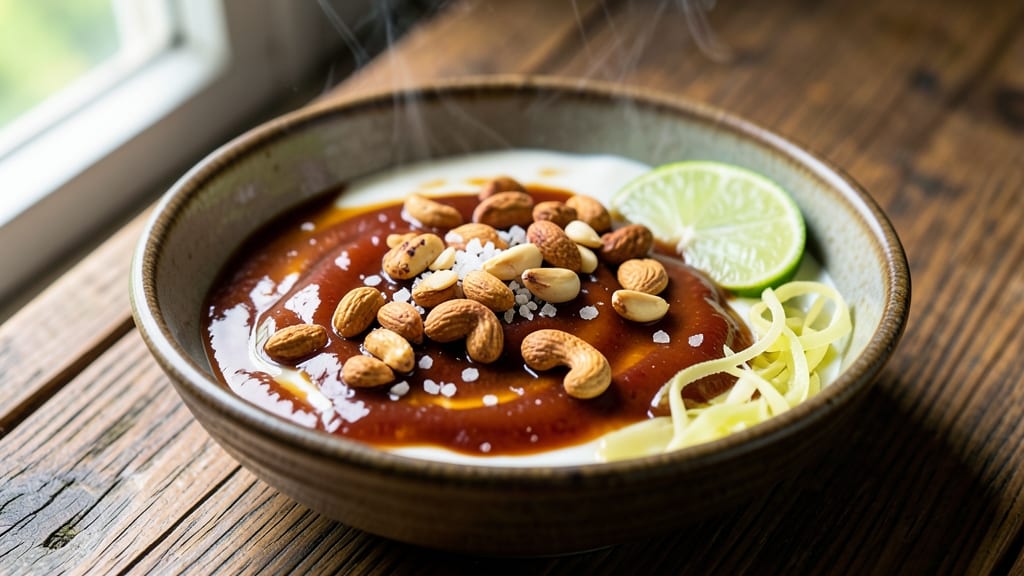
This Balinese satay sauce recipe transforms simple pantry staples into a rich, nutty, and tangy condiment that elevates grilled meats, rice dishes, and even roasted vegetables.
The secret lies in balancing toasted peanuts, coconut milk, and a touch of tamarind for that signature sweet-spicy depth—all simmered into a velvety sauce with just the right amount of heat.
I developed this version after tasting authentic satay in Bali, where the sauce isn’t just a dip but the heart of every bite.
The magic happens in the two-step process: first, toasting the peanuts and spices until fragrant, then blending them into a smooth paste before simmering with coconut milk and lime juice.
This method ensures the sauce is creamy yet balanced, with none of the heaviness you might expect from coconut. The result? A sauce that’s versatile enough for satay skewers but also works as a marinade or dipping sauce for spring rolls.
What sets this recipe apart is the authentic flavor profile—nutty from the peanuts, tangy from the tamarind and lime, and just a hint of warmth from the spices.
Unlike store-bought versions, this sauce builds layers of flavor as it simmers, creating a depth that’s impossible to replicate with jarred mixes. The texture is smooth yet clingy, clinging to every bite of grilled chicken or tofu.
Ready in just 20 minutes, this sauce keeps well in the fridge for up to a week, making it perfect for meal prep or entertaining. Whether you’re serving traditional satay or experimenting with new dishes, this recipe delivers the bold, aromatic essence of Balinese cuisine—without the fuss.
Ingredients for balinese satay sauce
Nine simple ingredients create this rich, aromatic Balinese satay sauce—nutty, tangy, and full of depth.
| Ingredient | Amount | Notes |
|---|---|---|
| Peanuts 🥜 | ½ cup | Raw, unsalted, toasted until fragrant |
| Coconut Milk 🥥 | 1 can | Full-fat, 13.5 oz can (not carton) |
| Tamarind Paste 🍈 | 2 tbsp | Thick, unsweetened (or 1 tbsp tamarind pulp) |
| Lime Juice 🍋 | ¼ cup | Freshly squeezed, about 2 limes |
| Garlic Cloves 🧄 | 4 cloves | Peeled, roughly chopped |
| Ginger Root 🌿 | 1 tbsp | Freshly grated (about 1-inch piece) |
| Ground Cumin 🌶️ | 1 tsp | Toasted for deeper flavor |
| Ground Coriander 🌿 | 1 tsp | Freshly ground preferred |
| Brown Sugar 🍯 | 2 tbsp | Light or dark, packed |
| Red Chili Flakes 🌶️ | ½ tsp | Adjust for heat preference |
The peanuts are non-negotiable—they carry the nutty essence of authentic satay. Buy raw, unsalted peanuts from the bulk section at Whole Foods or Trader Joe's for the best flavor. Toast them in a dry pan until golden and fragrant—this step makes all the difference. For tamarind paste, Asian markets have the best selection, but the jarred kind at H Mart works too. If you can't find tamarind paste, substitute lime juice plus 1 tsp brown sugar, though the flavor won't be identical. The coconut milk should be full-fat—Thai Kitchen brand is widely available and reliable.
No toasted cumin? Regular ground cumin works fine, though it lacks that deep, nutty aroma. For coriander, freshly ground is ideal, but if you're using dried, measure it by volume (not weight) to avoid bitterness. Chili flakes can be swapped for fresh red chili or cayenne pepper, but adjust to taste—Balinese satay sauce should have a gentle warmth, not a kick. The ginger and garlic can be minced or grated, but rough chopping works too if you're in a hurry. Brown sugar adds depth, but coconut sugar or maple syrup are great alternatives for a more authentic touch.
This sauce thickens as it cools, so stir in a splash of water if it's too thick for your liking. Store in an airtight container in the fridge for up to 1 week, or freeze for 3 months. I like to make a double batch—one for immediate use and one to freeze. The sauce tastes even better the next day as the flavors meld. For a smoother texture, blend briefly before serving, but the slight graininess adds authenticity.
Why You'll Love This Recipe
- Five-Ingredient Magic: This sauce comes together with stuff you’re already keeping in your pantry—peanut butter, coconut milk, tamarind, lime, garlic. No fancy shopping trips, no stress. Honestly, I’ve made it blindfolded (okay, maybe not, but close).
- Tangy Creamy Crunch: That first bite? The toasty peanuts, the zing of tamarind, the cool hit of lime—it’s like a flavor hug. The coconut milk smooths it out, but the garlic? Oh, it lingers in the best way.
- Weeknight to Party: Drizzle it over grilled chicken, toss it with noodles, or serve it as a dip with veggies. It’s my lazy Tuesday go-to, but somehow also the star of my potluck spread. (Yes, even on a Tuesday night.)
- Stays Fresh, Costs Less: Make a double batch—it keeps for days in the fridge, and the peanuts stretch every drop. I’ve fed a crowd with one jar of peanut butter and a can of coconut milk. Budget-friendly? More like budget hero.
Step-by-step instructions for Balinese satay sauce
This sauce delivers rich coconut depth and bright citrus zing in under 20 minutes.
Toast the Peanuts for Nutty Depth
Heat a dry skillet over medium heat. Add the 0.5 cup peanuts and toast for 3-4 minutes, stirring constantly until they turn a rich golden brown and release their fragrant aroma. You'll see them darken slightly at the edges—that's your cue to remove them immediately from the heat. Transfer the toasted peanuts to a plate and let them cool for 2 minutes before grinding.
Toasting enhances their natural oils and flavor profile. If you're using a food processor, pulse the peanuts until they reach a coarse texture—about the size of sand grains. This ensures you get both nutty texture and flavor in your sauce without it being overly chunky. Don't skip this step; raw peanuts won't provide that essential crunch and depth.
Build the Aromatic Base
In the same skillet (no need to clean it—the nutty oils add flavor), add 1 tablespoon of the grated ginger root and 4 cloves of roughly chopped garlic. Cook over medium heat for 2-3 minutes until the garlic becomes fragrant and the ginger softens slightly. You should smell a warm, spicy aroma developing—this is the foundation of your sauce's complexity.
Add the 1 teaspoon ground cumin and 1 teaspoon ground coriander, stirring constantly for 30 seconds to toast the spices. This quick toasting releases their essential oils and deepens their flavor profile. Immediately pour in the 2 tablespoons tamarind paste and stir vigorously to combine with the spices. The mixture will thicken slightly as the tamarind dissolves into the aromatic oils.
Simmer the Coconut-Lime Mixture
Pour in the 1 can coconut milk and bring the mixture to a gentle simmer over medium-low heat. Stir in the 2 tablespoons brown sugar and 0.5 teaspoon red chili flakes, then add the 0.25 cup lime juice. Let the sauce simmer uncovered for 8-10 minutes, stirring occasionally, until it thickens to a velvety consistency that coats the back of a spoon.
You'll notice the sauce darken slightly and develop a rich, caramelized aroma. This is where the tamarind and sugar work together to create that signature Balinese sweet-sour balance. If the sauce thickens too much before reaching the 8-minute mark, add 1-2 tablespoons of water to maintain the proper consistency.
Finish with Toasted Peanuts
Remove the sauce from heat and stir in the toasted, ground peanuts until they're evenly distributed throughout. The sauce should now have a beautiful golden hue with visible peanut specks. Taste and adjust the seasoning—add more lime juice if you want increased brightness, or more brown sugar if you prefer a sweeter profile. The sauce should be balanced between sweet, sour, spicy, and nutty flavors.
Let the sauce sit at room temperature for 5 minutes before serving. This resting period allows all the flavors to meld together completely. The sauce will continue to thicken slightly as it cools, so don't worry if it looks a bit thin immediately after cooking. Serve warm or at room temperature over grilled satay skewers, with steamed rice, or drizzled over fresh vegetables for a complete Balinese-inspired meal.
Pro Tips For Making Balinese Satay Sauce
- Toast Peanuts Low: I learned this the hard way—crank the heat to medium-low for peanut toasting. High heat burns them fast, turning them bitter before they brown. Watch them like a hawk and stir constantly until they smell nutty and golden, about 5-7 minutes.
- Strain the Tamarind: Tamarind paste is full of gritty bits that ruin texture. After dissolving it in warm water, strain through a fine-mesh sieve into your sauce. Skimp here, and you’ll taste every speck later—trust me, it’s not pretty.
- Simmer Coconut Milk Slow: Don’t boil this sauce—simmer it gently. Coconut milk curdles fast when it gets too hot, and you’ll end up with a lumpy mess. Keep it at a bare simmer, stirring often, and the sauce will stay silky.
- Add Lime Juice Last: Lime juice cuts the richness, but add it too early and the acid will break the sauce’s emulsion. Wait until everything else is combined and cooled slightly—just a splash at the end keeps the balance perfect.
Essential equipment for perfect results
Skillet Essentials
Your 8-inch cast-iron skillet (like a Lodge Pre-Seasoned) is the star here—it retains heat perfectly for toasting peanuts and building the aromatic base. I prefer cast iron because it distributes heat evenly, preventing hot spots that can burn your garlic or ginger.
If you don’t have cast iron, a heavy stainless steel skillet (like All-Clad) works too, but monitor the heat more closely. 🔥
Blender or Food Processor
A high-powered blender (such as a Vitamix) or food processor (like a Cuisinart) is essential for creating that signature smooth yet textured consistency. For the peanuts, pulse them until they’re coarse—about the size of sand grains.
If you’re using a blender, add the toasted peanuts, coconut milk, and tamarind paste first, then blend until smooth before simmering. This step ensures the sauce has that authentic Balinese clinginess. ✨
Measuring Tools
Precision matters with spices and liquids, so grab a set of stainless steel measuring spoons (like OXO Good Grips) for the 1 tsp cumin and ½ tsp chili flakes.
A liquid measuring cup (with clear markings) is a must for the ½ cup lime juice and 1 can coconut milk. I also recommend a small saucepan (like Le Creuset’s 1.5-quart) for simmering—it’s the perfect size to control the heat and prevent boiling over. 💡
Taste and Adjust Tools
Keep a small whisk (like Zyliss 3-in-1) handy for stirring the sauce while it simmers, and a clean spoon for tasting as you go. A microplane (for ginger) and garlic press (if using pre-peeled cloves) save time and ensure even texture.
For adjusting seasoning, I always keep a small bowl of lime juice and brown sugar nearby—this sauce is all about balance, and you’ll likely need to tweak it to your taste. 🍋
Storage Containers
Once your sauce is ready, transfer it to an airtight glass container (like Pyrex) for fridge storage or a freezer-safe silicone bag (like Stasher) for longer-term keeping.
Glass is best for fridge storage because it lets you see the sauce’s rich color, while silicone bags are great for freezing—they’re flexible and easy to thaw. Label your containers with the date to track freshness. 💫
Nutrition facts
Frequently asked questions
Can I make this sauce without tamarind paste?
Yes, you can substitute 2 tablespoons lime juice plus 1 teaspoon brown sugar for the tamarind paste, though the flavor won't be identical. Tamarind provides that signature tangy depth, but this combo creates a bright citrus note. For extra authenticity, try using 1 tablespoon tamarind pulp mixed with 1 tablespoon water if available.
How do I adjust the spice level?
The recipe includes just ½ teaspoon red chili flakes for a gentle warmth. For more heat, add ¼ teaspoon cayenne pepper or 1 fresh red chili (seeds removed) while simmering. If you prefer no heat, simply omit the chili flakes entirely—the sauce will still be delicious with just the nutty and tangy flavors.
Can I use peanut butter instead of raw peanuts?
Not recommended! Peanut butter lacks the toasted nutty depth that's essential to authentic satay sauce. If you're short on time, you could use ½ cup smooth natural peanut butter (no sugar added), but you'll need to adjust the coconut milk to ½ cup plus 2 tablespoons water to maintain the right consistency. The texture will be smoother but less authentic.
Why did my sauce separate?
This happens when the sauce cools too quickly or if you didn't blend the peanuts finely enough. Stir in 1 tablespoon coconut milk and gently reheat over low heat while whisking constantly. For future batches, always blend the peanuts to a coarse powder before simmering, and let the sauce cool gradually. The peanut oils need time to fully emulsify with the coconut milk.
What are the best ways to use this sauce?
While it's perfect for dipping grilled satay skewers, this versatile sauce works equally well as a marinade for chicken or tofu, a drizzle over rice dishes, or even a dressing for fresh spring rolls. For extra richness, brush it on grilled vegetables like eggplant or zucchini. The sauce keeps well for 1 week refrigerated, so make a double batch!