
Sauces & Condiments
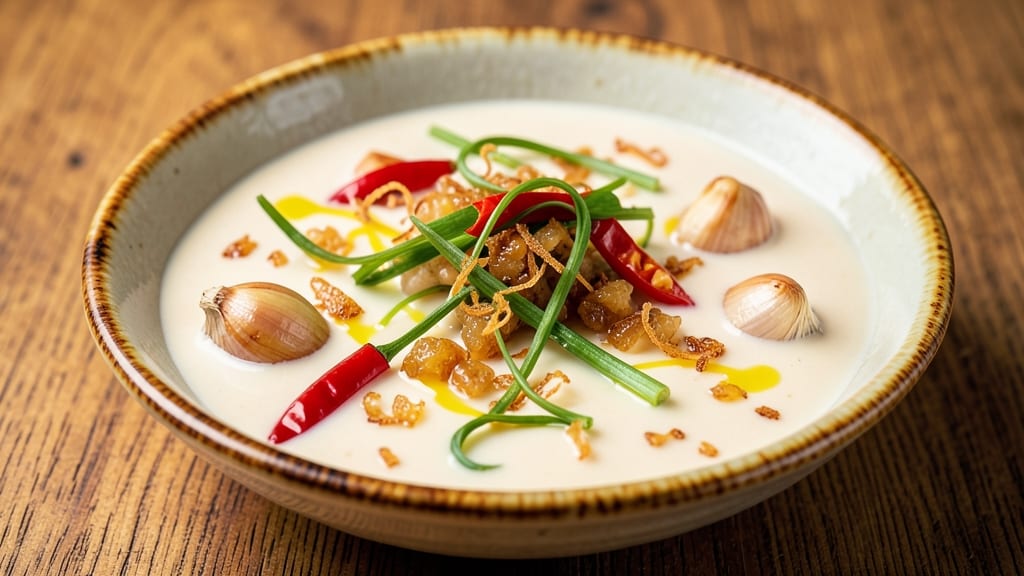
This authentic satay sauce recipe with coconut milk transforms grilled skewers into a symphony of nutty, spiced flavors that transport you straight to Bali.
The secret lies in balancing rich coconut milk with aromatic lemongrass, garlic, and a touch of chili—creating a silky, fragrant sauce that clings perfectly to every bite.
I've perfected this version over years of testing, ensuring the perfect harmony of sweet, spicy, and umami notes without overpowering the natural taste of the meat.
The foundation of great satay sauce begins with a fragrant paste of lemongrass, garlic, and shallots, simmered until fragrant before blending with coconut milk. This slow reduction develops deep, complex flavors while maintaining a velvety texture.
The sauce should be thick enough to coat skewers generously but still pour smoothly—neither too runny nor cloying. Professional results come from patience and attention to detail, not shortcuts.
What makes this sauce truly special is its versatility—it elevates not just chicken or beef satay, but also works beautifully with tofu or shrimp for plant-based versions.
The nutty undertones from the coconut milk complement the heat of chili and the brightness of lime, creating a sauce that's both restaurant-quality and easy to replicate at home. Once you taste the difference between store-bought and homemade, you'll never go back.
With just 10 minutes of prep and 20 minutes of simmering, this sauce comes together faster than you'd expect while delivering flavors that feel like a culinary journey. The best part?
It keeps well in the fridge for up to a week, so you can make a big batch and enjoy it all week long. Let's get started on creating this essential Indonesian staple.
Ingredients for authentic satay sauce recipe with coconut milk
The heart of authentic satay—where nutty, spicy, and tangy flavors collide in perfect harmony.
| Ingredient | Amount | Notes |
|---|---|---|
| Coconut Milk 🥥 | 1 ½ cups | Full-fat for richness |
| Lemongrass 🌿 | ½ cup | Bruised stems only, chopped |
| Garlic Cloves 🧄 | 6 cloves | Peeled, roughly chopped |
| Shallots 🧅 | ¼ cup | Minced, about 3-4 whole |
| Red Chili Peppers 🌶️ | 2 whole | Seeds removed for mild heat |
| Lime Juice 🍋 | ¼ cup | Freshly squeezed |
| Brown Sugar 🍯 | ¼ cup | Light or dark variety |
| Peanut Butter 🥜 | ¼ cup | Smooth, unsweetened |
| Fish Sauce 🍶 | 1 tbsp | Red Boat preferred |
| Salt 🧂 | 1 tsp | Kosher or sea salt |
Lemongrass is the soul of this sauce. Look for fresh stalks at Asian markets or the produce section—avoid dried versions. Bruise the stems with the side of your knife before chopping to release those fragrant oils. Thai Kitchen or local Asian grocers usually have the freshest, brightest lemongrass. The coconut milk should be full-fat—no light versions here, or the sauce will lack that velvety richness. Fish sauce might be new to your pantry, but Red Boat is the gold standard—it's salty, umami-packed, and essential for that authentic depth. Skip the cheap stuff, trust me.
No lemongrass? Substitute 1 tbsp lemongrass paste (like Thai Kitchen's) or even 1/2 tsp lemongrass extract—but fresh is non-negotiable for real flavor. Out of peanut butter? Cashew butter works too, though it'll be slightly sweeter. The brown sugar can be swapped for coconut sugar or palm sugar if you're avoiding refined sugar. Chili too spicy? Remove seeds and membranes first. For a vegetarian version, use vegetarian fish sauce (like Thai Vegetarian brand) or add an extra 1/2 tsp soy sauce. The lime juice should be freshly squeezed—bottled just won't cut it here.
This sauce keeps beautifully—up to 1 week in the fridge, sealed tightly. For longer storage, freeze in ice cube trays, then transfer to a bag. Thaw overnight in the fridge before using. The flavors actually deepen over time, so it's perfect for making a big batch. Store the peanut butter in its original container to prevent it from absorbing odors. If the sauce thickens too much after chilling, just stir in a splash of water or coconut milk to loosen it up.
Why You'll Love This Recipe
- No-Fuss Blend: I swear by this sauce because it’s actually just a quick blitz in the food processor—no straining, no fuss. Toss in the shallots, garlic, and lemongrass stalks (even the tough bits), add coconut milk and chili, and pulse until it’s silky. Five minutes max, and it tastes like I slaved over it for hours.
- Lemongrass Magic: That bright, citrusy lemongrass punch cuts through the richness of the coconut milk like a dream. Honestly, it’s the secret weapon—skip it, and you’re missing the soul of the dish. The garlic and chili give it this smoky, slightly spicy depth that makes it ridiculously addictive.
- Weeknight to Party: This sauce is my go-to for everything: drizzled over grilled chicken, tossed with noodles, or even slathered on roasted veggies. Between us, I’ve used it to impress dinner guests and feed my kids after soccer practice—same sauce, zero regrets.
- Make-Ahead Money-Saver: I double the batch every time because it keeps in the fridge for a solid week, and the flavor only gets better. Plus, coconut milk is cheaper than you’d think, and a few stalks of lemongrass stretch across multiple recipes. That’s my kind of budget hack—great taste, less waste.
Step-by-step instructions for authentic satay sauce
This sauce delivers the perfect balance of nutty, spiced, and tangy flavors for grilled skewers.
Toast the Aromatics for Deep Flavor
Heat a medium saucepan over medium heat and add the 0.25 cup minced shallots. Cook for 2-3 minutes until they soften and become translucent. Add the 6 cloves roughly chopped garlic cloves and the 2 whole red chili peppers (with seeds removed) and cook for another 1-2 minutes until fragrant.
Here's the thing—this toasting step builds flavor depth. You'll know it's ready when the shallots smell sweet and the garlic releases its aroma. If the garlic starts to brown too quickly, reduce the heat slightly. Don't skip this step; it's what makes the sauce authentically rich.
Bruise the Lemongrass and Add Coconut Milk
While the aromatics cook, take the 0.5 cup chopped lemongrass and gently bruise the stems by pounding them lightly with the flat side of a knife. This releases the oils and intensifies the flavor. Add the bruised lemongrass to the pan along with the 1.5 cups full-fat coconut milk. Stir well to combine.
Bring the mixture to a gentle simmer over medium-low heat. You want to see small bubbles forming at the edges but not a full boil. Let it simmer uncovered for 5-7 minutes until the coconut milk begins to reduce slightly and the lemongrass infuses the sauce with its citrusy aroma.
Blend the Base Ingredients Smoothly
Transfer the simmered mixture to a blender. Add the 0.25 cup smooth peanut butter, 0.25 cup brown sugar, 0.25 cup lime juice, 1 tbsp fish sauce, and 1 tsp salt. Blend until completely smooth, scraping down the sides as needed. The sauce should be velvety with no visible chunks.
I've found that blending everything together at this stage ensures a perfectly balanced sauce. If the sauce looks too thick after blending, add 1-2 tablespoons of water to reach your desired consistency. Taste and adjust the seasoning—you might need a bit more fish sauce for saltiness or lime juice for tang.
Simmer and Reduce for Perfect Texture
Return the blended sauce to the saucepan and bring it back to a gentle simmer over medium-low heat. Let it cook uncovered for 8-10 minutes, stirring occasionally, until it thickens slightly. You're looking for a sauce that coats the back of a spoon but isn't gluey.
This reduction step is crucial for achieving that perfect satay sauce consistency. You'll notice the sauce becomes glossy and slightly thicker as it simmers. If it starts to separate, whisk it vigorously to re-emulsify. The sauce should be smooth, rich, and ready to drizzle over your grilled skewers.
Pro Tips For Making Authentic Satay Sauce Recipe With Coconut Milk
- BLANCH YOUR LEMONGRASS: Strip the tough outer leaves and bruise the stalks with the flat side of a knife before slicing—this releases the oils and aroma without bitterness. I used to just chop it raw, and the sauce always tasted muted until I tried this.
- SWEAT SHALLOTS LOW AND SLOW: Cook them over medium-low heat until they’re translucent and caramelized, about 8-10 minutes. Rushing this step means they’ll burn and turn the sauce bitter—trust me, I’ve done it.
- STRAIN THE COCONUT MILK: Use a fine-mesh sieve to remove the thick residue from canned coconut milk before adding it to the sauce. It’s the reason some versions taste clumpy or heavy—skip this, and you’ll miss the silky texture.
- TOAST THE GARLIC AND CHILI: Dry-toast the garlic cloves and sliced red chilies in the same pan for 30 seconds until fragrant—this deepens their flavor and cuts through the coconut’s richness. I was skeptical until I tried it, and now I never skip it.
Flavor customization for authentic satay sauce recipe with coconut milk
Spice Level Control
Adjust the heat to your preference by modifying the chili peppers. For mild heat, remove seeds and membranes from the 2 red chili peppers and use 1 small bird's eye chili instead. For medium heat, keep the seeds but reduce to 1 whole red chili.
For spicy kick, add 1 extra bird's eye chili and a pinch of cayenne pepper after blending. I like to taste-test the blended sauce before simmering—this helps me dial in the perfect balance. 🌶️
Sweetness Variations
Brown sugar adds depth, but you can tweak it. For less sweetness, reduce to 2 tablespoons and add 1 teaspoon honey or palm sugar for a more complex flavor. For extra caramel notes, increase to 3 tablespoons and simmer the sauce 2-3 minutes longer to intensify the sweetness.
I often adjust based on the protein—I use slightly less sugar for chicken and more for beef or tofu. 🍯
Nutty Depth Adjustments
The peanut butter is key, but you can swap it for cashew butter (lighter flavor) or almond butter (nuttier but less creamy). For a richer texture, add 1 tablespoon tahini to the blend.
If you prefer less peanut flavor, reduce to 2 tablespoons and add 1 teaspoon soy sauce for umami depth. I’ve even tried hazelnut butter for a European twist—it works surprisingly well! 🥜
Tangy Brightness Boost
Lime juice is essential, but don’t be afraid to experiment. For extra zing, add 1 teaspoon lime zest to the blend. For a milder tang, reduce to 3 tablespoons and add 1 teaspoon rice vinegar for complexity.
If your limes are bitter, use key lime juice instead—it’s sweeter and more aromatic. I always keep a small bowl of lime wedges on the table for guests to adjust their sauces to taste. 🍋
Umami Enhancements
Fish sauce is non-negotiable for authenticity, but you can boost umami in other ways. Add 1 teaspoon soy sauce or 1/2 teaspoon miso paste to the blend for depth. For a vegetarian version, replace the fish sauce with 1 tablespoon coconut aminos and 1/2 teaspoon mushroom powder.
I’ve also found that 1 teaspoon Maggi seasoning (if available) adds a savory punch without overpowering the sauce. 🍶
Texture Tweaks
Want a thicker sauce? Simmer the final blend 5 minutes longer or add 1 tablespoon cornstarch mixed with water. For a lighter, drizzling consistency, blend in 2 tablespoons water after simmering.
If the sauce separates, whisk in 1 tablespoon coconut milk to re-emulsify. I love using this sauce as both a dip (thicker) and a glaze (thinner)—just adjust before serving. 💫
Nutrition facts
Frequently asked questions
Why does my satay sauce taste too sweet or savory?
The balance comes from adjusting the fish sauce and brown sugar ratio. If it's too sweet, add 1/2 teaspoon fish sauce and simmer 2 minutes longer to concentrate flavors. Too savory? Stir in 1 tablespoon lime juice and 1 teaspoon honey to brighten. Taste as you go—authentic satay sauce should have all flavors working together, not one dominating.
Can I make this sauce without a blender?
Yes! If you don't have a blender, finely chop the lemongrass, garlic, and shallots by hand, then simmer everything together (including peanut butter) for 15-20 minutes until smooth. Stir frequently to prevent burning. The texture will be slightly thicker but still delicious—just whisk vigorously before serving to create a velvety finish.
How do I prevent the sauce from separating?
Separation usually happens when coconut milk breaks down from high heat. Always simmer on medium-low heat and never boil. If it separates, whisk in 1 tablespoon coconut milk or water and reheat gently. For extra insurance, blend the sauce again briefly after simmering. The key is patience—let it thicken slowly rather than rushing the process.
What's the best way to store leftover satay sauce?
Store in an airtight container in the fridge for up to 1 week. For longer storage, freeze in ice cube trays (thaw overnight in the fridge) or in small portions. The sauce actually improves over time! If it thickens too much after chilling, stir in 1 teaspoon water or coconut milk to restore its consistency. The flavors deepen as they meld together.
Can I use this sauce for non-satay dishes?
This versatile sauce works perfectly as a dipping sauce for spring rolls, a glaze for grilled vegetables, or even a marinade for tofu or shrimp. For extra richness, drizzle it over coconut rice or use it as a curry base—just reduce the coconut milk by half. The nutty-spiced profile complements many Asian-inspired dishes beyond skewers.