
Sauces & Condiments
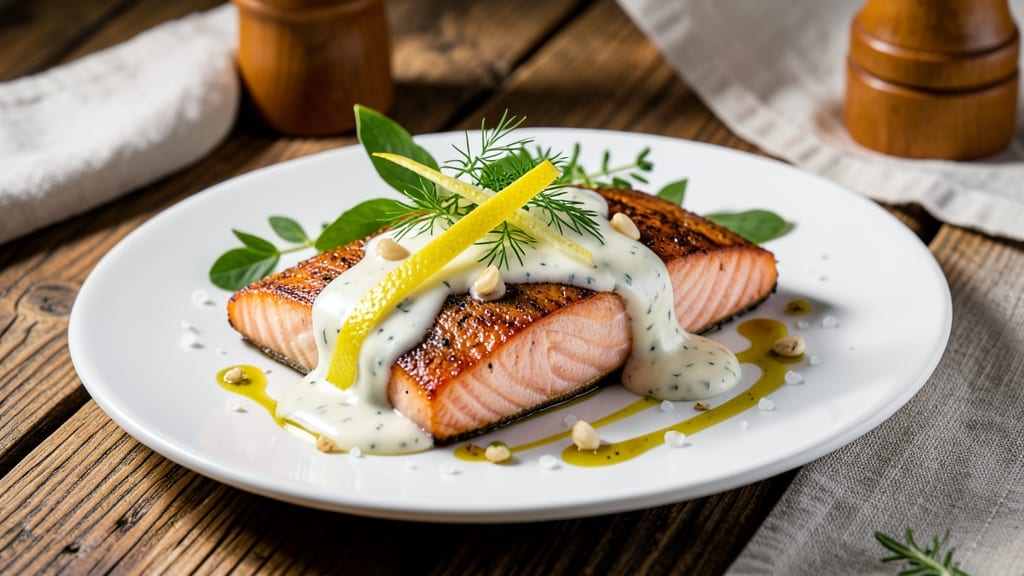
This baked salmon with sour cream dill sauce delivers perfectly flaky fish paired with a bright, herby drizzle that elevates every bite. The secret lies in baking the salmon just until it reaches 145°F—hot enough to flake effortlessly but still moist inside.
The sour cream dill sauce, whipped up in minutes, adds a cool contrast that balances the richness of the fish while keeping the dish light and refreshing.
What makes this recipe stand out is its simplicity—no complicated techniques, just high-quality ingredients and precise timing. The salmon rests in the oven while the sauce comes together, ensuring everything is ready at the same time.
This dish is ideal for pescatarians or anyone looking for a healthy, protein-packed meal that feels indulgent without being heavy.
The result is restaurant-quality salmon with tender, melt-in-your-mouth texture, topped with a velvety sauce that’s tangy, fresh, and packed with dill’s bright flavor. Serve it with roasted asparagus or a simple side salad to round out the meal.
The sauce also works beautifully as a dip for crusty bread, making this recipe versatile for any occasion.
Perfect for weeknight dinners or a special meal, this baked salmon dish proves that healthy eating doesn’t mean sacrificing flavor. The combination of flaky fish and cool, herby sauce creates a harmonious balance that’s both satisfying and elegant. Let’s get cooking!
Ingredients for baked salmon with sour cream dill sauce
Four ingredients make the salmon shine—rich, creamy, and perfectly balanced.
| Ingredient | Amount | Notes |
|---|---|---|
| Center-Cut Salmon Fillets 🐟 | 1 ½ lb | Skin-on for crispiness, even thickness |
| Fresh Dill 🌿 | ½ cup | Chopped, stems removed |
| Sour Cream 🥛 | ¾ cup | Full-fat for creaminess |
| Extra-Virgin Olive Oil 🫒 | 2 tbsp | For salmon and sauce |
| Fresh Lemon Juice 🍋 | 2 tbsp | From 1 small lemon |
| Garlic Cloves 🧄 | 2 cloves | Minced for sauce |
| Dijon Mustard 🍯 | 1 tbsp | For tangy depth |
| Diamond Crystal Kosher Salt 🧂 | 1 ½ tsp | For salmon and sauce |
| Ground Black Pepper 🌶️ | ½ tsp | Freshly cracked |
| Fresh Chives 🌱 | 2 tbsp | Chopped for garnish |
| Unsalted Butter 🧈 | 1 tbsp | For salmon finish |
The salmon fillets are non-negotiable here. Center-cut pieces stay intact during baking, while skin-on adds crispiness. I always grab mine from Whole Foods or the seafood counter at Trader Joe's—they keep it flash-frozen for maximum freshness. Look for fillets with vibrant color and minimal bruising. If using frozen, thaw overnight in the fridge (never at room temperature). The dill is the heart of the sauce—fresh, not dried—so buy a bunch and use half here, half on other dishes. Store the rest wrapped in damp paper towels in the fridge for up to 5 days.
No fresh dill? Dried dill at half the amount works in a pinch, but the flavor won’t be as bright. Substitute sour cream with Greek yogurt for a lighter option, though it’ll be slightly tangier. The Dijon mustard adds depth—substitute with whole-grain mustard if you prefer. For extra richness in the sauce, stir in 1 tbsp of crème fraîche if you have it. The lemon juice should be freshly squeezed; bottled won’t cut it. If you’re short on time, microwave the butter 40 seconds to just melt it before finishing the salmon.
This dish reheats beautifully—just warm the sauce gently and gently reheat the salmon in a skillet. The sauce keeps for 3-4 days in the fridge, but the salmon is best eaten fresh. For meal prep, bake the salmon ahead and store it separately, then assemble with freshly made sauce. The butter finish should be added right before serving to prevent burning. If making ahead, omit the butter and add it later. The sauce freezes well for up to 3 months—just thaw in the fridge overnight before using.
Why You'll Love This Recipe
- I swear by this method: just pat the salmon dry, drizzle it with olive oil, and let the oven do the work. No flipping, no fussing—just 15 minutes of hands-off cooking while the dill and lemon work their magic.
- No-Fuss Prep: I swear by this method: just pat the salmon dry, drizzle it with olive oil, and let the oven do the work. No flipping, no fussing—just 15 minutes of hands-off cooking while the dill and lemon work their magic.
- Creamy-Dill Magic: That bright, tangy sour cream sauce is where it shines. The fresh dill cuts through the richness of the salmon, and the lemon juice keeps it from feeling heavy—like a bright, herby hug on a plate.
- Weeknight or Dinner Party: Honestly, it’s my go-to for both. Toss it with some roasted potatoes for a lazy Tuesday, or serve it with crusty bread and a simple salad for guests. The sauce makes it feel special without the effort.
Step-by-step instructions for baked salmon with sour cream dill sauce
Here's the method to achieve perfectly flaky salmon with a rich, herby sauce every time.
Prepare the Salmon for Even Cooking
Preheat your oven to 400°F and line a baking sheet with parchment paper. Pat the 1.5 lb center-cut salmon fillets completely dry with paper towels—this ensures a crispy skin. Place the fillets skin-side down on the prepared sheet, leaving about ½ inch between each piece.
Drizzle the salmon with 1 tablespoon of the extra-virgin olive oil, rubbing it gently over the skin. Sprinkle evenly with 1 teaspoon of the diamond crystal kosher salt and ¼ teaspoon of the ground black pepper. I like to press the seasoning into the flesh lightly so it adheres well. Let the salmon sit at room temperature for 10 minutes before baking—this helps it cook more evenly.
Bake Until Flaky Perfection
Bake the salmon for 12-15 minutes, depending on thickness, until the skin is golden brown and crispy and the internal temperature reaches 145°F when measured at the thickest part. The fish should flake easily with a fork when tested gently.
Here's the thing—don't overcook it. Salmon continues cooking slightly after you remove it from the oven, so it's better to pull it out when it's just barely done. If the top isn't brown enough, you can broil for 1-2 minutes at the end, but watch it closely to avoid drying it out.
Prepare the Sour Cream Dill Sauce
While the salmon bakes, combine ½ cup chopped fresh dill, 2 tablespoons fresh lemon juice, 1 tablespoon Dijon mustard, 2 cloves minced garlic, and ½ teaspoon diamond crystal kosher salt in a small bowl. Mix well to distribute all the flavors evenly.
Gradually whisk in ¾ cup sour cream until smooth. The sauce should be thick but still pourable. If it's too thick, add 1 teaspoon water at a time until you reach the right consistency. Taste and adjust seasoning—you might need a pinch more salt or a splash more lemon juice to balance the flavors.
Finish the Salmon and Assemble
Remove the salmon from the oven and transfer it to a serving platter. Dot the top with 1 tablespoon unsalted butter and let it melt slightly for 1 minute. This adds richness and helps create a glossy finish. Spoon the prepared sour cream dill sauce over the salmon, letting it drizzle down the sides.
Garnish with 2 tablespoons chopped fresh chives just before serving. The chives add a fresh, bright contrast to the rich salmon and creamy sauce. Serve immediately while the salmon is still warm and flaky—this sauce pairs perfectly with the tender fish.
Serve with Confidence
Each fillet should separate easily into flakes with your fork, revealing a moist, pink center. The sauce should coat the salmon beautifully, with bright green dill flecks and a tangy-sweet balance. For best results, serve with steamed asparagus or a simple side salad to complement the rich flavors.
This method guarantees flaky salmon every time. The key is proper seasoning, accurate baking time, and that final butter finish. Don't skip the room temperature step—it makes all the difference in even cooking.
Pro Tips For Making Baked Salmon With Sour Cream Dill Sauce
- Dry the Salmon First: I learned this the hard way—wet salmon steams instead of browning. Pat those fillets thoroughly with paper towels before seasoning, even if they look dry. The crust on the outside makes all the difference when that sour cream dill sauce gets spooned on top.
- Use Room-Temp Sour Cream: Cold sour cream will curdle when you bake the salmon, and nobody wants lumpy sauce. Take the tub out of the fridge 30 minutes before mixing—just enough time to soften without turning warm. Trust me, your sauce will be smoother and brighter.
- Don’t Overbake the Salmon: Center-cut fillets cook fast—12-15 minutes at 375°F is plenty. The moment the flesh flakes easily with a fork, pull it out. Overcook it, and you’ll end up with dry, sad fish that fights the creamy sauce instead of playing nice.
- Add Lemon Zest to the Sauce: Fresh lemon juice is great, but a teaspoon of zest in the sour cream dill mix adds a bright, aromatic kick that cuts through the richness. It’s a tiny effort for a flavor upgrade—just grate it fresh and fold it in right before serving.
Flavor customization for this baked salmon with sour cream dill sauce
Herb Variations
Swap out the dill for fresh parsley and tarragon for a French-inspired twist—this combo adds earthy depth while keeping the sauce bright. For a Mediterranean vibe, mix chopped mint with dill (use 2 tbsp each) and add ½ tsp dried oregano.
Both variations work beautifully with the salmon’s richness. 🌿
Spicy Kick
Add ½ tsp of smoked paprika or 1 tsp of hot sauce (like Cholula) to the sauce for a smoky-spicy contrast. For extra heat, stir in 1 tsp of finely chopped jalapeño or ½ tsp of red pepper flakes.
Balance it with an extra 1 tbsp of lemon juice to keep the tang sharp. This works especially well with grilled salmon.
Creamy Upgrades
Replace the sour cream with crème fraîche for a slightly tangier, more luxurious sauce. For a lighter option, mix ½ cup Greek yogurt with ½ cup sour cream—it’ll be thicker but still creamy.
If you love richness, fold in 1 tbsp of heavy cream at the end for a velvety texture. Trust me, the difference is noticeable!
Citrus Brightness
Boost the lemon flavor by adding 1 tbsp of orange zest or 1 tsp of lime juice to the sauce. For a tropical twist, substitute 1 tbsp of the lemon juice with 1 tbsp of passionfruit puree (or ½ cup of mango purée for a sweeter contrast).
The acidity cuts through the richness perfectly. 🍊
Smoky Depth
Infuse the sauce with smoke by adding ½ tsp of liquid smoke or 1 tsp of smoked salt (like Morton’s Kosher Smoked Salt). For a more subtle touch, sauté 1 minced garlic clove in ½ tbsp olive oil until golden, then strain and mix into the sauce.
This pairs especially well with grilled or pan-seared salmon.
Nutrition facts
Frequently asked questions
Can I use frozen salmon for this recipe?
Yes, but thaw it properly first! Place frozen salmon in the refrigerator overnight (about 12-24 hours) to ensure even cooking. Never thaw at room temperature, as this can promote bacterial growth. Pat the fillets completely dry before seasoning to achieve that crispy skin.
How do I know when the salmon is fully cooked?
Use a meat thermometer to check the internal temperature—it should reach 145°F at the thickest part. The fish should also flake easily with a fork and appear opaque (no translucent edges). If the top isn't brown enough, broil for 1-2 minutes at the end, but watch closely to avoid drying it out.
What if my sauce separates or curdles?
This usually happens if the sauce gets too warm. To fix it, whisk in 1 teaspoon of cold water or 1 tablespoon of ice water while stirring continuously. For prevention, make the sauce last and keep it chilled until ready to serve. The sauce should be thick but still pourable—adjust with water if needed.
Can I make this ahead of time?
Bake the salmon up to 1 day ahead and store it in the fridge. Reheat gently in a skillet or microwave (covered) until warmed through. Make the sauce fresh before serving—it's best when bright and creamy. For a shortcut, prepare the sauce ingredients ahead and mix them just before serving.
What are the best sides to serve with this dish?
Roasted or steamed vegetables like asparagus, green beans, or Brussels sprouts complement the salmon beautifully. For a lighter option, try a crisp arugula salad with lemon vinaigrette. Crusty bread or dinner rolls work well for soaking up the extra sauce. The key is balancing rich flavors with bright, fresh sides.