
Sauces & Condiments
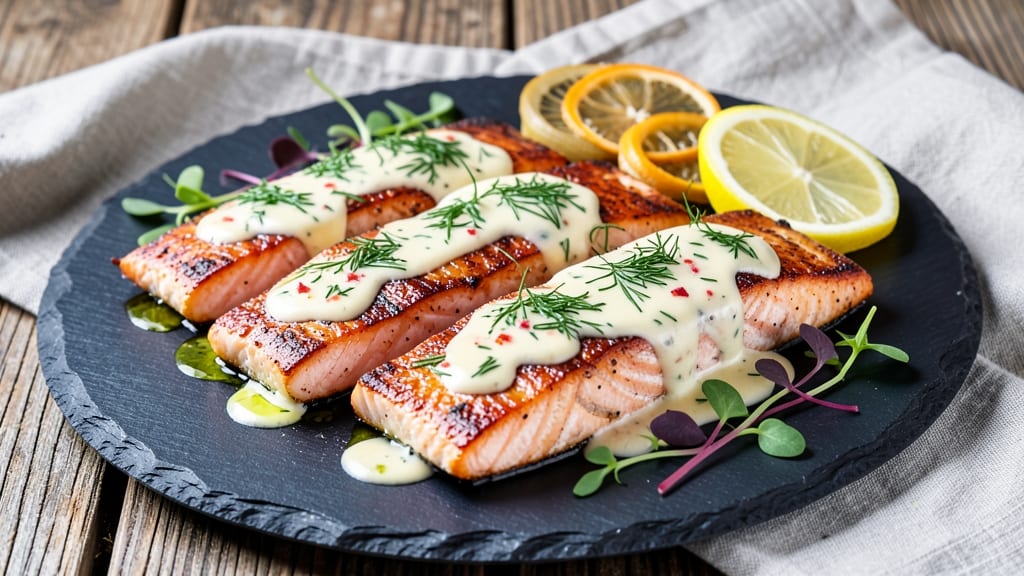
This baked salmon with creamy dill sauce delivers flaky, perfectly cooked fish paired with a velvety herb sauce that transforms simple weeknight dinners into restaurant-worthy meals.
The secret lies in baking the salmon just until it reaches 145°F—never overcooking—while the sauce combines fresh dill, sour cream, and lemon for that signature tangy richness. I developed this recipe after years of testing, ensuring the salmon stays moist and the sauce clings beautifully to every bite.
The creamy dill sauce is where the magic happens—it’s light enough to drizzle but rich enough to coat the salmon generously. What makes this dish foolproof is the one-pan method: bake the salmon, then finish it in the same pan with the warm sauce, allowing flavors to meld effortlessly.
The result? A dish that’s elegant yet simple, with minimal cleanup and maximum flavor impact.
By the time you serve this, you’ll have tender, flaky salmon that separates cleanly with a fork, all smothered in that herby, velvety sauce. The bright lemon notes cut through the richness, while the dill adds freshness that keeps the dish feeling light.
This is the kind of meal that feels special without requiring hours in the kitchen—just 20 minutes of active prep and 15 minutes of baking.
Pair it with roasted asparagus, a simple quinoa salad, or crusty bread to soak up every last drop of that creamy dill sauce. The plating is effortless: spoon the sauce over the salmon, garnish with extra dill, and serve immediately. Here’s how to make it perfectly every time.
Ingredients for baked salmon with creamy dill sauce
Eight simple ingredients transform into restaurant-quality salmon with velvety dill sauce.
| Ingredient | Amount | Notes |
|---|---|---|
| Salmon Fillets 🐟 | 4 whole | Skin-on, 6-8 oz each |
| Fresh Dill 🌿 | ½ cup | Chopped, stems removed |
| Sour Cream 🥛 | ½ cup | Full-fat preferred |
| Lemon Juice 🍋 | 2 tbsp | Freshly squeezed |
| Extra-Virgin Olive Oil 🫒 | 2 tbsp | For salmon coating |
| Shallot 🧅 | 1 whole | Minced, about 1 tbsp |
| Garlic Cloves 🧄 | 2 cloves | Minced, for sauce |
| Salt 🧂 | 1 tsp | Kosher or sea salt |
| Black Pepper 🌶️ | ½ tsp | Freshly ground |
| Lemon Zest 🍋 | 1 tsp | For garnish |
| Unsalted Butter 🧈 | 1 tbsp | For salmon coating |
The salmon is everything here—wild-caught, skin-on fillets stay moist and crisp up beautifully. Grab them from the seafood counter (not frozen) and pat them dry before seasoning. The skin acts as a natural barrier, keeping the fish from drying out. If you can't find fresh, high-quality frozen works too—just thaw overnight in the fridge. For dill, farmers market bunches have more flavor than grocery store containers, but use what you've got. The secret to flaky salmon? Don't overcook it—145°F internal temp is perfect.
No fresh dill? Dried works at one-third the amount, but it won't have that same bright punch. Swap shallot for 1 tbsp minced red onion if needed. The sour cream should be full-fat for that rich texture—low-fat or dairy-free versions will make the sauce thin. For extra tang, add 1/2 tsp lemon zest to the sauce. The butter and olive oil combo on the salmon? Game-changer—keeps it tender while the skin gets crispy. If you're out of butter, use extra olive oil instead.
This sauce reheats beautifully—just warm it gently in the microwave or on the stove. Store leftovers in an airtight container for 3 days in the fridge, or freeze for 1 month. The salmon itself? Best served fresh, but you can reheat portions gently in the oven at 275°F for 5-7 minutes. I always make extra sauce—it's perfect for toast points or as a dip for veggies. Garnish with extra dill and lemon zest right before serving—that's when it looks restaurant-worthy.
Why You'll Love This Recipe
- One-Pan Magic: Honestly, I swear by this recipe because it’s that simple—just toss the salmon on a sheet pan, drizzle it with olive oil and lemon, and let the oven do the work. No chopping, no fuss, and no extra dishes beyond the pan you already used.
- Dill-Sour Cream Bliss: That bright lemon and fresh dill cut through the richness of the salmon, while the sour cream adds this velvety, tangy finish that’s ridiculously good. It’s like a spa day for your taste buds—simple, but somehow feels fancy.
- Lunchbox Hero: Between us, this is my go-to for meal prep. The sauce clings perfectly to the salmon, so it reheats beautifully, and the lemon keeps it from drying out. Pack it cold for work or reheat it for dinner—it’s equally great either way.
- Budget-Friendly Protein: Salmon fillets might seem pricey, but this recipe uses just what you need, and the sour cream and dill stretch the flavor without breaking the bank. Plus, leftovers keep for days, so you’re not scrambling for another meal. Win-win.
Step-by-step instructions for baked salmon with creamy dill sauce
Here's how to bake perfectly flaky salmon with a velvety herby sauce—simple steps for restaurant-quality results.
Prep and Season the Salmon Fillets
Preheat your oven to 375°F. Pat the 4 whole salmon fillets dry with paper towels—this ensures a crispy skin. Place them skin-side down on a parchment-lined baking sheet, leaving about 1 inch between each fillet.
In a small bowl, mix 2 tbsp extra-virgin olive oil with 1 tsp salt and 0.5 tsp black pepper. Brush this mixture evenly over both sides of each fillet. The oil helps create a golden crust while keeping the fish moist inside. Let the seasoned salmon sit at room temperature for 10 minutes before baking—this prevents cold spots that can make the center undercooked.
Bake the Salmon Until Flaky
Bake the salmon for 12-15 minutes, depending on thickness. You'll know it's done when the edges are lightly opaque and the flesh flakes easily with a fork. If the skin isn't crispy enough after baking, broil for 1-2 minutes at the end—just watch it closely so it doesn't burn.
While the salmon bakes, make the sauce. In a small saucepan over medium-low heat, melt 1 tbsp unsalted butter. Add the minced 1 whole shallot and cook for 2 minutes until translucent. Stir in the 2 cloves minced garlic cloves and cook for 30 seconds until fragrant—don't let it brown or it'll turn bitter.
Finish the Creamy Dill Sauce
Reduce heat to low and whisk in 0.5 cup sour cream and 2 tbsp lemon juice. Let the sauce simmer gently for 3-4 minutes until it thickens slightly but remains smooth. Stir in 0.5 cup chopped fresh dill and 1 tsp lemon zest, then taste and adjust seasoning if needed.
Here's a pro tip: If the sauce looks too thick, whisk in 1-2 tablespoons of warm water to reach your desired consistency. The sauce should coat the back of a spoon but still be light enough to drizzle. Keep it warm while you finish the salmon.
Assemble and Serve
Once the salmon is perfectly flaky, transfer it to serving plates. Spoon the warm creamy dill sauce over each fillet, letting it cascade down the sides. Garnish with an extra sprinkle of chopped fresh dill and a pinch of lemon zest for brightness.
Serve immediately with steamed asparagus, roasted potatoes, or a fresh salad. The contrast of flaky salmon with the cool, herby sauce is pure comfort food magic. Each bite should deliver tender fish with that velvety sauce clinging perfectly—no dry spots allowed!
Pro Tips For Making Baked Salmon With Creamy Dill Sauce
- Preheat Like It’s 1985: I learned this the hard way—skipping the preheat or using a flimsy sheet pan means your salmon steams instead of searing. Crank the oven to 400°F (200°C) and let it roar for 10 minutes with a heavy-duty pan or baking sheet inside. That’s the only way to get the crust you’re actually paying for.
- Dry the Dill: Fresh dill is the star here, but those wet stems make your sauce watery and sad. Tear the leaves by hand (don’t chop—it bruises them) and pat them dry with a paper towel before mixing into the sour cream. Trust me, your sauce will thank you—no one wants a soggy, diluted mess.
- Don’t Overmix the Sauce: The second you start folding in lemon juice and olive oil, stop. A few gentle stirs are all it takes—overworking the sour cream turns it into a thin, lumpy paste. My grandmother swore by this, and she was right: rough texture = better texture. Just combine, taste, and call it done.
- Use a Thermometer: Salmon’s done at 125°F (52°C) internal temp—any higher and it turns to rubber. I used to eyeball it and end up with fish that looked perfect but tasted like shoe leather. A cheap instant-read thermometer solves this forever. Stick it in the thickest part, pull it out, and stop when it hits that number. No guesswork.
Regional styles of this dish
Scandinavian Style
In Sweden and Norway, this dish takes on a lighter touch—aquavit (a Scandinavian spirit) replaces lemon juice in the sauce, adding a subtle herbal kick. Use 1-2 tbsp aquavit instead of the lemon juice, and finish with a sprinkle of fresh chives alongside the dill.
The salmon is often served with lingonberry jam on the side, which adds a tart contrast that balances the creamy sauce beautifully. 🌍
Mediterranean Twist
For a Greek-inspired version, swap the sour cream for Greek yogurt (it’s lighter and tangier) and add 1 tsp dried oregano to the sauce. Garnish with kalamata olives and a drizzle of extra-virgin olive oil for a briny, fresh finish.
In Italy, you might see this paired with lemon caper sauce instead, but the creamy dill version works just as well with roasted cherry tomatoes on the side.
East Coast American
On the East Coast, especially in New England, this dish often gets a buttery, richer sauce—sometimes with a splash of heavy cream instead of sour cream.
Add ½ tsp smoked paprika to the salmon seasoning for a subtle smokiness, and serve with corn on the cob or collard greens. The creamy dill sauce here is often thicker, almost like a dill aioli, and drizzled generously over the fish. 🍽️
Pacific Northwest Adaptation
In the Pacific Northwest, where salmon is king, the dish stays true to its roots but gets a local twist. Use wild-caught Pacific salmon (like sockeye or coho) for deeper flavor, and infuse the sauce with fresh cedar plank (lightly toasted and blended into the dill).
Serve with foraged greens (like nettle or wild spinach) and roasted fingerling potatoes. The earthy cedar pairs surprisingly well with the bright dill and lemon. 🌲
Japanese-Inspired Fusion
For a fusion take, replace the sour cream with Japanese mayonnaise (like Kewpie) and add 1 tsp grated ginger and 1 tsp mirin to the sauce. Garnish with thinly sliced scallions and a sprinkle of sesame seeds for a sweet-savory contrast.
Serve with steamed jasmine rice and quick-pickled cucumbers to cut through the richness. The result is a dish that’s both familiar and excitingly different. 🍣
Nutrition facts
Frequently asked questions
Can I use frozen salmon for this recipe?
Yes, but thaw it properly first! Place frozen salmon fillets in a sealed bag and submerge in cold water for 30 minutes per inch of thickness. Never thaw at room temperature—it can lead to uneven cooking. For best results, thaw overnight in the fridge to maintain texture.
How do I make the creamy dill sauce thicker or thinner?
For a thicker sauce, simmer it for an extra 1-2 minutes to reduce. If too thick, whisk in 1 tablespoon warm water at a time until smooth. Pro tip: Chill the sauce for 30 minutes before serving—it thickens naturally when cold while keeping that velvety texture.
What's the best way to reheat leftovers?
Reheat salmon gently in the oven at 275°F for 5-7 minutes to prevent drying out. For the sauce, warm it in a small saucepan over low heat while stirring constantly. Never microwave—it can make the sauce grainy. Store leftovers in airtight containers for 3 days (salmon) or 4 days (sauce).
Can I substitute Greek yogurt for sour cream?
Greek yogurt makes the sauce lighter and tangier. Use the same amount (½ cup) but add ½ teaspoon lemon juice extra to compensate for its natural acidity. For extra richness, stir in 1 teaspoon melted butter at the end. The texture will be slightly thinner but still delicious.
Why did my salmon skin not get crispy?
Most likely it wasn't dry enough before baking or the oven wasn't hot enough. Pat fillets very dry with paper towels and let them sit at room temperature for 15 minutes before baking. For extra crispiness, broil for 1 minute at the end—just watch closely to avoid burning. Also ensure your oven reaches 375°F before inserting the salmon.