
Sauces & Condiments
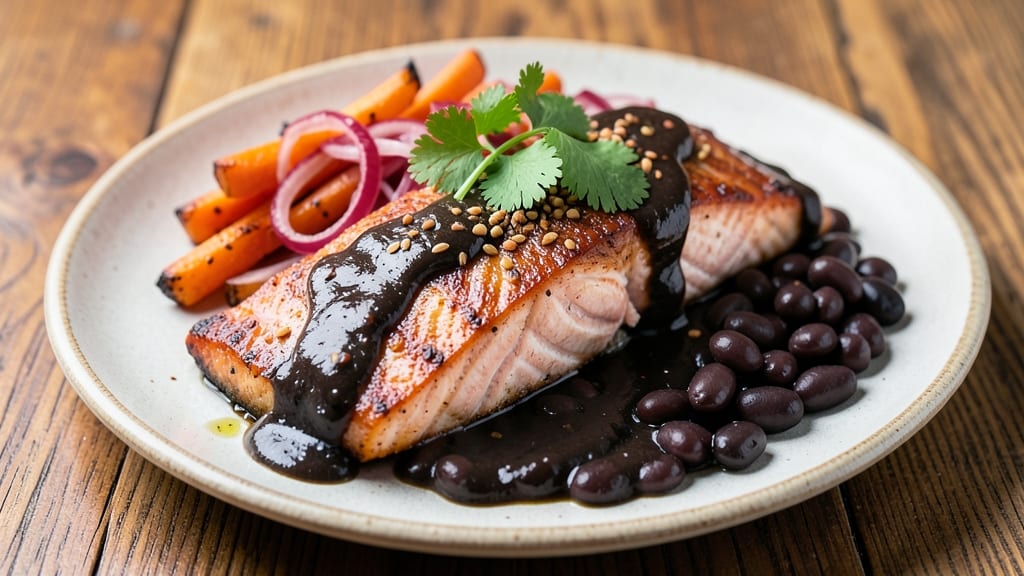
This baked salmon with black bean sauce transforms simple weeknight dinner into a restaurant-worthy meal with just one smoky, caramelized glaze.
The secret lies in blending black beans with spices until they create a velvety, umami-rich sauce that clings to the salmon's edges, creating a perfect balance of tender fish and bold, savory-sweet flavors.
I developed this recipe after years of perfecting the art of balancing rich sauces with delicate seafood—no more dry salmon or overwhelming flavors.
The magic happens when the black bean sauce caramelizes during baking, forming a glossy crust that seals in moisture while adding depth. You'll need just 15 minutes of prep time, followed by 12-15 minutes in the oven at 400°F, making it ideal for busy weeknights.
The sauce's smoky notes complement the salmon's natural richness without overpowering it, while the black beans add a satisfying texture that elevates every bite.
What makes this dish truly special is how effortlessly it comes together—no complicated techniques required. The black bean sauce can be made ahead and stored in the fridge, so you can focus solely on baking the salmon when you're ready.
Serve it with a side of quinoa or roasted vegetables to create a well-rounded, pescatarian-friendly meal that's both nutritious and indulgent.
The result is a dish that's elegant enough for dinner guests but simple enough for a solo meal. The caramelized edges of the salmon contrast beautifully with the smooth, smoky sauce, making every forkful a harmonious blend of textures and flavors.
This is the kind of recipe that turns a basic baked fish into something extraordinary—without the fuss.
Ingredients for baked salmon with black bean sauce
The perfect balance of smoky, caramelized black bean sauce and tender salmon fillets—just 14 ingredients for an elegant weeknight meal.
| Ingredient | Amount | Notes |
|---|---|---|
| Center-Cut Salmon Fillets 🐟 | 4 whole | Skin-on, 6-8 oz each |
| Canned Black Beans 🫘 | 1 can | Drained, rinsed, low-sodium preferred |
| Smoked Paprika 🌶️ | 1 tbsp | For deep smoky flavor |
| Ground Cumin 🌿 | ½ tsp | Toasted for aroma |
| Garlic Cloves 🧄 | 3 cloves | Minced, fresh preferred |
| Medium Red Onion 🧅 | ½ whole | Finely diced |
| Extra-Virgin Olive Oil 🫒 | 2 tbsp | For richness |
| Lemon Juice 🍋 | 2 tbsp | Freshly squeezed |
| Maple Syrup 🍁 | 1 tbsp | For subtle sweetness |
| Fresh Cilantro 🌿 | ¼ cup | Chopped, stems removed |
| Diamond Crystal Kosher Salt 🧂 | ¾ tsp | For seasoning |
| Freshly Ground Black Pepper 🌶️ | ¼ tsp | For finishing |
| Baby Carrots 🥕 | ½ lb | For roasting side |
| Quinoa 🌾 | ½ cup | Uncooked, for serving |
The salmon fillets are non-negotiable here—center-cut ensures even cooking, while skin-on adds crispy edges. Whole Foods or Trader Joe's carry excellent sushi-grade options, but any reputable seafood counter will do. Look for fillets with vibrant color and firm texture; avoid any with a fishy odor. The black beans? Low-sodium canned saves time, but rinse thoroughly to remove excess sodium. For the sauce, smoked paprika is the secret weapon—it delivers that restaurant-quality depth without overpowering. Toast your cumin seeds in a dry pan for 30 seconds before grinding if you're using whole cumin—trust me, it makes all the difference.
No smoked paprika? Substitute with 1 tsp regular paprika plus 1/4 tsp liquid smoke—it won't be identical, but you'll still get that smoky essence. Running short on maple syrup? Agave nectar or honey work in a pinch, though maple's subtle earthiness pairs best. The carrots can be swapped for asparagus or green beans if you prefer, but baby carrots roast beautifully with minimal prep. Fresh cilantro? Dried works at 1/3 the amount, but the bright flavor is worth hunting down. For the quinoa, any grain works—brown rice or farro add different textures, but quinoa's protein content makes it ideal for a pescatarian meal.
The black bean sauce can be made up to 3 days ahead and stored in an airtight container in the fridge—it actually tastes better after flavors meld. The salmon, however, is best baked fresh, but you can prep the sauce and fillets separately up to 12 hours ahead. Roast the carrots alongside the salmon for a hands-off side dish. Leftovers? The salmon reheats beautifully in a 350°F oven for 8-10 minutes, while the sauce can be frozen for up to 3 months—just thaw overnight in the fridge before reheating gently. Portion the sauce into ice cube trays for easy single-use portions.
Why You'll Love This Recipe
- Pan-Proof Perfection: I swear by this one-pan method—just toss the salmon and beans on a sheet, drizzle the sauce, and walk away. No greasy skillets, no sticky pots, just flaky fish and tender beans that practically fall apart.
- Smoky-Sweet Magic: That smoky paprika and cumin? It’s like a warm hug for your taste buds. The black beans add this deep, earthy richness that balances the salmon’s buttery melt—every bite feels like a little flavor victory.
- Weeknight to Weekend: Make it for Tuesday takeout night or impress guests on Saturday—same recipe, zero stress. The sauce keeps well, so I double it and freeze half for lazy days when I just want something good without the fuss.
- Budget-Friendly Luxury: Salmon feels fancy, but black beans stretch it into a meal that won’t break the bank. Honestly, I buy the cheaper fillets, and this sauce makes them taste like a high-end restaurant dish—without the price tag. Leftovers? Even better the next day.
Step-by-step instructions for baked salmon with black bean sauce
Transform simple ingredients into a restaurant-worthy dish with this smoky, caramelized glaze.
Roast the Baby Carrots and Cook the Quinoa
Preheat your oven to 400°F and line a baking sheet with parchment paper. Toss the 0.5 lb baby carrots with 1 tbsp extra-virgin olive oil, 0.25 tsp diamond crystal kosher salt, and 0.125 tsp freshly ground black pepper. Spread them in a single layer and roast for 20-25 minutes until tender and slightly caramelized at the edges.
While the carrots roast, rinse the 0.5 cup quinoa thoroughly under cold water. In a small saucepan, combine the quinoa with 1 cup water and bring to a boil. Reduce heat to low, cover, and simmer for 15 minutes until the liquid is absorbed. Remove from heat, fluff with a fork, and let sit covered for 5 minutes. This step ensures your quinoa is perfectly cooked and ready to absorb the black bean sauce.
Prepare the Smoky Black Bean Sauce
In a food processor, combine the 1 can drained black beans, 0.5 whole medium red onion, 3 cloves minced garlic, 1 tbsp smoked paprika, 0.5 tsp ground cumin, 2 tbsp lemon juice, and 1 tbsp maple syrup. Pulse until smooth, scraping down the sides as needed. The sauce should be thick but pourable, with a deep, smoky aroma that hints at the caramelized edges to come.
Transfer the sauce to a small saucepan and simmer over medium-low heat for 8-10 minutes, stirring occasionally, until it thickens slightly. The heat will deepen the flavors and create a glossy, velvety consistency. Taste and adjust seasoning with additional salt or pepper if needed. Here’s the thing—this sauce is the star, so don’t rush it. The longer it simmers, the richer it becomes.
Season and Bake the Salmon
Pat the 4 whole center-cut salmon fillets dry with paper towels—this ensures a crispy skin. Place them skin-side down on a separate parchment-lined baking sheet. Drizzle each fillet with 0.5 tbsp extra-virgin olive oil and season generously with 0.1875 tsp diamond crystal kosher salt and 0.0625 tsp freshly ground black pepper. Let them sit at room temperature for 10 minutes while the oven finishes preheating.
Bake the salmon at 400°F for 12-15 minutes, until the edges begin to caramelize and the internal temperature reaches 145°F. The skin should be crispy and golden, while the flesh remains tender. Don’t overcook—salmon continues cooking slightly after removal from the oven. If the skin isn’t crispy enough, broil for 1-2 minutes at the end, watching closely to avoid burning.
Assemble and Serve
Remove the salmon from the oven and let it rest for 5 minutes on a wire rack. Spoon the black bean sauce evenly over each fillet, allowing it to seep into the crevices. The sauce will caramelize further from the residual heat, creating a glossy, sticky glaze that clings beautifully to the salmon.
Garnish each serving with 1 tbsp chopped fresh cilantro and serve immediately alongside the roasted carrots and quinoa. The contrast of textures—crispy salmon skin, tender quinoa, and caramelized carrots—makes every bite unforgettable. This dish is all about balance: the smoky depth of the black bean sauce, the bright acidity of the lemon, and the subtle sweetness of the maple syrup coming together in perfect harmony.
Pro Tips For Making Baked Salmon With Black Bean Sauce
- Pat the Salmon Dry: The black bean sauce won’t cling properly if the salmon is wet—use paper towels to blot it thoroughly before baking. I learned this the hard way when my sauce slid off like a sad, greasy river.
- Sauté the Garlic Low: Cook those garlic cloves in the saucepan until they’re golden, not burnt—just 2-3 minutes on medium-low heat. Overcooking turns them bitter, and you’ll taste it in every bite.
- Don’t Skip the Rest: Let the salmon sit under foil for 5 minutes after baking—this keeps it moist and prevents it from flaking apart when you cut into it. I know, I know, but trust the process.
- Toast the Spices First: Bloom the smoked paprika and cumin in a dry pan for 30 seconds before adding liquid—this wakes up their flavors and makes the sauce taste deeper. It’s a tiny effort for a noticeable upgrade.
Essential equipment for baked salmon with black bean sauce
Must-Have Kitchen Tools
Start with a food processor—I use my Ninja FP101 for blending the black bean sauce—it handles the beans and onion effortlessly without over-processing. A high-quality saucepan (I love my All-Clad Stainless Steel) is essential for simmering the sauce to perfection. 🔥
Baking Essentials
A parchment-lined baking sheet prevents sticking and makes cleanup a breeze. For crispy salmon skin, use a wire cooling rack to rest the fillets after baking.
I keep mine in my oven drawer for quick access. A meat thermometer (like the ThermoWorks Smoke) ensures your salmon reaches 145°F without overcooking.
Prep Gear
Invest in a sharp chef's knife (my Wüsthof Classic never disappoints) for mincing garlic and dicing onions. A microplane comes in handy for zesting lemon if you want to add brightness. For measuring spices precisely, I recommend spice grinders—they keep your smoked paprika and cumin fresh and potent.
Optional Upgrades
A blowtorch (like the Weber Dual Fuel) adds a professional touch for caramelizing the sauce edges at the table. For meal prep, glass storage containers with airtight lids keep leftovers fresh for up to 3 days.
And if you love quinoa, a rice cooker (like the Zojirushi NS-LAC10) makes cooking it foolproof every time. ✨
Nutrition facts
Frequently asked questions
Can I use canned salmon instead of fresh fillets?
Fresh salmon is ideal for this recipe because it delivers the best texture and flavor. Canned salmon would change the dish's consistency and cooking method entirely. If you're set on canned, try this recipe with smoked salmon instead—just adjust baking time to 8-10 minutes at 375°F since it's pre-cooked. The black bean sauce would still pair beautifully, but the texture will differ.
How do I prevent the black bean sauce from being too thick?
Start with 2-3 tablespoons of water or broth when blending the sauce in the food processor. If it thickens too much during simmering, add 1 teaspoon at a time until you reach a pourable consistency. The sauce should coat the back of a spoon but still flow smoothly. Remember, it will thicken further while baking.
What's the best way to reheat leftovers?
For the salmon, reheat gently in a 350°F oven for 8-10 minutes on a parchment-lined tray to maintain moisture. The black bean sauce reheats best in a small saucepan over low heat for 3-5 minutes, stirring constantly to prevent scorching. If storing leftovers, keep components separate—the sauce freezes beautifully for up to 3 months while salmon is best consumed within 2 days.
Can I make this dish without smoked paprika?
For a similar smoky depth, combine 1 tsp regular paprika plus 1/4 tsp liquid smoke. Alternatively, use 1/2 tsp chipotle powder for a spicier kick. Just reduce the cumin to 1/4 tsp to balance the flavors. The sauce will still develop that rich, caramelized character—just with slightly different notes.
Why does my salmon skin keep coming off?
This usually happens when the salmon isn't properly dried before baking or if the oven isn't hot enough. Pat the fillets very dry with paper towels and let them sit at room temperature for 10 minutes before baking. Also ensure your oven is fully preheated to 400°F—cold spots can cause the skin to detach. Bake skin-side down on a dry baking sheet (no oil) for maximum crispiness.