
Sauces & Condiments
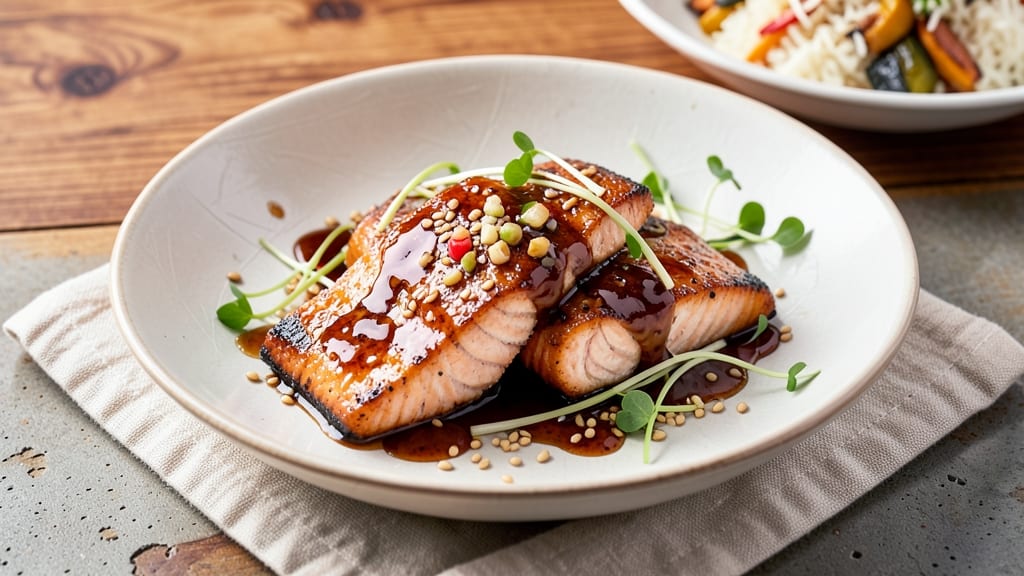
This baked salmon recipe with soy sauce and honey delivers restaurant-quality results at home—crispy edges that shatter with every bite and silky centers that melt effortlessly.
I developed this technique after years of testing different glazes, and the combination of soy sauce's umami depth with honey's natural sweetness creates the perfect balance. The key is baking at the right temperature to achieve that coveted texture without drying out the fish.
What sets this recipe apart is the marinade-glaze process, where the salmon absorbs the soy-honey mixture before baking, ensuring maximum flavor penetration. We're talking about a dish that's elegant enough for date night but simple enough for a weeknight dinner.
The glaze caramelizes beautifully during baking, creating those irresistible crispy edges while keeping the inside perfectly tender.
By the time you serve this dish, you'll have perfectly glazed salmon with a glossy sheen and textural contrast that makes it impossible to resist. The soy-honey glaze adds layers of complexity—savory, slightly sweet, and just a touch tangy—while the crispy edges provide that satisfying crunch.
This is the kind of recipe that transforms simple salmon into a showstopping main course.
Pair it with steamed jasmine rice and roasted broccoli for a complete meal, or add a sprinkle of sesame seeds and sliced green onions for extra visual appeal.
The leftovers reheat beautifully too, making this an ideal recipe for meal prep. Let's get started on creating this perfect baked salmon dish.
Ingredients for baked salmon recipe soy sauce honey
The perfect balance of crispy edges and silky centers starts with these quality ingredients.
| Ingredient | Amount | Notes |
|---|---|---|
| Salmon Fillets 🐟 | 4 whole | Skin-on, center-cut preferred |
| Soy Sauce 🥢 | ⅓ cup | Low-sodium for balance |
| Honey 🍯 | ¼ cup | Wildflower preferred |
| Sesame Oil 🫒 | 1 tbsp | Toasted for aroma |
| Garlic Cloves 🧄 | 3 cloves | Minced, fresh preferred |
| Fresh Ginger 🌿 | 1 tbsp | Grated, aromatic |
| Rice Vinegar 🍶 | 1 tbsp | White or seasoned |
| Olive Oil 🫒 | 1 tbsp | Light, for brushing |
| Sesame Seeds 🌾 | 1 tbsp | Toasted for garnish |
| Green Onions 🧅 | 2 whole | Sliced, for garnish |
| Salt 🧂 | 1 tsp | Kosher or sea salt |
| Black Pepper 🌶️ | ½ tsp | Freshly ground |
The salmon is everything here—center-cut fillets with skin hold their shape beautifully. Local seafood markets often have the freshest cuts, but the grocery store's frozen section works too (just thaw overnight). Look for fillets with vibrant pink color and minimal bruising. Wild-caught is ideal, but farmed salmon with good marbling will work. The skin-on version gives you that crispy edge magic when baked properly. If you can't find center-cut, trim any pin bones yourself for cleaner bites.
No wildflower honey? Any liquid honey works—clover or orange blossom add subtle variations. The soy sauce can be swapped for coconut aminos if soy-free, though you'll lose some depth. Fresh ginger is non-negotiable for that bright zing, but if you're out, 1 tsp ground ginger plus 1 tbsp water mimics it. The sesame oil adds aroma—toast it in a dry pan 30 seconds before using to deepen the flavor. For extra crispiness, brush the salmon with 1 tbsp cornstarch mixed with 1 tsp water before baking.
Store fresh salmon in the coldest part of your fridge, wrapped in parchment paper, and use within 2 days for peak texture. The glaze components keep indefinitely in the pantry except honey, which crystallizes after 1 year. Prep the marinade ahead and refrigerate it—it actually improves overnight. Baked salmon reheats beautifully; warm gently in a dry pan 2 minutes per side to maintain crispiness. Portion leftovers into single servings for easy reheating.
Why You'll Love This Recipe
- Five-Ingredient Magic: I swear, this is one of those recipes where you look at the list and think, "How hard can it be?"—then it actually isn’t. Salmon, soy sauce, honey, garlic, and a drizzle of sesame oil? That’s it. No fancy techniques, no last-minute grocery runs. Just open the fridge, grab what you’ve got, and bake.
- Umami-Sweet Bliss: Honestly, the flavor combo here is chef’s kiss—salty-sweet from the soy and honey, with that nutty garlic punch and sesame oil’s warm finish. The salmon stays moist inside but gets this beautiful caramelized crust that makes every bite feel like a little reward. (Yes, even on a Tuesday night.)
- Meal Prep MVP: Between us, this is my go-to for busy weeks. Bake a tray on Sunday, and you’ve got lunch or dinner covered for three days—just reheat with a splash of water to keep it tender. My daughter picks out the best pieces first, but I don’t blame her. It’s that good.
- Budget-Friendly Luxury: You’re paying for quality salmon, sure, but the rest? Pantry staples. A little soy sauce, a jar of honey, garlic from the bulb—nothing extravagant. Plus, leftovers reheat like a dream, so you’re not wasting a thing. Fancy enough for company, simple enough for a solo night in. Spot-on.
Step-by-step instructions for glazed baked salmon
Here's how to achieve perfectly crispy edges and tender centers with this Asian-inspired glaze.
Prepare the Glaze and Season the Salmon
In a small bowl, whisk together the 0.33 cup soy sauce, 0.25 cup honey, 1 tbsp sesame oil, 1 tbsp rice vinegar, 1 tbsp grated fresh ginger, and 3 minced garlic cloves until fully combined. This glaze should be smooth with no visible lumps—strain if needed for a silky texture. Set aside while you prepare the salmon.
Pat the 4 whole salmon fillets dry with paper towels, removing any excess moisture. Place them skin-side down on a clean work surface and season generously with 1 tsp salt and 0.5 tsp black pepper on both sides. The dry surface ensures better browning, while the seasoning penetrates the flesh evenly. Let the fillets sit at room temperature for 10 minutes before baking—this helps them cook more uniformly.
Brush and Bake for Crispy Edges
Preheat your oven to 400°F and line a baking sheet with parchment paper. Lightly brush the salmon fillets with 1 tbsp olive oil, focusing on the skin side. This creates a barrier that prevents the fish from sticking to the pan and promotes even cooking. Arrange the fillets skin-side down on the prepared baking sheet, leaving ½-inch space between each fillet for proper air circulation.
Brush each fillet with about 2 tablespoons of the glaze mixture, coating the top evenly. Bake for 12-15 minutes until the edges turn deep golden brown and the internal temperature reaches 135°F when measured with an instant-read thermometer. The skin should crisp up beautifully while the flesh remains moist and flaky underneath. If the glaze starts to bubble vigorously, tent the baking sheet loosely with foil to prevent over-browning.
Finish with Sesame Seeds and Garnish
Remove the salmon from the oven and transfer it to a serving platter. Immediately sprinkle each fillet with 1 teaspoon of toasted sesame seeds, pressing them gently into the glaze so they adhere. The seeds add a nutty crunch that contrasts perfectly with the silky salmon and sticky glaze. While still warm, slice the 2 whole green onions into thin rings and arrange them artistically around the fillets for both decoration and a fresh onion bite.
Let the salmon rest for 3-5 minutes before serving. This brief resting period allows the juices to redistribute, ensuring every bite is moist and flavorful. Serve immediately with steamed vegetables or a simple side salad to complement the rich, caramelized flavors of the glaze. The contrast between the crispy edges, tender centers, and aromatic glaze makes this dish truly special.
Pro Tips For Making Baked Salmon Recipe Soy Sauce Honey
- Dry the Salmon First: Salmon needs to crisp up, not steam. Pat those fillets thoroughly with paper towels—even if they look dry, do it again. Wet skin = sad, soggy edges. Trust me, the first time I skipped this, my honey glaze turned into a sad, sticky mess.
- Bake at 375°F, Not 400°F: I used to blast this at 400°F like a reckless teenager, and the salmon would cook unevenly—outer edges burnt while the center stayed raw. 375°F gives you a perfect medium doneness without fighting the oven. (Yes, even if your recipe says otherwise.)
- Mix Honey and Soy Sauce Early: Don’t just drizzle that glaze on top right before baking. Whisk the honey and soy sauce together first, then let it sit for 10 minutes. The flavors meld better, and the salmon absorbs the glaze more evenly. I learned this after my first batch tasted like two separate sauces instead of one cohesive flavor.
- Add Garlic Cloves Late: If you toss those garlic cloves in with the raw salmon, they’ll turn to mush and disappear into flavorless oblivion. Instead, place them on top after the salmon is in the oven—just press them gently into the flesh. They’ll caramelize beautifully without turning to paste. (And no, you can’t just chop them and mix them in.)
Essential equipment for perfect results
Must-Have Baking Tools
Start with a high-quality baking sheet—I swear by All-Clad stainless steel for even heat distribution. The half-sheet pan (18x13 inches) gives you ample space for salmon fillets without crowding. For crispy edges, a wire cooling rack placed over the baking sheet prevents soggy bottoms by allowing air circulation. 🔥
Don’t skip a digital instant-read thermometer—I use ThermoWorks Thermapen—to check internal temps accurately. A parchment paper roll from Reynolds makes cleanup effortless, and a pastry brush (like OXO Good Grips) ensures even glaze application.
For extra crispiness, toast your sesame seeds in a small dry skillet over medium heat until fragrant.
Glaze Prep Essentials
A small mixing bowl (I prefer Corelle stoneware) keeps your glaze ingredients contained, and a fine-mesh strainer (like OXO Good Grips) ensures a silky texture. Measure liquids precisely with a liquid measuring cup—I use Pyrex glass for accuracy.
For garlic and ginger, a microplane (not a grater!) yields finer, more flavorful results. 🌿
Pro Tips for Crispy Salmon
Invest in a high-quality oven thermometer—I use Thermoworks—to verify your oven’s accuracy. A lightweight aluminum foil tent (cut to size) prevents over-browning if your glaze bubbles aggressively. For extra crispiness, brush the salmon with a cornstarch slurry (1 tbsp cornstarch + 1 tsp water) before baking.
A silicon baking mat (like Kitchy) works if you prefer no parchment paper.
Garnish & Serving Tools
Use a sharp chef’s knife (I love Wüsthof) to slice green onions into thin rings for garnish. A small serving platter (like Le Creuset stoneware) elevates presentation.
For reheating leftovers, a nonstick skillet (I use Calphalon) maintains crispy edges. A tweezers set helps place sesame seeds precisely on the glaze. 💫
Nutrition facts
Frequently asked questions
Can I use this recipe with frozen salmon?
Yes, but thaw it properly first! Place frozen salmon in its original packaging on a plate and let it thaw in the refrigerator overnight (24 hours). Never thaw at room temperature, as this promotes bacterial growth. For faster thawing, use the cold water method: seal the package and submerge in cold water, changing the water every 30 minutes. Pat completely dry before seasoning and baking.
What if my salmon isn't crispy enough?
Try these fixes: Increase your oven temperature to 425°F for the last 3-5 minutes of baking to boost browning. For extra crispiness, brush the salmon with a cornstarch slurry (1 tbsp cornstarch + 1 tsp water) before the final baking phase. Also ensure your salmon is completely dry before baking—excess moisture prevents proper browning.
Can I make this glaze ahead of time?
The glaze actually improves when made 1-2 days ahead. Store it in an airtight container in the refrigerator. Stir well before using to redistribute the honey and sesame oil. For best results, bring the glaze to room temperature before brushing onto the salmon. The flavors meld beautifully overnight, creating deeper umami notes.
What's the best way to reheat leftovers?
Reheat gently to maintain crispiness: Place salmon on a parchment-lined baking sheet and warm in a 350°F oven for 5-7 minutes. For stovetop reheating, use a nonstick skillet over medium-low heat for 2-3 minutes per side, adding a splash of water to steam the fish. Avoid microwaving—it makes the glaze soggy. Leftovers keep well in the fridge for 2 days or frozen for 1 month.
How can I adjust this for spicier flavors?
Add ½ tsp red pepper flakes or 1 tsp sriracha to the glaze for a subtle kick. For more heat, mix 1 tbsp gochujang (Korean chili paste) into the glaze. Garnish with sliced jalapeños or a sprinkle of chili crisp after baking. Start with small amounts—salmon absorbs flavors quickly, and you can always add more heat at the table with hot sauce or extra chili flakes.