
Sauces & Condiments
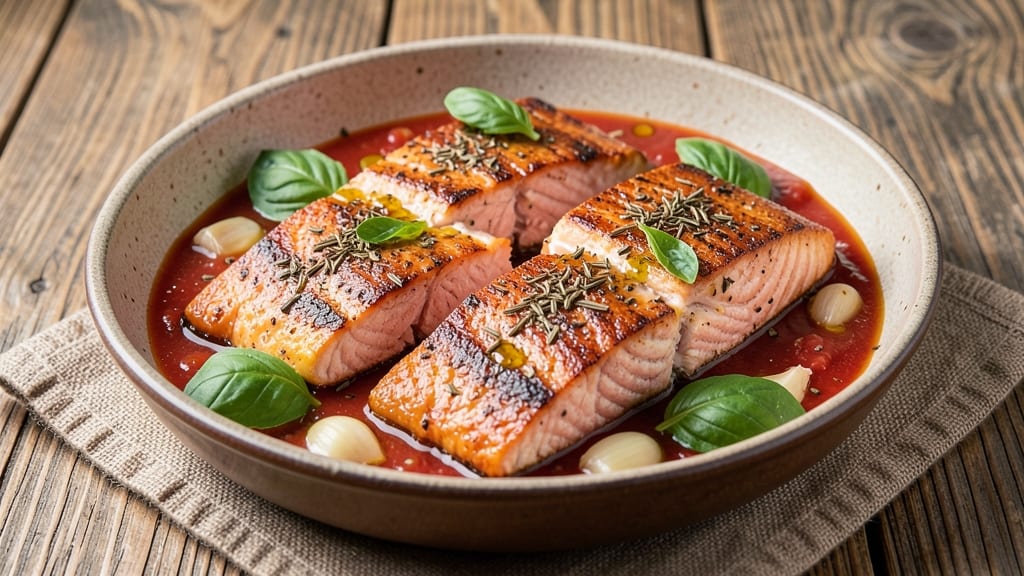
Baked salmon in tomato sauce transforms simple ingredients into a restaurant-worthy meal with minimal effort. The secret lies in balancing bright tomato sauce with aromatic herbs, creating a dish that's both elegant and approachable. I've perfected this one-pan method over years of testing, ensuring the salmon stays moist while the sauce develops rich, complex flavors.
This recipe delivers perfectly tender salmon with a golden crust, all baked in a fragrant tomato-herb sauce that doubles as both topping and braising liquid. The process is straightforward: season the salmon, simmer the sauce, then bake everything together at 375°F for just 12-15 minutes.
No complicated techniques required—just quality ingredients and simple timing.
The result is a dish that's equally impressive for weeknight dinners or special occasions. The salmon emerges flaky and succulent, coated in a velvety sauce that's tangy, slightly sweet, and infused with fresh herbs.
Serve with roasted vegetables, quinoa, or crusty bread to soak up every last bit of that flavorful sauce.
What makes this recipe truly special is its versatility. Use store-bought or homemade tomato sauce, adjust herbs to your preference, and even swap white wine for broth if needed. The method remains the same, delivering foolproof results every time. Let's create this elegant yet simple salmon dish together.
Ingredients for baked salmon in tomato sauce
Quality ingredients transform simple baking into restaurant-worthy salmon with velvety tomato-herb sauce.
| Ingredient | Amount | Notes |
|---|---|---|
| Center-Cut Salmon Fillets 🐟 | 4 pieces | Skin-on, 6-8 oz each |
| High-Quality Tomato Sauce 🍅 | 2 cups | San Marzano tomatoes preferred |
| Extra-Virgin Olive Oil 🫒 | ½ cup | Light fruity variety |
| Fresh Garlic Cloves 🧄 | 4 cloves | Minced for aromatic depth |
| Fresh Basil Leaves 🌿 | ½ cup | Packed, stems removed |
| Dried Oregano 🍃 | 1 tsp | Mediterranean variety |
| Red Wine Vinegar 🍷 | 1 tbsp | For acid balance |
| Dry White Wine 🍷 | ½ cup | Sauvignon Blanc preferred |
| Fresh Lemon Juice 🍋 | 1 tbsp | Brightens the sauce |
| Kosher Salt 🧂 | 1 ½ tsp | Diamond Crystal preferred |
| Freshly Ground Black Pepper 🌶️ | ½ tsp | Cracked peppercorns preferred |
| Fresh Thyme Sprigs 🌿 | 2 sprigs | Leaves only used |
| All-Purpose Flour 🌾 | 1 tbsp | For sauce thickening |
| Fresh Parsley Leaves 🌿 | ¼ cup | Chopped for garnish |
The salmon selection is critical—center-cut fillets with skin ensure even cooking and crisp edges. Whole Foods or local fishmongers carry the best quality; look for bright, translucent flesh and minimal fishy odor. If using frozen, thaw overnight in the fridge. The San Marzano tomato sauce elevates the dish with its natural sweetness and acid balance, though quality jarred brands like Mutti work well. Fresh herbs are non-negotiable here—basil and thyme provide the aromatic complexity that dried versions can't replicate, though dried oregano adds depth when fresh isn't available.
No white wine? Dry vermouth or additional broth maintains the same acidity profile. Substitute fresh basil with dried at one-third the amount, but expect less vibrant flavor. For a richer sauce, add 1 tbsp tomato paste to deepen the color and umami. The flour is optional but helps thicken the sauce if you prefer a more velvety consistency. If using store-bought tomato sauce, choose one without added sugar—Rao's or Barilla are excellent choices. For a vegetarian adaptation, replace salmon with firm tofu or portobello mushrooms, though the texture will differ.
Prep the salmon and sauce components separately to streamline assembly. Store fresh herbs wrapped in damp paper towels in sealed containers for up to 5 days. The tomato sauce can be prepped 2 days ahead and refrigerated, while the salmon should be seasoned and refrigerated on a plate no more than 4 hours before baking. Leftover salmon reheats beautifully—place in a 350°F oven for 8-10 minutes with a splash of water to maintain moisture. The sauce freezes well for 3 months if stored in airtight containers, perfect for future quick meals.
Why You'll Love This Recipe
- Here’s what sold me: salmon feels fancy, but this recipe stretches it. A single fillet feels indulgent, but a panful feeds the whole family without breaking the bank. Plus, leftovers taste just as good the next day.
- One-Pan Magic: I swear by this for nights when I’d rather not wash dishes. Just toss the salmon on a sheet pan, pour that rich tomato sauce over it, and let the oven do the work—no pots, no pans, no stress.
- Garlic-Kissed Bliss: That first whiff of garlic and basil simmering into the sauce? It’s like a hug for my taste buds. The salmon soaks up the flavors perfectly, giving you that perfect balance of bright, herby, and slightly sweet.
- Weeknight or Weekend Star: Between us—this recipe works everywhere. Too tired for dinner? Done. Want to impress guests? Done. Need a lunch for tomorrow? Done. The sauce keeps well, and the salmon reheats beautifully.
Step-by-step instructions for baked salmon in tomato sauce
This one-pan method delivers restaurant-quality salmon with a velvety tomato-herb sauce.
Prepare the Salmon and Sauce Base
Preheat your oven to 375°F and position a rack in the lower third. Pat the 4 pieces center-cut salmon fillets dry with paper towels—this ensures maximum crispness. Place them skin-side down in a large oven-safe skillet.
In a small bowl, whisk together 2 cups high-quality tomato sauce, 0.5 cup dry white wine, 1 tbsp red wine vinegar, and 1 tbsp fresh lemon juice. Season generously with 1.5 tsp kosher salt and 0.5 tsp freshly ground black pepper. This acidulated base prevents the sauce from becoming overly sweet as it bakes.
Build Flavor Layers in the Pan
Heat 0.5 cup extra-virgin olive oil in the skillet over medium heat until shimmering. Add the 4 cloves minced fresh garlic cloves and cook for 30 seconds until fragrant—don't let them brown. Remove from heat and carefully pour the wine-tomato mixture over the salmon, coating it evenly.
Sprinkle 1 tsp dried oregano and the leaves from 2 sprigs fresh thyme sprigs over the salmon. The thyme adds earthy depth while the oregano bridges Mediterranean flavors. Let the mixture sit for 5 minutes to allow the salmon to absorb some of the marinade.
Bake to Perfect Doneness
Transfer the skillet to the preheated oven and bake for 12-15 minutes until the salmon reaches an internal temperature of 145°F. You'll know it's done when the edges begin to lift slightly from the pan and the flesh flakes easily with a fork.
During the last 5 minutes, sprinkle the 0.5 cup packed fresh basil leaves over the sauce. The basil will wilt beautifully, releasing its aromatic oils into the sauce. This is when the dish truly comes together—herbs infuse the sauce while the salmon finishes cooking.
Thicken and Finish the Sauce
Remove the salmon from the oven and tent loosely with aluminum foil. Return the skillet to the stovetop over medium-low heat. Sprinkle 1 tbsp all-purpose flour over the sauce and whisk vigorously for 1-2 minutes until it thickens slightly but remains silky.
Taste and adjust seasoning—you may need a pinch more salt or a splash of red wine vinegar to balance the flavors. The sauce should coat the back of a spoon but remain pourable. If it's too thick, whisk in 1-2 tablespoons water to achieve the perfect consistency.
Plate and Garnish Professionally
Carefully transfer the salmon to serving plates, spooning the sauce generously over each fillet. The skin should be crisp with just a hint of golden color, while the flesh remains moist and flaky. Garnish each portion with 0.25 cup chopped fresh parsley leaves for a pop of color and freshness.
Serve immediately with crusty bread or over polenta to soak up the rich tomato-herb sauce. The contrast between the crisp salmon skin, tender flesh, and velvety sauce creates a harmonious bite that balances richness with acidity.
Pro Tips For Making Baked Salmon In Tomato Sauce
- Pat the Salmon Dry: I learned this the hard way—salmon baked in tomato sauce needs that crispy skin, and skipping the paper towel pat-down means soggy, sad edges. Spend 30 seconds pressing firmly with a dry towel; the sauce will cling better and caramelize into a glossy crust.
- Prep Garlic Like a Pro: Mince those garlic cloves just before adding them to the sauce—raw garlic burns in 30 seconds flat, and you’ll taste the bitter hit. Use a chef’s knife for even slices, then smash them lightly with the flat side of your blade instead of chopping. (Yes, even if you’re impatient like me.)
- Sauce First, Salmon Second: Don’t pour that tomato sauce directly over raw salmon—it’ll turn to a watery mess. Preheat your dish, spread the sauce on the bottom, then bake it for 5 minutes until it thickens slightly. The salmon goes in after, so the sauce clings instead of pooling.
- Rest Before Serving: I was skeptical until I tried it: let the salmon rest under foil for 5–10 minutes after baking. The flesh firms up, stays juicy, and slices cleanly—no flaking into the sauce. (Your future self will thank you, I promise.)
Dietary considerations for baked salmon in tomato sauce
Low-Carb Adaptations
Swap the tomato sauce base for a cauliflower purée blended with 1 tbsp lemon juice, 1 tsp garlic powder, and ½ tsp onion powder.
Use 2 cups cauliflower florets steamed until tender, then puréed until smooth. This creates a creamy, low-carb alternative that still carries the dish's bright acidity. 🥬
For extra richness, stir in 2 tbsp heavy cream or ¼ cup coconut milk to mimic the velvety texture of traditional tomato sauce. The salmon will absorb these flavors beautifully, maintaining its tenderness while cutting carbs significantly. Garnish with fresh herbs as usual to keep the presentation elegant.
Gluten-Free Considerations
This recipe is naturally gluten-free, but always double-check your San Marzano tomato sauce label—some brands contain hidden gluten. If thickening the sauce, use cornstarch or arrowroot powder instead of flour.
Mix 1 tbsp cornstarch with 1 tbsp cold water to create a slurry, then whisk into the sauce off-heat for a smooth, gluten-free thickening agent.
For extra insurance, use certified gluten-free olive oil and wine. The white wine in the recipe is safe, but always verify if you're highly sensitive. The natural ingredients here make this dish inherently gluten-free friendly while keeping all the original flavor complexity.
Dairy-Free Options
Skip the optional flour thickening entirely and let the sauce reduce naturally on the stovetop. For extra body, add 2 tbsp nutritional yeast—it provides a cheesy, umami depth without dairy. The sauce will still cling beautifully to the salmon while remaining rich and satisfying. 🌱
If you prefer a slightly thicker sauce, blend ½ cup cooked white beans (like cannellini) into the puréed sauce base. They dissolve seamlessly, adding creaminess and protein without altering the dish's elegant profile. This works particularly well with the cauliflower purée adaptation mentioned earlier.
Allergen-Friendly Swaps
For nut allergies, avoid any nut-based thickeners and stick to cornstarch or arrowroot. If you're avoiding shellfish, this salmon dish remains perfectly safe—just ensure your seafood is sustainably sourced. The recipe naturally excludes top allergens like eggs, dairy, and gluten when using the right ingredients.
For soy allergies, avoid any soy-based sauces and stick to the specified ingredients. The white wine and herbs provide all the necessary complexity without relying on soy. Always check your tomato sauce for soy additives, though most quality brands are soy-free.
Vegetarian Alternative
Replace the salmon with firm tofu or portobello mushrooms for a meaty texture. Press and marinate 16 oz extra-firm tofu in 2 tbsp soy sauce (or tamari for gluten-free), 1 tbsp maple syrup, and 1 tsp smoked paprika for 30 minutes before baking.
The tomato sauce will cling beautifully to both proteins.
For mushrooms, slice 4 large portobello caps into ½-inch thick steaks, then brush with 1 tbsp olive oil and season generously with salt and pepper. Bake alongside the sauce using the same timing, though mushrooms may need 2-3 extra minutes to reach tenderness.
The earthy flavor pairs wonderfully with the tomato-herb sauce.
Nutrition facts
Frequently asked questions
Can I use frozen salmon for this recipe?
Yes, but thaw it properly first! Place frozen salmon in a sealed bag and submerge in cold water for 30-45 minutes or thaw overnight in the fridge. Never use warm water—it promotes bacterial growth. Pat completely dry before seasoning to ensure crisp skin.
What if my tomato sauce is too sweet?
Add 1-2 tablespoons red wine vinegar or 1 teaspoon lemon juice to balance sweetness. For extra depth, stir in ½ teaspoon smoked paprika or a pinch of cayenne. The acidity will brighten the sauce while adding complexity. Taste as you go!
Can I make this recipe without wine?
Replace the white wine with ½ cup dry chicken or vegetable broth plus 1 teaspoon apple cider vinegar for similar acidity. Or use ½ cup extra tomato sauce and add ½ teaspoon onion powder for depth. The dish will still be flavorful.
Why did my salmon skin stay soggy?
Soggy skin usually means moisture got trapped. Always pat fillets very dry before baking, and place them skin-side down in the pan. If using a non-stick skillet, ensure it's properly heated to create a crisp crust. For extra insurance, broil for 1-2 minutes at the end.
How can I reheat leftovers without drying out the salmon?
Gently reheat in a 350°F oven for 8-10 minutes with a splash of water or broth in the pan. For stovetop, use low heat with a splash of sauce to keep it moist. Avoid microwaving—it makes salmon rubbery.