
Sauces & Condiments
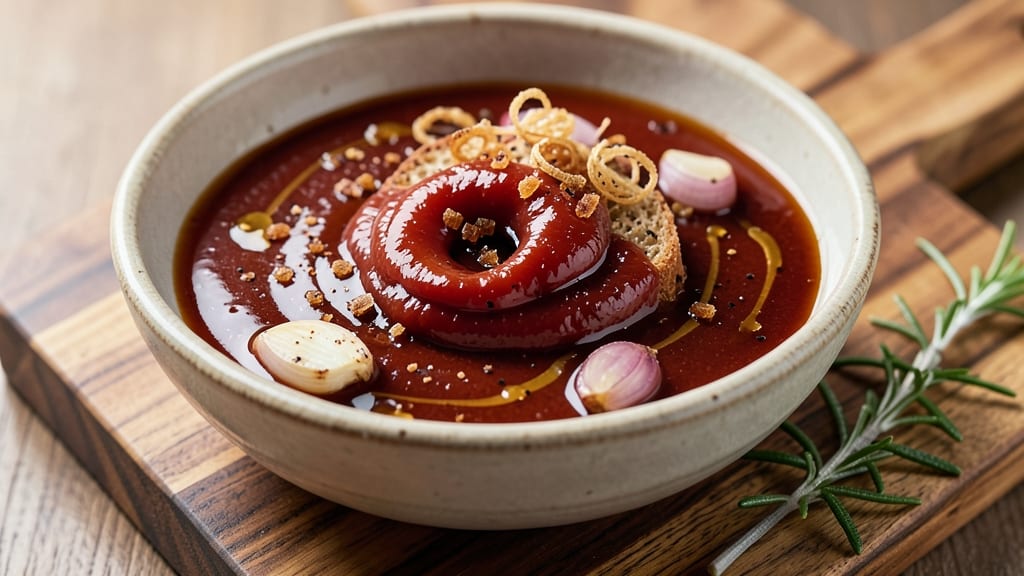
This Bachan barbecue sauce recipe delivers that signature smoky-sweet gloss with a secret vinegar punch that makes it unforgettable. 🔥 I've spent years perfecting the balance between sweetness, acidity, and deep smoky flavor—this isn't your basic bottled sauce, but a condiment that transforms everything it touches.
The key lies in slow-cooked tomatoes, carefully chosen spices, and that vinegar zing that cuts through the richness.
The sauce builds flavor through a two-stage cooking process: first simmering the tomato base with aromatic spices, then blending it with vinegar and sweetener for that signature glossy finish.
What makes this recipe special is how it maintains perfect consistency—no lumps, no separation—while delivering layers of flavor that develop even more as it sits. The result is a sauce that's equally at home on ribs, pulled pork, or even as a marinade.
What you'll end up with is a glossy, velvety sauce with just the right balance of sweetness and acidity, where every brush brings that smoky depth and subtle vinegar tang.
The texture is smooth yet substantial, clinging beautifully to meats without overwhelming them. This isn't just another BBQ sauce—it's the kind that makes people ask where you got it from.
Best of all, it keeps beautifully in the refrigerator for up to two weeks, with flavors actually improving as they meld. Whether you're smoking brisket, glazing chicken, or using it as a marinade, this sauce will elevate your dishes to restaurant-quality levels. Let's get cooking!
Ingredients for bachan barbecue sauce
Ten ingredients, two stages, restaurant-quality BBQ sauce that'll have everyone asking for your secret.
| Ingredient | Amount | Notes |
|---|---|---|
| Canned San Marzano Tomatoes 🍅 | 28 oz | Crushed by hand for texture |
| Apple Cider Vinegar 🍎 | ½ cup | For signature tang |
| Brown Sugar 🍚 | ¾ cup | Packed firmly |
| Smoked Paprika 🌶️ | 2 tbsp | For deep smoky flavor |
| Garlic Cloves 🧄 | 6 cloves | Minced finely |
| Onion Powder 🧅 | 1 tbsp | Adds depth |
| Ground Black Pepper 🌶️ | 1 tsp | Freshly cracked |
| Kosher Salt 🧂 | 1 ½ tsp | Diamond Crystal preferred |
| Extra-Virgin Olive Oil 🫒 | ¼ cup | For richness |
| Worcestershire Sauce 🍶 | 2 tbsp | For umami depth |
The tomatoes are non-negotiable—San Marzano has that perfect balance of sweetness and acidity. Trader Joe's or Whole Foods carry them year-round, but if you can't find them, any high-quality canned tomatoes work. The vinegar is what sets this apart—apple cider gives that bright, clean tang that cuts through the sweetness. Bragg is my go-to brand, but any good-quality apple cider vinegar will do. The brown sugar needs to be packed firmly—don't scoop it loosely, or you'll end up with less sauce. For the smoked paprika, Penzeys has the best selection, but the regular grocery store stuff works fine if it's labeled 'smoked'.
No apple cider vinegar? White vinegar or balsamic in a pinch, but you'll lose some of that apple brightness. Running short on Worcestershire? Soy sauce or a splash of fish sauce adds umami, though fish sauce might add a different depth. The garlic can be roasted for a sweeter flavor—just toss the whole cloves in olive oil and roast at 400°F for 10 minutes. For the olive oil, California extra-virgin brands like Corto or Colavita have that fruity punch that makes the sauce sing. If you're in a hurry, skip mincing the garlic and just use a food processor for 5 seconds—it'll still work.
This sauce tastes even better the next day as the flavors meld. Store in an airtight container in the fridge for up to 2 weeks, or freeze for 6 months in ice cube trays for single-use portions. The sauce thickens as it sits, so you might need to thin it with a splash of water or vinegar when reheating. I always make a double batch—one for immediate use and one to stash in the freezer. It's worth every minute of the two-stage cooking process.
Why You'll Love This Recipe
- Pantry Magic: I swear by this sauce because it’s made with stuff I always have—no special trips to the store. Canned tomatoes and vinegar do the heavy lifting while the garlic and smoked paprika add that smoky punch without extra effort.
- Sweet-Smoky Balance: The brown sugar and vinegar create this perfect harmony—tangy enough to cut through rich meats, but sweet enough to make you lick the bowl. Honestly, it’s the kind of sauce that makes you want to eat it straight from the jar.
- Weeknight Hero: Slap this on grilled chicken, roasted veggies, or even eggs for breakfast—it’s that versatile. Between us, I’ve used it as a marinade, a dipping sauce, and even a pizza topping, and it never lets me down.
- Budget-Friendly Staple: A single batch stretches across multiple meals, and the ingredients cost pennies compared to store-bought sauces. I’ll be real: this is my go-to for feeding the family without breaking the bank, and it still tastes like it came from a fancy restaurant.
Step-by-step instructions for Bachan barbecue sauce
Here's how to build a sauce that balances smoky depth with bright vinegar tang.
🍳 Step 1: Crush Tomatoes and Sauté Aromatics
Start by crushing the 28 oz Canned San Marzano Tomatoes by hand with your fingers or a wooden spoon in a large saucepan. You want a chunky texture with some seeds remaining—this adds body to the sauce. Place the pan over medium heat and let the tomatoes warm through for 3-4 minutes until they begin to break down.
Add the 0.25 cup Extra-Virgin Olive Oil, 6 cloves Garlic Cloves (minced), 1 tbsp Onion Powder, 2 tbsp Smoked Paprika, 1.5 tsp Kosher Salt, and 1 tsp Ground Black Pepper. Stir constantly for 5-6 minutes until the garlic becomes fragrant and the paprika develops a rich, toasty aroma. Watch the heat carefully—garlic burns quickly, so keep it at medium-low once it starts to sizzle.
🔥 Step 2: Simmer and Reduce the Base
Pour in the 0.5 cup Apple Cider Vinegar and 2 tbsp Worcestershire Sauce, stirring to combine. Bring the mixture to a gentle boil, then reduce heat to low and let it simmer uncovered for 20-25 minutes. You're looking for a thickened base where the tomatoes break down into a glossy consistency. Stir occasionally to prevent sticking, and taste as you go—this is where you'll notice the vinegar's bright acidity cutting through the smokiness.
If the sauce seems too thin after 20 minutes, continue simmering for another 5 minutes. The goal is a sauce that coats the back of a spoon but still has a silky mouthfeel. Real talk: this is the moment that matters—don't rush it, or you'll end up with a gloppy sauce instead of the glossy finish you want.
🥘 Step 3: Sweeten and Finish the Sauce
Gradually whisk in the 0.75 cup Brown Sugar (packed firmly) until fully dissolved. Return the heat to medium-low and simmer for another 10-12 minutes, stirring frequently. The sugar will caramelize slightly, deepening the sauce's color and adding a subtle molasses note. You'll notice the sauce thickening further as the sugar integrates.
Taste and adjust seasoning—you might need a pinch more salt or a splash of vinegar to balance the sweetness. The sauce should have a perfect harmony: smoky from the paprika, tangy from the vinegar, sweet from the brown sugar, and umami-rich from the Worcestershire. Let it cool for 10 minutes before tasting again—the flavors will meld beautifully as it sits.
⏰ Step 4: Strain and Store for Maximum Flavor
For a silky-smooth sauce, strain the mixture through a fine-mesh sieve into a clean bowl or jar, pressing gently on the solids to extract all the flavor. This step removes any remaining tomato skins or garlic bits, giving you a professional finish. If you prefer a slightly rustic texture, skip the straining—just whisk vigorously to redistribute any settled ingredients.
Let the sauce cool completely before storing. It keeps in the refrigerator for up to 2 weeks or can be frozen for 3 months. The longer it sits, the more complex the flavors become—this sauce tastes even better the next day as the vinegar and sugar marry together. Use it to glaze ribs, drizzle over pulled pork, or serve as a dip for crispy fries.
Pro Tips For Making Bachan Barbecue Sauce
- CRUSH THE GARLIC: Peel and smash those cloves with the flat side of your knife first—no chopping needed. I used to mince it fine, but whole cloves infuse better without burning, and you’ll taste that deep, sweet garlic aroma in every bite.
- SIMMER LOW AND SLOW: After the vinegar and sugar dissolve, drop the heat to a bare simmer. Skipping this step means you’ll end up with a thin, vinegary glaze instead of a rich, balanced sauce that clings to ribs like it’s supposed to.
- STRAIN THE TOMATOES: Dump those San Marzanos through a fine-mesh sieve to remove skins and seeds—yes, it’s extra work, but it keeps the sauce silky smooth. I learned this the hard way when I ended up with a chunky mess that looked more like soup than barbecue magic.
- SWEAT THE PAPRIKA: Toast the smoked paprika in a dry pan for 30 seconds before adding it to the sauce—just until you smell that nutty, smoky depth. It’s the difference between a dusting of spice and a sauce that actually tastes like it’s been kissed by a campfire.
Essential equipment for great bachan barbecue sauce
Heavy-Duty Saucepan
You absolutely need a 5-6 quart heavy-bottomed saucepan for this recipe—I use my All-Clad stainless steel because it distributes heat evenly and prevents scorching. A thin, cheap pan will burn your sauce before it thickens properly.
If you're on a budget, a Lodge cast iron works beautifully too, just watch the heat closely. 🔥
Immersion Blender
While you can hand-whisk the sauce, an immersion blender saves time and effort, especially when blending the strained sauce back together. I prefer the Cuisinart Smart Stick for its powerful motor and easy-to-clean design.
If you don't have one, a regular blender works, but you'll need to transfer the hot sauce carefully to avoid splatters.
Fine-Mesh Sieve
The straining step is what gives this sauce its silky texture, so don't skip it! A fine-mesh stainless steel sieve (like the OXO Good Grips) is ideal—it catches all the tomato skins and garlic bits while letting the smooth sauce through.
If you're in a pinch, a cheesecloth works, but it requires more effort to press out all the liquid.
Wooden Spoon
A heat-resistant wooden spoon is essential for stirring and crushing the tomatoes—it won't scratch your pan like metal utensils. I keep a maple or walnut-handled spoon in my kitchen because it's gentle on the saucepan and durable.
Avoid plastic spoons, as they can melt or warp when exposed to prolonged heat.
Kitchen Scale
For precise measurements, especially with the brown sugar and apple cider vinegar, a digital kitchen scale ensures accuracy. I use the OXO Good Grips because it's lightweight and easy to read.
If you don't have one, measuring cups work, but pack the brown sugar firmly to avoid under-measuring—this sauce relies on balance, and even small discrepancies can throw off the flavor.
Storage Containers
Once your sauce is ready, store it in airtight glass containers like mason jars or glass storage bowls to preserve its freshness. Glass keeps the sauce from absorbing odors, and it reheats beautifully.
I also freeze portions in silicone ice cube trays for single-use servings—just pop them into a bowl and microwave for 20 seconds when needed. 💫
Nutrition facts
Frequently asked questions
Can I substitute apple cider vinegar for white vinegar in this recipe?
The apple cider vinegar gives that signature bright, clean tang that balances the smoky-sweet flavors. If you must substitute, use white vinegar but increase to 0.6 cup—it's more acidic, so you'll need slightly more. Balsamic vinegar won't work as well, as it adds a different depth of flavor that clashes with the sauce's balance.
Why does my sauce turn out too thin or too thick?
Simmering time controls the thickness—20-25 minutes for a balanced sauce. If it's too thin, simmer uncovered another 5-10 minutes to reduce. Too thick? Thin with 1-2 teaspoons of apple cider vinegar at a time. The key is patience: rushing the simmering leads to gloppy results, while over-reducing makes it syrupy.
How can I make this sauce spicier?
Add 1 teaspoon of cayenne pepper or 1-2 tablespoons of hot sauce (like Frank's RedHot) to the finished sauce. For heat with depth, toast 1/2 teaspoon of crushed red pepper flakes with the garlic in Step 1. Always taste as you go—start with less and adjust gradually to avoid overpowering the smoky-sweet balance.
Can I use this sauce as a marinade?
This sauce works beautifully as a marinade for chicken, pork, or shrimp. For best results, use it undiluted and marinate for 2-4 hours (never overnight). The vinegar and spices tenderize the meat while infusing flavor. Just pat the meat dry before cooking to ensure a good sear.
What’s the secret to getting that glossy finish?
The gloss comes from the olive oil and the caramelization of the brown sugar in the final simmer. For extra shine, whisk in 1 teaspoon of cornstarch mixed with 1 tablespoon water during the last 5 minutes of cooking. Straining the sauce also removes any skins or bits that could dull the finish.