
Sauces & Condiments
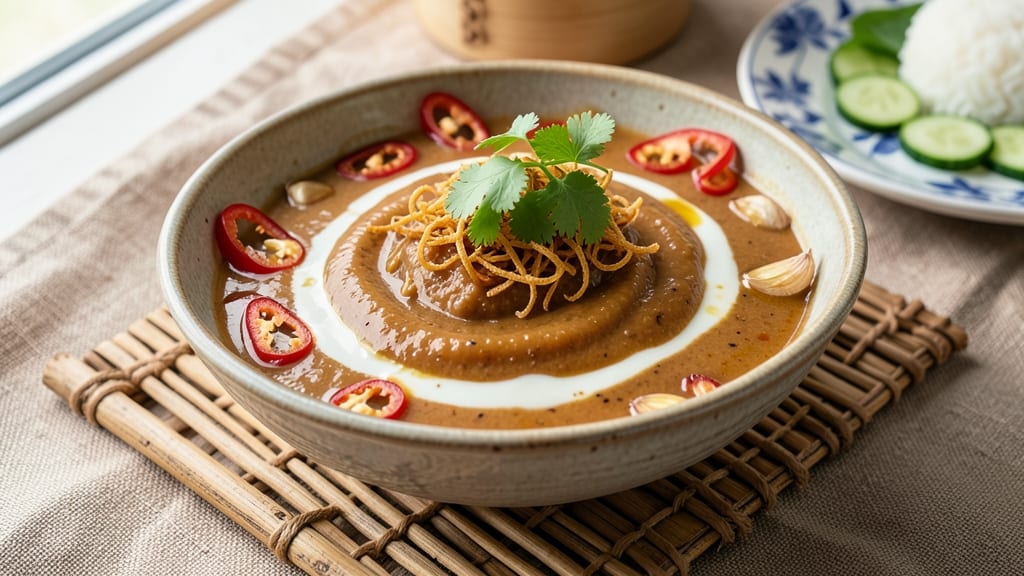
This ayam satay sauce recipe transforms simple ingredients into a velvety, nutty masterpiece that elevates grilled skewers to restaurant-quality perfection. The secret lies in balancing rich peanut butter with the bright tang of tamarind and aromatic spices, creating a sauce that's both complex and approachable.
I've refined this recipe through countless batches, ensuring the perfect harmony of sweet, savory, and umami notes that define authentic satay sauce.
The foundation begins with smooth peanut butter and coconut milk, simmered until silky, then brightened with tamarind paste for that signature tangy kick. Warm spices like cinnamon and coriander add depth without overpowering, while garlic and shallots build a savory base.
What makes this sauce special is its versatility—it works equally well as a dipping sauce for satay skewers or as a marinade for grilled meats.
By the time you're done, you'll have a glossy, aromatic sauce that clings beautifully to grilled chicken or vegetables, delivering layers of flavor in every bite. The texture is smooth yet rich, with just the right balance of sweetness and acidity.
This isn't just a sauce; it's the heart of Indonesian street food culture, brought effortlessly into your home kitchen.
The best part? It comes together in under 30 minutes, with minimal prep and no special equipment. Whether you're serving up a satay night or looking to add global flavors to your meals, this sauce delivers restaurant-quality results with simple ingredients. Let's get started!
Ingredients for ayam satay sauce
Peanut butter, coconut milk, and tamarind create this restaurant-worthy sauce in under 30 minutes.
| Ingredient | Amount | Notes |
|---|---|---|
| Creamy Peanut Butter 🥜 | ¾ cup | Natural, unsweetened preferred |
| Coconut Milk 🥥 | 1 can | Full-fat for richness (13.5 oz can) |
| Tamarind Paste 🍈 | ½ cup | Or 4 tbsp tamarind concentrate |
| Brown Sugar 🍬 | ¼ cup | Light or dark, packed |
| Garlic Cloves 🧄 | 4 cloves | Minced for aromatic depth |
| Shallots 🧅 | 2 whole | Finely chopped, about 0.25 cup |
| Fresh Ginger 🌿 | 1 tbsp | Grated, for zesty kick |
| Ground Cinnamon 🌶️ | ½ tsp | Warmth without overpowering |
| Ground Coriander 🌿 | ½ tsp | Earthy depth (not coriander seeds) |
| Soy Sauce 🍜 | 2 tbsp | Light soy for umami balance |
The peanut butter is non-negotiable—natural, unsweetened gives the best texture and flavor. Trader Joe's or Smucker's Natural are my go-tos, but any brand works as long as it's creamy, not crunchy. Coconut milk? Full-fat only—the richness is essential. If you can't find tamarind paste, substitute 4 tbsp tamarind concentrate or even 2 tbsp lemon juice plus 1 tbsp brown sugar for a quick fix. For the aromatics, fresh ginger and garlic make all the difference—don't skip them. The shallots add sweetness, so charred in a dry pan first if you're feeling fancy.
No tamarind? Lime juice plus a pinch of salt brings the tang, though it won't be identical. Short on peanut butter? Almond butter or cashew butter works, but the flavor shifts slightly. The spices are flexible—reduce cinnamon to 0.25 tsp if you're sensitive to warmth, or add a pinch of cayenne for heat. Soy sauce can be swapped for coconut aminos if you're avoiding gluten. For the brown sugar, coconut sugar or maple syrup keeps it vegan-friendly, though the color will differ. The sauce thickens as it cools, so add a splash of water if it's too stiff.
This sauce keeps beautifully—1 week in the fridge sealed in a jar, or 3 months in the freezer. It thickens when refrigerated, so stir in 1-2 tbsp water before using. I double the batch and freeze half—perfect for satay nights when you're not in the mood to cook. The sauce also freezes beautifully in ice cube trays for portion control. If you're using it as a marinade, reserve 2 tbsp for basting while grilling.
Why You'll Love This Recipe
- No Blender Needed: I’ll be real—this sauce only requires a whisk and a pot. The peanut butter and coconut milk blend smooth as silk with just heat and a little elbow grease, no fancy gadgets required.
- Tamarind’s Tangy Magic: That little packet of tamarind paste? It’s the secret weapon. One spoonful cuts through the richness of the peanut butter, giving it this bright, almost citrusy kick that makes every bite pop—like a flavor explosion you didn’t see coming.
- Weeknight to Dinner Party: Same sauce, endless uses. Drizzle it over grilled chicken for satay night, stir it into noodles for a quick lunch, or even slather it on rice paper rolls when friends drop by. It’s the one sauce that turns “what’s for dinner?” into “let’s order takeout… again.”
- Pantry Goldmine: Honestly, this costs less than takeout. Peanut butter, coconut milk, and brown sugar? Stuff I already have. The tamarind’s the only splurge, but a jar lasts forever. Plus, leftovers? They taste just as good reheated as they do fresh.
Step-by-step instructions for ayam satay sauce
Here's how to blend rich, nutty peanut butter with tangy tamarind for that signature satay sauce.
Sauté Aromatics Until Fragrant
Heat a medium saucepan over medium heat and add the 2 whole shallots and 4 cloves garlic cloves. Cook for 3-4 minutes until the shallots soften and turn translucent, stirring occasionally to prevent burning. You'll smell that sweet, oniony aroma—this is when you know they're ready.
Add the 1 tablespoon fresh ginger and continue cooking for another 1 minute until the raw ginger scent disappears. The mixture should smell warm and inviting, like a spice market in Indonesia. This aromatic base forms the flavor foundation of your sauce, so don't rush this step.
Stir in Peanut Butter and Coconut Milk
Reduce the heat to low and carefully stir in the 0.75 cup creamy peanut butter using a wooden spoon. Let it melt completely, about 2-3 minutes, stirring constantly to prevent clumping. The peanut butter will transform from solid to a smooth, creamy texture.
Pour in the 1 can coconut milk and stir well to combine. The mixture will become thick and velvety. Bring the sauce to a gentle simmer, then reduce heat to lowest setting to maintain a slow bubble. This prevents the peanut butter from separating and ensures even cooking throughout.
Add Tamarind and Sweeteners
Stir in the 0.5 cup tamarind paste and 0.25 cup brown sugar until fully dissolved. The sauce will darken slightly and develop a glossy sheen. Let it simmer gently for 5-7 minutes, stirring occasionally, until the tamarind is completely incorporated and the sauce thickens slightly.
Here's where the magic happens: the tamarind's tangy brightness cuts through the peanut butter's richness, while the brown sugar adds depth. Taste the sauce at this point—you should notice the balance between sweet, sour, and nutty flavors. If it needs more sweetness, add a pinch more brown sugar.
Season with Spices and Soy Sauce
Add the 0.5 teaspoon ground cinnamon, 0.5 teaspoon ground coriander, and 2 tablespoons soy sauce. Stir well and let the sauce simmer for another 3-4 minutes until all the spices are fully dissolved and the flavors meld together.
The cinnamon will add warmth, the coriander earthy depth, and the soy sauce that essential umami punch. The sauce should now have a smooth, velvety consistency with a rich aroma that makes your mouth water. If the sauce is too thick, thin it with 1-2 tablespoons warm water at a time until you reach your desired consistency.
Cool and Serve
Remove the saucepan from heat and let the sauce cool slightly. The sauce will thicken further as it cools, so don't worry if it looks a bit too thin while warm. Transfer the sauce to a bowl and let it cool completely before serving.
This satay sauce is perfect for dipping grilled skewers, drizzling over rice, or using as a marinade. The nutty peanut butter, tangy tamarind, and rich coconut milk create a harmonious balance that's both comforting and exciting. Store any leftovers in an airtight container in the refrigerator for up to 5 days.
Pro Tips For Making Ayam Satay Sauce
- Warm the peanut butter: Dump cold peanut butter straight into hot liquid, and you’ll end up with a grainy, lumpy mess. Instead, mix it with a splash of warm coconut milk first—just enough to make it pourable—then whisk it into the sauce. This keeps the texture silky smooth without breaking a sweat.
- Toast the garlic: Raw garlic in satay sauce tastes sharp and medicinal. Lightly fry the minced cloves in a dry pan until golden—just 30 seconds—before adding them to the sauce. The nutty aroma deepens the peanut flavor and cuts through the tamarind’s tang.
- Balance the tamarind: Tamarind paste is sneaky—too much, and your sauce tastes like sour vinegar. Start with half the recipe’s amount, taste, then adjust. If it’s too tart, a pinch of brown sugar (or even a splash of coconut milk) fixes it faster than adding more tamarind.
- Simmer low and slow: Rushing this sauce on high heat turns it greasy and separates. Keep it at a gentle bubble—just enough to see tiny ripples—until everything’s fully incorporated. Patience here means a sauce that clings to skewers instead of sliding off.
Wine and beer pairings for this ayam satay sauce
Indonesian Red Wine
For a traditional pairing, reach for a Bintan or Tanjung red wine from Indonesia—these local varieties complement the sauce's nutty depth and tamarind tang beautifully. Their medium-bodied profile with dark fruit notes mirrors the peanut butter's richness while cutting through the sweetness.
I've found Bintan Merah at specialty Asian markets works perfectly, but any Pinot Noir from California also bridges the gap with its earthy undertones. 🍷
Crisp White Options
A Sauvignon Blanc with citrus zest and light herbal notes is my go-to white wine pairing. Look for New Zealand Sauvignon Blanc—its grassy, limey brightness enhances the tamarind's tang while balancing the peanut butter's heaviness.
Alternatively, a dry Riesling from Germany adds a mineral crispness that refreshes the palate after each bite. Avoid oaky Chardonnays—they'll clash with the sauce's vibrant acidity.
Craft Beer Pairings
For beer lovers, a wheat beer with lemony notes works surprisingly well. Try a Belgian Witbier like Hoegaarden—its corianander and orange peel flavors echo the sauce's spices while the effervescence cleanses the palate.
If you prefer darker beers, a lightly hopped amber ale (like Fat Tire) provides malty sweetness that complements the peanut butter without overpowering. Avoid heavy IPAs—they'll drown out the sauce's delicate balance. 🍺
Non-Alcoholic Choices
Don't drink alcohol? No problem! A sparkling limeade with muddled mint mimics the sauce's tangy-sweet profile. For something bolder, try coconut water chilled with lime wedges—the natural sweetness and acidity mirror the tamarind and brown sugar.
Even iced hibiscus tea (sweetened lightly) adds a floral brightness that pairs surprisingly well with the peanut butter's nuttiness. The key is balancing sweetness with acidity, just like the sauce itself.
Serving Temperature Tips
Wine and beer should be chilled slightly cooler than usual when pairing with satay sauce—about 55-60°F for whites and 50-55°F for beers. The sauce's warmth makes room-temperature drinks feel too heavy. I like to pre-chill my wine glasses in the freezer for 10 minutes before pouring.
For beer, serve in a frosted mug to maintain the ideal temperature while adding a fun presentation touch. The contrast between the cool drink and warm sauce creates a truly satisfying experience. ✨
Nutrition facts
Frequently asked questions
Can I make this satay sauce without tamarind?
The tangy brightness of tamarind is essential, but you can substitute with 2 tbsp lime juice + 1 tbsp brown sugar or 1 tbsp vinegar + 1 tbsp sugar. For closer results, use 1 tbsp lemon juice + 1 tsp sugar—just know the flavor will be slightly different. The sauce will still work, but the authentic depth comes from tamarind's complex sour-sweet profile.
How do I fix separated peanut butter in my sauce?
If your sauce looks oily or the peanut butter separates, whisk in 1-2 tbsp warm water while stirring vigorously. For stubborn separation, place the saucepan over low heat and stir constantly until smooth. The key is patience—don't rush the process. This usually happens if you heat the peanut butter too quickly.
Can I use this sauce as a marinade for chicken?
Reserve 2 tbsp of the finished sauce to baste while grilling, then marinate chicken skewers in the rest for 2-4 hours in the fridge. The peanut butter will tenderize the meat while infusing flavor. For extra richness, brush on more sauce during grilling. The sauce also works well as a post-grill dip for skewers.
Why does my satay sauce taste too sweet?
Adjust the balance by adding 1-2 tbsp more tamarind paste or 1 tsp soy sauce to cut the sweetness. The tamarind's acidity will brighten the flavor. If you prefer less sweetness from the start, reduce the brown sugar to 2 tbsp and increase tamarind to 0.6 cup. Taste as you go—this sauce is all about balance!
How long can I store this sauce in the freezer?
This sauce freezes beautifully for up to 3 months in an airtight container. For easy use, freeze in ice cube trays—just thaw and stir with a splash of water if it thickens. Avoid freezing in metal containers as they can react with the peanut butter's oils. The texture remains creamy when properly stored.