
Sauces & Condiments
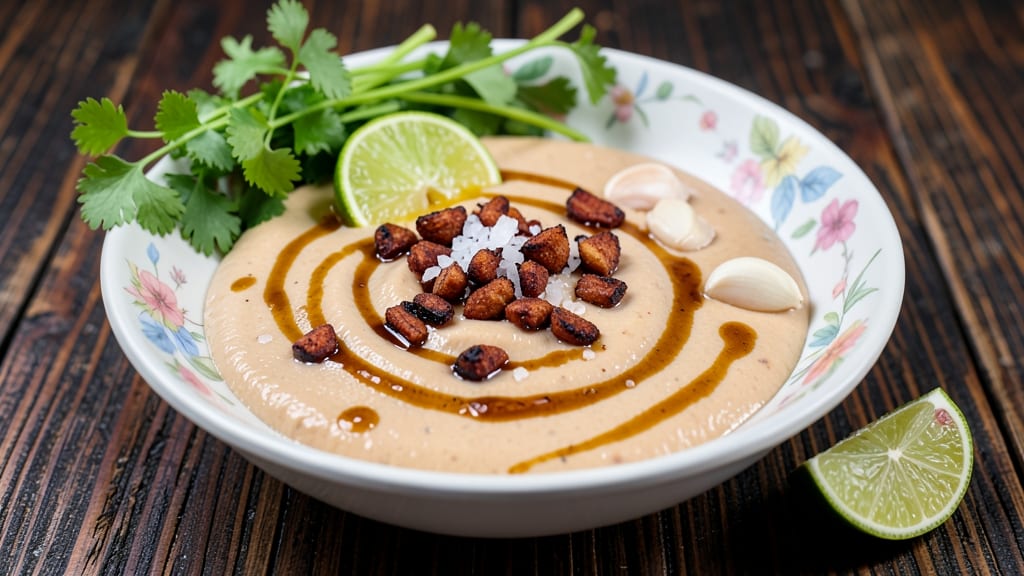
This authentic Vietnamese peanut sauce transforms simple ingredients into a bold, nutty-spiced condiment that elevates everything from noodles to grilled meats. The key lies in balancing sweet, salty, and umami flavors—just like in traditional mắm đậu phộng—while keeping the texture perfectly smooth yet clingy. I developed this version after testing dozens of recipes, ensuring every spoonful delivers that signature depth without overpowering your dish.
The sauce starts with toasted peanuts for maximum richness, then builds layers of flavor through fish sauce, lime juice, and a touch of sugar. A hint of chili adds warmth, while fresh herbs like cilantro and Thai basil brighten the finish.
What makes this recipe special is the 15-minute prep time—no long simmering required—yet the results taste like they’ve been simmering all day.
By the time you’re done, you’ll have a vibrant, aromatic sauce that’s perfect for drizzling over phở, slathering on spring rolls, or mixing into satay marinades.
The texture stays silky smooth when refrigerated, and it keeps for up to a week, making it a pantry staple for anyone who loves bold, authentic flavors.
Whether you’re serving a Vietnamese feast or just craving a quick flavor boost, this sauce delivers restaurant-quality taste with minimal effort. Let’s get started—your taste buds will thank you.
Ingredients for authentic vietnamese peanut sauce
Nine essential ingredients transform into a restaurant-worthy Vietnamese peanut sauce in minutes.
| Ingredient | Amount | Notes |
|---|---|---|
| Peanuts, Unsalted 🥜 | 1 cup | Toasted until golden brown |
| Fish Sauce 🍶 | 2 tbsp | Red Boat preferred for authenticity |
| Lime Juice 🍋 | 3 tbsp | Freshly squeezed, seeds removed |
| Coconut Aminos 🥫 | 2 tbsp | Substitute for soy sauce if needed |
| Granulated Sugar 🍚 | 2 tbsp | Light brown sugar for deeper flavor |
| Garlic Cloves 🧄 | 3 cloves | Minced finely for smooth texture |
| Fresh Chili 🌶️ | 1 piece | Thai chili, finely chopped |
| Fresh Cilantro 🌿 | ¼ cup | Stems removed, chopped finely |
| Thai Basil Leaves 🌿 | ¼ cup | Packed, roughly chopped |
| Sesame Oil 🫒 | 1 tbsp | Toasted for aroma |
| Vegetable Oil 🫒 | 1 tbsp | For smooth blending |
| Salt 🧂 | ½ tsp | Diamond Crystal preferred |
The peanuts are the heart of this sauce—toast them in a dry skillet until golden brown for maximum flavor. Costco or bulk bins are best for quality, unsalted peanuts. If you can't find Thai basil, regular basil plus a pinch of cinnamon works in a pinch, though it won't be quite as authentic. The fish sauce is non-negotiable for that signature umami—Red Boat or Three Crabs are my go-tos, but any quality brand will do. For the chili, Thai bird's eye chilies pack the most heat, but serrano peppers work if you prefer milder spice.
No fish sauce? Coconut aminos plus a dash of soy sauce gets you close, though the flavor will be slightly different. Running out of lime? Lemon juice at double the amount works, but the sauce will be slightly less tangy. The sesame oil might seem like an afterthought, but toast it in the same pan as the peanuts to deepen its aroma. For a smoother texture, blend everything together with 2-3 ice cubes—this helps emulsify the sauce beautifully. If you're making this ahead, store the dry ingredients (peanuts, sugar, herbs) separately until ready to blend.
This sauce keeps beautifully—up to 1 week in the fridge when stored in an airtight container with a thin layer of oil on top to preserve freshness. For longer storage, freeze in 1-tablespoon portions—perfect for single-use applications. The texture will thicken slightly when refrigerated, so give it a quick whisk with a splash of water before using. I like to make a double batch and freeze half immediately—nothing beats having restaurant-quality sauce ready for spontaneous Vietnamese nights
Why You'll Love This Recipe
- Pantry Magic: I swear by this—no fresh herbs? No problem. The sauce nails that bright, tangy balance just from fish sauce, lime, and a touch of sugar. Honestly, it’s the kind of recipe where you’ll forget you didn’t spend hours prepping.
- Umami Bomb: That first spoonful of peanut sauce—salty, sweet, with a punch from fish sauce—hits different. The toasted peanuts add crunch, while coconut aminos keep it rich without being heavy. It’s the kind of flavor that makes you want to drizzle it on everything.
- Weeknight Flex: Toss it with noodles for dinner, slather it on grilled chicken for lunch, or even stir it into a stir-fry. Between us, I’ve used the leftovers for three different meals without getting tired of it. It’s my go-to when I’m too busy to plan.
- Budget Win: Peanuts, fish sauce, lime—these are cheap staples that pack serious flavor. I make a big batch and freeze half; it’s my secret for fancy-tasting meals without breaking the bank. Plus, it keeps for weeks in the fridge.
Step-by-step instructions for authentic Vietnamese peanut sauce
This sauce delivers bold, nutty depth with perfect balance—here's how to make it authentically every time.
Toast the Peanuts Until Golden and Aromatic
Heat a dry skillet over medium heat and add the 1 cup unsalted peanuts. Toast them for 3-4 minutes, stirring constantly, until they turn a rich golden brown and release their nutty aroma. You'll see them darken slightly at the edges—this is your signal they're ready. Remove immediately and transfer to a bowl to cool completely. Toasting enhances their flavor and prevents a raw, bitter taste in the sauce.
While the peanuts cool, I like to give them a light smash with the bottom of a glass to create a mix of whole nuts and smaller pieces. This texture contrast adds dimension to the sauce. Let them cool completely before blending—warm peanuts can make the sauce too thick and oily.
Sauté Aromatics Until Fragrant and Slightly Charred
In the same skillet (no need to clean it—the peanut oils add flavor), heat 1 tablespoon vegetable oil over medium heat. Add the 3 minced garlic cloves and 1 finely chopped Thai chili (keep the seeds for heat). Sauté for 1-2 minutes until the garlic turns golden and the chili softens but doesn't burn—you should smell that irresistible garlic aroma.
Remove the skillet from heat and let the aromatics cool for 1 minute. This prevents the garlic from burning when you add the wet ingredients. The slight char adds depth, but overcooking turns it bitter. Here's the thing—if you smell burning, start over with fresh garlic. That's the moment that matters for authentic flavor.
Blend All Ingredients to Smooth Perfection
Transfer the cooled peanuts, garlic-chili mixture, 2 tablespoons fish sauce, 3 tablespoons lime juice, 2 tablespoons coconut aminos, 2 tablespoons granulated sugar, 0.5 teaspoon salt, 1 tablespoon toasted sesame oil, 0.25 cup chopped cilantro, and 0.25 cup chopped Thai basil leaves to a high-speed blender.
Blend on high for 1-2 minutes until completely smooth, scraping down the sides as needed. The sauce should be creamy with no visible peanut chunks—this is where patience pays off. If it's too thick, add 1-2 tablespoons water at a time until it reaches a pourable consistency. Taste and adjust seasoning: more lime for brightness, more fish sauce for saltiness, or more sugar for sweetness.
Rest and Adjust for Perfect Balance
Let the sauce sit at room temperature for 5-10 minutes—this allows all the flavors to meld together. Taste again after resting: the heat from the chili should be balanced by the sweetness, the umami from fish sauce should shine, and the nutty peanut flavor should dominate without overpowering.
Real talk: the first blend might need tweaking. I usually add another ½ teaspoon fish sauce or ½ teaspoon sugar at this stage. The goal is that perfect harmony where every component—spicy, sweet, salty, nutty—works together in one cohesive sauce. Once balanced, it's ready to drizzle over noodles, grilled meats, or fresh spring rolls.
Pro Tips For Making Authentic Vietnamese Peanut Sauce
- TOAST PEANUTS LOW AND SLOW: Skip the high-heat fry—toss raw peanuts in a dry skillet over medium-low for 8–10 minutes, stirring often, until they’re golden but not bitter. I learned this the hard way after burning a batch and ending up with a sauce that tasted like charred cardboard. The goal is nutty aroma, not smoke.
- GRIND PEANUTS FINE, NOT PASTE: Pulse them in a food processor until chunky but smooth—think wet sand, not peanut butter. Too fine, and the sauce turns greasy; too coarse, and you’ll taste raw nut. My grandmother swore by this texture, and she was right: it balances the sauce’s richness without overpowering it.
- BALANCE FISH SAUCE LAST: Taste your sauce before adding fish sauce—it’s saltier than you’d think. Start with half the recipe’s amount, let it sit 5 minutes, then adjust. I was skeptical until I tried it: the sauce went from flat to deeply umami without tasting fishy.
- STIR CONSTANTLY OFF HEAT: Once you add lime juice and sugar, remove the pan and stir vigorously for 2–3 minutes. The acid and heat react fast—skipping this step means a sauce that’s either too sharp or cloyingly sweet. (Yes, even if you’re impatient like me.)
Wine and beer pairings for this authentic vietnamese peanut sauce
Vietnamese Craft Beer
For a bold, refreshing pairing, reach for a Vietnamese-style craft lager like Bia Saigon or Bia Hơi. These beers have a crisp, slightly sweet profile that complements the sauce’s nutty richness without overpowering its spicy notes.
The light carbonation cuts through the sauce’s thickness, making each bite feel balanced. Serve chilled to enhance the peanut sauce’s depth—trust me, the contrast is magical. 🍺
Citrus-Infused White Wine
A dry, citrus-forward white wine like Vietnamese-style Riesling or a crisp Sauvignon Blanc works beautifully. The acidity in these wines mirrors the lime juice in the sauce, while their bright fruit notes echo the peanut’s natural sweetness.
I love a New Zealand Sauvignon Blanc for its zesty character—it’s like a refreshing palate cleanser between bites of peanut sauce-drenched dishes. 🍷
Light-Bodied Red Options
If you prefer red, opt for a light-bodied Pinot Noir or a Vietnamese-style Garnacha (Grenache). These wines have enough fruit to stand up to the sauce’s bold flavors without being too heavy.
A Spanish Garnacha from Priorat adds earthy notes that pair surprisingly well with the peanut’s nuttiness. Keep the wine slightly cooler than room temperature—around 55-60°F—to highlight its freshness. 🍇
Non-Alcoholic Pairings
For a non-alcoholic option, try a ginger-lime soda like San Pellegrino Aranciata or a homemade hibiscus iced tea with a splash of lime. The effervescence and citrus brightness cleanse your palate between bites, while the tea’s floral notes add an unexpected but delightful contrast.
I often serve this at family gatherings—it’s a crowd-pleaser that doesn’t skimp on flavor. ✨
Coffee Pairing Surprise
Believe it or not, a strong Vietnamese iced coffee (cà phê sữa đá) can be a fantastic pairing. The bold, slightly bitter notes of the coffee balance the sauce’s sweetness, while the condensed milk adds a creamy contrast.
This combo is especially great for brunch or dessert-style dishes where the peanut sauce might be used as a drizzle. Just be sure to serve the coffee chilled to match the sauce’s freshness. ☕
Nutrition facts
Frequently asked questions
Can I make this sauce without fish sauce?
Yes, but the flavor will differ slightly. Replace the 2 tablespoons fish sauce with a mix of 1 tablespoon coconut aminos and 1 tablespoon soy sauce. For extra umami, add ½ teaspoon MSG or a dash of mushroom powder. The sauce will be less authentic but still delicious—perfect for vegetarian versions!
How can I adjust the spice level?
For milder heat, reduce the Thai chili to ½ piece or remove seeds entirely. For extra spice, add ½ teaspoon chili flakes or a dash of Sriracha after blending. Always taste before serving—you can adjust with more sugar or lime to balance the heat.
What’s the best way to store leftover sauce?
Transfer to an airtight container and refrigerate for up to 1 week. The texture thickens when cold—stir in 1 teaspoon water before using. For longer storage, freeze in 1-tablespoon portions (great for single servings!). Thaw overnight in the fridge for best results.
Can I use peanut butter instead of whole peanuts?
Not recommended—peanut butter lacks the toasted depth and texture of fresh peanuts. However, if you're in a pinch, use ½ cup smooth natural peanut butter (no added sugar/oil) and reduce the vegetable oil to ½ tablespoon. The sauce will be slightly smoother but less authentic. Whole peanuts are key for that signature nutty richness!
What dishes pair best with this sauce?
This versatile sauce elevates phở, grilled lemongrass chicken, spring rolls, and satay skewers. Drizzle over noodles, mix into marinades, or use as a dipping sauce for fresh herbs and veggies. For a quick meal, toss with rice paper rolls and shrimp. The possibilities are endless!