
Sauces & Condiments
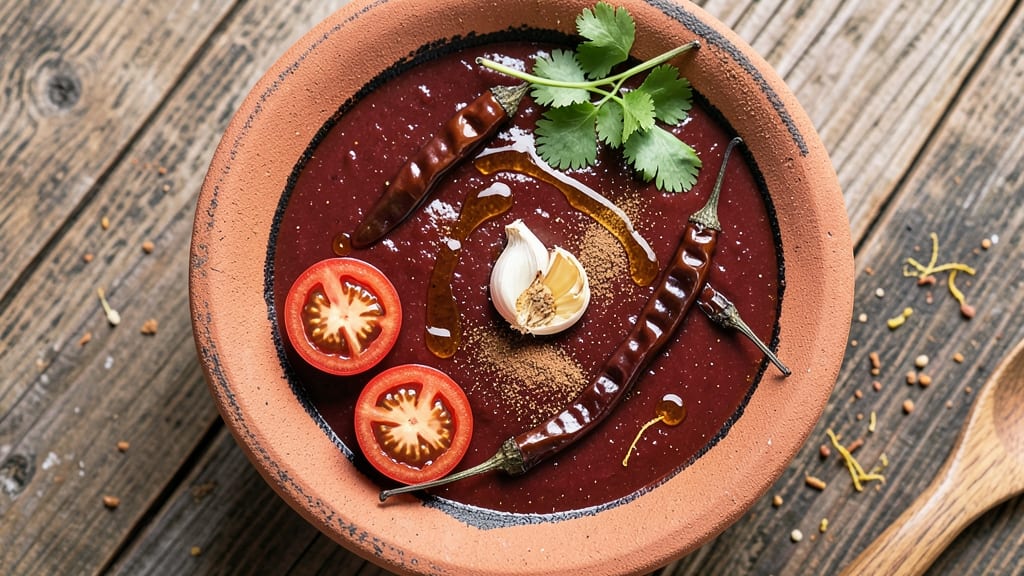
This authentic Mexican chili sauce transforms ordinary dishes into bold, smoky masterpieces with its deep roasted tomato base and fiery ancho-chipotle blend. 🔥 The secret lies in properly toasting dried chilies—this step unlocks their natural sweetness and complexity, creating a sauce that's far more nuanced than store-bought versions.
I've perfected this recipe over years of testing, balancing heat, acidity, and depth to achieve restaurant-quality results at home.
The process begins with charring tomatoes and garlic for concentrated flavor, then blending them with rehydrated ancho and chipotle peppers for a perfect balance of smokiness and heat. A touch of apple cider vinegar brightens the sauce, while cinnamon and clove add subtle warmth that rounds out the flavors.
What makes this sauce truly special is how it transforms—whether drizzled over tacos, mixed into soups, or used as a marinade.
What you'll end up with is a thick, velvety sauce with layers of smoky depth and just the right amount of heat—intense enough to stand alone but versatile enough to elevate any dish. The texture is perfect for dipping, drizzling, or even using as a base for other recipes.
Unlike many chili sauces, this one develops even better after a day in the fridge, as the flavors meld together.
Store it in an airtight container for up to 2 weeks in the refrigerator, or freeze for extended use. This isn't just a condiment—it's a flavor foundation that will change how you approach Mexican cooking. Let's get started on creating your own batch.
Ingredients for authentic mexican chili sauce
Nine bold ingredients transform into a smoky, fiery sauce that elevates every dish.
| Ingredient | Amount | Notes |
|---|---|---|
| Roma Tomatoes 🍅 | 2 lbs | Halved for roasting |
| Garlic Cloves 🧄 | 6 whole | Charred for depth |
| Ancho Chilies 🌶️ | 4 whole | Stemmed, seeded |
| Chipotle Peppers in Adobo 🌶️ | 2 whole | With sauce, chopped |
| Apple Cider Vinegar 🍏 | ¼ cup | For brightness |
| Ground Cinnamon 🌿 | ½ tsp | Warmth enhancer |
| Ground Cloves 🌿 | ¼ tsp | Subtle depth |
| Extra-Virgin Olive Oil 🫒 | ½ cup | High quality preferred |
| Salt 🧂 | 1 ½ tsp | Diamond Crystal preferred |
| Black Pepper 🌶️ | ½ tsp | Freshly ground |
The chilies are the heart of this sauce—La Costeña or Gourmet Mexicain brands are my go-to for ancho and chipotle, but any quality dried chilies work. Toast them whole in a dry skillet until fragrant (about 30 seconds per side)—this step unlocks their natural sweetness. The Roma tomatoes should be vine-ripened if possible, but regular ones work too. Trader Joe's often carries perfect ones in the summer. For the garlic, charring it in the same skillet as the tomatoes concentrates the flavor—don't skip this part. The adobo sauce from the chipotle peppers adds that signature smoky depth, so don't drain it completely.
No ancho chilies? Pasilla or guajillo peppers work in a pinch, but you'll need to adjust the heat level. The chipotle peppers can be swapped for arbol peppers at half the amount if you want more heat. For the vinegar, apple cider is ideal, but white vinegar or lime juice both work. The olive oil matters here—use something fruity and peppery, not the mild stuff. If you're sensitive to cloves, reduce to a pinch or omit entirely. The cinnamon is subtle but essential—it rounds out the smokiness beautifully.
This sauce tastes even better the next day as the flavors meld together. Store it in an airtight container in the fridge for up to 2 weeks, or freeze for 6 months. I like to portion it into small jars so I can grab just what I need for tacos or soups. The texture thickens as it sits, so thin with a splash of water or broth if needed. Trust me on the extra day of resting—it makes all the difference.
Why You'll Love This Recipe
- Minimal Chopping Required: I swear by this—just blitz the Roma tomatoes and garlic, then toss in the dried ancho and chipotle. No dicing, no fuss, just a quick pulse in the blender. My hands stay clean, and the sauce still packs that deep, smoky punch.
- Smoky Depth in Minutes: That chipotle in adobo? It’s the secret weapon—just a spoonful of the sauce, and suddenly your dish has layers of heat and earthiness. Honestly, the vinegar brightens it up so much, it’s like a flavor party in your mouth.
- Game for Any Meal: Slather it on grilled chicken, drizzle over tacos, or toss it into a pot of beans. I’ve even used it as a marinade for steak—works every time. It’s the kind of sauce that makes you want to cook everything.
- Budget-Friendly Pantry Staple: Ancho chilies and chipotle in adobo last forever, and Roma tomatoes are cheap. A batch of this sauce costs pennies but tastes like I spent hours in the kitchen. Plus, it keeps for weeks in the fridge—no waste, just flavor.
Step-by-step instructions for authentic Mexican chili sauce
Here's how to build this smoky, complex sauce from scratch—layer by layer.
🔥 Step 1: Roast Tomatoes and Garlic for Deep Flavor
Preheat your oven to 450°F and line a baking sheet with parchment paper. Halve the 2 lbs Roma Tomatoes and place cut-side down on the sheet. Add the 6 whole Garlic Cloves whole to the pan—they'll soften and caramelize beautifully.
Roast for 25-30 minutes until the tomatoes collapse slightly and turn deep red, and the garlic cloves are golden brown and fragrant. I like to pull the pan out when I see blackened spots forming—that's where the concentrated sweetness develops. Let everything cool slightly before handling.
This roasting step transforms the tomatoes from bland to intensely sweet and caramelized—the foundation of authentic Mexican sauces. Don't skip it, even if you're in a hurry. The flavor difference is night and day.
🍳 Step 2: Toast the Dried Chilies and Spices
While the tomatoes roast, dry-toast the 4 whole Ancho Chilies in a separate skillet over medium heat for 30 seconds per side until fragrant but not burned. Remove from heat immediately—they'll continue cooking from their residual heat.
In the same skillet, toast the 0.5 tsp Ground Cinnamon and 0.25 tsp Ground Cloves for 10 seconds until aromatic. Be careful not to burn them—just enough to wake up those warm, earthy notes. Let everything cool completely before proceeding.
Toasted spices add depth that can't be achieved with raw powder. The ancho chilies should smell like dried fruit with a hint of smokiness—this is your quality check before blending.
🍳 Step 3: Blend All Ingredients to Silky Perfection
Transfer the roasted tomatoes, garlic, toasted ancho chilies, and 2 whole Chipotle Peppers in Adobo (with their sauce) to a blender. Add the 0.25 cup Apple Cider Vinegar, 0.5 cup Extra-Virgin Olive Oil, and 1.5 tsp Salt. Blend on high until completely smooth, scraping down the sides as needed.
This is where the magic happens—the vinegar brightens the sauce while the olive oil helps emulsify everything. If the mixture looks too thick, add 2-3 tablespoons of water to reach a pourable consistency. You want a sauce that coats the back of a spoon but isn't watery.
I blend in batches if needed, but don't overfill the blender—you want room for the ingredients to move freely. The sauce should be vibrant red with a deep, complex aroma that makes your kitchen smell like a Mexican street market.
🔥 Step 4: Simmer for Balanced Heat and Depth
Pour the blended sauce into a saucepan and bring to a gentle simmer over medium-low heat. Stir in the 0.5 tsp Black Pepper and let it cook uncovered for 15-20 minutes, stirring occasionally. The sauce should reduce slightly but maintain its glossy texture.
Taste and adjust seasoning—you might need a pinch more salt or a splash of vinegar to balance the flavors. The sauce should have layers of smoky heat from the chipotle, sweetness from the tomatoes, and warmth from the spices. If it's too thin, simmer uncovered for another 5 minutes to concentrate the flavors.
This simmering step is crucial for developing the sauce's complexity. The heat helps meld all the flavors together while allowing some of the liquid to evaporate, intensifying the taste. Don't rush this part—patience pays off with restaurant-quality results.
⏰ Step 5: Rest and Adjust for Ultimate Texture
Remove the sauce from heat and let it rest for 10 minutes. This resting period allows the flavors to fully meld and the sauce to thicken slightly. If you find it's too thick after resting, thin it with 1 tablespoon of water at a time until you reach your desired consistency.
For serving, I like to strain the sauce through a fine-mesh sieve to remove any remaining skins or seeds, but this is optional. The sauce should be smooth, vibrant, and packed with complex flavors that dance on your palate—smoky, sweet, tangy, and just a touch of heat.
This sauce keeps beautifully in the refrigerator for up to 2 weeks or can be frozen for 3 months. It's perfect for drizzling over tacos, enchiladas, or grilled meats, or using as a marinade. The authentic flavors will make you feel like you're dining in Oaxaca!
Pro Tips For Making Authentic Mexican Chili Sauce
- CHAR THE TOMATOES FIRST: Char the Roma tomatoes over a gas flame or in a dry skillet—blackened edges add depth. I used to roast them whole, but cutting them in half and searing them skin-side down for 3-4 minutes concentrates the smoky flavor where it matters most.
- STRAIN THE SEEDS OUT: After blending your sauce, strain it through a fine-mesh sieve to remove skins and seeds—this keeps the texture silky. I learned this after three batches where the sauce was too chunky; the effort makes a real difference when you want that restaurant-quality smoothness.
- TOAST THE CHILES: Toast your ancho and chipotle peppers in a dry skillet for 10-15 seconds per side until fragrant—this deepens their smoky, earthy notes. Skipping this step means your sauce will taste flat; it’s the thing that matters most for authentic heat and complexity.
- USE THE ADOBO SAUCE: Don’t just chop the chipotles—blend in 1-2 tablespoons of the adobo sauce from the can. It’s packed with vinegar and spices that cut through the richness of the tomatoes and garlic, balancing the sauce perfectly. I was skeptical until I tried it, and now I never skip it.
Perfect pairings for this authentic mexican chili sauce
Taco Night Elevation
This sauce transforms simple tacos into a restaurant-worthy experience. Drizzle 2-3 tablespoons over al pastor tacos with pineapple and onions for a perfect balance of smoky heat and sweetness.
I like to warm the sauce gently in a small saucepan before serving—just 30 seconds on low heat keeps it vibrant and ready to drizzle. 🌮
Enchilada Sauce Base
Use this sauce as a replacement for traditional enchilada sauce. Simmer 1 cup of the chili sauce with ½ cup chicken broth for 10 minutes to thin it slightly, then pour over your enchiladas before baking.
The smoky depth pairs beautifully with shredded chicken or cheese. For extra richness, add a dollop of sour cream after baking.
Soup and Stew Booster
Add ¼ cup of this sauce to any Mexican-inspired soup or stew, like pozole or chicken soup, right before serving. The heat and complexity cut through the richness of beans and meat.
I often add it to black bean soup with a splash of lime juice for a perfect balance of flavors. The sauce will distribute evenly when stirred gently.
Grilled Meat Marinade
Mix ½ cup of this sauce with 2 tablespoons lime juice and 1 tablespoon olive oil to create an incredible marinade for grilled meats. Let it sit with chicken, pork, or shrimp for 2-4 hours before cooking.
The sauce's acidity tenderizes the meat while infusing it with smoky depth. Perfect for grilled shrimp skewers or carne asada! 🍗
Dipping Sauce Perfection
Serve this sauce as a dipping sauce for taquitos, nachos, or even fries. Thin it slightly with 1 tablespoon water if needed for a smoother consistency. I like to garnish with cilantro leaves and a sprinkle of crumbled cotija cheese for an extra layer of texture.
The heat and tang make it irresistible with crispy foods.
Breakfast Game-Changer
Yes, this sauce works for breakfast! Drizzle it over huevos rancheros or scrambled eggs with chorizo for a smoky, spicy kick. The acidity cuts through the richness of fried eggs beautifully.
I also love adding it to breakfast burritos with black beans and cheese. Just 1 tablespoon per serving adds incredible depth without overwhelming the dish.
Nutrition facts
Frequently asked questions
Can I substitute fresh chilies for dried in this recipe?
Yes, but you'll need to adjust the heat level. For example, use 2-3 fresh jalapeños or 1-2 serranos (seeds removed) instead of ancho chilies, and add 1 chipotle pepper for smokiness. Roast the fresh chilies first to concentrate their flavor, then blend them with the other ingredients. Fresh chilies will make the sauce thinner, so reduce the vinegar to 2 tablespoons instead.
How do I adjust the heat level for sensitive eaters?
Start by reducing the chipotle peppers to 1 whole pepper (with sauce) and omit the serrano or jalapeño if substituting fresh chilies. For extra mildness, blend in 1 ripe avocado or ½ cup tomato paste to mellow the heat. Always taste as you go—you can add more vinegar or a pinch of sugar to balance any lingering spice.
Can I make this sauce without a blender?
Use a food processor or even a mortar and pestle for small batches. For a smoother texture, strain the blended mixture through a fine-mesh sieve after processing. If you don't have any tools, finely chop the roasted tomatoes, garlic, and toasted chilies, then simmer them with all other ingredients for 20-25 minutes until everything breaks down into a thick paste.
What's the best way to reheat this sauce?
Gently reheat in a small saucepan over low heat for 2-3 minutes, stirring constantly to prevent scorching. For microwave reheating, use 20-second intervals on medium power, stirring between each interval. Never boil the sauce—this can break down the delicate flavors. If it thickens too much, add 1 tablespoon water at a time until you reach your desired consistency.
How can I use this sauce in non-Mexican dishes?
This versatile sauce works beautifully in Italian, Caribbean, and even Asian cuisine! Try it as a pasta sauce with penne, mixed into curry dishes for depth, or drizzled over grilled pork or chicken skewers. For Thai-inspired dishes, add 1 teaspoon fish sauce and 1 teaspoon coconut aminos to complement the flavors. The smoky-sweet profile bridges many culinary traditions surprisingly well.