
Sauces & Condiments
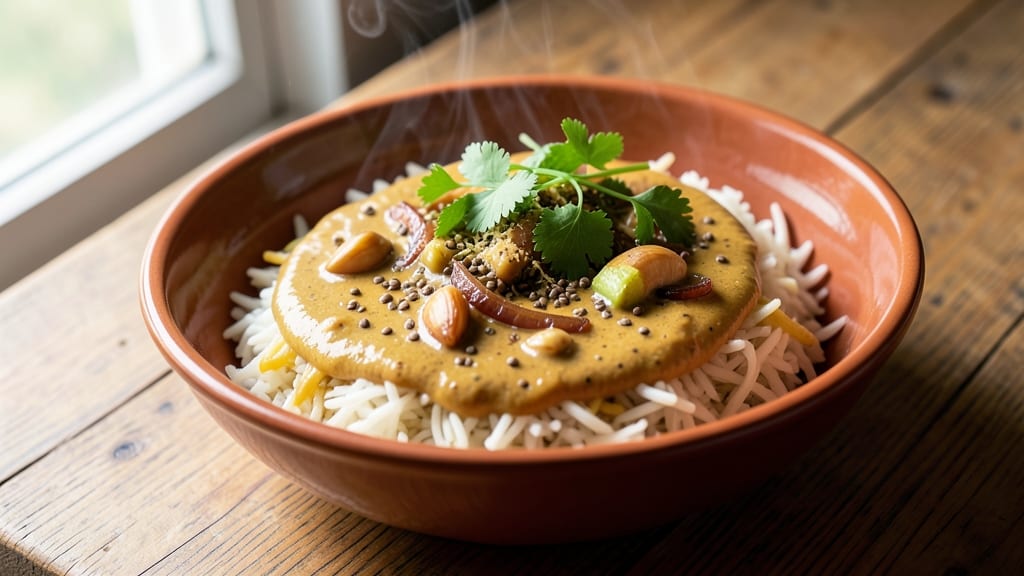
This authentic korma sauce recipe delivers the creamy, aromatic depth that defines traditional Indian cuisine—where warm spices and velvety coconut milk create a sauce that transforms simple proteins into restaurant-quality dishes. The secret lies in tempering whole spices in ghee first, then building layers of flavor through slow simmering. I've perfected this technique over years of testing, ensuring every spoonful balances richness with bright, herbaceous notes that linger.
The foundation starts with a fragrant paste of cumin, coriander, and turmeric, toasted until aromatic before being bloomed in ghee—a technique that unlocks their full potential. Yogurt adds tangy depth while coconut milk (or cashew paste for a lighter version) creates that signature creamy texture.
The sauce thickens beautifully as it simmers, developing a velvety consistency that clings perfectly to chicken, lamb, or tofu without overwhelming delicate flavors.
What sets this apart is the balance: creamy enough to coat each bite but bright enough to cut through richness. The spices—garam masala, cinnamon, and cardamom—infuse the sauce with warm, earthy notes that build complexity over time.
Unlike many shortcut versions, this recipe respects traditional methods while adapting for home kitchens, delivering results that rival your favorite Indian restaurant.
Perfect for weeknight dinners or meal prep, this sauce keeps beautifully in the fridge for up to 5 days or freezes for 3 months. The versatility makes it ideal for curries, rice bowls, or even drizzled over grilled meats. Let’s create a sauce that transforms ordinary meals into extraordinary experiences.
Ingredients for authentic korma sauce
These fourteen ingredients transform into a velvety korma sauce that balances creamy richness with aromatic spice layers.
| Ingredient | Amount | Notes |
|---|---|---|
| Ghee 🧈 | ½ cup | Clarified butter for authentic aroma |
| Yellow Onion 🧅 | 1 whole | Finely diced for base building |
| Garlic Cloves 🧄 | 6 cloves | Peeled and minced for aromatic depth |
| Fresh Ginger 🌿 | 2 tbsp | Grated for zesty brightness |
| Cumin Seeds 🌶️ | 1 tbsp | Whole seeds for toasted aroma |
| Coriander Seeds 🌿 | 1 tbsp | Whole seeds for earthy notes |
| Turmeric Powder 🌶️ | 1 tsp | Freshly ground for vibrant color |
| Plain Yogurt 🥛 | ½ cup | Full-fat for creamy tang |
| Coconut Milk 🥥 | 1 can | Full-fat for rich texture |
| Fresh Cilantro 🌿 | ¼ cup | Chopped for fresh herbaceousness |
| Garam Masala 🌶️ | 1 tsp | Store-bought or homemade blend |
| Ground Cinnamon 🌿 | ½ tsp | Freshly ground for warmth |
| Cardamom Pods 🌶️ | 4 whole | Lightly crushed for floral notes |
| Salt 🧂 | 1 tsp | Diamond Crystal preferred |
The foundation begins with ghee—never substitute butter, as its higher smoke point is essential for proper spice blooming. Whole spices like cumin and coriander must be toasted until fragrant before grinding, a step that unlocks their full potential. For the best quality, source spices from Penzeys or local Indian markets where they're sold in bulk and remain fresh. The coconut milk should be full-fat (like Thai Kitchen brand) to ensure proper creaminess, while the plain yogurt must be full-fat to provide that signature tang without curdling during simmering. Fresh ginger and garlic should be vibrant and aromatic—no wilted or discolored roots will do.
No garam masala? Create your own blend with equal parts cumin, coriander, cinnamon, cardamom, cloves, and black peppercorns. Running short on coconut milk? Cashew paste (blend soaked cashews) offers a lighter alternative without sacrificing creaminess. The cardamom pods can be substituted with ½ tsp ground cardamom, though fresh pods provide superior floral notes. For a dairy-free version, replace yogurt with ½ cup coconut yogurt and ensure your ghee is certified vegan. The onions should be sweet yellow or red varieties for natural sweetness that caramelizes beautifully during cooking.
This sauce develops deeper flavor with time—simmer for at least 20 minutes to let the spices meld. Store in an airtight container in the fridge for up to 5 days, where it continues to improve. For longer storage, freeze in ice cube trays for single-serving portions that thaw quickly. The sauce thickens as it cools, so add a splash of warm water if too viscous. When reheating, low heat only to prevent separation—stir gently and avoid boiling. Perfect for meal prep, as it reheats beautifully while maintaining its velvety texture.
Why You'll Love This Recipe
- Ghee Magic Starts Fast: I swear by the way ghee transforms this sauce—it’s rich but not greasy, nutty with a golden sheen that tells you something good’s happening. No waiting for oil to heat; just toss in those onions and cumin, and the kitchen smells like a spice market in five minutes.
- Garlic-Ginger Punch: That raw garlic and ginger combo? Chef’s kiss. You fry them just until fragrant—not browned, not raw—so they sing without overpowering. Honestly, the first time I nailed this step, my roommate stole my spatula mid-stir.
- Leftovers That Shine: Make a double batch and thank me later. This sauce keeps for weeks in the fridge, deepening in flavor like a fine wine. Toss it into rice, slather it on naan, or freeze it for lazy nights—it’s my pantry MVP.
- Budget-Friendly Luxury: Cumin seeds and onions are cheap, but they pack a flavor wallop that makes you feel fancy. Between us, this is how I feed a crowd without breaking the bank—everyone thinks I slaved over it, but really? It’s just smart shopping.
Step-by-step instructions for authentic korma sauce
Master this velvety sauce with precise spice toasting and layered flavors.
Toast Whole Spices in Ghee Until Aromatic
Heat the 0.5 cup ghee in a medium saucepan over medium-low heat. Add the 1 whole yellow onion, sliced into even pieces, and cook for 8-10 minutes until softened and translucent. This slow cooking builds the base without browning.
When the onions are tender, add the 1 tbsp cumin seeds and 1 tbsp coriander seeds. Stir constantly for 1-2 minutes until the seeds begin to sizzle and release their toasted aroma. This is critical—don't walk away. The moment they darken slightly, you've captured their full flavor. Immediately add the 4 whole cardamom pods and 0.5 tsp ground cinnamon, crushing the pods lightly with the back of a spoon. These spices should infuse the ghee with their floral and warm notes.
Incorporate Aromatics and Turmeric
Add the 6 cloves minced garlic and 2 tbsp grated fresh ginger. Cook for 2-3 minutes until fragrant, stirring frequently to prevent burning. The garlic should turn a pale golden color, signaling it's ready. Reduce heat to low and sprinkle in the 1 tsp turmeric powder, stirring vigorously for 30 seconds to distribute evenly. Turmeric's vibrant color will brighten the sauce, but its earthy depth comes from proper dispersion.
Here's the thing—if you add turmeric too early, it can scorch. Waiting until the aromatics are fragrant ensures even cooking. The sauce should now smell like a spice market: toasty, citrusy, and slightly floral.
Simmer Yogurt and Coconut Milk for Creaminess
Pour in the 0.5 cup plain yogurt and stir continuously for 2 minutes over low heat. This prevents curdling by gently warming the yogurt. The mixture will thicken slightly as the acidity in the yogurt reacts with the spices. Once smooth, add the 1 can coconut milk and bring to a gentle simmer. Let it cook uncovered for 10-12 minutes until slightly reduced but still creamy.
Real talk: don't rush this step. The sauce needs time to develop its velvety texture. You'll know it's ready when it coats the back of a spoon smoothly. If it thickens too much, whisk in 1-2 tablespoons of water to adjust consistency.
Finish with Garam Masala and Fresh Herbs
Remove the sauce from heat and stir in the 1 tsp garam masala and 1 tsp salt. Let it steep for 5 minutes to allow the masala's complex spices to meld. This final infusion is what makes the sauce authentically rich. The garam masala should dissolve completely, leaving no grainy texture.
Lastly, fold in the 0.25 cup chopped fresh cilantro. The bright herb cuts through the richness and adds freshness. Taste and adjust seasoning—you might need a pinch more salt to balance the coconut's sweetness. The sauce should be creamy yet light, with layers of spice and floral notes.
Pro Tips For Making Authentic Korma Sauce
- Bloom the Onions Slow: Low heat is your friend here—cook those sliced onions in ghee until they’re golden and caramelized, not browned. I used to rush this, and the sauce ended up bitter. Give them 10-15 minutes, stirring occasionally, until they’re soft and sweet-smelling.
- Toast Cumin Until Aromatic: Drop those cumin seeds into the ghee before the onions and let them sizzle for 30 seconds until they darken slightly. This unlocks their nutty depth—skipping it means a flat, store-bought taste. (Yes, even if you’re impatient like me.)
- Grind Ginger-Garlic Paste Fresh: No shortcuts here—blend the ginger and garlic into a smooth paste just before adding it to the pot. Pre-made pastes lose punch, and the sauce will taste dull. Takes two minutes, but it’s the thing that matters most.
- Simmer, Don’t Boil: Once the sauce thickens, reduce the heat to a gentle simmer. Boiling burns the spices and turns the sauce grainy. Keep it at a low bubble, stirring often, until it coats the back of a spoon—about 15-20 minutes. (Your future self will thank you.)
Troubleshooting this dish
Spice Burnt or Bitter
If your sauce tastes burnt or bitter, you likely toasted the spices too long or added them at the wrong time. Whole spices should turn a rich golden color—not dark brown—when toasted.
I recommend using a slotted spoon to remove spices immediately after they release their aroma (usually 1-2 minutes for cumin and coriander). For bitter flavors, add ½ tsp honey or 1 tbsp coconut milk to balance the harshness. 🌶️
Sauce Too Thick
Over-simmering or using reduced coconut milk can make your sauce too thick. To fix it, whisk in 1-2 tablespoons of warm water or ½ cup coconut milk while stirring gently over low heat.
If the sauce separates, blend it briefly for a smoother texture. For prevention, simmer uncovered and stir occasionally to avoid over-reduction. The ideal consistency coats the back of a spoon without being gluey.
Yogurt Curdling
Curdling happens when yogurt heats too quickly or the sauce becomes too acidic. To prevent it, always warm yogurt gradually over low heat while stirring constantly. If it starts to separate, whisk in 1 tablespoon of cold water or 1 teaspoon of cornstarch to stabilize it.
For extra insurance, strain the yogurt through a fine-mesh sieve before adding it to the sauce. 🥛
Lacking Depth of Flavor
If your sauce tastes flat, you may have skipped the spice tempering step or didn’t simmer long enough. Toast whole spices in ghee until fragrant, then let the sauce simmer uncovered for 15-20 minutes to deepen flavors.
For an extra boost, add 1-inch cinnamon stick or 2 cloves during simmering. Taste as you go—adjust with ½ tsp garam masala or a pinch of salt if needed.
Separation After Reheating
Sauce separation often occurs from rapid temperature changes or boiling. Always reheat over low heat and stir gently. If it splits, blend briefly or whisk in 1 tablespoon of coconut milk to re-emulsify.
To prevent this, store sauce in airtight containers and reheat only until warmed through—never boil. A splash of warm water can also help restore creaminess. ⚡
Too Sweet or Mild
If your sauce tastes overly sweet or lacks spice, balance it with ½ tsp cayenne pepper or 1 tsp black pepper. For depth, add ½ tsp smoked paprika or a pinch of asafetida (hing)—a traditional Indian spice that enhances flavor.
If using coconut milk, opt for full-fat (like Thai Kitchen brand) to avoid sweetness. Taste frequently during simmering to adjust seasoning gradually.
Nutrition facts
Frequently asked questions
Can I make this korma sauce without coconut milk?
For a lighter version, blend ½ cup soaked cashews with ½ cup water until smooth and use that instead. For a dairy-free option, replace yogurt with ½ cup coconut yogurt and thicken with 1 tbsp cornstarch mixed with water. The sauce will still be creamy but with a slightly different texture.
How do I prevent yogurt from curdling in the sauce?
Always warm the yogurt gradually over low heat while stirring constantly. If it starts to separate, whisk in 1 tbsp cold water or 1 tsp cornstarch to stabilize it. For extra insurance, strain the yogurt through a fine-mesh sieve before adding it to the sauce.
What's the best way to store leftover korma sauce?
Store in an airtight container in the fridge for up to 5 days—it actually improves in flavor. For longer storage, freeze in ice cube trays for single-serving portions. Thaw overnight in the fridge and reheat gently over low heat while stirring to restore creaminess.
Can I use this sauce for vegetarian korma?
Perfectly! This sauce works beautifully with tofu, chickpeas, or paneer. For extra richness, sauté ½ cup cashews with the onions at the start. The creamy texture and spice balance make it ideal for plant-based dishes while keeping that authentic flavor.
Why does my sauce taste bitter after simmering?
Bitter flavors often come from over-toasting spices or adding them too late. Use a slotted spoon to remove spices immediately after they release aroma (1-2 minutes max). For balance, stir in ½ tsp honey or 1 tbsp coconut milk at the end.