
Sauces & Condiments
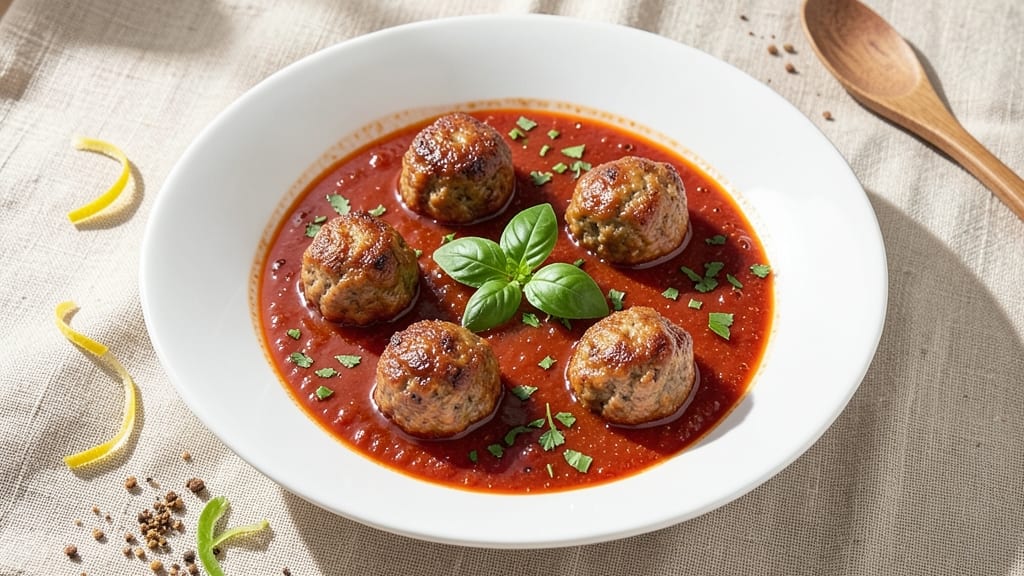
This authentic Italian meatballs in tomato sauce recipe delivers the flavors of a Roman trattoria—juicy, herby meatballs simmered in rich tomato sauce until tender and fragrant. The secret lies in proper meatball formation (ground beef, pork, and breadcrumbs) and slow simmering to develop deep flavors without drying out.
I've perfected this technique over years of testing, ensuring every bite stays moist and packed with aromatic herbs.
The beauty of this recipe is its balance between tradition and flexibility. While we follow classic methods—browning meatballs in olive oil, building a robust tomato base with garlic and onions—modern adaptations like slow cooker or Instant Pot versions make it adaptable to busy schedules.
The sauce reduces to a perfect consistency, clinging to each meatball while maintaining its vibrant color and depth.
What you'll achieve is a dish that tastes like it belongs in a bustling Italian bistro: tender, flavorful meatballs swimming in a velvety tomato sauce with just the right balance of acidity and sweetness.
The aroma alone will have everyone gathering around the table, while the texture guarantees satisfaction with each bite—juicy centers and crisp edges that hold up perfectly.
Serve with al dente pasta, crusty bread, or over polenta for a complete meal. The leftovers reheat beautifully, making this an ideal recipe for meal prep or family dinners. Let's create this classic dish that brings Italy to your kitchen.
Ingredients for authentic italian meatballs in tomato sauce
Juicy meatballs and velvety tomato sauce—just 15 ingredients bring Roman trattoria flavors to your kitchen.
| Ingredient | Amount | Notes |
|---|---|---|
| Ground Beef (80% lean) 🥩 | 1 lb | Chilled, not pre-formed patties |
| Ground Pork 🐷 | ½ lb | Freshly ground preferred |
| Italian Seasoned Breadcrumbs 🍞 | ½ cup | Freshly toasted for texture |
| Large Eggs 🥚 | 1 whole | Room temperature for binding |
| Fresh Parsley 🌿 | ¼ cup | Finely chopped, stems removed |
| Fresh Basil 🌿 | ¼ cup | Chopped, for sauce finish |
| Garlic Cloves 🧄 | 4 cloves | Peeled, minced for sauce |
| Yellow Onion 🧅 | 1 whole | Medium, finely diced |
| Canned San Marzano Tomatoes 🍅 | 2 cans | 28 oz each, crushed by hand |
| Extra-Virgin Olive Oil 🫒 | ½ cup | For browning meatballs |
| Dry Red Wine 🍷 | ½ cup | Bold, like Chianti |
| Tomato Paste 🍅 | 2 tbsp | High-quality, no sugar added |
| Kosher Salt 🧂 | 1 ½ tsp | Adjust to taste |
| Freshly Ground Black Pepper 🌶️ | ½ tsp | Coarsely cracked |
| Dried Oregano 🍃 | 1 tsp | Italian preferred |
The meatballs need the right balance: 80% lean ground beef keeps them tender, while pork adds fat for juiciness. Grab these from the butcher counter if possible—they'll have better marbling. For breadcrumbs, Italian seasoned adds depth, but regular works too if that's what you've got. Fresh parsley and basil are non-negotiable here—they make the difference between 'okay' and 'restaurant-quality'. Whole Foods or local markets usually have the freshest herbs, but even grocery store basil will work if it's bright green with no wilt.
No red wine? Substitute beef broth with a splash of balsamic vinegar—it mimics the acidity. For the tomatoes, San Marzano is ideal, but any quality canned tomatoes will do. If you can't find Italian seasoned breadcrumbs, toast regular breadcrumbs with dried oregano and basil for the same effect. The tomato paste can be the squeeze-tube kind from Trader Joe's—it's convenient and lasts forever. For the garlic, roast it first if you want to take this to the next level (trust me on this).
Meatballs brown best at room temperature, so take them out of the fridge 30 minutes before cooking. The sauce improves overnight—make extra and store it in the fridge for up to 5 days. Freeze portions for 3 months if you're prepping ahead. For serving, I like to keep the meatballs whole and let everyone roll them in the sauce—it makes for a fun, interactive meal. The leftovers reheat beautifully, so this is perfect for meal prep.
Why You'll Love This Recipe
- No-Mess Mixing: I swear by the pork-beef combo—it stays together without overworking, and those breadcrumbs soak up just enough egg to bind without turning gluey. Honestly, I’ve tried meatballs that crumble like sand, but these? They hold shape like they’re supposed to.
- Umami Bomb: The pork alone brings that deep, savory punch, but add the parsley chopped fine into the mix? That’s the secret—bright, herbal notes cutting through the richness. Between us, the Italian seasoned breadcrumbs (not just plain!) add a toasty depth that store-bought sauce can’t match.
- Leftovers That Beg for More: These reheat like a dream—toss them in a skillet with a splash of water, and they’re juicy again. I make a double batch on Sundays because my kids will eat them cold in sandwiches all week, and I’ll sneak them into pasta the next night. No sad, dry meatballs here.
- Pantry Staple Power: Ground beef, pork, eggs, and breadcrumbs? You’re probably already stocked. No fancy ingredients, no last-minute grocery runs. I’ll be real: my first batch cost me less than $15, and I’ve fed six people twice with what’s left. That’s Italian comfort without the restaurant price tag.
Step-by-step instructions for authentic Italian meatballs in tomato sauce
Here's how to craft bistro-style meatballs with perfect texture and flavor balance.
Prepare the Meatball Mixture
In a large mixing bowl, combine the 1 lb ground beef (80% lean) and 0.5 lb ground pork. The pork adds tenderness while keeping the meatballs juicy. Using your hands, gently mix the meats until just combined—don't overwork or the meatballs will become dense.
Add the 0.5 cup Italian seasoned breadcrumbs, 1 whole large egg (room temperature), 1.5 tsp kosher salt, 0.5 tsp freshly ground black pepper, and 1 tsp dried oregano. Mix carefully until fully incorporated, but avoid developing gluten. The breadcrumbs should be evenly distributed throughout the mixture.
Fold in the 0.25 cup finely chopped fresh parsley and 0.25 cup chopped fresh basil. These herbs will infuse the meatballs with bright, aromatic flavor. Cover the bowl and refrigerate for 30 minutes to allow the mixture to firm up slightly, making it easier to handle.
Form and Brown the Meatballs
Using your hands, roll the chilled mixture into 1.5-inch diameter meatballs—about 16 total for proper portioning. Place them on a parchment-lined baking sheet and refrigerate for another 15 minutes to maintain shape.
Heat 0.25 cup extra-virgin olive oil in a 12-inch heavy-bottomed skillet over medium-high heat until shimmering. Working in batches to avoid crowding, add the meatballs and brown them for 3-4 minutes per side until they develop a deep golden crust. They should release easily from the pan when ready.
Transfer the browned meatballs to a plate and set aside. The residual heat will continue cooking them slightly, but they'll finish in the sauce. Don't drain the pan—those flavorful browned bits are essential for the sauce.
Build the Tomato Sauce Base
In the same skillet, reduce heat to medium and add 1 whole medium yellow onion, finely diced. Cook for 5 minutes until softened and translucent. Add the 4 cloves minced garlic and cook for another 30 seconds until fragrant—don't let it brown or it'll turn bitter.
Stir in 2 tbsp tomato paste and cook for 1 minute, allowing it to deepen in color. Pour in the 0.5 cup dry red wine and scrape up any browned bits from the bottom of the pan. Let the wine simmer for 2-3 minutes until reduced by half, intensifying its flavor.
Simmer with San Marzano Tomatoes
Add the 2 cans (28 oz each) crushed San Marzano tomatoes to the skillet. Stir in the 0.25 cup reserved olive oil (if needed) to reach your desired sauce consistency. Bring to a gentle simmer over low heat and cook uncovered for 20-25 minutes, stirring occasionally, until the sauce thickens slightly.
Return the meatballs to the sauce and simmer gently for 15-20 minutes, turning occasionally, until they're cooked through and the internal temperature reaches 160°F. The meatballs should be tender but still hold their shape—don't overcook or they'll dry out.
Finish and Serve
Taste the sauce and adjust seasoning with additional kosher salt or black pepper if needed. The sauce should be rich but not overly salty. The meatballs should be juicy with a tender interior and a slightly crisp exterior from the browning step.
Garnish each serving with extra fresh basil leaves and serve immediately with crusty bread or over al dente spaghetti. The sauce should cling beautifully to the meatballs, delivering layers of herbaceous, tomato-forward flavor with just the right balance of acidity.
Pro Tips For Making Authentic Italian Meatballs In Tomato Sauce
- Chill the Meat Mix: Pop your beef-pork blend into the fridge for 30 minutes before forming meatballs—this firms up the fat so it doesn’t ooze out when cooking. I learned this the hard way after making meatballs that turned into greasy puddles in the pan.
- Toast the Breadcrumbs: Dry-toast your Italian seasoned breadcrumbs in a cold pan over low heat until they’re golden and fragrant—about 3 minutes. This adds depth to the meatballs without making them dense. (Yes, even if you’re impatient like me.)
- Don’t Overmix the Parsley: Chop parsley fine but stop when you hit tiny flecks—overworking it turns the meatballs into a green paste. My grandmother swore by this, and she was right: you want flavor, not a science experiment.
- Simmer Sauce Covered: Keep your tomato sauce fully submerged with a splash of water or broth if needed—this prevents scorching and lets the flavors meld. After burning three batches, I finally figured out that low and slow is the only way.
Health benefits of this authentic italian meatballs in tomato sauce
Lean Protein Power
The combination of ground beef (80% lean) and ground pork in these meatballs delivers a lean protein source with 25-30 grams per serving. The pork adds fat for moisture, but the beef keeps the overall fat content lower than traditional meatball recipes.
This makes it a great option for balanced meals, especially when paired with whole-grain pasta or crusty bread. 💪
Herb-Rich Antioxidants
Fresh parsley and basil aren't just for flavor—they pack a nutritional punch! These herbs contain vitamin K (important for bone health) and vitamin A (supports vision and immunity).
The 0.25 cup each used in this recipe provides about 10% of your daily vitamin K needs while adding that signature Italian brightness. Plus, they're naturally low-calorie, making this dish both flavorful and nutrient-dense.
Tomato Benefits
San Marzano tomatoes are the star of this sauce's nutritional profile. They're rich in lycopene (a powerful antioxidant that may reduce inflammation) and vitamin C (supports skin health and immune function). The 2 cans (28 oz each) used here provide nearly 200% of your daily vitamin C needs.
Cooking tomatoes actually increases lycopene absorption, making this sauce particularly beneficial for your health.
Heart-Healthy Fats
The extra-virgin olive oil used in both the meatballs and sauce provides monounsaturated fats, which are linked to improved heart health when consumed as part of a balanced diet. A 0.5 cup serving contains about 120 calories and 14 grams of healthy fats.
These fats help reduce LDL cholesterol while maintaining HDL levels, supporting cardiovascular wellness. The red wine used in the sauce also contains resveratrol, a compound with potential heart-protective benefits.
Digestive Benefits
The tomato sauce contains fiber from the tomatoes and prebiotic properties that support gut health. The garlic and onion in the sauce also contain compounds that may aid digestion. Plus, the Italian seasoned breadcrumbs add a touch of fiber from whole grains if you choose a less processed version.
This combination creates a meal that's not only delicious but also supports your digestive system's natural balance. 🌱
Meal Flexibility
This recipe's nutritional profile makes it adaptable to various dietary needs. The meatballs can be made with leaner ground turkey for lower fat content, or plant-based crumbles for a vegetarian version. The sauce's tomato base provides natural sweetness, reducing the need for added sugars.
With about 350 calories per serving (without pasta), it fits well into balanced meal plans while delivering satisfying flavors that keep you full longer.
Nutrition facts
Frequently asked questions
Can I make these meatballs ahead of time?
Form the meatballs and refrigerate them on a tray for up to 24 hours before cooking. For longer storage, freeze uncooked meatballs on a tray first (to prevent sticking), then transfer to a sealed bag for 3 months. Cook from frozen—just add 5-7 extra minutes to the simmering time. The sauce tastes even better the next day as flavors meld!
What's the secret to juicy meatballs?
The key is proper fat content (80% lean beef + pork) and gentle handling. Overworking the mixture makes them dense. Also, browning them first creates a flavorful crust that seals in moisture. Never skip the 30-minute chilling before cooking—it helps them hold together while keeping the centers tender.
Can I use ground turkey instead of beef?
Yes, but with adjustments! Replace the beef with 1 lb ground turkey (93% lean) and add 2 tbsp grated Parmesan to help bind. Use 1 extra egg white for moisture. The turkey version will be leaner but slightly drier—simmer the meatballs 5 minutes longer in the sauce to compensate. For best results, choose ground turkey with skin for extra fat.
Why does my sauce turn out watery?
Watery sauce usually means undercooked tomatoes or too much liquid. Always simmer uncovered for 20-25 minutes to reduce naturally. If needed, remove meatballs and simmer sauce alone for 10 more minutes to thicken. For extra richness, stir in 1 tbsp tomato paste at the end. Never add flour—it makes the sauce taste artificial.
How do I serve these meatballs authentically?
In Italy, they're often served family-style with al dente spaghetti or freshly baked bread for dipping. For a true trattoria experience, top each serving with extra basil leaves and a drizzle of high-quality olive oil. The sauce should cling to the meatballs—serve immediately while warm. For a complete meal, add a simple side salad with lemon vinaigrette.