
Sauces & Condiments
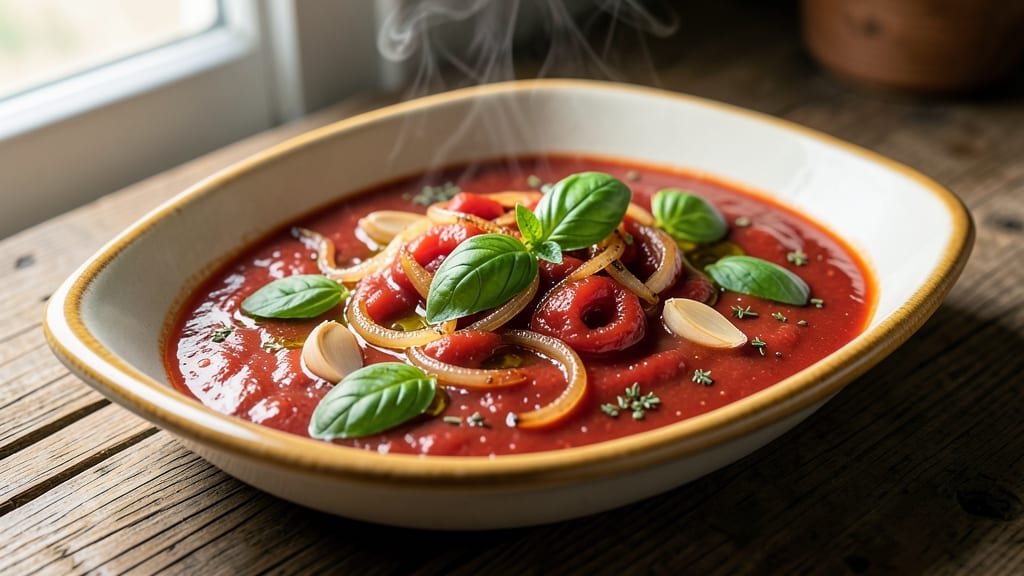
This authentic Italian lasagna sauce recipe delivers the deep, slow-simmered tomato flavor that makes traditional lasagna unforgettable. The secret lies in balancing rich, caramelized tomatoes with fresh herbs and a touch of wine, creating a sauce that's as versatile as it is flavorful.
Unlike quick versions, this method builds layers of complexity through patience and proper technique.
What sets this sauce apart is the slow simmering process, which reduces the sauce to a thick, velvety consistency while developing intense tomato flavor. Fresh basil and oregano add bright, aromatic notes that cut through the richness, while garlic and onions provide a savory foundation.
The optional splash of red wine deepens the sauce's depth, making it taste like it's been simmering for hours—not minutes.
This authentic Italian lasagna sauce works perfectly as a standalone condiment for pasta, meatballs, or grilled vegetables, or as the star of your homemade lasagna. The rich, balanced flavor comes from high-quality ingredients and careful technique, ensuring every bite is packed with authentic Italian taste.
Ready in about 2 hours (mostly hands-off time), it's worth the wait for a sauce that tastes like Nonna's kitchen.
For best results, make a double batch—this sauce freezes beautifully and tastes even better the next day. The key is letting it develop fully, so resist the urge to rush.
Whether you're building a lasagna or simply drizzling it over fresh pasta, this sauce will elevate any Italian meal to restaurant-quality.
Ingredients for authentic italian lasagna sauce
Ten essential ingredients crafting restaurant-quality lasagna sauce with authentic Italian depth.
| Ingredient | Amount | Notes |
|---|---|---|
| San Marzano Tomatoes 🍅 | 28 oz | Crushed by hand for authenticity |
| Extra-Virgin Olive Oil 🫒 | ½ cup | High-quality, fruity variety |
| Yellow Onion 🧅 | 1 whole | Finely chopped, sweet variety |
| Garlic Cloves 🧄 | 4 cloves | Freshly minced, not pre-minced |
| Fresh Basil Leaves 🌿 | ½ cup | Packed, stems removed |
| Fresh Oregano Leaves 🍃 | ¼ cup | Italian oregano preferred |
| Dry Red Wine 🍷 | ½ cup | Bold, medium-bodied variety |
| Tomato Paste 🍅 | 2 tbsp | High-quality, not powdered |
| Kosher Salt 🧂 | 1 ½ tsp | Diamond Crystal preferred |
| Freshly Ground Black Pepper 🌶️ | ½ tsp | Coarsely cracked |
The tomatoes are non-negotiable—San Marzano delivers the sweet, consistent flavor that defines Italian sauces. Purchase whole and crush them by hand for the best texture. Whole Foods or Italian specialty markets stock the highest quality, but any reputable grocery store carries them in the canned goods aisle. Fresh basil and oregano should be bright green with no wilting; Trader Joe's often carries pre-packaged Italian herbs that work perfectly. For the red wine, any bold, medium-bodied variety like Chianti or Sangiovese will deepen the sauce's complexity without overpowering it.
No San Marzano tomatoes? Plum tomatoes work in a pinch, though flavor will be less refined. Substituting dried oregano? Use one-third the amount of fresh and toast it lightly in a dry pan first for deeper flavor. Pre-minced garlic lacks freshness—peel and mince your own for that bright, pungent aroma. For tomato paste, avoid powdered versions; high-quality canned paste from brands like Bertolli ensures proper texture. The olive oil should be extra-virgin—California or Italian varieties with fruity notes elevate the sauce's richness.
Store any unused fresh basil and oregano wrapped in damp paper towels inside a sealed container for up to 5 days. The finished sauce thickens as it cools, so reheat gently with a splash of water if needed. For long-term storage, portion into airtight containers and freeze for up to 3 months. The sauce actually improves with time—day-old sauce tastes more developed and complex, perfect for layering in lasagna or drizzling over pasta. Double batches freeze beautifully for future meals.
Why You'll Love This Recipe
- No-Fuss Simplicity: I swear, this sauce comes together in one pot with zero fuss. Just chop an onion, crush some garlic, and let the San Marzanos do the heavy lifting while you sip your coffee.
- Umami Bomb: That first spoonful? Chef’s kiss. The slow-simmered tomatoes caramelize into something rich, while the basil brightens it just enough to make you reach for another plate.
- Weeknight to Party: Same sauce, endless uses—lasagna night, Sunday brunch, or even stuffed into grilled chicken. I’ve served it at both my kitchen table and my in-laws’ dinner parties, and no one ever questions why it’s my go-to.
- Budget Magic: A single can of San Marzanos and a handful of pantry staples stretch to feed six for less than $10. Honestly, the only thing more impressive than the flavor is how much it saves me from takeout.
Step-by-step instructions for authentic Italian lasagna sauce
This method delivers restaurant-quality depth with slow-simmered tomatoes and vibrant fresh herbs.
Sauté Aromatics in Olive Oil
Heat the 0.5 cup extra-virgin olive oil in a heavy-bottomed pot over medium-low heat. Add the finely chopped yellow onion and cook for 5-6 minutes until translucent, stirring occasionally. The onion should soften without browning—this prevents bitterness in the final sauce.
Add the 4 freshly minced garlic cloves and cook for another 1 minute until fragrant. Garlic burns quickly, so keep the heat gentle. Here's the thing—don't rush this step. Properly developed aromatics form the flavor foundation of authentic Italian sauce.
Build Flavor with Tomato Paste and Wine
Stir in the 2 tbsp tomato paste and cook for 2 minutes until it darkens slightly and releases its concentrated tomato flavor. This step deepens the sauce's richness and balances acidity. Pour in the 0.5 cup dry red wine and simmer for 3-4 minutes until the wine reduces by half.
I always use bold red wine here—it adds complexity that cuts through the tomato's natural acidity. The alcohol will cook off completely, leaving behind just the wine's fruity notes. This is where the sauce transforms from basic to sophisticated.
Add Tomatoes and Simmer Slowly
Add the 28 oz crushed San Marzano tomatoes, the 1.5 tsp kosher salt, and the 0.5 tsp freshly ground black pepper. Stir well to combine, then bring to a gentle simmer. The sauce should bubble softly—never a rolling boil, which can make it bitter.
Partially cover the pot and simmer for 45-60 minutes until the sauce thickens and reduces by about one-third. You're looking for a concentrated, velvety texture with deep tomato flavor. Stir occasionally to prevent sticking, and add a splash of water if it becomes too thick.
Finish with Fresh Herbs
Remove the pot from heat and stir in the 0.5 cup fresh basil leaves and 0.25 cup fresh oregano leaves. Let the sauce steep for 10 minutes off the heat—this allows the herbs to infuse without losing their bright, fresh qualities. The sauce should be vibrant with herbaceous notes that elevate the tomato base.
For authentic Italian lasagna sauce, the herbs should add brightness, not overpower. Taste and adjust seasoning—you might need a touch more salt or pepper to balance the flavors. The sauce is now ready to layer between lasagna sheets or serve over pasta.
Pro Tips For Making Authentic Italian Lasagna Sauce
- Sweat the Onion First: Dice the onion fine—no need for fancy cuts—and cook it in olive oil over medium-low heat until it’s translucent and just starting to caramelize. I used to rush this, but taking 8-10 minutes here builds flavor that carries through the sauce. (Yes, even if you’re impatient like me.)
- Crush Whole Garlic: Instead of mincing, smash 3-4 peeled garlic cloves with the flat side of your knife before adding them to the pot. This releases more aroma without burning, and you won’t have to fish out bitter bits later. My grandmother swore by this, and she was right: it’s subtle but noticeable.
- Simmer, Don’t Boil: Once the tomatoes hit the pot, reduce the heat to a bare simmer—you should see tiny bubbles, not a rolling boil. Boiling turns San Marzano sauce watery and dull; simmering concentrates the sweetness and deepens the color. I learned this the hard way after making a lasagna that tasted like tomato soup.
- Add Basil Late: Tear the fresh basil leaves and stir them in only in the last 5 minutes of cooking. This keeps their bright flavor from turning bitter and fading into the background. (Your future self will thank you for not adding it early—trust me.)
Common mistakes when making your authentic italian lasagna sauce
Overcooking Tomatoes
Simmering too long or at too high a temperature turns your beautiful sauce bitter and mealy. The magic happens at a gentle low simmer—never a rolling boil.
I've ruined batches by letting it bubble vigorously, which breaks down the tomato's natural sweetness. Aim for 45-60 minutes total simmer time, stirring occasionally to prevent scorching. 🌡️
Skipping the Wine
That ½ cup dry red wine isn't just for flavor—it deglazes the pan and adds depth that water or broth can't replicate. Some recipes omit it, but I've found it's the secret to that restaurant-quality richness. Use a bold variety like Chianti and let it reduce completely before adding tomatoes.
Using Pre-Minced Garlic
Freshly minced garlic releases its aromatic oils immediately, creating that authentic Italian punch. Pre-minced garlic loses potency quickly and often contains anti-caking agents that dull flavor. I always peel and mince my own—just 4 cloves—and add them at the very end of the sautéing stage when they're most fragrant.
Adding Herbs Too Early
Fresh basil and oregano should infuse at the end, not simmer in the sauce. Cooking them too long turns their bright green color muddy and their flavor bitter. Stir them in just before serving or let them steep for 10 minutes off the heat—this preserves their vibrant qualities. 🌿
Ignoring Tomato Quality
Not all tomatoes are created equal—San Marzano or high-quality plum tomatoes make all the difference. Cheap canned tomatoes often contain added salt or preservatives that ruin the balance. I've tried substitutions, but nothing matches the sweet, consistent flavor of 28 oz San Marzano tomatoes crushed by hand.
Rushing the Process
This sauce needs time to develop its complex flavors. Trying to speed it up by increasing heat or reducing time results in a flat, one-dimensional sauce. The 2-hour process—especially that slow simmer—builds layers of flavor that quick methods can't replicate.
Trust me, the wait is worth it for that authentic Italian taste. ⏳
Nutrition facts
Frequently asked questions about authentic Italian lasagna sauce
Can I make this sauce without red wine?
The wine adds depth, but you can substitute ½ cup tomato juice or ½ cup water if needed. For best flavor, use a bold red wine like Chianti—the alcohol cooks off, leaving just rich fruit notes. If omitting, reduce the tomatoes by ½ cup to maintain balance.
How long will this sauce keep in the fridge?
Store in an airtight container for up to 5 days in the refrigerator. The sauce actually improves overnight as flavors meld! For longer storage, freeze portions in airtight containers for up to 3 months. Thaw gradually in the fridge before reheating.
What's the best way to thicken this sauce if it's too thin?
Simmer uncovered for 10-15 extra minutes to reduce naturally. For quicker thickening, mix 1 tbsp tomato paste with 1 tbsp water and stir in. Avoid cornstarch—it can make the sauce taste artificial. The sauce should coat the back of a spoon when done.
Can I use dried herbs instead of fresh?
Yes, but use ⅓ the amount (e.g., 1 tbsp dried basil instead of ½ cup fresh). Toast dried herbs lightly in a dry pan first to enhance flavor. Fresh herbs add vibrant color and brightness that dried can't match, but this works in a pinch.
How much sauce do I need for a lasagna?
A standard 9x13-inch lasagna requires about 3-4 cups of sauce. For extra richness, spread 1 cup on the bottom, layer noodles, then alternate with sauce, cheese, and meat. The remaining sauce can be used for the top layer. Double the recipe if making ahead!