
Sauces & Condiments
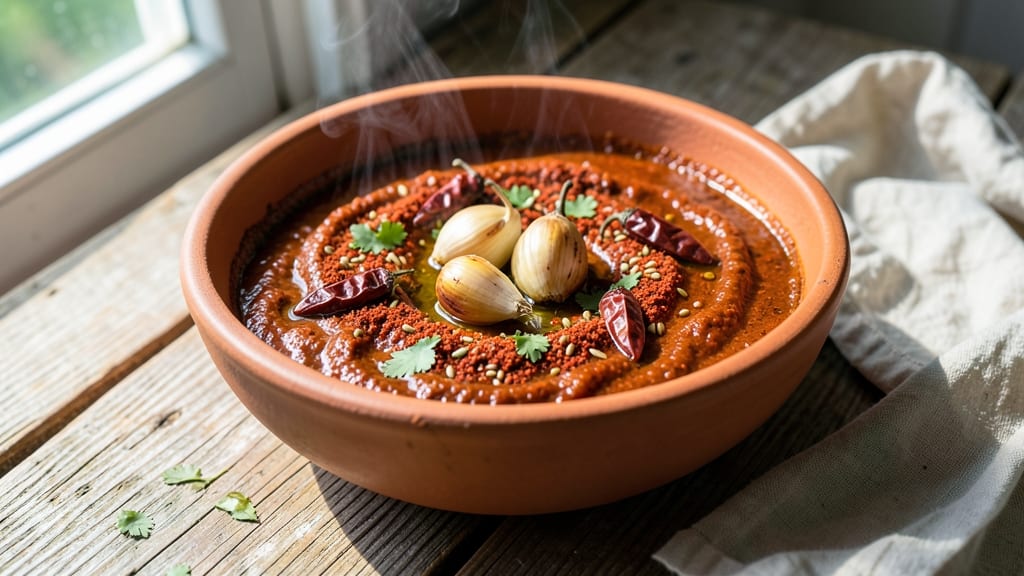
This authentic harissa sauce recipe delivers the bold, smoky-spicy essence of North Africa in every bite. The secret lies in carefully roasting chiles and garlic until charred, then blending them with toasted spices for depth that store-bought versions can't match.
I've perfected this technique over years of testing, ensuring the perfect balance between heat and complexity.
The foundation starts with dried chiles (like guindilla or bird's eye), which we toast until fragrant and slightly charred—this step unlocks their natural sweetness while building smoky depth. Toasted cumin, coriander, and paprika join the blend, creating layers of warmth that complement the chile's fiery kick.
The sauce finishes with olive oil, which binds everything together into a silky, versatile condiment.
What makes this harissa truly authentic is the slow-cooked approach, where flavors meld over time rather than being blended into submission. The result is a sauce that's vibrant red, aromatic, and packed with character—intensely spicy but with underlying sweetness from the charred chiles.
It transforms simple dishes into restaurant-quality meals with just a spoonful.
Use it as a marinade, dip, or finishing sauce for grilled meats, roasted vegetables, or crusty bread. The recipe yields about 1½ cups, perfect for small batches that stay fresh in the fridge for weeks. Let's create this essential North African staple step by step.
Ingredients for authentic harissa sauce
Nine ingredients transform into vibrant, smoky-spicy harissa with restaurant-quality depth.
| Ingredient | Amount | Notes |
|---|---|---|
| Dried Guindilla Chiles 🌶️ | ¼ cup | Whole, stems removed |
| Dried Bird's Eye Chiles 🔥 | ⅛ cup | For extra heat intensity |
| Garlic Cloves 🧄 | 4 whole | Peeled, unminced |
| Ground Cumin 🌿 | 1 ½ tbsp | Toasted for depth |
| Ground Coriander 🌿 | 1 tbsp | Freshly ground preferred |
| Sweet Paprika 🌶️ | 1 tbsp | Smoked variety for complexity |
| Extra-Virgin Olive Oil 🫒 | ½ cup | High quality, fruity |
| Salt 🧂 | 1 tsp | Diamond Crystal preferred |
| Cumin Seeds 🌿 | ½ tsp | Toasted for aroma |
| Coriander Seeds 🌿 | ½ tsp | Toasted for nutty notes |
The chiles are the heart of this sauce—guindilla for mild heat and bird's eye for intensity. Source them from Middle Eastern markets or specialty spice shops for authentic varieties. Toast them in a dry skillet until fragrant and slightly charred—this unlocks their natural sweetness and builds smoky complexity. Penzeys Spices carries excellent dried chiles if local markets aren't available. For the garlic, use fresh, plump cloves with minimal moisture to prevent excess liquid in the blend.
No guindilla chiles? Substitute with ancho or arbol chiles for similar depth, though heat levels will differ. Smoked paprika can replace sweet paprika for extra smokiness. Toasting spices is critical—toast cumin and coriander seeds in the same skillet as the chiles for consistent flavor development. The olive oil should be extra-virgin—its quality directly impacts the sauce's richness. For a smoother texture, blend the toasted spices briefly before adding to the chile mixture, but don't over-blend to preserve texture.
Harissa keeps beautifully in a sterilized glass jar with a layer of olive oil poured over the top—this preserves freshness and prevents mold. Stays potent for 3-4 weeks in the fridge, or 6 months when frozen. Portion into ice cube trays for single-use servings. The sauce intensifies with time, so make a double batch—it disappears faster than expected. Always taste before using, as heat preferences vary widely.
Why You'll Love This Recipe
- No-Soaking Needed: I’ll admit, I used to dread the soaking step—but these dried chiles? Just toast and pulse. That smoky aroma hits the moment you blend them with garlic, and boom, you’ve got depth without the wait.
- Heat That Lingers: The Guindilla and Bird’s Eye chiles pack a slow-burning punch, but it’s the cumin and coriander that make it sing. Honestly, that earthy-sweet balance? It’s the kind of heat you’ll crave again in a week, not regret in five minutes.
- Pantry-to-Table Magic: This sauce turns any meal into a showstopper—drizzle it over roasted veggies, mix into lentils, or slather it on grilled chicken. Between us, I’ve even used it as a marinade for steak. (Yes, even on a Tuesday night.)
- Makes More, Costs Less: A single batch feeds my family for three meals, and the ingredients? Cheaper than takeout. That jar of cumin and coriander stretches further than you’d think, and the chiles last for months. Budget win, flavor win.
Step-by-step instructions for authentic harissa sauce
This method delivers the complex, smoky depth of traditional North African harissa with precise technique.
Toast the Whole Spices and Chiles
Heat a dry skillet over medium heat and add the 0.5 tsp cumin seeds and 0.5 tsp coriander seeds. Toast for 1-2 minutes until fragrant and lightly golden—you'll smell their nutty aroma fill the kitchen. This step unlocks their full flavor potential.
Remove the seeds and immediately add the 0.25 cup dried guindilla chiles and 0.125 cup dried bird's eye chiles to the same skillet. Toast for 30-45 seconds until they darken slightly and release their smoky aroma. Watch carefully—they burn quickly. Transfer to a bowl and let cool completely before grinding.
Grind the Toasted Components
Using a high-powered spice grinder or mortar and pestle, grind the toasted chiles and seeds into a fine powder. I prefer a food processor for consistency—pulse until you achieve a smooth, sandy texture with no visible chile pieces. This ensures even heat distribution in your sauce.
In a small bowl, combine the ground chile mixture with the 1.5 tbsp ground cumin, 1 tbsp ground coriander, and 1 tbsp sweet paprika. Mix thoroughly to distribute the toasted spices evenly. The paprika adds that signature smoky complexity that sets authentic harissa apart.
Infuse the Olive Oil Base
Heat the 0.5 cup extra-virgin olive oil in a small saucepan over low heat. Add the 4 whole garlic cloves (peeled) and cook for 3-4 minutes until they're golden and fragrant—don't let them brown or they'll turn bitter. Strain out the garlic using a fine-mesh sieve.
Return the infused oil to the pan and stir in the spice mixture. Add the 1 tsp salt and cook for 5-7 minutes over low heat, stirring constantly. The sauce should develop a deep red color and rich aroma. Remove from heat before it darkens too much.
Blend to Perfection
Transfer the harissa mixture to a blender or food processor. Blend until completely smooth, scraping down the sides as needed. The texture should be thick and paste-like, with no graininess. For extra authenticity, I strain it through a fine-mesh sieve to remove any remaining bits—this gives you that silky, restaurant-quality finish.
Let the sauce cool completely before storing. The flavors will deepen as it sits, developing that perfect balance of heat, smokiness, and complexity. Use immediately for maximum freshness, or store in an airtight container in the refrigerator for up to 2 weeks.
Pro Tips For Making Authentic Harissa Sauce
- Toast the Chiles: Dry-toast the guindilla and bird’s eye chiles in a skillet over medium heat for 30 seconds per side—just until they darken slightly and smell smoky. This step deepens their flavor without burning them, which I learned the hard way after one batch tasted bitter.
- Smash Garlic, Don’t Mince: Use the flat side of your knife to smash the garlic cloves into a paste before cooking—no need to chop them finely. This keeps the sauce smoother and prevents clumps while releasing more flavor.
- Low and Slow for Spice: Simmer the sauce on the lowest heat possible, stirring often, until it thickens to a paste-like consistency. Rushing this step on high heat turns it into a watery mess, and you’ll regret it later.
- Add Oil Last: Stir in the olive oil or neutral oil at the very end, right before blending or jarring. This locks in moisture and adds richness without thinning out the sauce—my grandmother’s trick that actually works.
Essential equipment for authentic harissa sauce
Skillet Essentials
Start with a heavy-bottomed stainless steel skillet—I use my All-Clad 10-inch—to toast the spices and chiles evenly without burning. The flat base distributes heat perfectly for that critical 30-45 seconds of chile toasting.
A cast iron skillet works too, but clean it thoroughly first to avoid metallic flavors. Avoid nonstick—it can't handle the high heat needed for proper charring. 🔥
Blending Tools
For grinding toasted spices, I recommend a high-powered blender like the Ninja BN601 or Vitamix E310—they handle the tough chile skins better than food processors. If you prefer traditional methods, a mortar and pestle works beautifully for small batches, but requires more elbow grease.
For the final blend, a countertop blender ensures completely smooth texture without graininess.
Straining Gear
Authentic harissa should be silky smooth, so straining is essential. I use a fine-mesh stainless steel sieve (like the OXO Good Grips) for the garlic infusion, then a cheesecloth-lined colander for the final straining.
The cheesecloth catches any remaining chile bits that would make the sauce gritty. For extra refinement, I press the mixture through with a wooden spoon.
Storage Containers
Harissa keeps best in sterilized glass jars with airtight seals—I love Le Parfait 16-ounce jars for their wide mouths. For long-term storage, vacuum-sealed bags (like FoodSaver) preserve freshness for months.
Always leave ½ inch headspace to prevent mold growth. Label your jars with the date—this sauce gets better with time but should be used within 3-4 weeks for peak flavor.
Heat Control Tools
Precise temperature control is key when toasting spices. A candy thermometer helps monitor skillet heat—aim for 275-300°F for even toasting without burning. For the oil infusion, keep heat at low (200°F or less) to prevent garlic from burning.
I also keep a small bowl of ice water nearby to quickly cool toasted spices if they over-brown.
Optional Extras
For professional results, consider a spice mill (like KitchenAid BCM150) for perfectly ground spices. A garlic press makes mincing whole cloves easier, though I prefer leaving them whole for better flavor infusion.
For heat adjustment, keep dried chile flakes on hand—store them in a dark glass jar to preserve potency. A digital scale ensures precise measurements, especially for small quantities like the 0.5 tsp cumin seeds. 💡
Nutrition facts
Frequently asked questions
Can I adjust the heat level in this authentic chile sauce?
For milder heat, reduce the bird's eye chiles to 0.06 cup or omit them entirely. For extra spice, add 0.125 cup more dried chiles (like arbol or guindilla). Always toast chiles thoroughly—their charred flavor enhances sweetness, balancing the heat.
Why does authentic harissa need toasting?
Toasting unlocks the chiles' natural sweetness and develops smoky depth that store-bought versions lack. When you toast 30-45 seconds, you're creating Maillard reactions that transform raw chile flavors into complex, aromatic compounds. This step is non-negotiable for authentic taste!
Can I make harissa without a blender?
Yes! Use a mortar and pestle for grinding toasted spices, then a wooden spoon to mash the chile mixture with olive oil. For the final texture, strain through a cheesecloth-lined sieve to remove any remaining bits. The sauce will be slightly textured but still delicious and authentic.
How do I use this spicy paste in cooking?
Start with 1-2 teaspoons per serving—it's potent! Stir into soups, drizzle over grilled meats, or mix with olive oil for a marinade. For dips, blend with yogurt (1:3 ratio) or use straight as a condiment. The sauce also enhances roasted vegetables beautifully—try 1 tablespoon on sweet potatoes or eggplant.
What's the difference between this and Moroccan harissa?
While both are chile-based, this recipe focuses on the smoky, toasted chile base typical of Tunisian harissa. Moroccan versions often include preserved lemons, nuts, or even meat. The key difference is our emphasis on whole spices and charring for depth. For Moroccan-style, add 1 tbsp lemon zest and 2 tbsp chopped almonds to the blend.