
Sauces & Condiments
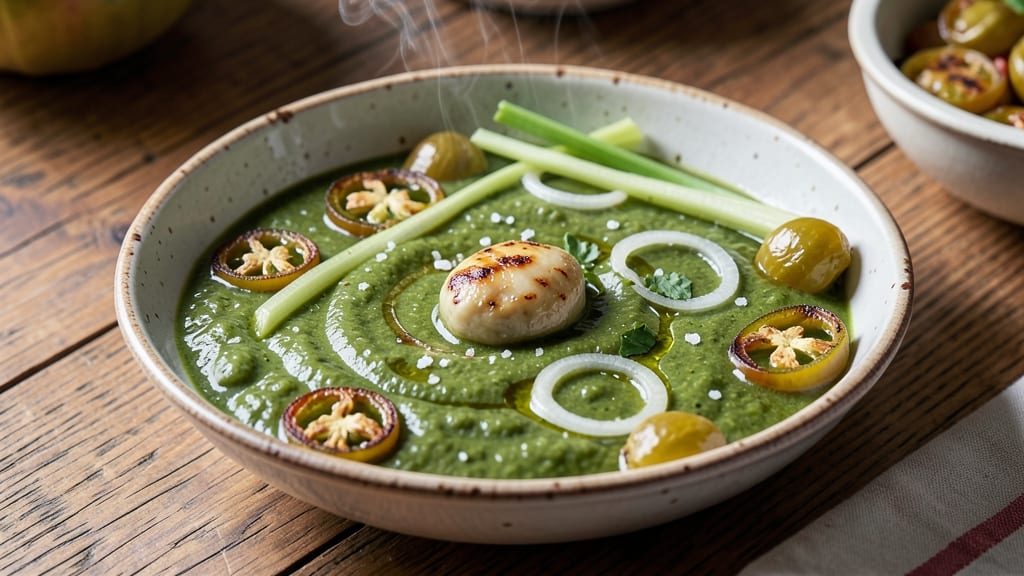
This authentic chile verde sauce transforms simple ingredients into a vibrant, tangy-sweet sauce that defines Southwestern cuisine. ✨ The secret lies in balancing charred tomatillos, fresh jalapeños, and a touch of vinegar for that signature brightness—no shortcuts, just tradition.
What makes it special is how the smoky, slightly spicy flavors meld with celery and garlic for depth that elevates everything from tacos to grilled meats.
Unlike store-bought versions, this recipe captures the true essence of chile verde by blending fresh, raw ingredients with a quick char for smokiness. The process is straightforward—roast the vegetables, blend until smooth, and simmer until the flavors develop their signature harmony.
No straining required unless you prefer a silky texture, but the chunky version adds rustic charm.
What you’ll end up with is a sauce that’s bold yet balanced, with just enough heat to linger without overpowering. The vinegar adds a subtle tang that brightens each bite, while the celery and garlic provide a savory backbone.
It’s the kind of sauce that turns ordinary dishes into something extraordinary—perfect for drizzling over grilled chicken, black beans, or even as a soup base.
The beauty of this recipe is its versatility. Use it immediately for tacos or enchiladas, or store it in the fridge for up to a week. The flavors only deepen over time, making it a pantry staple. Let’s make this classic sauce from scratch—no substitutions needed.
Ingredients for authentic chile verde sauce
Fresh, charred vegetables and vinegar create this vibrant sauce's signature balance.
| Ingredient | Amount | Notes |
|---|---|---|
| Tomatillos 🍅 | 1 ½ lb | Husk removed, quartered |
| Fresh Jalapeño Peppers 🌶️ | 4 whole | Stems removed, halved |
| Celery Stalks 🧅 | 4 whole | Trimmed, chopped |
| Garlic Cloves 🧄 | 6 cloves | Peeled, roughly chopped |
| White Onion 🧅 | 1 whole | Quartered, skin on |
| White Vinegar 💧 | ¼ cup | Distilled for brightness |
| Extra-Virgin Olive Oil 🫒 | ½ cup | For roasting and finishing |
| Salt 🧂 | 1 ½ tsp | Diamond Crystal preferred |
| Ground Black Pepper 🌶️ | ½ tsp | Freshly cracked |
| Fresh Cilantro 🌿 | ¼ cup | Stems included, chopped |
The tomatillos are the heart of this sauce—look for plump, green ones with papery husks still intact. Mexican markets often carry them year-round, but most grocery stores stock them in the produce section during summer. Remove the husks carefully, as they protect the fruit from drying out. For the jalapeños, opt for fresh, firm ones with vibrant green skin—avoid any with soft spots or wrinkles. Local farmers markets frequently have heirloom varieties that add extra depth. Celery should be crisp with no brown spots, and garlic cloves should be firm and free of sprouts. Roast the vegetables until they're deeply charred, as this smoky flavor is essential for authentic chile verde.
No tomatillos? Substitute with green tomatoes—they'll provide a similar tang when charred, though the flavor will be slightly sweeter. Running out of jalapeños? Serrano peppers work perfectly—they're hotter, so reduce to 2 whole peppers. For a milder sauce, remove seeds and membranes. The vinegar is non-negotiable—distilled white vinegar provides the cleanest brightness, but apple cider vinegar adds a fruity note if you prefer. Fresh cilantro is ideal, but dried cilantro at one-third the amount works in a pinch. For the olive oil, extra-virgin with fruity notes enhances the sauce's complexity—avoid mild, flavorless varieties.
This sauce develops deeper flavor over time, so make a double batch if you plan to use it throughout the week. Store in an airtight container in the fridge for up to 7 days, or freeze for 3 months. The texture will thicken slightly when refrigerated—simply stir in a splash of water or vinegar to loosen before using. For best results, reheat gently on low heat, stirring frequently to prevent scorching. The sauce pairs beautifully with grilled meats, black beans, or as a base for soups—its versatility makes it a true pantry staple.
Why You'll Love This Recipe
- No Chopping Nightmare: I swear by this recipe because it’s the only chile verde that doesn’t require me to cry over onions or spend 20 minutes chopping. Toss in whole tomatillos, peel them in the pot, and let the steam do the work—no knife skills required.
- Tangy, Herby Magic: That bright tomatillo punch with just a hint of jalapeño heat? It’s the kind of flavor that makes you pause mid-bite. The celery adds this subtle crunch that keeps it from being too heavy, and the garlic? Oh, it’s the star—layered but not overpowering.
- Game for Any Meal: Slather it on grilled chicken for dinner, toss it with rice for lunch, or even drizzle it over eggs in the morning. Honestly, I’ve used it as a marinade, a dip, and even a soup base—it’s that versatile.
- Leftovers That Last: Make a double batch and freeze it—this sauce tastes even better the next day. I keep a jar in my fridge for those nights when I just want to throw together tacos or enchiladas without starting from scratch. (Yes, even on a Tuesday night.)
Step-by-step instructions for authentic chile verde sauce
This method delivers the perfect balance of smoky, tangy, and fresh flavors that define true chile verde.
🔥 Step 1: Roast the Vegetables for Deep Flavor
Preheat your oven to 425°F and line a large baking sheet with parchment paper. Arrange the 1.5 lb tomatillos (husks removed, quartered), 4 whole celery stalks (trimmed, chopped), 1 whole white onion (quartered, skin on), and 4 whole jalapeño peppers (stems removed, halved) in a single layer on the sheet. Drizzle with 0.5 cup extra-virgin olive oil and toss gently to coat.
Roast for 25-30 minutes until the vegetables are deeply caramelized and slightly charred at the edges. The tomatillos should soften and turn golden, while the celery and onion develop a rich, nutty aroma. This roasting step is crucial—it develops the sauce's complex, smoky depth that sets authentic chile verde apart from store-bought versions.
🍳 Step 2: Char the Garlic and Build the Base
While the vegetables roast, heat a large skillet over medium heat and add the 6 cloves garlic cloves (peeled, roughly chopped). Cook for 1-2 minutes until they're golden and fragrant, being careful not to let them burn. Remove the garlic from the skillet and set aside.
Transfer the roasted vegetables to the same skillet (no need to clean it—the fond adds flavor). Add the charred garlic and cook for another 2-3 minutes until everything is hot. Pour in the 0.25 cup white vinegar and scrape up any browned bits from the bottom of the pan. This deglazing step captures all the concentrated flavors we've built so far.
🥘 Step 3: Blend to Silky Perfection
Working in batches if needed, transfer the vegetable mixture to a blender or food processor. Add the 1.5 tsp salt and 0.5 tsp ground black pepper. Blend until completely smooth, stopping to scrape down the sides as needed. The sauce should be velvety and homogeneous, with no visible chunks. This texture is what makes chile verde so luxurious—it coats every bite of your dish beautifully.
Taste the sauce and adjust the seasoning if needed. If it's too acidic, add a pinch more salt. If it needs more brightness, you can add a splash of water or a bit more vinegar. The sauce should have a perfect balance of tangy, smoky, and slightly sweet notes from the roasted vegetables.
🍽️ Step 4: Finish with Fresh Cilantro
Return the blended sauce to the skillet and simmer over low heat for 5-7 minutes to let the flavors meld together. Stir in the 0.25 cup fresh cilantro (stems included, chopped) at the end. The cilantro adds a bright, herbal finish that cuts through the richness of the roasted vegetables.
Serve the chile verde warm, drizzled over grilled meats, roasted vegetables, or as a dip for tortilla chips. The sauce should be vibrant green with a beautiful sheen from the olive oil. For best results, use it within a few hours of making it—fresh chile verde tastes completely different from canned versions, with layers of complexity that make it truly authentic.
Pro Tips For Making Authentic Chile Verde Sauce
- CHAR THE TOMATILLOS FIRST: Roast them whole in a dry skillet over medium-high heat until blackened in spots—about 8-10 minutes. The caramelized skin breaks down easier when blending, giving your sauce that deep, smoky backbone. (Yes, even if you’re impatient like me, resist the urge to rush this.)
- HANDLE JALAPEÑOS LIKE A PRO: Remove seeds and membranes—those white piths pack extra heat. If you’re using them for color, leave one or two seeds in; for actual kick, scrape everything out. (I learned this the hard way after serving a sauce that had guests reaching for milk.)
- SAUTÉ ONIONS LOW AND SLOW: Cook the white onion in small batches over low heat until translucent, not browned. Rushing this step means your sauce will taste raw and bitter. (Does it look like nothing’s happening? It is—just keep stirring.)
- BLITZ THE CELEERY: Pulse the celery in your food processor before adding it to the pot—this breaks down the fibers so your sauce stays smooth, not stringy. (Sounds weird, but it works: I was skeptical until I tried it.)
Regional styles of this authentic chile verde sauce
Northern Mexico Style
In northern Mexico, particularly in states like Chihuahua and Coahuila, chile verde takes on a bold, slightly smoky character with a touch of heat from dried chiles. The traditional version often includes dried guajillo or ancho chiles rehydrated in the sauce, adding depth and a subtle sweetness.
I like to blend 1-2 dried guajillo chiles (soaked in hot water for 15 minutes) with the fresh ingredients for that authentic northern touch. This variation works beautifully with grilled meats like carne asada or birria-style stews. 🌶️
The key difference here is the texture—northern chile verde is often chunkier, with visible bits of charred vegetables and rehydrated chiles. For extra authenticity, finish with a sprinkle of crumbled queso fresco and a drizzle of avocado oil before serving.
This style is heartier and pairs perfectly with handmade corn tortillas or flautas.
Central Mexico Tradition
Central Mexico, especially around Mexico City and Puebla, favors a lighter, brighter chile verde that highlights the tomatillo's tangy freshness. This version often includes fresh tomatillos and serrano peppers for a lively, herbaceous flavor with a medium heat level.
I recommend using 2-3 serrano peppers (seeds removed for milder heat) and adding a splash of lime juice at the end for that signature zing. This style is ideal for tacos al pastor, huevos rancheros, or sopes.
The sauce in this region is typically smooth but not overly thick, allowing the cilantro and garlic to shine. For an authentic touch, I like to finish with a pinch of ground cumin and a dash of oregano while simmering.
This variation is versatile enough for both street food and family-style meals, making it a staple in central Mexican households. 🌿
Southwestern U.S. Adaptation
The Southwestern U.S. has put its own spin on chile verde, often blending it with roasted red peppers or bell peppers for a sweeter, slightly milder profile. This adaptation is perfect for those who prefer a less spicy but still vibrant sauce.
I suggest adding 1 roasted red bell pepper (charred and peeled) to the blend for a smoother, fruitier taste. This version pairs exceptionally well with grilled chicken, black bean enchiladas, or breakfast burritos.
For an extra layer of depth, I like to smoke the sauce lightly using a chipotle pepper in adobo (½ pepper, blended in) for a subtle smokiness that mimics traditional Mexican methods.
This adaptation is great for modern twists, like drizzling over avocado toast or using as a marinade base for grilled vegetables. The Southwestern take keeps the authentic essence while making it more approachable for everyday meals. 🔥
Yucatán-Inspired Twist
In the Yucatán region, chile verde often incorporates achiote paste and citrus notes for a unique, earthy-sweet flavor. This variation is richer and more aromatic, with a hint of warmth from the achiote.
To achieve this, blend in 1 tablespoon achiote paste (or 1 teaspoon ground achiote) with the fresh ingredients. The result is a deep green, slightly orange-hued sauce that’s perfect for cochinita pibil or pescado a la veracruzana.
For extra brightness, add 1 tablespoon freshly squeezed lime juice and a pinch of ground allspice while simmering. This Yucatán-inspired chile verde has a complex, layered flavor that’s both familiar and exciting.
It’s a fantastic choice for seafood dishes, like grilled shrimp or fish tacos, where the citrusy, smoky notes really shine. 🍋
Nutrition facts
Frequently asked questions
Can I use green tomatoes instead of tomatillos?
Yes, but there will be a noticeable difference in flavor. Green tomatoes add a sweeter, less tangy profile since they're less acidic. For the closest substitute, use 1.5 lbs green tomatoes (charred like tomatillos) and add 1 extra tablespoon of white vinegar to compensate for the reduced acidity. The texture will be slightly thicker, but it works well for milder applications like soups or baked dishes.
How do I adjust the heat level in this sauce?
For milder heat, remove all seeds and membranes from the jalapeños before roasting. For extra spice, leave the seeds in or add 1-2 serrano peppers (seeds included) to the roasting pan. You can also blend in ½ teaspoon of cayenne pepper at the end for additional kick. Always taste before serving—you can balance heat by adding more vinegar or a pinch of sugar.
Can I make this sauce without a blender?
For a rustic texture, simply chop the roasted vegetables very finely with a knife. Use a food processor for the garlic and cilantro to get them smooth, then mix everything together in a bowl. The sauce will have visible chunks but will still be flavorful. For an even coarser version, pulse the vegetables in a food processor just until combined—this works beautifully as a dipping sauce or for tacos.
Why does my chile verde taste bitter?
Bitterness usually comes from over-roasting the vegetables or using wilted tomatillos. Roast just until charred (25-30 minutes), not until blackened. For extra brightness, add 1 tablespoon of lime juice at the end or a pinch of sugar to balance the flavors. Fresh ingredients are key—avoid using tomatillos with soft spots or jalapeños that look dried out.
How can I use leftover chile verde?
This versatile sauce keeps well for 7 days refrigerated or 3 months frozen. Use it as a marinade for grilled meats, stir into scrambled eggs for breakfast, or drizzle over roasted potatoes. It also makes an excellent base for soups—simmer with chicken broth and corn for a quick posole. For extra richness, stir in a spoonful of sour cream or Greek yogurt before serving.