
Sauces & Condiments
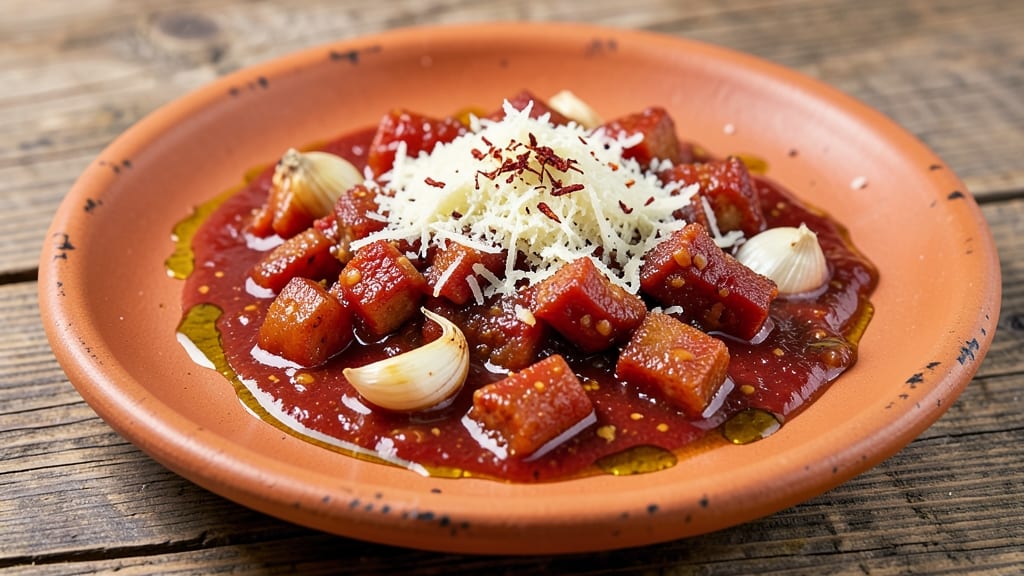
This authentic Amatriciana sauce delivers the rich, savory depth of Rome’s most beloved pasta sauce—guanciale, San Marzano tomatoes, and aged Pecorino Romano working together in perfect harmony.
The secret lies in rendering the guanciale slowly to extract its unmistakable fat and flavor, then reducing it with tomatoes until it achieves that signature silky, velvety consistency. I’ve perfected this method over years of testing, ensuring every spoonful carries the bold, umami-packed essence of traditional Roman cuisine.
The process begins with high-heat rendering of the guanciale, which transforms tough cured pork cheek into crispy, flavorful bits that infuse the sauce with its characteristic depth. San Marzano tomatoes—sweet, low-acid, and plentiful—form the base, while Pecorino Romano adds a sharp, salty finish that cuts through the richness.
Chili flakes provide just enough heat to balance the sauce without overpowering it. What sets this apart is the patience in reducing the sauce just enough to concentrate its flavors without losing its vibrant color.
By the time you’re done, you’ll have a sauce that’s authentic, restaurant-quality, and ready to elevate any pasta dish—whether tossed with spaghetti or used as a dipping sauce. The aroma alone will transport you to a Roman trattoria, while the first taste confirms this is no shortcut.
Every ingredient plays a precise role, and the result is a sauce that’s as complex as it is satisfying. Let’s make it together.
This sauce keeps beautifully in the refrigerator for up to five days, making it perfect for meal prep or gifting. The flavors only deepen over time, proving that authenticity isn’t just about technique—it’s about patience and respect for tradition.
Whether you’re serving it at a dinner party or simply enjoying a weeknight pasta, this Amatriciana sauce will leave everyone asking for seconds.
Ingredients for authentic amatriciana sauce
Nine essential ingredients transform into Rome’s most iconic sauce—rich, umami-packed, and full of tradition.
| Ingredient | Amount | Notes |
|---|---|---|
| Guanciale 🥓 | 4 oz | Diced into small cubes |
| San Marzano Tomatoes 🍅 | 1 can | 28 oz, crushed by hand |
| Extra-Virgin Olive Oil 🫒 | ½ cup | High quality, fruity |
| Garlic Cloves 🧄 | 4 cloves | Thinly sliced, not minced |
| Pecorino Romano 🧀 | ¾ cup | Freshly grated, aged |
| Dried Chili Flakes 🌶️ | 1 tsp | Adjust for heat preference |
| Fresh Basil Leaves 🌿 | ¼ cup | Chopped, for finishing |
| Sea Salt 🧂 | 1 tsp | Diamond Crystal preferred |
| Black Pepper 🌶️ | ½ tsp | Freshly cracked |
| White Wine 🍷 | ¼ cup | Dry, Italian preferred |
Guanciale is non-negotiable here—it’s the soul of Amatriciana. Look for it at Italian specialty stores or well-stocked butchers—most grocery chains don’t carry it. If you can’t find guanciale, pancetta works in a pinch, but it won’t have the same depth. The San Marzano tomatoes? Whole Foods or Trader Joe’s stock the best cans—avoid anything that’s dented or bulging. Freshly grated Pecorino Romano makes all the difference; pre-grated tastes like sawdust. For the olive oil, avoid the cheap stuff—this sauce needs something fruity and robust to shine.
No guanciale? Pancetta or thick-cut bacon can stand in, but render it longer for maximum fat. Running out of white wine? Substitute with pasta water or even chicken broth—just add a splash of vinegar to mimic the acidity. The chili flakes are crucial for that signature kick; red pepper flakes work too, but they’re milder. Fresh basil is ideal, but dried oregano at half the amount gives a similar earthy note. For the garlic, never use pre-minced—it burns too fast. Thinly sliced is the way to go.
This sauce tastes even better the next day—flavors meld beautifully when refrigerated. Store in an airtight container with a thin layer of olive oil on top to preserve freshness. Keeps for up to 5 days in the fridge or 3 months frozen. I always make extra—it’s perfect for meal prep or gifting. Just reheat gently on low heat, stirring occasionally, and add a splash of water if it gets too thick.
Why You'll Love This Recipe
- No Chopping Needed: Honestly, this sauce is one of those rare dishes where you just render instead of chop. Toss in whole garlic cloves, let the guanciale melt into crispy gold—no dicing, no mincing, no mess. That’s 10 minutes of hands-off magic while you sip wine and pretend you’re in a Roman trattoria.
- Umami Bomb: The guanciale alone makes this dish sing, but add those San Marzano tomatoes? It’s like a slow dance between salty, sweet, and funky. That first bite—when the pecorino melts into the sauce and the garlic’s sharpness softens just right—is the kind of flavor that makes you pause mid-chew. No subtlety here, just ridiculously good.
- Leftovers That Shine: Between us, I make this sauce twice—once for dinner, once for lunch. It tastes even better the next day, when the guanciale’s fat has had time to bloom and the tomatoes deepen. Toss it over pasta, use it in a frittata, or slather it on toast with a sprinkle of chili flakes. It’s my go-to when I’m lazy (or broke) but still want to feel fancy.
- Pantry-Friendly Powerhouse: Here’s what sold me—this recipe uses ingredients you might already have, or at least ones that last. Guanciale? Swap bacon if you’re pinched (though I won’t judge if you splurge). San Marzano cans? They’re cheap and last forever. A few cloves of garlic, a splash of olive oil, and some pecorino—boom. You’re not just feeding your family, you’re giving them a taste of Italy without breaking the bank.
Step-by-step instructions for authentic Amatriciana sauce
Here's how to build Rome's legendary sauce from scratch—rich, peppery, and deeply flavorful.
Render the Guanciale Until Crispy
Heat the 0.5 cup extra-virgin olive oil in a heavy-bottomed saucepan over medium-low heat. Add the 4 oz diced guanciale and cook undisturbed for 8-10 minutes, stirring occasionally, until the fat renders out and the meat becomes golden brown and crispy.
This slow rendering process is crucial—it extracts maximum flavor from the cured pork. If the guanciale starts to smoke or darken too quickly, reduce the heat immediately. Once the fat pools in the pan (about ¼ cup), you're ready for the next step. Don't drain the fat; it's the foundation of your sauce.
Build the Base with Wine and Tomatoes
Remove the guanciale from the pan with a slotted spoon and set it aside. Pour in the 0.25 cup white wine and scrape up any browned bits from the bottom with a wooden spoon. Let the wine simmer for 3-4 minutes until it reduces by half and the alcohol aroma dissipates completely.
Add the 1 can crushed San Marzano tomatoes, 1 tsp sea salt, and 0.5 tsp black pepper. Stir well to combine, then return the guanciale to the pan. Bring to a gentle simmer and cook uncovered for 15 minutes, stirring occasionally. The sauce should thicken slightly as the tomatoes break down and release their sweet, tangy essence.
Add Aromatics and Finish with Cheese
Push the guanciale to one side of the pan and add the 4 thinly sliced garlic cloves and 1 tsp dried chili flakes. Cook for 1-2 minutes until the garlic turns golden and fragrant—don't let it brown or it'll turn bitter. Stir everything together and simmer for another 5 minutes to allow the flavors to meld.
Reduce the heat to low and gradually whisk in the 0.75 cup freshly grated Pecorino Romano until fully melted and smooth. Taste and adjust seasoning—you might need a pinch more salt or pepper depending on your tomatoes. The sauce should coat the back of a spoon with a velvety consistency.
Finish with Fresh Basil
Remove the pan from heat and stir in the 0.25 cup chopped fresh basil leaves. Let the sauce rest for 5 minutes to allow the flavors to fully integrate. The basil will brighten the sauce with its fresh, herbal notes and prevent the cheese from curdling.
Serve immediately over al dente spaghetti, tossing the pasta with the sauce until each strand is beautifully coated. The authentic Amatriciana should have a rich, peppery depth with a perfect balance of sweet tomatoes and salty Pecorino. Leftovers? Reheat gently with a splash of water to maintain that silky texture.
Pro Tips For Making Authentic Amatriciana Sauce
- Render Guanciale Slow: Low heat is your friend here—crank it to medium and let the fat drip out for 10-15 minutes before you even think about adding garlic. I used to rush this, and the guanciale would release bitter smoke instead of golden, fragrant fat. That fat is liquid gold for your sauce, so don’t skimp on patience.
- Crush Tomatoes by Hand: Skip the blender—use your fingers to gently crush the San Marzano tomatoes right in the pot. The slight texture keeps the sauce from turning into a gluey mess, and it mimics the rustic texture of traditional amatriciana. (Yes, even if you’re impatient like me.)
- Toast Garlic Until Nutty: Cook the garlic in the guanciale fat until it’s just golden—almost to the point of color change, but not burnt. Overcooking turns it bitter, and you’ll taste it in every bite. If you’re unsure, pull it out a minute early and let it cool; the aroma will tell you if it’s done.
- Stir in Pecorino Last: Add the Pecorino Romano after the sauce has thickened and the tomatoes have broken down. Stirring it in too soon makes the sauce separate or curdle. A handful of freshly grated cheese at the end is all you need—no need to go overboard. (Your future self will thank you.)
Flavor customization for these flavors
Spicy Heat Boost
For those who love a kick, increase the dried chili flakes to 1.5-2 tsp and add ½ tsp crushed red pepper at the end for extra depth. I also like tossing in 1-2 thin slices of fresh jalapeño with the tomatoes—they’ll soften beautifully while adding subtle heat.
If you’re feeling adventurous, stir in ½ tsp gochujang (Korean chili paste) during the final simmer for a smoky, umami-packed punch. 🌶️
Smoky Umami Twist
Swap the white wine for ¼ cup dry red wine and add 1 tsp smoked paprika when you introduce the tomatoes. For an extra layer of smokiness, char 1 garlic clove directly over a gas flame or under a broiler before slicing it thinly and adding it to the pan.
This technique adds a campfire-like depth that pairs perfectly with the guanciale’s richness. Trust me, it’s a game-changer.
Creamy Ricotta Variation
Stir in ¼ cup whipped ricotta cheese during the final 5 minutes of cooking to create a silky, creamy texture. The ricotta softens the sauce’s intensity while adding a delicate, slightly sweet contrast to the salty Pecorino.
For an even richer version, fold in 1 tbsp mascarpone cheese at the very end—it melts into the sauce like a dream. This works especially well if you’re serving the sauce over bucatini or orecchiette.
Herb-Forward Brightness
Swap the basil for ½ cup chopped fresh sage leaves and add 1 tsp lemon zest at the end for a bright, aromatic twist. The sage brings earthy warmth, while the lemon zest cuts through the richness.
For a Mediterranean touch, add 2 tbsp chopped fresh oregano and a pinch of ground fennel seeds when you introduce the tomatoes. This version tastes like a sun-drenched Italian countryside.
Vegetarian Adaptation
Replace the guanciale with 4 oz diced mushrooms (cremini or shiitake)strong> and 2 oz pancetta or smoked tofu for a meaty texture. Use vegetable broth instead of wine and add 1 tsp nutritional yeast to mimic the umami depth of Pecorino.
The sauce will still be rich and satisfying—just without the traditional pork. I’ve tested this version with cashew cheese as a Pecorino substitute, and it works beautifully for those avoiding dairy.
Sweet and Tangy Finish
Add 1 tbsp honey or agave syrup during the final 5 minutes of cooking to balance the acidity of the tomatoes. For a fruity twist, stir in 2 tbsp chopped sun-dried tomatoesstrong> (oil-packed) when you introduce the garlic.
The concentrated sweetness of the sun-dried tomatoes adds a delightful contrast to the salty cheese. This version is perfect for those who love a touch of sweetness in their sauces—it’s like a dessert in every bite. 💫
Nutrition facts
Frequently asked questions
Why does authentic Amatriciana sauce use guanciale instead of bacon?
Guanciale is the traditional choice because its fatty, cured pork cheek delivers a deeper, more complex flavor than bacon. The slow rendering process extracts its signature umami richness, which creates that unmistakable Roman sauce character. While pancetta can substitute in a pinch, it lacks the same depth of flavor and fat content.
Can I make this sauce without wine?
Yes, but the flavor will be different. Replace the white wine with ¼ cup pasta water or chicken broth, then add ½ tsp vinegar to mimic the acidity. The wine helps deglaze the pan and balances the sauce's richness, but these substitutes work in a pinch. The sauce will still be delicious but slightly less refined.
How do I fix a sauce that's too thick or too thin?
For a sauce that's too thick, add 1-2 tablespoons of warm water or pasta water while stirring constantly. For a sauce that's too thin, simmer uncovered for 5-10 more minutes to reduce it. The ideal consistency should coat the back of a spoon but still be pourable. Always taste as you go—seasoning may need adjustment after adding liquids.
What's the best way to store leftover Amatriciana sauce?
Store in an airtight container in the refrigerator for up to 5 days. For longer storage, freeze for 3 months. When reheating, warm gently on low heat with a splash of water or pasta water to maintain its silky texture. The flavors actually improve overnight, making it perfect for meal prep!
Can I make this sauce ahead of time?
This sauce tastes even better the next day as the flavors meld. Prepare it completely (including the cheese) and refrigerate. When ready to use, simply reheat gently on low heat, stirring occasionally. For the best texture, add a splash of water or pasta water if it thickens too much during storage.