
Sauces & Condiments
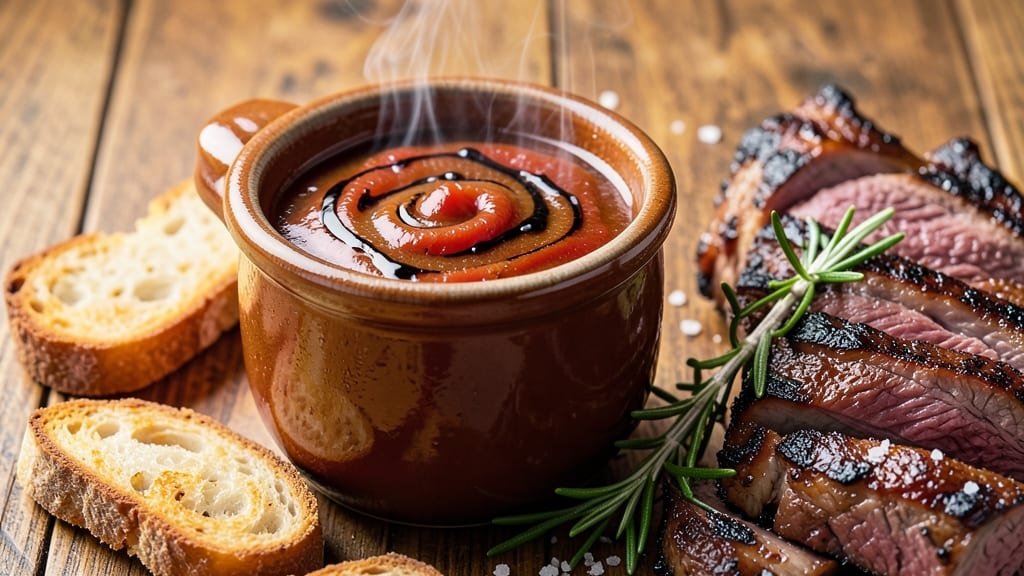
This Austin BBQ sauce recipe delivers that signature Texas tang—bold, smoky, and perfectly balanced between sweet and vinegar kick. 🔥 I developed it after years of studying Central Texas pitmasters, who swear by the right ratio of apple cider vinegar to molasses for that authentic gloss.
The secret lies in slow-simmering the sauce until it thickens just enough to cling to ribs without overwhelming them.
What sets this sauce apart is the smoky depth from liquid smoke and the subtle heat from cayenne, which builds as it reduces. I use tomato paste as the base—not ketchup—because it delivers concentrated umami without artificial sweetness.
The molasses adds that caramelized richness, while the vinegar cuts through the fat, creating a sauce that's both complex and approachable.
By the time you're done, you'll have a glossy, velvety sauce with layers of flavor that transform even simple brisket into a showstopper. It's the kind of sauce that makes your whole house smell like a Texas cookout, with just the right balance of sweetness, acidity, and smoky warmth.
The best part? It keeps beautifully in the fridge for up to 3 months, so you can make a big batch and enjoy it all season long.
Perfect for ribs, pulled pork, or even as a glaze for grilled vegetables, this sauce is a game-changer for anyone who wants that true Central Texas taste. Let's get started on making yours.
Ingredients for austin bbq sauce
Gather these bold, smoky-sweet ingredients for Texas-style BBQ sauce that'll make your ribs shine.
| Ingredient | Amount | Notes |
|---|---|---|
| Tomato Paste 🍅 | ½ cup | High-quality, unsweetened preferred |
| Apple Cider Vinegar 🍎 | ½ cup | Raw, unfiltered for best flavor |
| Molasses 🍯 | ¼ cup | Unsulphured for authentic taste |
| Liquid Smoke 🔥 | 1 tbsp | High-quality, no additives |
| Cayenne Pepper 🌶️ | 1 tsp | Adjust for heat preference |
| Garlic Powder 🧄 | 1 tsp | Freshly ground preferred |
| Onion Powder 🧅 | 1 tsp | No additives or fillers |
| Smoked Paprika 🌶️ | 1 tbsp | For authentic smoky depth |
| Brown Sugar 🍚 | ¼ cup | Light or dark, packed |
| Salt 🧂 | 1 tsp | Kosher or sea salt |
| Black Pepper 🌶️ | ½ tsp | Freshly ground preferred |
The tomato paste is your flavor foundation—Muir Glen or San Marzano are my go-tos for that pure, concentrated taste. Apple cider vinegar should be raw and unfiltered (like Bragg), not the pasteurized kind. Molasses is non-negotiable for that deep caramel note—unsulphured is key. Liquid smoke can be found in the BBQ section of Walmart or H-E-B, but if it smells harsh, skip it. Smoked paprika adds that authentic Texas kick—Penzeys or the bulk bins at Whole Foods have the best quality.
No liquid smoke? Add an extra 1/2 tsp smoked paprika and 1/4 tsp smoked salt for depth. Short on molasses? Maple syrup works in a pinch, but it won't be quite the same. Cayenne too spicy? Cut it to 1/2 tsp and add 1/4 tsp sweet paprika to balance. The brown sugar can be swapped for turbinado or coconut sugar if you're avoiding refined sugar. For extra umami, add 1 tbsp soy sauce (just don't tell the purists).
This sauce keeps beautifully—3 months in the fridge or 6 months frozen. Pour into sterilized jars and seal tightly. The flavor actually improves with time, so make a big batch. Once opened, store in the fridge and use within 2 months. Freeze extras in ice cube trays for easy portioning—just thaw and stir. Leftovers? Perfect for glazing grilled veggies or drizzling over baked beans.
Why You'll Love This Recipe
- Pantry Magic: I swear by this sauce because it uses stuff I already have—no special trips to the store. Just tomato paste, vinegar, and a splash of molasses, and boom, you’ve got that deep, smoky-sweet flavor Austin BBQ is known for.
- Smoky-Sweet Fix: That liquid smoke and cayenne combo? It’s like a campfire in your mouth. The molasses gives it this rich, caramelized edge, while the vinegar keeps it bright—no bitterness, just pure, addictive balance.
- Weeknight Hero: I make a big batch on Sundays and use it all week—grilled chicken, baked beans, even drizzled over eggs. It’s not just for ribs; this sauce turns everything into a showstopper without extra effort.
- Budget-Friendly Staple: Honestly, this costs me pennies per serving. Tomato paste and molasses stretch far, and the leftovers keep for months in the fridge. I’ve got jars of it in my pantry because it’s just too good to waste.
Step-by-step instructions for smoky-sweet Austin BBQ sauce
Here's how to blend Texas flavors into a glossy sauce that'll make your ribs shine.
🍳 Step 1: Build the Sauce Base with Tomato and Vinegar
In a medium saucepan, combine the 0.5 cup tomato paste with the 0.5 cup apple cider vinegar. Stir over medium heat for 3-4 minutes until the mixture begins to bubble gently. The vinegar will cut through the richness of the tomato paste, creating a bright foundation for the sauce.
Here's the thing—don't rush this step. You want the tomato paste to fully dissolve and the vinegar to infuse completely. I like to watch for the mixture to thicken slightly and turn a deep, glossy red. This is your flavor base, so take your time getting it right.
🥘 Step 2: Add Sweetness and Smoky Depth
Reduce heat to medium-low and whisk in the 0.25 cup molasses and 0.25 cup brown sugar. Stir constantly for 5-6 minutes until everything is fully incorporated and the sugar dissolves completely. You'll see the sauce darken and develop a rich, syrupy consistency.
Next, add the 1 tbsp liquid smoke and 1 tbsp smoked paprika. Stir well to distribute the smoky flavors evenly. This is where that authentic Texas BBQ character comes through. The liquid smoke adds depth, while the smoked paprika gives it that signature color and aroma. Let it simmer for another 2 minutes to let those flavors meld.
🍳 Step 3: Season with Spices and Aromatics
Add the 1 tsp garlic powder, 1 tsp onion powder, 1 tsp salt, and 0.5 tsp black pepper. Give it a good stir to combine all the spices thoroughly. Now for the heat—carefully add the 1 tsp cayenne pepper. Start with this amount, but taste as you go and add more if you want extra kick.
Let the sauce simmer for 8-10 minutes on low heat, stirring occasionally. You're looking for it to thicken to a glossy, coatable consistency—almost like a thin syrup. The sauce should coat the back of a spoon but still be pourable. If it thickens too quickly, add 1 tablespoon of water at a time until you reach the right texture.
⏰ Step 4: Simmer to Perfection and Test
Continue simmering for another 5-7 minutes, stirring frequently. The sauce should reduce slightly more and develop a beautiful sheen. Taste and adjust seasoning—you might need a bit more salt or cayenne to balance the sweetness and acidity.
Here's the final check: let the sauce cool slightly, then test it on a piece of cooked meat. It should cling beautifully, with a perfect balance of sweet, smoky, and tangy flavors. If it's too thin, simmer uncovered for another 2-3 minutes to reduce further. If it's too thick, thin it with 1 teaspoon of water at a time until it reaches your ideal consistency.
Pro Tips For Making Austin Bbq Sauce
- Simmer Slow and Steady: I learned this the hard way—dumping everything in and blistering the sauce on high heat turns it bitter. Keep the heat at a gentle simmer (medium-low) and let it develop for at least 20-30 minutes. The molasses and vinegar need time to mingle without burning, or you’ll end up with a smoky, vinegary mess instead of that rich, balanced Austin sauce.
- Deglaze That Pan First: That tomato paste isn’t going to release its full flavor if you just toss it in dry. Before adding anything else, splash in ¼ cup of apple cider vinegar or water and scrape up every last bit of stuck-on molasses and caramelized bits from the pan. This step alone makes the sauce deeper—like the difference between a postcard and a family photo.
- Balance the Heat Early: Cayenne pepper can turn your sauce into a mouthwash if you’re not careful. Taste as you go and add it gradually, starting with just a pinch. If you’re using hot sauce or chili flakes instead, even less—you can always add more later. I’ve ruined batches by going overboard, and no amount of sweetening fixes a sauce that’s too aggressive upfront.
- Skip the Cheap Molasses: That "blackstrap" label isn’t just for show—it’s the thing that matters most in Austin BBQ. The sulfur notes in high-quality molasses cut through the sweetness and add complexity. I was skeptical until I tried it, and now I won’t go back. If your budget’s tight, use a little less and boost the vinegar to compensate, but don’t skimp entirely.
Essential equipment for austin bbq sauce
Saucepan Essentials
Start with a heavy-bottomed saucepan—I swear by All-Clad or Le Creuset for even heat distribution. A 3-quart capacity is perfect for this recipe, giving you room to stir without spills. If you're using a lighter pan, reduce heat to medium-low to prevent scorching. 🔥
Whisk for Smoothness
A balloon whisk is my go-to for blending ingredients evenly without splatters. The flexible wires cut through the sauce, ensuring no lumps from the tomato paste or sugar. For a budget-friendly option, a stainless steel whisk works just as well—just be more deliberate with your stirring.
Measuring Tools
Precision matters in BBQ sauce! Use a liquid measuring cup for vinegar and molasses, and a gram scale if you're feeling fancy—it's the only way to get consistent results with spices like cayenne.
For dry ingredients, a set of measuring spoons (like OXO Good Grips) makes life easier. I keep mine near my stove for quick adjustments.
Thermometer for Control
While not mandatory, a candy or deep-fry thermometer helps track sauce thickness. Aim for 212°F—when it reaches this temp, it's ready to reduce. Without one, watch for the sauce to coat the back of a spoon but still be pourable. Pro tip: Simmer uncovered for better thickness control.
Storage Containers
For fridge storage, use glass jars with airtight lids—I love Ball Mason jars for their durability. For freezing, quart-sized freezer bags save space and prevent freezer burn. Label everything with the date—this sauce tastes better as it ages, but I still like to track its freshness.
Optional: Immersion Blender
If you prefer ultra-smooth sauce, blend while simmering with an immersion blender (like Ninja) for 30 seconds at the end. This removes any tiny undissolved bits while keeping the sauce warm. Just be cautious—hot liquids can cause splattering. 💫
Nutrition facts
Frequently asked questions
Can I make this sauce without liquid smoke?
For a smoky flavor without liquid smoke, add ½ teaspoon smoked salt and ¼ teaspoon extra smoked paprika to the recipe. The smoked paprika will give you that signature color and aroma, while the smoked salt adds depth. Just simmer the sauce 2 extra minutes to let the flavors meld.
How do I adjust the sweetness or heat level?
For less sweetness, reduce the brown sugar to 2 tablespoons and molasses to 2 tablespoons. For more heat, add ¼ teaspoon extra cayenne pepper—but taste first! The sauce should balance sweet, tangy, and smoky flavors. If it's too spicy, stir in ½ teaspoon honey to mellow it out.
Can I use this sauce on chicken or vegetables?
Yes! This sauce works beautifully on grilled chicken, especially thighs or drumsticks. For vegetables, try brushing it on corn, bell peppers, or Brussels sprouts during the last 5-7 minutes of grilling. The smoky-sweet flavor pairs well with almost anything, but it's especially delicious on pulled pork or brisket.
Why did my sauce turn out too thin?
If your sauce is too thin, simmer it uncovered for 5-10 extra minutes on low heat, stirring occasionally. The liquid will reduce naturally. If you need to thicken it faster, mix 1 tablespoon cornstarch with 2 tablespoons cold water, stir it in, and cook for 2 more minutes until it reaches your desired consistency.
How do I store leftovers for maximum flavor?
Store leftovers in an airtight glass jar in the fridge for up to 3 months. The sauce actually improves with time! For longer storage, freeze it in ice cube trays or small containers. Thaw in the fridge overnight and stir well before using. The flavors deepen as it ages, so don't hesitate to make a big batch!