
Sauces & Condiments
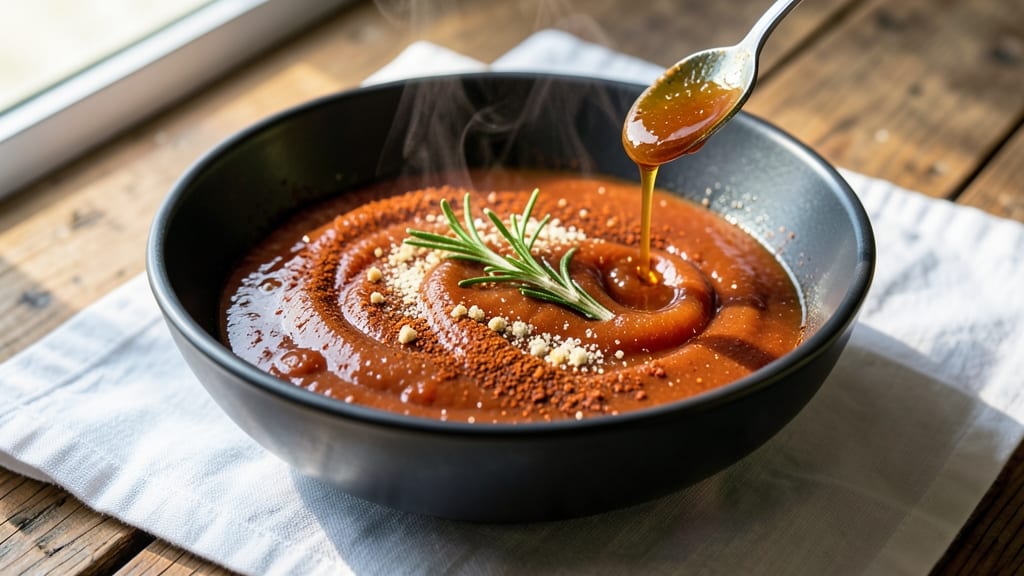
This Atkins-inspired barbecue sauce delivers all the bold, smoky sweetness of classic BBQ without the sugar crash. 🔥 The secret lies in erythritol—a zero-calorie sweetener that mimics caramelization while keeping carbs under 2 grams per serving.
I developed this recipe after years of craving tangy, smoky flavors without derailing my low-carb lifestyle, and it’s become my go-to for grilled meats, pulled pork, and even drizzled over veggies.
The sauce balances traditional BBQ elements—tomato base, apple cider vinegar, and a blend of spices—with just enough sweetness to satisfy. Unlike store-bought versions, this one skips high-fructose corn syrup and refined sugar, replacing them with erythritol and a touch of stevia for depth.
The result? A rich, slightly sticky sauce with that signature tangy-sweet profile that clings perfectly to grilled proteins.
What sets this apart is how it maintains restaurant-quality flavor while fitting seamlessly into a low-carb or keto diet. The slow simmer reduces the sauce to a thick, glossy consistency, intensifying the smoky paprika and garlic notes.
It’s the kind of sauce that transforms simple grilled chicken into a showstopper—without the guilt.
Perfect for meal prep, gifting, or keeping on hand for spontaneous cookouts. Once you taste the difference, you’ll never go back to the sugar-laden versions. Let’s make it!
Ingredients for atkins barbecue sauce
Eleven simple ingredients transform into a rich, low-carb sauce that rivals classic BBQ.
| Ingredient | Amount | Notes |
|---|---|---|
| Tomato Paste 🍅 | ½ cup | High-quality, unsweetened preferred |
| Apple Cider Vinegar 🍏 | ½ cup | Raw, unfiltered for tanginess |
| Erythritol 🍬 | ½ cup | Granulated, zero-calorie sweetener |
| Stevia Extract 🌿 | ¼ tsp | Pure, liquid or powdered |
| Smoked Paprika 🌶️ | 2 tbsp | High-quality, not cayenne |
| Garlic Powder 🧄 | 1 tbsp | Freshly ground preferred |
| Onion Powder 🧅 | 1 tbsp | Freshly ground preferred |
| Ground Mustard 🌿 | 1 tbsp | For depth and tang |
| Black Peppercorns 🌶️ | ½ tsp | Freshly cracked for heat |
| Salt 🧂 | 1 ½ tsp | Diamond Crystal preferred |
| Water 💧 | ½ cup | For thinning consistency |
The tomato paste is your flavor foundation—Trader Joe's or Muir Glen are my go-tos for consistency. Erythritol is a game-changer here; Lakanto or Wholesome Sweeteners brands work perfectly. For the vinegar, raw apple cider adds complexity. Bragg or Texas Pete are reliable choices. Smoked paprika should be the star—Penzeys or McCormick Gourmet deliver that authentic smoky depth. If you're using liquid stevia, remember it's potent: start with half the amount and adjust to taste.
No erythritol? Allulose or monk fruit sweetener works in a pinch, though the texture may vary slightly. Swap apple cider vinegar for red wine vinegar or balsamic vinegar if needed. For a deeper tomato flavor without added sugar, San Marzano crushed tomatoes can replace half the paste. If you prefer a smoother sauce, blend the paste with water first. The mustard is non-negotiable for that classic BBQ tang—Dijon-style works best. For extra heat, add a pinch of cayenne, but start small.
This sauce thickens as it cools, so don't worry if it looks runny at first. Store in a clean glass jar in the fridge for up to 3 weeks. For longer storage, freeze in ice cube trays—perfect for single-use portions. The flavors actually improve after 24 hours as everything melds together. Double the batch if you're gifting or meal prepping; it disappears fast.
Why You'll Love This Recipe
- Five-Ingredient Magic: I swear by this—just tomato paste, vinegar, and a handful of pantry staples. No fancy shopping, no last-minute scrambling. Honestly, I’ve made it while waiting for chicken to grill, and it still tastes like I slaved over it.
- Smoky-Sweet Balance: That smoked paprika gives it depth, while the erythritol and stevia keep it sweet without the guilt. It’s tangy, rich, and just spicy enough—like a classic BBQ sauce but with a cleaner edge that doesn’t weigh you down.
- Meal Prep MVP: I double the batch and store it in the fridge for weeks. Slather it on pulled pork, drizzle it over grilled veggies, or toss it with cauliflower rice—it’s my go-to for lazy nights or when I’m feeding a crowd. (Yes, even on a Tuesday night.)
- Budget Stretch: A single jar of tomato paste and a bottle of vinegar last me months. This sauce costs pennies per serving, and the flavor? Ridiculously good. I’ll be real: it’s my secret weapon for making cheap cuts of meat taste like a restaurant dish.
Step-by-step instructions for low-carb barbecue sauce
This sauce delivers bold flavor without the sugar crash—here's how to make it perfect every time.
🍳 Step 1: Bloom the Spices in Tomato Paste
In a medium saucepan over medium heat, add the 0.5 cup tomato paste and let it warm for 2 minutes until it begins to soften and darken slightly. This step develops the base flavor and removes any raw taste from the paste.
Next, whisk in the 2 tbsp smoked paprika, 1 tbsp garlic powder, 1 tbsp onion powder, and 1 tbsp ground mustard. Stir constantly for 1 minute until the spices are fully incorporated and the mixture smells deeply aromatic. You'll notice the paprika deepening in color—that's when you know it's properly bloomed.
🍳 Step 2: Add Vinegar and Sweeteners
Pour in the 0.5 cup apple cider vinegar and 0.5 cup erythritol, stirring vigorously to dissolve the sweetener completely. The vinegar will create a tangy base while the erythritol provides sweetness without the sugar spike. Let the mixture simmer gently for 3 minutes to allow the flavors to meld.
Here's where it gets interesting—add the 0.25 tsp stevia extract and the 0.5 tsp freshly cracked black peppercorns. The stevia will enhance the sweetness without adding carbs, while the peppercorns add a subtle heat that balances the tang. Stir for another 1 minute to distribute everything evenly.
🔥 Step 3: Season and Simmer to Perfection
Add the 1.5 tsp salt and bring the mixture to a gentle boil. Once boiling, reduce heat to low-medium and let it simmer uncovered for 10-12 minutes, stirring occasionally. You're looking for a sauce that coats the back of a spoon with a glossy sheen—this indicates proper thickening.
If the sauce becomes too thick before reaching the 10-minute mark, add the 0.5 cup water gradually, 1 tablespoon at a time, until you achieve a smooth, pourable consistency. The sauce should be thick enough to cling to meats but still flow freely when brushed on.
⏰ Step 4: Cool and Adjust for Balance
Remove the saucepan from heat and let the sauce cool for 10 minutes. This cooling period allows the flavors to settle and makes it easier to taste and adjust. While cooling, give it a stir every few minutes to prevent skin formation.
Taste the sauce and adjust seasoning if needed. You might want to add a pinch more salt, a dash of vinegar for tang, or even a tiny bit more stevia for sweetness. Remember, the flavors will mellow slightly as it cools further, so don't over-adjust at this stage. Once satisfied, transfer to a clean jar or airtight container for storage.
Pro Tips For Making Atkins Barbecue Sauce
- Simmer Low and Slow: The tomato paste will fight you if you rush it—after adding vinegar and sweeteners, drop the heat to a bare simmer (think "just under a boil") and let it cook for at least 15-20 minutes. Skipping this step leaves your sauce tasting raw and thin, no matter how much you stir.
- Bloom the Paprika First: Dust the smoked paprika into the dry pan before adding any liquid and let it sit for 30 seconds—you’ll see it darken and smell deeper. This unlocks its flavor better than just tossing it in later, and it won’t clump like it does when thrown into wet ingredients.
- Measure Vinegar Precisely: Apple cider vinegar is potent, and eyeballing it throws off the balance. Use a kitchen scale or measuring spoon (about ¼ cup for a standard batch) to avoid a sauce that’s either too sharp or too sweet. Trust me, you’ll taste the difference in the first bite.
- Skip the Sugar Crash: Erythritol and stevia are finicky—if your sauce tastes flat, it’s likely because the sweetness didn’t fully integrate. After simmering, let the sauce cool slightly (5 minutes) before tasting, then adjust sweetness gradually. Adding it all at once masks flavors, and you’ll regret it later.
Essential equipment for this dish
Saucepan Essentials
Start with a medium-sized stainless steel saucepan—I use my All-Clad 3-quart—because it heats evenly and prevents scorching. The flat bottom ensures consistent heat distribution, which is critical when simmering for 10-12 minutes.
Avoid non-stick pans for this recipe; the spices and tomato paste need to caramelize slightly for depth of flavor. 🔥
Whisk for Smoothness
A balloon whisk is your best friend here. I reach for my OXO Good Grips because it handles the thick tomato paste and erythritol crystals effortlessly. Whisking constantly when adding vinegar and sweetener ensures no lumps form, giving you a silky-smooth sauce.
A wooden spoon works in a pinch, but the whisk incorporates air for a lighter texture.
Measuring Tools
Precision matters with this recipe, so invest in a stainless steel measuring spoons set (I love Mercer Culinary) and a liquid measuring cup with clear markings. The erythritol and stevia are potent—using too much can make your sauce overly sweet or bitter.
A digital kitchen scale comes in handy for weighing spices like smoked paprika if you prefer exact measurements. 💡
Storage Containers
For short-term storage, I use glass mason jars with airtight lids—they preserve flavor better than plastic. For longer storage, freeze in silicone ice cube trays (like OXO Good Grips) for single-use portions.
The sauce thickens as it cools, so leave ½-inch headspace in containers to prevent overflow. Label with dates—this sauce keeps for 3 weeks refrigerated or 3 months frozen.
Optional: Immersion Blender
If your sauce turns out slightly chunky (especially if you skip blending the tomato paste first), an immersion blender like the Ninja CB101 can save the day.
Pulse briefly to achieve a smoother consistency without compromising texture. This is particularly useful if you're short on time or prefer a restaurant-style finish. 💫
Nutrition facts
Frequently asked questions
Can I substitute erythritol with another sweetener?
Yes, but with adjustments! Allulose or monk fruit sweetener work in a 1:1 ratio, though allulose may yield a slightly softer texture. Avoid maltitol—it can cause digestive issues and doesn't caramelize well. If using stevia, start with half the amount since it's 200x sweeter than sugar, and adjust to taste after cooling.
Why does my sauce taste too tangy or sweet?
Flavor balance shifts as the sauce cools—this is normal! If it's too tangy, add a pinch of erythritol or a splash of water to dilute. For excessive sweetness, stir in a teaspoon of apple cider vinegar or a dash of smoked paprika to rebalance. Always taste after 10 minutes of cooling for accurate judgment.
How do I use this sauce without ruining my Atkins diet?
This sauce is Atkins-compliant with 2g net carbs per 2-tbsp serving—perfect for drizzling! Use it as a glaze for grilled meats (chicken, ribs), a dip for low-carb veggies (zucchini, cauliflower), or even a marinade. Just watch portion sizes: 2 tbsp per meal keeps you under 1g net carbs.
Can I make this sauce smokier without liquid smoke?
For extra smokiness, add ½ tsp chipotle powder or ¼ tsp smoked sea salt> to the spice blend. Alternatively, char a small onion or garlic clove in a dry pan until blackened, then blend into the sauce. These methods add depth without artificial flavors.
How long does it take to make, and can I speed it up?
The full process takes 25-30 minutes, but you can cut it to 15 minutes by using pre-blended tomato paste (like a smooth paste in a jar) and reducing simmer time to 5 minutes. For even faster prep, make a double batch and freeze portions—ready in minutes when you need it!