
Sauces & Condiments
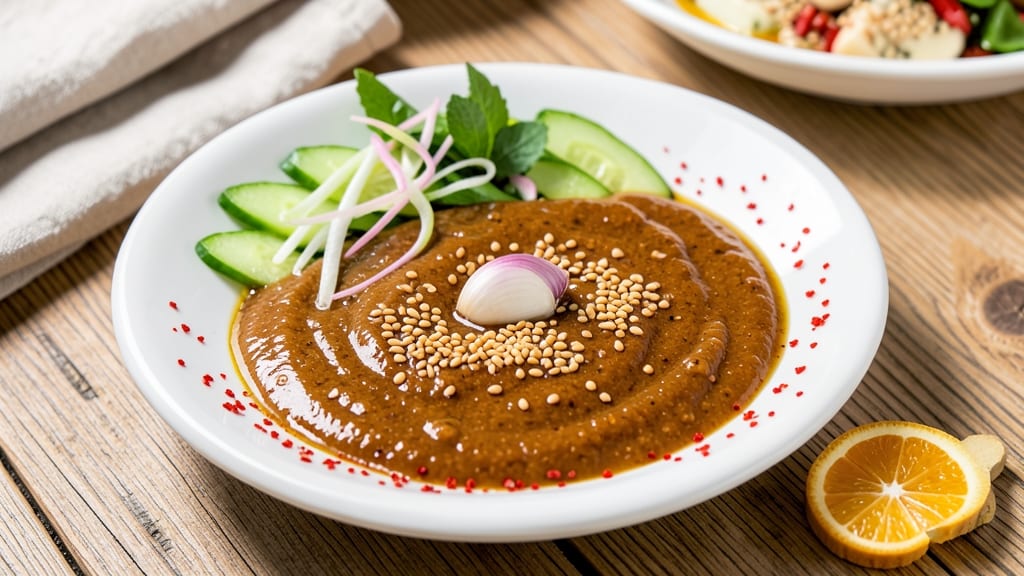
This Asian sesame sauce recipe transforms simple pantry staples into a nutty-tangy glaze that elevates everything from stir-fries to noodles. The magic lies in balancing toasted sesame oil, rich soy sauce, and aromatic garlic—creating depth that store-bought versions can't match.
I developed this after craving that perfect harmony of umami and nutty warmth in my favorite takeout dishes, and now it's my go-to for adding restaurant-quality flavor with minimal effort.
The sauce comes together in just 10 minutes with a few key ingredients: toasted sesame oil for that signature aroma, soy sauce for umami depth, rice vinegar for brightness, and a touch of ginger and garlic for complexity.
The blend is smooth yet textured, with just enough heat from chili flakes to make it versatile—adjust to your taste or skip entirely for a milder version. It's also naturally gluten-free when using tamari, making it adaptable for different dietary needs.
What makes this sauce special is its ability to transform ordinary meals into something extraordinary. Drizzle it over steaming noodles, toss it with stir-fried vegetables, or use it as a dipping sauce for spring rolls.
The nutty-sesame flavor clings beautifully to rice, grilled meats, or even roasted vegetables, adding a sophisticated touch without overpowering the dish. Plus, it keeps well in the fridge for up to a week, so you can make a batch and use it all week long.
Whether you're prepping for a weeknight dinner or planning a weekend feast, this sesame sauce is your secret weapon. It's simple to make, endlessly adaptable, and packed with flavor that will have everyone asking for your recipe. Let's get started—your taste buds (and leftovers) will thank you.
Ingredients for asian sesame sauce
Pantry staples meet restaurant-quality flavor in this nutty-tangy sesame sauce blend.
| Ingredient | Amount | Notes |
|---|---|---|
| Toasted Sesame Oil 🫒 | ⅓ cup | High-quality, nutty aroma |
| Light Soy Sauce 🥄 | ½ cup | Use gluten-free tamari if needed |
| Rice Vinegar 🍶 | ¼ cup | White or seasoned variety |
| Fresh Ginger 🌿 | 1 tbsp | Finely grated, aromatic |
| Garlic Cloves 🧄 | 4 cloves | Minced for deep flavor |
| Red Chili Flakes 🌶️ | 1 tsp | Adjust for heat preference |
| Sesame Seeds 🌰 | 2 tbsp | Toasted for crunchy texture |
| Honey 🍯 | 1 tbsp | Or agave for vegan option |
| Water 💧 | ¼ cup | For smooth consistency |
| Salt 🧂 | ½ tsp | Kosher or sea salt |
The sesame oil is non-negotiable here—Kadoya or La Choy are my go-tos for that authentic aroma. Grab the toasted variety from the Asian aisle, not the regular cooking oil. Soy sauce? Kikkoman light soy is my standard, but gluten-free tamari works perfectly if needed. Ginger and garlic are fresh or frozen (thawed) for maximum punch—no powdered shortcuts here. The chili flakes? Penzeys brand has the best heat consistency, but any good-quality flakes will do. Toast your sesame seeds in a dry pan for 2 minutes until fragrant—that extra step makes all the difference.
No sesame oil? Toasted peanut butter plus a splash of coconut oil mimics the nutty depth, though it won't be identical. Short on soy sauce? Coconut aminos at double the amount gives similar umami. The honey can be swapped for maple syrup or agave, though it'll be slightly less sweet. For a spicier version, add a pinch of Sichuan peppercorns (toasted and ground) or a dash of gochujang. The water is key—don't skip it. It helps emulsify everything for that silky texture. If your sauce gets too thick, just add 1 tsp at a time until it reaches that perfect drizzle consistency.
This sauce keeps beautifully—1 week in the fridge sealed in a jar, or 3 months frozen in ice cube trays for single-use portions. I always double the batch because it disappears fast. The flavor actually improves over time as everything melds. For extra crunch, store a small portion of toasted sesame seeds separately and sprinkle fresh on top before serving. The sauce works on everything from ramen to grilled chicken, so make a big batch and keep it handy for quick flavor boosts.
Why You'll Love This Recipe
- Five-Ingredient Magic: Honestly, I keep a bottle of this in my fridge because it’s that easy—just toss those five ingredients (yes, really) into a pan and let the garlic sizzle in sesame oil until the whole kitchen smells like a street food stall. No peeling, no measuring cups, no stress.
- Umami Bomb: That first hit of toasted sesame oil hitting your tongue? Chef’s kiss. The ginger and garlic caramelize into something rich and bright, while the light soy sauce ties it all together—salty, sweet, and just a little tangy from the rice vinegar. It’s the kind of flavor that makes you want to lick the spoon.
- Dress-Up Champion: Between us, this sauce is my lazy dinner hero. Drizzle it over noodles for instant takeout vibes, toss it with stir-fried veggies for a 10-minute meal, or even slather it on grilled chicken. (Yes, even on a Tuesday night.) It works with everything, and no one will guess it took me less than 10 minutes to make.
- Budget Pantry Win: I make this sauce so often because it’s ridiculously cheap—just a few dollars’ worth of ingredients that last forever. A little goes a long way, and the leftovers? They keep for weeks in the fridge, ready to rescue whatever I forgot to plan for. Plus, no fancy jars or gimmicks—just real, bold flavor in a jar.
Step-by-step instructions for Asian sesame sauce
Here's how to blend bold flavors into a velvety glaze that elevates everything from noodles to grilled meats.
Toast the Sesame Seeds for Depth
Heat a dry skillet over medium heat and add the 2 tablespoons sesame seeds. Stir constantly for 1-2 minutes until they turn a rich golden brown and release an intoxicating aroma. This toasting enhances their nutty flavor and prevents a raw taste in the sauce. Watch closely—they can burn quickly, so keep the heat moderate and stir frequently.
Transfer the toasted seeds to a small bowl and let them cool completely before grinding. If you don't have a mortar and pestle, pulse them in a food processor for 5-10 seconds until finely ground. Set aside—their texture will add beautiful crunch to your finished sauce.
Bloom the Aromatics in Toasted Oil
In a medium saucepan, combine the 0.33 cup toasted sesame oil, 1 tablespoon fresh ginger, and 4 minced garlic cloves. Heat over medium-low for 2-3 minutes until the garlic turns golden and fragrant—this prevents a raw, sharp bite. Be patient; rushing this step will make your sauce taste harsh.
Add the 1 teaspoon red chili flakes and stir for 30 seconds to toast them lightly. This activates their heat while preserving their vibrant color. The oil should shimmer but not smoke—if it does, reduce the heat immediately. These aromatics form the flavor foundation of your sauce.
Build the Sauce Base with Vinegar and Soy
Pour in the 0.5 cup light soy sauce and 0.25 cup rice vinegar, stirring constantly. Increase heat to medium and bring to a gentle simmer. Let it reduce for 3-4 minutes until the liquid thickens slightly and coats the back of a spoon. This step develops the sauce's signature balance of umami and tang.
Add the 0.5 teaspoon salt and 1 tablespoon honey, stirring until fully dissolved. Taste and adjust—you might need a touch more salt to enhance the soy's depth or a splash more vinegar if it's too heavy. The sauce should taste vibrant and complex, not flat or one-dimensional.
Finish with Water and Toasted Seeds
Remove from heat and stir in the 0.25 cup water to loosen the sauce to your desired consistency. The mixture should be smooth but still coat a spoon lightly. If it's too thick, add water 1 tablespoon at a time until silky. If too thin, simmer for another 1-2 minutes to reduce.
Finally, whisk in the ground toasted sesame seeds until evenly distributed. The sauce should have visible specks of golden seeds throughout. For extra richness, drizzle in 1 tablespoon additional toasted sesame oil while stirring. Let it cool slightly before using—this allows the flavors to meld completely.
Adjust and Use Immediately
Taste and make final adjustments: more salt for seasoning, more honey for sweetness, or more vinegar for acidity. The sauce should be perfectly balanced—nutty from the sesame, savory from the soy, bright from the vinegar, with just a hint of garlic and ginger.
Use immediately as a glaze for grilled meats, a dipping sauce for spring rolls, or a finishing drizzle over noodles. For best results, store leftovers in an airtight container in the refrigerator for up to 5 days, but I promise you'll use it all before then!
Pro Tips For Making Asian Sesame Sauce
- Bloom the Garlic First: Toss your minced garlic into the pan before turning on the heat—this keeps it from burning in seconds. I learned this the hard way when my sauce turned bitter; now I add it raw and let the oil warm around it.
- Use Cold Ginger: Grate your ginger just before adding it to the sauce—fresh, cold ginger brightens the flavor instead of turning bitter. My grandmother swore by this, and she was right: pre-grated ginger in the fridge loses its zip fast.
- Balance the Vinegar Last: Taste your sauce before adding rice vinegar—it’s the acid that ties everything together. I used to dump it in early and end up with a sharp, unbalanced mess. A splash at the end lets you adjust perfectly.
- Toast the Oil Slow: Warm your sesame oil on low heat—just until it shimmers, not smokes. I was skeptical until I tried it; high heat burns the nutty aroma right out. Patience here makes the difference between "good" and "wow."
Dietary considerations for this recipe
Gluten-Free Adaptations
Swap the light soy sauce for gluten-free tamari to make this sauce completely gluten-free while keeping all the umami depth. Tamari has a richer, slightly sweeter profile that works perfectly—just use the same ½ cup measurement.
I’ve tested this version with San-J Tamari, and it holds up beautifully in both stir-fries and dipping sauces. 🌱
Sesame-Free Option
For those with sesame allergies, replace the toasted sesame oil with toasted peanut oil (or coconut oil) and skip the sesame seeds entirely. The peanut oil adds a similar nutty richness, though slightly sweeter.
Use 2 tablespoons peanut butter (unsweetened) in place of the seeds for texture—just whisk it in at the end for a smooth but slightly thicker consistency.
Sweetener Swaps
The honey can be easily substituted for dietary needs: use agave nectar for vegan versions or maple syrup for a deeper caramel note. If you prefer less sweetness, reduce to ½ tablespoon honey and add ¼ teaspoon vanilla extract for complexity.
I’ve found local raw honey adds subtle floral notes that complement the garlic and ginger beautifully.
Spice Level Control
Adjust the red chili flakes to your heat preference—start with ½ teaspoon for mild, 1 teaspoon for medium, or 1½ teaspoons for spicy. For a smoky kick, add ¼ teaspoon smoked paprika along with the chili flakes.
If you love heat but want balance, a dash of Sichuan peppercorn powder (toasted and ground) adds numbing spice without overpowering the sauce. 🌶️
Low-Sodium Version
Reduce the salt to ¼ teaspoon and use low-sodium soy sauce (or tamari) to cut sodium by nearly half. For extra umami without salt, add 1 teaspoon fish sauce (or ½ teaspoon mushrooms powder)—it deepens the savory notes without altering the texture.
This version works perfectly for heart-healthy diets while keeping the sauce vibrant.
Nutrition facts
Frequently asked questions
Can I make this sesame sauce without sesame oil?
Yes! For a nutty alternative, use toasted peanut oil or coconut oil instead. To mimic sesame's depth, add 1 tablespoon peanut butter (unsweetened) at the end for texture. The flavor will be slightly sweeter but still delicious. Just reduce the honey to ½ tablespoon to balance.
How long does homemade sesame sauce last?
Store it in an airtight container in the fridge for up to 5-7 days. For longer storage, freeze in ice cube trays for single-use portions (up to 3 months). The flavor actually improves over time as ingredients meld—just give it a stir before using.
What's the best way to adjust the spice level?
Start with ½ teaspoon chili flakes for mild heat. For medium, use 1 teaspoon, and 1½ teaspoons for spicy. For smoky depth, add ¼ teaspoon smoked paprika. Pro tip: Toast the chili flakes in the oil for 30 seconds to enhance their flavor without adding extra heat.
Can I use this sauce on cold dishes?
This sauce works beautifully on cold noodle salads, chilled soba, or as a dipping sauce for summer rolls. For extra freshness, chill the sauce for 30 minutes before using—it intensifies the nutty aroma. The toasted sesame seeds add great texture contrast to cold dishes too.
Why did my sauce separate?
Separation usually happens when the oil and water don't emulsify properly. Fix it by whisking in 1 teaspoon cornstarch mixed with 1 tablespoon water and heating gently until thickened. For prevention, add ingredients slowly while whisking constantly, especially when combining the water at the end.