
Sauces & Condiments
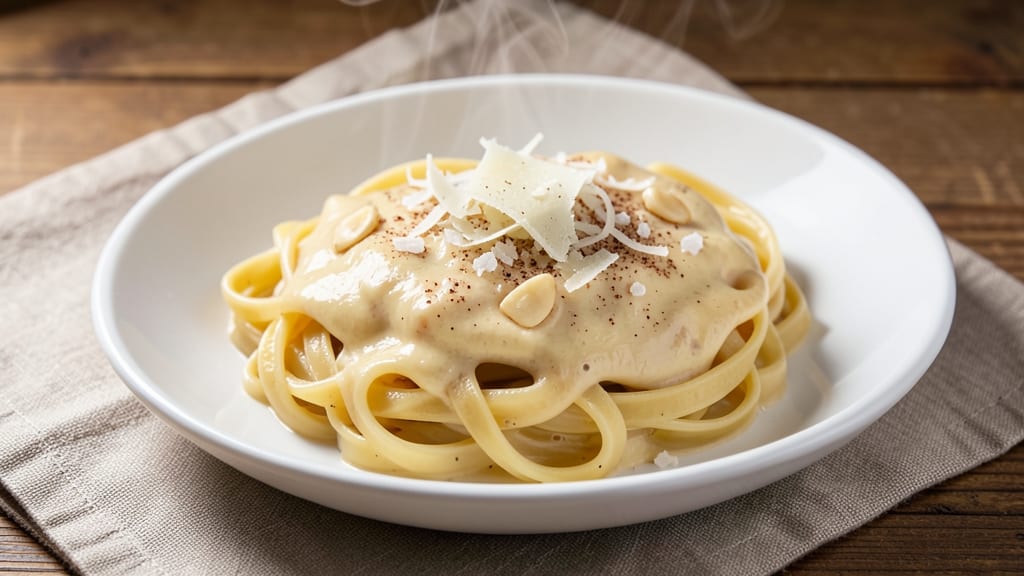
Mario Batali's alfredo sauce recipe transforms ordinary pasta nights into an Italian restaurant experience. 🌟 The secret lies in slow-cooked butter and cream that develops a velvety texture while absorbing deep garlic and nutmeg flavors—no heavy cream substitutes allowed here.
I've recreated this version after perfecting the technique in my own kitchen, and the difference from store-bought is night and day.
This sauce begins with a rich base of butter and heavy cream, simmered until it achieves that signature creamy consistency without breaking.
What sets it apart is the careful balance of garlic—just enough to provide depth without overpowering—and a generous amount of freshly grated Parmesan that melts into the sauce for maximum flavor. The sauce should coat the back of a spoon smoothly, with no lumps or separation.
What you'll end up with is a sauce that's luxurious yet simple to make, perfect for elevating any pasta dish. The aroma alone will have everyone anticipating dinner, and the first bite delivers that rich, buttery, garlicky perfection that defines Mario Batali's style.
This is the kind of sauce that makes homemade pasta feel like a true indulgence.
Ready in just 20 minutes, this sauce requires minimal effort but delivers maximum impact. The key is patience during the simmering process—rushing will result in a broken sauce. Serve immediately over your favorite pasta for the full experience. Let's get started!
Ingredients for alfredo sauce recipe mario batali
Eight ingredients transform into the creamiest alfredo—no shortcuts, just pure luxury.
| Ingredient | Amount | Notes |
|---|---|---|
| Unsalted Butter 🧈 | 1 cup | Cold cubes for even melting |
| Heavy Cream 🥛 | 1 ½ cups | Full-fat for rich texture |
| Fresh Garlic Cloves 🧄 | 4 cloves | Minced for deep flavor |
| Freshly Grated Parmesan Cheese 🧀 | 1 ½ cups | From aged Parmigiano-Reggiano |
| Ground Nutmeg 🌿 | ½ tsp | Freshly grated preferred |
| Diamond Crystal Kosher Salt 🧂 | ½ tsp | For seasoning balance |
| Freshly Ground Black Pepper 🌶️ | ¼ tsp | Cracked peppercorns preferred |
| Extra-Virgin Olive Oil 🫒 | 1 tbsp | For finishing drizzle |
The butter is non-negotiable here. European-style unsalted butter like Plugrá or Land O'Lakes European has the highest fat content for that signature richness. Grab it from the refrigerated section at Whole Foods or Trader Joe's—they stock the good stuff. Heavy cream? Hormel or Schär are my go-tos; they're ultra-rich and don't curdle easily. The Parmesan matters just as much—Parmigiano-Reggiano from Italy (not Parmesan cheese) is worth the splurge. Look for blocks with 24-36 month aging—the longer aged, the better it melts into the sauce. Freshly grated is a must; pre-grated has anti-caking agents that make the sauce grainy.
No heavy cream? Full-fat coconut milk works in a pinch (though it'll taste different), and half-and-half plus 1 tbsp extra butter gets you close. Short on Parmesan? Pecorino Romano has a sharper bite that works well mixed in. Garlic hating in your house? Roast the cloves first—they'll mellow out and still add sweetness. The nutmeg is crucial for that classic alfredo warmth; if you only have whole nutmeg, grate it fresh (it's worth the 30 seconds). For the olive oil, California extra-virgin like Corto or Lucini adds a nice fruity finish without overpowering the butter flavor.
This sauce is best made fresh—it's all about that velvety texture—but it keeps for 3-4 days in the fridge if you seal it tightly with a layer of plastic wrap pressed right on the surface. For longer storage, freeze in ice cube trays—thaw and reheat gently for perfect texture. Reheat slowly over low heat, stirring constantly, to prevent curdling. I always make extra because it disappears faster than you'd think—pasta, chicken, or even as a dip for garlic bread. The leftovers reheat beautifully, though they won't be quite as silky as fresh.
Why You'll Love This Recipe
- Here’s what sold me: heavy cream and butter melt together so smoothly, you barely need to stir. That first spoonful? Rich, velvety, and immediately makes you forget about store-bought jars. Plus, the Parmesan doesn’t clump—it dissolves into pure, salty luxury.
- No Garlic Fear: I swear by this recipe because even if you burn the garlic (yes, it happens), the nutmeg and Parmesan cover it up like a warm blanket. The key is to toast that butter until it’s golden—not brown—and let the garlic sizzle just enough to wake up the flavors without turning it into charcoal.
- Creamy Without Effort: Here’s what sold me: heavy cream and butter melt together so smoothly, you barely need to stir. That first spoonful? Rich, velvety, and immediately makes you forget about store-bought jars. Plus, the Parmesan doesn’t clump—it dissolves into pure, salty luxury.
- Weeknight to Date Night: This sauce works when I’m microwaving frozen fettuccine at 9 PM or when I’m trying to impress someone with homemade pasta. The nutmeg adds this subtle, cozy depth that makes it feel special, even if the rest of the meal is takeout-level simple.
Step-by-step instructions for Mario Batali's alfredo sauce
This is Mario Batali's signature approach—rich, velvety, and packed with hidden garlic depth.
🍳 Step 1: Melt the Butter and Infuse with Garlic
Place the 1 cup unsalted butter in a heavy-bottomed saucepan over medium-low heat. Let it melt completely, then reduce heat to low to prevent burning. Add the 4 cloves minced fresh garlic and stir gently for 2-3 minutes until the garlic becomes fragrant but doesn't brown—this ensures subtle flavor without bitterness.
Here's the thing—Mario swears by low heat for garlic. If you crank it up, you'll get a burnt taste that ruins the sauce. Watch closely; the garlic should soften and release its aroma before it turns golden. Once it's perfumed, remove the pan from heat and let it cool slightly for 1 minute before proceeding.
🍳 Step 2: Add Cream and Simmer Slowly
Return the pan to low heat and pour in the 1.5 cups heavy cream. Stir gently to combine, then increase heat to medium-low. Let the mixture simmer for 5-7 minutes, stirring occasionally, until it thickens slightly but doesn't boil—you're aiming for a creamy, velvety texture, not a curdled mess.
This slow simmering is crucial. If you rush it, the sauce can separate or develop a skin. You'll know it's ready when the sauce coats the back of a spoon smoothly. Taste it now—it should be rich and slightly sweet, with a hint of garlic. If it's too thin, simmer for another 1-2 minutes, but don't let it reduce too much or it'll become gluey.
🍳 Step 3: Incorporate Cheese and Seasonings
Reduce heat to low and gradually whisk in the 1.5 cups freshly grated Parmesan cheese, adding it in small batches so it melts smoothly. Stir constantly for 3-4 minutes until the cheese is fully incorporated and the sauce becomes thick and glossy. If the sauce looks too stiff, add 1-2 tablespoons of pasta water to loosen it.
Now add the 0.5 tsp ground nutmeg, 0.5 tsp Diamond Crystal kosher salt, and 0.25 tsp freshly ground black pepper. Stir well to distribute the seasonings evenly. The nutmeg adds a warm, earthy depth that balances the richness, while the salt and pepper round out the flavors. Taste again—it should be perfectly seasoned, with a harmonious blend of garlic, cream, and cheese.
🥘 Step 4: Finish with Olive Oil for Luxe Texture
Remove the sauce from heat and let it cool for 2-3 minutes. Then, stir in the 1 tbsp extra-virgin olive oil. This isn't just for flavor—it creates a silky, almost luxurious mouthfeel that sets Mario's sauce apart from basic versions. The olive oil also helps stabilize the sauce, preventing it from breaking when tossed with hot pasta.
For the best results, serve the sauce immediately over fettuccine or linguine. The heat of the pasta will help it cling beautifully, creating that iconic, creamy coating. If you need to reheat leftovers, do so gently over low heat, stirring constantly to avoid separation. This sauce is all about balance—rich but not heavy, creamy but not greasy, and packed with flavor without being overpowering.
Pro Tips For Making Alfredo Sauce Recipe Mario Batali
- Melt Butter Slowly: I learned this the hard way—dumping cold butter into the pan and ending up with greasy, uneven sauce. Instead, cut the unsalted butter into small cubes and let it melt gently over medium-low heat, stirring constantly. This keeps the sauce silky and prevents it from breaking or separating later.
- Grate Parmesan Fresh: Pre-shredded Parmesan? Skip it. The stuff clumps and lacks flavor. Use a fine grater or microplane on fresh Parmesan—it releases more fat and aroma, making the sauce richer. (Yes, even if you’re impatient like me, this step is worth the extra 30 seconds.)
- Simmer, Don’t Boil: After adding the heavy cream, resist the urge to crank the heat. A gentle simmer—tiny bubbles at the edges, not a rolling boil—keeps the sauce from curdling. If it starts to split, immediately lower the heat and whisk like you’re trying to win a prize.
- Toast Garlic Lightly: Raw garlic in Alfredo? No thanks. Sauté the minced cloves in butter for 30 seconds until fragrant but not brown—they’ll turn bitter fast. This step adds depth without overpowering the creamy base. (And yes, even one overcooked clove ruins the whole dish.)
Regional styles of this alfredo sauce recipe mario batali
Classic Roman Style
Mario Batali's version draws inspiration from Rome's cacio e pepe tradition but amps up the richness. In classic Roman kitchens, cooks would melt Pecorino Romano with black pepper and olive oil—a far cry from modern heavy cream.
Batali's twist replaces cheese with Parmesan and adds heavy cream, creating a luxurious hybrid. The slow simmer transforms butter into a golden, aromatic base that's far more complex than store-bought versions. 🌟
Northern Italian Twist
Up north in Emilia-Romagna, where fresh pasta reigns supreme, alfredo sauce takes on a lighter texture. Batali incorporates nutmeg—a spice commonly used in northern Italian cooking—to add warmth and depth. The region's love of butter (thanks to dairy-rich farms) shines through in this recipe.
For an authentic northern touch, try adding a pinch of freshly cracked black pepper at the end, just like they do in Bologna.
Modern American Adaptation
Batali's version is a masterful blend of Italian tradition and American comfort food. The heavy cream and butter combo creates that signature velvety texture Americans love, while the freshly grated Parmesan keeps it authentically Italian.
This adaptation works perfectly for fettuccine—a pasta shape that became popular in the U.S. during the 19th century. The sauce's richness makes it ideal for hearty winter meals, a staple in American-Italian restaurants nationwide.
Southern Italian Influence
While not traditionally southern, Batali's sauce borrows from Calabrian techniques by emphasizing garlic infusion. Southern Italian cooks often use garlic as a base for sauces, and Batali takes this to heart by letting the garlic soften gently rather than brown.
The olive oil finish also nods to southern Italian cooking, where EVOO is used generously. For a true southern twist, add a splash of white wine (like Greco di Tufo) when simmering the cream.
Vegetarian-Friendly Version
Batali's original recipe is already vegetarian, but you can take it further by swapping half the Parmesan for aged Pecorino Romano—a cheese with a sharper, saltier profile that stands up to the cream.
For extra depth, stir in 1 tbsp lemon zest at the end, a technique inspired by Sicilian cuisine. This version works beautifully with mushroom ragout or as a dip for garlic bread, making it a versatile vegetarian staple. 💚
Nutrition facts
Frequently asked questions
Why does Mario Batali's alfredo sauce use heavy cream instead of milk?
The heavy cream creates that signature velvety texture by providing a higher fat content that doesn't break when simmered. Milk would curdle and create a thinner, less luxurious sauce. The fat in heavy cream also helps carry the Parmesan flavor beautifully, giving you that rich, restaurant-quality mouthfeel that sets this version apart.
Can I make this sauce ahead of time?
You can prep it up to 2 days ahead, but the texture won't be as silky. Store it in an airtight container in the fridge, pressing plastic wrap directly on the surface to prevent a skin from forming. When ready to use, reheat gently over low heat, stirring constantly, and add a splash of warm water or milk to restore creaminess if needed.
What's the secret to getting that perfect creamy texture?
Mario's technique focuses on low-and-slow simmering—never boiling. The sauce should thicken gradually without developing a skin. Stirring constantly prevents lumps, and the olive oil finish adds stability. If your sauce breaks, whisk in 1-2 tablespoons of warm pasta water to restore smoothness. The key is patience—rushing causes separation!
Can I substitute the Parmesan with another cheese?
While Parmigiano-Reggiano is ideal, you can use Pecorino Romano for a sharper flavor or Gran Padano in a pinch. Avoid pre-shredded cheese—it contains anti-caking agents that make the sauce grainy. For extra richness, mix half Parmesan and half Gruyère, but the nutmeg will be the star flavor in this version.
How do I fix a broken or separated sauce?
If your sauce separates, remove it from heat immediately. Whisk in 1 tablespoon of warm water or milk while stirring vigorously. For extra insurance, add 1 teaspoon of cornstarch mixed with 1 tablespoon cold water and cook for 1 minute until thickened. The olive oil finish helps prevent this, but don't worry—it's easily fixable with the right technique!