
Sauces & Condiments
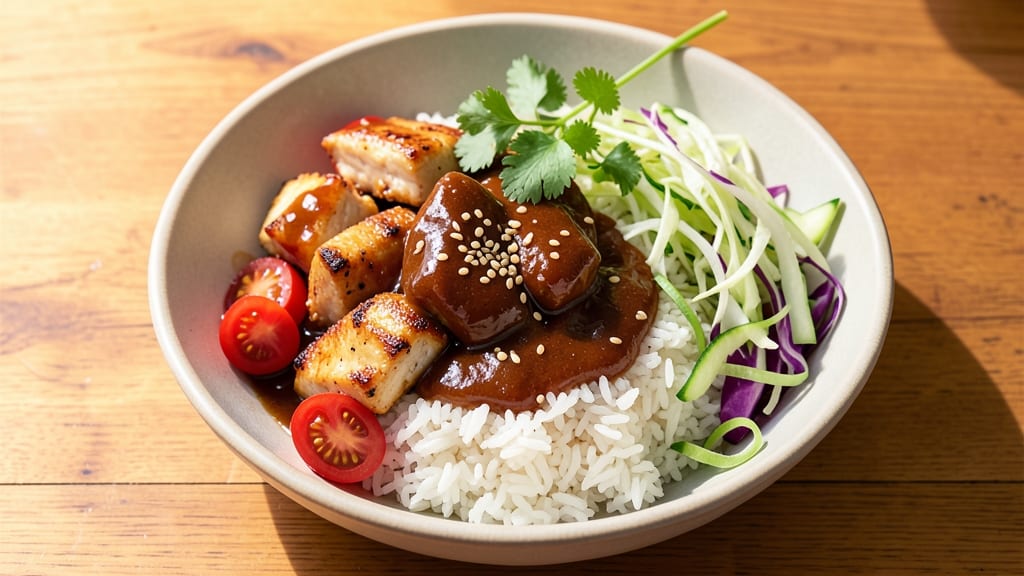
This Asian rice bowl sauce recipe delivers the perfect balance of umami depth and fresh herb brightness—transforming simple bowls into restaurant-quality meals.
The secret lies in a simple simmer of soy sauce, sesame oil, and aromatics, finished with a bright splash of rice vinegar and fresh herbs for that signature zing.
I developed this sauce after years of experimenting with Asian-inspired flavors, and it never fails to elevate any protein or vegetable combination.
The sauce takes just 15 minutes to prepare and stays fresh in the fridge for up to a week, making it the ideal pantry staple for quick weeknight dinners.
Whether you're pairing it with grilled chicken, tofu, or crisp vegetables, this versatile sauce adds layers of flavor without overpowering the main ingredients. The result is a glossy, aromatic sauce that clings beautifully to rice and every bite of your bowl.
Ingredients for asian rice bowl sauce
Nine simple ingredients transform into a sauce that turns rice bowls into restaurant-worthy meals.
| Ingredient | Amount | Notes |
|---|---|---|
| Low-Sodium Soy Sauce 🍶 | ½ cup | Kikkoman preferred for balance |
| Sesame Oil 🫒 | 2 tbsp | Toasted sesame oil for aroma |
| Rice Vinegar 🍶 | ⅓ cup | Seasoned or white vinegar |
| Fresh Ginger 🌿 | 1 ½ tbsp | Finely grated, fresh preferred |
| Garlic Cloves 🧄 | 3 cloves | Minced or finely chopped |
| Honey 🍯 | 1 tbsp | Or agave for vegan option |
| Fresh Cilantro 🌿 | ¼ cup | Stems included, chopped fine |
| Fresh Thai Basil 🌿 | ¼ cup | Or regular basil in pinch |
| Sesame Seeds 🥜 | 1 tbsp | Toasted for garnish |
| Water 💧 | ¼ cup | For thinning consistency |
The soy sauce is your flavor anchor—Kikkoman is my go-to for that perfect balance of salt and umami. Grab the low-sodium version if you want to control the saltiness yourself. Fresh ginger and garlic are non-negotiable here; pre-minced jarred garlic works in a pinch, but fresh has way more punch. Whole Foods or Asian markets usually have the best fresh ginger—look for knobby, firm roots. Toast your sesame seeds in a dry pan for 30 seconds before adding to the sauce; that extra nutty aroma makes all the difference. I always double-check my rice vinegar label too—some brands are way more seasoned than others.
No sesame oil? Avocado oil or neutral oil works, but you'll lose that signature aroma. Short on cilantro? Fresh mint or basil can step in, though Thai basil is ideal if you can find it. The honey adds just enough sweetness to balance the acidity—agave or maple syrup are great swaps if you're avoiding honey. If your sauce turns out too thick, just add water a teaspoon at a time. Too thin? Simmer uncovered for 2-3 minutes to reduce. Pro tip: Taste as you go! The sauce should be glossy but still coat the back of a spoon—like a perfect glaze.
This sauce keeps beautifully in the fridge for up to a week sealed in a jar. I like to portion it into small containers so I always have some ready for quick bowls. If you make a big batch, freeze half in ice cube trays—just thaw overnight in the fridge. The flavors actually improve after a day or two as everything melds together. Store any leftover fresh herbs separately in a damp paper towel in a sealed bag for 3-4 days. Garnish with those toasted sesame seeds right before serving—they add crunch and visual appeal.
Why You'll Love This Recipe
- Five-Ingredient Magic: The pantry already has these—no specialty shopping needed. I’ll be real: that sesame oil alone transforms the simplest rice bowl into something worth eating, and the ginger? It’s the secret weapon that keeps it from tasting flat.
- Umami Bomb: Low-sodium soy sauce and garlic cloves simmered down? That’s the kind of deep, savory punch you’ll want to drizzle on everything. Honestly, I’ve used it on scrambled eggs and called it a win—no judgment here.
- Meal Prep MVP: Make a double batch and store it in the fridge for up to a week. Toss it with cold rice for lunch, or heat it gently for dinner—it’s my go-to when I’m too tired to think. (Yes, even on a Tuesday night.)
- Budget Stretch: Sesame oil costs next to nothing, and a little goes a long way. This sauce turns $5 worth of chicken and veggies into a full meal that feels fancy. My college self would’ve cried happy tears over this.
Step-by-step instructions for Asian rice bowl sauce
This sauce comes together in minutes with bold flavors that'll elevate any rice bowl.
Bloom the Ginger and Garlic
Heat a small saucepan over medium-low heat and add the 2 tablespoons sesame oil. Once the oil shimmers slightly, add the 1.5 tablespoons finely grated fresh ginger and 3 minced garlic cloves. Cook for 1-2 minutes until the mixture becomes fragrant and the garlic turns golden around the edges.
This step is crucial—it builds the aromatic base of your sauce. You'll know it's ready when you can smell that warm, spicy ginger aroma filling your kitchen. If the garlic starts to brown too quickly, reduce the heat slightly to prevent burning. The goal is to develop flavor without letting anything turn bitter.
Combine the Wet Ingredients
Pour in the 0.5 cup low-sodium soy sauce, 0.33 cup rice vinegar, and 1 tablespoon honey. Stir well to combine, then bring the mixture to a gentle simmer over medium heat. Let it cook for 3-4 minutes, stirring occasionally, until the sauce slightly thickens and the flavors meld together.
You'll notice the sauce reduce just a bit as it simmers—this concentration deepens the umami flavor. If it starts to bubble vigorously, reduce the heat slightly to maintain a gentle simmer. The honey will help balance the acidity from the rice vinegar while adding a subtle sweetness that complements the savory notes.
Incorporate the Fresh Herbs
Remove the saucepan from heat and let it cool for 2-3 minutes. Then stir in the 0.25 cup finely chopped fresh cilantro and 0.25 cup chopped fresh Thai basil. Mix gently to distribute the herbs evenly throughout the sauce.
Adding the herbs at this stage ensures they infuse the sauce without wilting in the heat. The cilantro and Thai basil will bring a bright, fresh contrast to the rich, umami-packed base. If you're using regular basil instead of Thai basil, you can add a pinch of red pepper flakes for a subtle kick that mimics Thai basil's heat.
Adjust Consistency and Finish
If the sauce is too thick, stir in the 0.25 cup water one tablespoon at a time until you reach your desired consistency. For a more vibrant finish, toast the 1 tablespoon sesame seeds in a dry skillet over medium heat for 1-2 minutes until fragrant, then sprinkle them over the sauce just before serving.
The sauce should coat the back of a spoon but still be pourable enough to drizzle over rice bowls. If you prefer it thinner, add a bit more water. The toasted sesame seeds add a nutty crunch that contrasts beautifully with the smooth sauce. This sauce keeps well in the refrigerator for up to 5 days, making it perfect for meal prep.
Pro Tips For Making Asian Rice Bowl Sauce
- STIR LOW AND LATE: That sesame oil burns faster than you think—add it last, just as the sauce finishes simmering, and take the pan off the heat for 10 seconds before stirring. I learned this the hard way when my sauce turned bitter from overcooked oil, and now I swear by this step. The aroma hits you right away, but the flavor stays bright.
- GRATE GINGER FINE: Skip the mincer if you’re in a hurry, but don’t just chop it—use the smallest holes on a box grater for ginger. This ensures it dissolves smoothly into the sauce instead of leaving stubborn chunks that make you question your life choices. (Yes, even if you’re impatient like me.)
- SALT THE VINEGAR: Taste your rice vinegar before adding it to the sauce—if it’s unsalted, give it a pinch of salt (¼ tsp per 2 tbsp). This balances the acidity and saves you from overdoing the soy sauce later. I used to ignore this, and my sauces always tasted flat until I tried it.
- GARLIC FIRST, GINGER SECOND: Cook the garlic in the dry pan for 10 seconds until fragrant, then add the grated ginger right after. This prevents the garlic from turning bitter and ensures the ginger absorbs the oil properly. Sounds weird, but it works—your sauce will taste deeper and more cohesive.
Perfect pairings for these flavors
Protein Pairings
This sauce shines with grilled chicken breast—marinate slices in 2 tablespoons soy sauce for 30 minutes before grilling, then drizzle with sauce. For tofu, press and pan-fry extra-firm tofu until crispy, then toss with sauce and 1 teaspoon sesame oil for extra aroma. 🍗
Shrimp lovers, try sautéing ½ pound shrimp in 1 tablespoon butter until pink, then finish with sauce and a sprinkle of Thai basil. The sweetness of the sauce balances shrimp’s natural brininess perfectly.
Vegetable Complements
Add steamed bok choy or shredded cabbage—toss with sauce and a pinch of red pepper flakes for a quick stir-fry. Edamame also works: steam 1 cup shelled edamame, then toss with sauce and 1 teaspoon toasted sesame seeds. 🥬
Rice Bowl Staples
Use jasmine rice or sushi rice as your base—cook it slightly sticky for better sauce absorption. For extra texture, top with quick-pickled cucumbers (slice ½ cucumber, toss with 1 tbsp rice vinegar and ½ tsp sugar).
Sauce Variations
For a spicy kick, stir in 1 teaspoon gochujang or ½ teaspoon sriracha at the end. Need more sweetness? Add ½ teaspoon maple syrup while simmering. For a nutty twist, swap sesame oil for 1 tbsp peanut butter (thin with water first).
Beverage Pairings
Pair with a crisp Japanese lager like Asahi Super Dry—its clean finish cuts through the sauce’s richness. For a non-alcoholic option, try yuzu soda (citrusy and refreshing) or green tea** (complements the umami). 🍺
Nutrition facts
Frequently asked questions
Can I make this sauce without fresh ginger or garlic?
Yes, but the flavor will be less vibrant. Use 1 teaspoon ground ginger and 1 teaspoon garlic powder instead, but toast them in the oil for 30 seconds to enhance aroma. For extra depth, add ½ teaspoon onion powder too. Fresh is always better, but this works in a pinch!
How do I prevent the sauce from getting too salty?
Use low-sodium soy sauce and adjust to taste. If it's still too salty, balance with extra rice vinegar or honey. For a milder version, reduce soy sauce to ¼ cup and add ¼ cup water to compensate. Taste as you go!
Can I make this sauce ahead of time?
This sauce tastes even better after 24 hours as flavors meld. Store in an airtight container in the fridge for up to 5 days. For longer storage, freeze in ice cube trays—thaw overnight in the fridge. The herbs will keep their freshness if stored separately.
What if I don't have Thai basil?
No problem! Swap for regular basil or cilantro only. For a similar flavor profile, add ¼ teaspoon red pepper flakes or a pinch of fish sauce (just ½ teaspoon) to mimic Thai basil's complexity. The sauce will still taste delicious!
How much sauce should I use per bowl?
Start with 1-2 tablespoons per serving and adjust to taste. For extra flavor, drizzle over rice first, then add proteins/veggies. The sauce absorbs well into rice, so you can always add more. Save leftovers—they keep perfectly for 5 days in the fridge!