
Sauces & Condiments
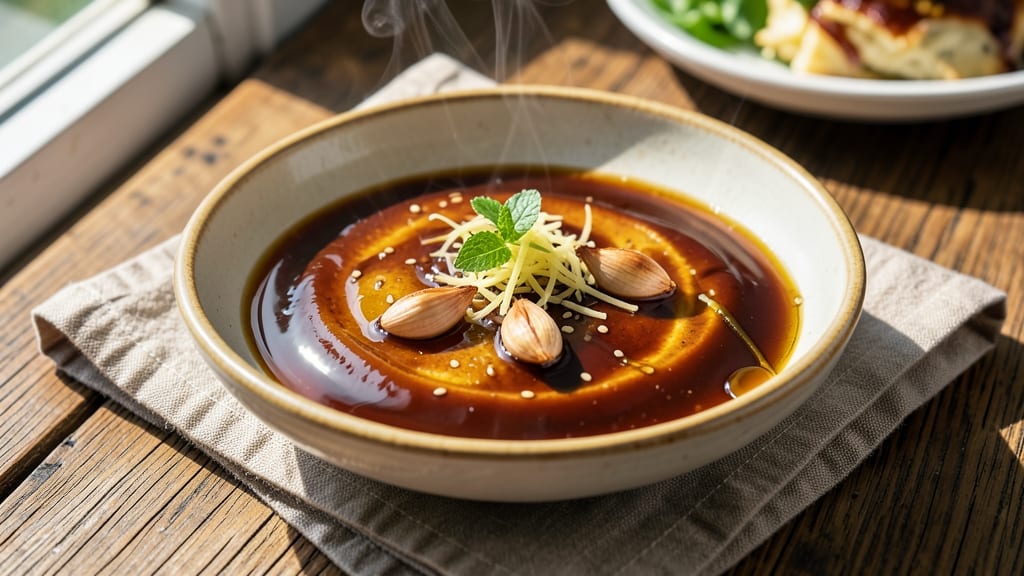
This Asian omelette sauce recipe transforms ordinary eggs into restaurant-quality masterpieces with just a few simple ingredients. The secret lies in balancing umami-rich soy sauce, fragrant sesame oil, and aromatic garlic-ginger for a sauce that clings perfectly to crispy egg edges while keeping the centers silky.
I developed this recipe after years of experimenting with Asian-style omelettes—it's the drizzle that elevates everything from classic omelettes to delicate egg rolls.
The magic happens in the sauce's depth of flavor, achieved through slow simmering until the aromatics dissolve completely. No artificial additives or complicated techniques—just high-quality ingredients combined in a 10-minute process that yields a sauce with staying power.
Unlike store-bought versions, this keeps beautifully in the fridge for up to two weeks, ready to enhance any dish with a single drizzle.
What makes this sauce truly special is its versatility—it doesn't just belong on omelettes. Use it to elevate scrambled eggs, stir-fries, or even as a dipping sauce for spring rolls.
The perfect harmony of salty, sweet, and aromatic notes creates a flavor profile that's both complex and approachable, making it ideal for home cooks who want restaurant-quality results without the fuss.
The sauce's rich, glossy texture coats eggs evenly, creating that signature caramelized crust while maintaining tender centers. Whether you're serving breakfast for two or preparing a meal for a crowd, this foolproof recipe delivers consistent, professional-quality results every time. Let's create this flavor-packed essential for your kitchen.
Ingredients for asian omelette sauce
Nine ingredients transform simple eggs into restaurant-quality omelettes with perfect umami balance.
| Ingredient | Amount | Notes |
|---|---|---|
| Light Soy Sauce 🍶 | ½ cup | High-quality, preferably Japanese |
| Dark Soy Sauce 🍶 | ¼ cup | For deeper umami complexity |
| Sesame Oil 🫒 | 2 tbsp | Toasted, not refined |
| Garlic Cloves 🧄 | 4 cloves | Freshly minced, aromatic |
| Fresh Ginger 🌿 | 1 tbsp | Finely grated, peeled |
| Honey 🍯 | 1 tbsp | Pure, for subtle sweetness |
| Rice Vinegar 🍶 | 1 tbsp | Seasoned, for brightness |
| Cornstarch 🌾 | ½ tsp | For thickening consistency |
| Water 💧 | ¼ cup | Room temperature |
| Sesame Seeds 🥜 | 1 tsp | Toasted, for garnish |
The soy sauces form the sauce's foundation—Japanese brands like Kikkoman deliver the cleanest umami, but La Choy works in a pinch. Fresh garlic and ginger are non-negotiable; pre-minced jarred versions lack the aromatic punch. For sesame oil, Kadoya or Lee Kum Kee provide that nutty depth without bitterness. The honey should be pure, not artificial—Manuka honey adds subtle floral notes if you're feeling fancy. Rice vinegar brings brightness, so Mushroom brand seasoned rice vinegar adds complexity without overpowering. All ingredients should be at room temperature before combining for optimal flavor integration.
No light soy sauce? Dark soy sauce alone works in a bind, though the color will be richer. Substitute honey with maple syrup for vegan versions, though the flavor profile shifts slightly. Fresh ginger can be swapped for 1/2 tsp ground ginger, but texture and aroma suffer. Sesame oil is tricky to replace—toasted peanut oil mimics the nuttiness but lacks sesame's signature aroma. For thickening, arrowroot powder works at a 1:1 ratio, though cornstarch provides a cleaner finish. The sauce's versatility means it adapts well to substitutions, but the garlic-ginger-sesame trio remains essential for that signature umami punch.
This sauce thickens beautifully when refrigerated, developing richer flavors over 24 hours. Store in an airtight container in the fridge for up to two weeks, with the flavors deepening like a fine wine. For longer storage, freeze in ice cube trays—thaw and whisk before use. The sauce's glossy texture comes from slow simmering; don't rush this step. Garnish with toasted sesame seeds just before serving to maintain that restaurant-quality presentation. Portion into small jars for easy drizzling on omelettes, scrambled eggs, or stir-fries.
Why You'll Love This Recipe
- Pantry Magic: I swear by this sauce—just five ingredients, no fancy shopping. Light and dark soy sauce give that perfect umami balance, while a splash of sesame oil adds a nutty punch that transforms even the simplest eggs into something special.
- Garlic-Ginger Zing: That fresh ginger and garlic combo? It’s the secret weapon. The moment you taste the first bite—crispy egg edges with a fragrant, slightly spicy kick—you’ll understand why this sauce is my go-to for breakfast, lunch, or dinner.
- Meal Prep Hero: Between us, this sauce keeps for weeks in the fridge. I make a big batch on Sundays, and it turns scrambled eggs, fried rice, or even noodles into a weeknight win. No last-minute grocery runs needed.
- Budget Booster: Honestly, this is one of those recipes where you get restaurant-quality flavor for pennies. A few cents’ worth of soy sauce and ginger stretch to feed the whole family, and the leftovers? Even better the next day.
Step-by-step instructions for Asian omelette sauce
Here's the precise method to create a balanced, restaurant-quality sauce that elevates every egg dish.
Bloom the Aromatics in Sesame Oil
Heat a small saucepan over medium-low heat and add the 2 tablespoons sesame oil. Once the oil shimmers gently, add the 4 minced garlic cloves and 1 tablespoon finely grated fresh ginger. Cook for 1-2 minutes until the garlic turns golden and fragrant—this prevents raw garlic flavor in your sauce.
Watch the heat carefully here. If it smokes or darkens too quickly, reduce to low heat immediately. The aromatics should perfume the oil without browning. This foundational step builds the sauce's complex umami profile that makes it perfect for omelettes.
Combine Soy Sauces and Sweetener
Pour in the 0.5 cup light soy sauce and 0.25 cup dark soy sauce simultaneously, stirring constantly with a wooden spoon. Add the 1 tablespoon honey and 1 tablespoon rice vinegar, mixing well until fully incorporated. The sauce should begin to simmer gently—you'll see small bubbles forming around the edges.
This combination creates the perfect balance: the light soy provides clean saltiness while the dark soy adds depth. The honey and vinegar introduce subtle sweetness and acidity that complement the eggs beautifully. Let the mixture simmer for 2-3 minutes until it reduces slightly and the aromatics are fully integrated.
Thicken the Sauce Properly
In a small bowl, whisk together the 0.5 teaspoon cornstarch with the 0.25 cup room-temperature water until completely dissolved. Slowly pour this slurry into the simmering sauce while whisking continuously. The sauce will thicken immediately—you're looking for a consistency that coats the back of a spoon but still flows freely when drizzled.
Continue simmering for 1-2 minutes until the sauce reaches your desired thickness. It should be glossy and coat the spoon completely. If it thickens too much, whisk in 1 teaspoon water at a time until perfect. This precise thickening ensures the sauce clings beautifully to omelette edges without being gluey.
Finish and Prepare for Service
Remove the sauce from heat and let it cool slightly for 2 minutes. Taste and adjust seasoning—you may need to add a pinch more light soy sauce for saltiness or a touch of rice vinegar for brightness. The sauce should be perfectly balanced: umami-rich from the soy, slightly sweet from the honey, with bright acidity from the vinegar.
Transfer to a small bowl or sauceboat and sprinkle with 1 teaspoon toasted sesame seeds just before serving. These seeds add visual contrast and nutty crunch that contrasts beautifully with the smooth sauce. Keep the sauce covered until ready to use—it will maintain its perfect consistency for up to 3 days refrigerated.
Pro Tips For Making Asian Omelette Sauce
- Mince That Ginger: I learned this the hard way—peeled ginger slices won’t dissolve properly, leaving you with chewy chunks in an otherwise smooth sauce. Use a sharp knife or microplane to turn it into a fine paste before adding it to the pan. Trust me, your sauce will thank you.
- Start Low, Finish High: Sesame oil burns faster than you’d think. Sauté garlic and ginger in a dry pan over medium-low heat until fragrant—about 2 minutes—before adding any liquid. Then crank the heat to medium-high to cook off the raw soy sauce aroma. This keeps the oil from turning bitter.
- Balance Those Soy Sauces: Dark soy sauce adds color, but too much makes the sauce taste like liquid molasses. Use a 3:1 ratio of light to dark (e.g., 3 tablespoons light, 1 tablespoon dark) and adjust to taste after simmering. The sauce should coat the back of a spoon, not look like it’s drowning in ink.
- Deglaze with a Splash: After cooking garlic and ginger, don’t just dump in the soy sauce—give the pan a quick deglaze with 1 tablespoon of water first. This loosens the browned bits (fond) that hold onto all the flavor. Stir for 30 seconds before adding the soy sauces, and your sauce will taste deeper.
Essential equipment for great asian omelette sauce
Small Saucepan
I use a 3-quart stainless steel saucepan for this recipe—it's the perfect size for controlling heat and preventing scorching. Brands like All-Clad or Cuisinart offer excellent heat distribution, but any quality pan with sloped sides works well.
Avoid nonstick pans for this sauce since the high heat needed for thickening can damage coatings. 🔥
Wooden Spoon
A 6-inch wooden spoon is essential for stirring without scratching the pan or altering the sauce's texture. I prefer olive wood spoons—they're durable and gentle on delicate sauces.
Avoid metal utensils when simmering, as they can cause the sauce to splatter or stick. Keep your spoon handy for constant stirring during the thickening phase.
Fine-Mesh Strainer
Though not required, a fine-mesh strainer helps remove any garlic or ginger bits if you prefer a completely smooth sauce. I use a stainless steel mesh strainer from OXO—it's sturdy and easy to clean.
If you skip straining, simply whisk vigorously before transferring to your serving dish. The texture should still be velvety smooth.
Whisk for Thickening
For the cornstarch slurry, a balloon whisk ensures perfect emulsification without lumps. I like the OXO Good Grips whisk—it's lightweight and provides excellent control. Whisking thoroughly prevents that dreaded "gluey" texture that can happen when cornstarch isn't fully dissolved.
A small bowl (about 8-ounce capacity) works best for mixing the slurry.
Sauceboat or Small Bowl
Serve your sauce in a small ceramic sauceboat or glass serving bowl to maintain its perfect temperature. I use a 2-cup glass bowl from Pyrex—it keeps the sauce warm while allowing guests to see its beautiful glossy texture.
For restaurant-style presentation, add a small ladle (about 2-ounce capacity) for controlled drizzling.
Toasting Pan for Sesame Seeds
A small dry skillet (about 8-inch diameter) is perfect for toasting the sesame seeds before garnishing. Heat it over medium heat for just 30 seconds until fragrant—never let them burn.
I use a nonstick skillet from Calphalon for easy cleanup. Toasting enhances their nutty aroma and adds that professional restaurant touch to your omelette presentation. ✨
Nutrition facts
Frequently asked questions
Can I make this sauce without sesame oil?
Yes, but the flavor will be different. Replace sesame oil with 1 tablespoon toasted peanut oil or 1/2 teaspoon sesame pastestrong> mixed with 1 tablespoon neutral oil. The nutty aroma is key for that authentic Asian omelette experience—just know it won't be identical. For a vegan version, ensure your sesame oil is certified.
How long does this sauce keep, and can I freeze it?
The sauce stays fresh in an airtight container for up to 2 weeks refrigerated. For longer storage, freeze in ice cube traysstrong>—thaw overnight in the fridge and whisk before use. The texture may separate slightly after freezing, but a quick whisk restores it. Avoid freezing in glass containers as they may crack.
What's the best way to use this sauce beyond omelettes?
This versatile sauce elevates scrambled eggs, egg rolls, and stir-fries beautifully. Drizzle over congee or rice bowls for instant umami depth, or use as a dipping sauce for spring rolls or fried wontons. Even a spoonful in ramen broth adds incredible complexity. The possibilities are endless!
Why did my sauce turn out too thick/thin?
Too thick? Whisk in 1 teaspoon water at a time until smooth. Too thin? Simmer uncovered for 1-2 extra minutesstrong> while stirring constantly. The ideal consistency coats the back of a spoon but still flows freely when drizzled. If using cornstarch substitutes like arrowroot, reduce by 1/4 teaspoonstrong>—they thicken more aggressively.
Can I make this sauce in advance?
This sauce actually improves overnightstrong> as the flavors meld. Make it the night before and store refrigerated. The next day, whisk gently to restore smoothness before serving. The longer it rests, the deeper the umami flavor becomes—perfect for meal prep. Just reheat gently before using on hot dishes.