
Sauces & Condiments
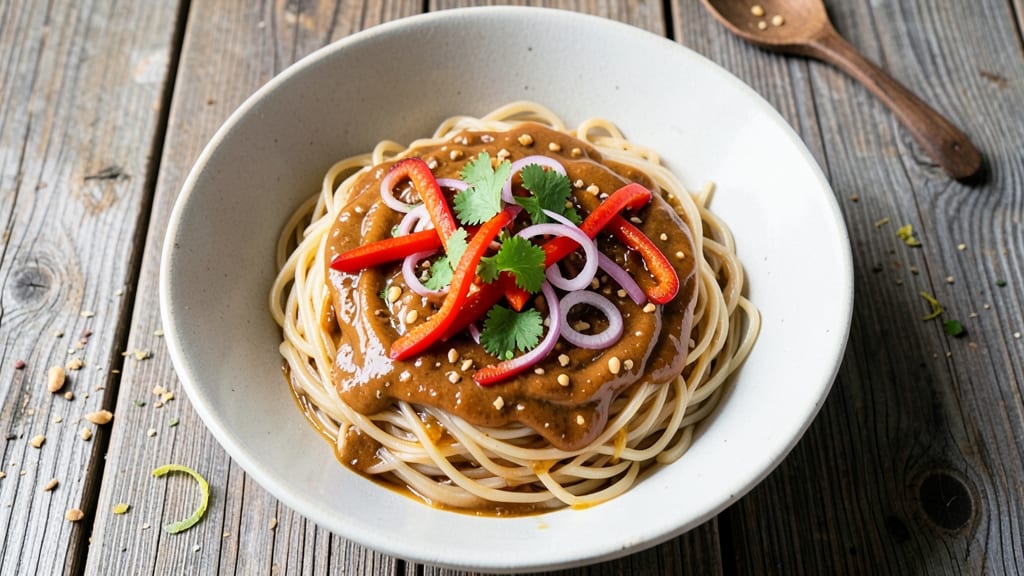
This Asian noodles with peanut sauce recipe delivers a nutty-sweet stir-fry that transforms simple ingredients into a restaurant-worthy meal in just 20 minutes. The magic lies in balancing creamy peanut sauce with fresh vegetables and protein, creating a dish that's both comforting and vibrant.
I developed this recipe after craving the perfect harmony of textures—crisp vegetables, tender noodles, and a rich, aromatic sauce that clings to every bite.
The foundation of this dish is the peanut sauce—a smooth, tangy blend of peanut butter, soy sauce, lime juice, and a touch of chili. This sauce isn’t just a topping; it’s the star that ties everything together, adding depth and complexity without overpowering the fresh ingredients.
The stir-fry technique ensures vegetables stay crisp while the noodles absorb the sauce perfectly, making every forkful a balance of flavors and textures.
What makes this recipe shine is its versatility—swap in shrimp, chicken, or tofu for the protein, or customize the vegetables based on what’s fresh at your market. The result is a dish that’s quick, satisfying, and packed with flavor, perfect for a weeknight dinner or a light lunch.
Serve it with a side of steamed greens or a simple cucumber salad to round out the meal.
This recipe is designed to be foolproof and adaptable, so you can adjust the heat level, protein choice, or even the noodle type to suit your taste.
Whether you're feeding a crowd or treating yourself to a flavorful solo meal, this nutty-sweet stir-fry delivers big on flavor without the fuss. Let’s get cooking!
Ingredients for asian noodles with peanut sauce
These 15 ingredients create a restaurant-worthy stir-fry with perfect nutty-sweet balance.
| Ingredient | Amount | Notes |
|---|---|---|
| Rice Noodles 🍜 | 8 oz | Thin or medium width preferred |
| Natural Peanut Butter 🥜 | ½ cup | Creamy, unsweetened preferred |
| Soy Sauce 🍶 | ⅓ cup | Low-sodium preferred |
| Lime Juice 🍋 | ¼ cup | Freshly squeezed |
| Red Curry Paste 🌶️ | 1 tbsp | Or substitute 1 tsp curry powder |
| Honey 🍯 | 2 tbsp | Or maple syrup for vegan option |
| Carrots 🥕 | 2 whole | Julienned into matchsticks |
| Bell Peppers 🍅 | 1 whole | Red or yellow, sliced thin |
| Red Onion 🧅 | ½ whole | Thinly sliced |
| Garlic Cloves 🧄 | 4 cloves | Minced |
| Chicken Breast 🍗 | 1 lb | Thinly sliced, boneless |
| Sesame Oil 🫒 | 1 tbsp | For aroma |
| Vegetable Oil 🫒 | 2 tbsp | High smoke point |
| Salt 🧂 | 1 tsp | Diamond Crystal preferred |
| Black Pepper 🌶️ | ½ tsp | Freshly ground |
The peanut butter quality makes all the difference here. Natural, unsweetened varieties from Trader Joe's or Whole Foods have the best flavor without added sugars. If you prefer extra creaminess, add 1 tbsp of coconut milk to the sauce. For the chicken, buy boneless, skinless breast and slice it against the grain for maximum tenderness. The rice noodles should be labeled 'vermicelli' or 'egg noodles'—they're the thin kind that cook in minutes. Look for brands like Three Ladies or Lotus Foods in the Asian aisle for the best texture.
No peanut butter? Almond butter or cashew butter works in a pinch, though the flavor will differ slightly. Swap the chicken for shrimp or tofu—just adjust cooking time accordingly. If you can't find red curry paste, mix 1 tsp curry powder with 1/2 tsp chili flakes. The honey adds the perfect touch of sweetness, but maple syrup or agave works beautifully for a vegan version. For extra crunch, toast 1 tbsp of sesame seeds and sprinkle them over the finished dish. The vegetables can be customized—baby corn, snap peas, or broccoli all work well.
Prep the sauce first—it needs time to emulsify properly. Store any leftover sauce in a sealed jar for up to 1 week in the fridge. The cooked noodles reheat well, but add a splash of water to prevent drying. For a quick assembly, keep the sauce and stir-fry components separate until serving. This dish keeps for 3 days in the fridge, though the noodles soften slightly with each reheating. Freeze the sauce separately for up to 3 months if you want to make it ahead.
Why You'll Love This Recipe
- No-Fuss Pantry Staples: I swear by this recipe because it uses things I always have—peanut butter, soy sauce, lime—no special shopping required. The rice noodles soak in minutes, and the sauce? Just stir, simmer, and boom. Even my lazy Sundays feel productive.
- Creamy-Spicy Magic: That peanut butter isn’t just a binder—it’s the star. The red curry paste adds depth, while the lime cuts through the richness like a bright, tangy hug. Honestly, the first bite makes me question why I ever ordered takeout.
- Lunchbox or Dinner Party: Pack it cold for work or serve it warm at a gathering—this dish handles both. Double the batch, and you’ve got meal prep gold. My roommates and I split leftovers for days, and no one complains.
- Budget-Friendly Powerhouse: Natural peanut butter, rice noodles, and a splash of lime? This recipe costs less than half a takeout order. I’ll be real: it’s my go-to when I’m broke but still want to feel fancy. (Yes, even on a Tuesday night.)
Step-by-step instructions for Asian noodles with peanut sauce
This method delivers restaurant-quality peanut sauce in minutes while keeping the noodles perfectly tender.
Prepare the Peanut Sauce
In a medium bowl, whisk together the 0.5 cup natural peanut butter, 0.33 cup soy sauce, 0.25 cup lime juice, 1 tbsp red curry paste, and 2 tbsp honey until completely smooth. I like to use a fork first to break up any peanut butter clumps before whisking, as this ensures the sauce emulsifies properly. The mixture should be thick but pourable—if it's too stiff, add 1-2 teaspoons of hot water to loosen it. Set aside while you prep the remaining ingredients.
This sauce is the heart of the dish, so don't rush the whisking. You want a velvety texture that coats the noodles beautifully without being overly thick. The lime juice adds brightness that cuts through the richness of the peanut butter, while the red curry paste introduces subtle heat and depth. Taste as you go—adjust the lime or honey if needed, but remember the flavors will meld further as you cook.
Cook the Chicken and Vegetables
Heat 2 tablespoons vegetable oil in a large wok or skillet over medium-high heat until shimmering. Add the 1 lb thinly sliced chicken breast and cook for 3-4 minutes until the edges turn opaque and the chicken releases easily from the pan. Remove the chicken and set aside on a plate.
In the same pan, add 1 tablespoon sesame oil, then stir in the 0.5 whole thinly sliced red onion, 2 whole julienned carrots, and 1 whole thinly sliced bell pepper. Cook for 4-5 minutes until the vegetables soften slightly but still retain their vibrant color. Add the 4 minced garlic cloves and cook for 30 seconds until fragrant. Season with 1 tsp salt and 0.5 tsp black pepper. Return the chicken to the pan and toss everything together for 1 minute to combine flavors.
Cook the Rice Noodles
While the chicken and vegetables cook, bring a large pot of water to a boil. Add the 8 oz rice noodles and cook for 2-3 minutes—they should be tender but still slightly firm to the bite. Drain immediately in a colander and rinse under cold water for 10 seconds to stop the cooking process. Shake off excess water and return the noodles to the pot.
This quick cooking time is crucial—rice noodles continue cooking even after you drain them, so they should be al dente when you remove them from the pot. The cold water rinse prevents them from sticking together and ensures they absorb the peanut sauce beautifully. Work quickly here, as the noodles will start to stick if left sitting too long.
Combine Everything
Add the drained noodles to the wok with the chicken and vegetables. Pour the peanut sauce over everything and toss vigorously for 1-2 minutes until the noodles are evenly coated and the sauce clings to each strand. If the sauce seems too thick, add 2-3 tablespoons of hot water from the noodle pot to loosen it. The noodles should be glossy and well-coated, with no dry spots.
This is where the dish comes together. The residual heat from the pan will help the sauce emulsify perfectly with the noodles, creating that signature silky texture. Taste and adjust seasoning if needed—you might want to add a splash more lime juice for brightness or a pinch of salt to balance flavors. Serve immediately while the noodles are hot and the sauce is at its peak consistency.
Pro Tips For Making Asian Noodles With Peanut Sauce
- STIR THE PEANUT BUTTER: Mix the peanut butter into the sauce last—after cooking the curry paste and simmering the broth. Natural peanut butter separates when heated, so add it when the sauce is off the heat or just warm enough to blend smoothly. (Yes, it’ll look weird at first, but it emulsifies like magic.)
- SOAK NOODLES SEPARATELY: Don’t toss the rice noodles straight into the hot sauce. Soak them in warm water (not boiling) for 8–10 minutes until pliable but still slightly firm—this prevents a mushy, gluey mess. Drain just before adding to the sauce, so they absorb the peanut dressing without turning to porridge.
- DILUTE THE CURRY PASTE: Red curry paste packs a punch—start with 1–2 teaspoons, not the whole jar. Bloom it in 2 tablespoons of oil first, then add ½ cup broth (or water) to mellow the heat. Skimp here, and your sauce will taste like a spicy afterthought.
- ZEST THE LIME FIRST: Add lime zest to the sauce before the juice—it brightens the peanut flavor without overpowering. A teaspoon of zest (from 1 lime) adds depth, while the juice (2–3 tablespoons) balances acidity. (Pro move: Use a microplane for finer, more aromatic zest.)
Common mistakes when making perfect results
Overcooking Noodles
Rice noodles are delicate and cook in a flash—2-3 minutes max in boiling water. I’ve ruined countless batches by leaving them too long, resulting in mushy, gluey strands that refuse to hold the sauce.
The moment they’re tender but still slightly firm to the bite, drain them immediately and rinse with cold water to stop cooking. This 10-second rinse is non-negotiable—it prevents sticking and keeps the texture perfect for absorbing the peanut sauce. 🍜
Skipping the Sauce Emulsification
The peanut sauce needs time to blend smoothly before hitting the pan. If you whisk it too quickly or skip the initial fork-mixing step, you’ll end up with clumpy peanut butter lumps that ruin the texture.
I always let the sauce sit for 5 minutes while prepping other ingredients—this gives it time to emulsify properly. If it’s still too thick, add 1-2 teaspoons of hot water to loosen it. A well-emulsified sauce coats the noodles evenly and creates that signature silky finish. 🥜
Underseasoning the Sauce
Peanut sauce is rich and creamy, so it’s easy to underseason it. Taste the sauce before tossing it with the noodles—it should balance sweet, salty, tangy, and slightly spicy. If it tastes bland, add ½ teaspoon more soy sauce for saltiness or 1 teaspoon lime juice for brightness.
I often adjust the honey too, especially if the peanut butter was sweetened. Remember, the sauce will mellow slightly after mixing with the noodles, so don’t be shy with the seasoning. 🍯
Crowding the Pan
Stir-frying works best with a hot, crowded pan—but not too crowded! If you pack the wok with all the ingredients at once, the chicken and vegetables will steam instead of sear, leading to soggy results. Cook the chicken first, then remove it before adding the vegetables.
This ensures everything gets a proper sear and stays crisp. I like to work in batches if needed—just keep the pan hot between additions. A well-seared base builds flavor that carries through the entire dish. 🔥
Ignoring the Chicken’s Rest Time
Thinly sliced chicken continues cooking even after it leaves the pan. If you toss it straight into the noodles without resting, it’ll turn rubbery. Let the chicken rest for 2-3 minutes after removing it from the pan—this allows the juices to redistribute, keeping it tender.
I also slice it against the grain to shorten the muscle fibers, which makes each bite more tender. This small step makes a huge difference in texture. 🍗
Using Low-Quality Peanut Butter
Not all peanut butters are created equal. Store-bought varieties with added sugars or oils can make your sauce taste artificial or overly sweet. I always use natural, unsweetened peanut butter from brands like Trader Joe’s or Whole Foods.
These have the richest flavor and proper texture for emulsifying. If you’re in a pinch, almond butter works, but the flavor will be subtly different. The quality of your peanut butter is the foundation of the sauce—don’t skimp! 🥜
Nutrition facts
Frequently asked questions
Can I make this peanut sauce ahead of time?
The peanut sauce keeps well in an airtight container for up to 1 week in the fridge. For longer storage, freeze it for 3 months—just thaw overnight in the fridge before using. The flavors actually meld better when made ahead, so this is a great time-saver for busy weeknights.
What's the best way to adjust the heat level?
For more spice, add ½ teaspoon chili flakes or 1 teaspoon sriracha to the sauce. If you prefer milder heat, reduce the red curry paste to ½ teaspoon and skip the chili flakes. The lime juice also brightens the heat, so adjust that first before adding more spice.
Can I use other types of noodles?
Rice noodles are ideal for this recipe, but you can substitute with udon or soba noodles if preferred. For chewier texture, use egg noodles, but reduce cooking time by 1 minute. Avoid wheat noodles—they won't absorb the sauce as well and may make the dish too heavy.
How do I make this dish vegetarian?
Swap the chicken for firm tofu or extra-firm tempeh, both cut into thin strips. Press tofu for 15 minutes first to remove excess water, then pan-fry until golden. Add 1 tablespoon soy sauce to the tofu while cooking for extra flavor. The dish will be equally satisfying with these plant-based proteins!
Why did my sauce separate?
This usually happens when the sauce isn't properly emulsified or if too much liquid is added. Whisk vigorously with a fork first to break up peanut butter clumps, then use a whisk for 1 minute to combine. If it separates later, stir in 1 teaspoon hot water to restore smoothness. The sauce should be thick but pourable—like honey consistency.