
Sauces & Condiments
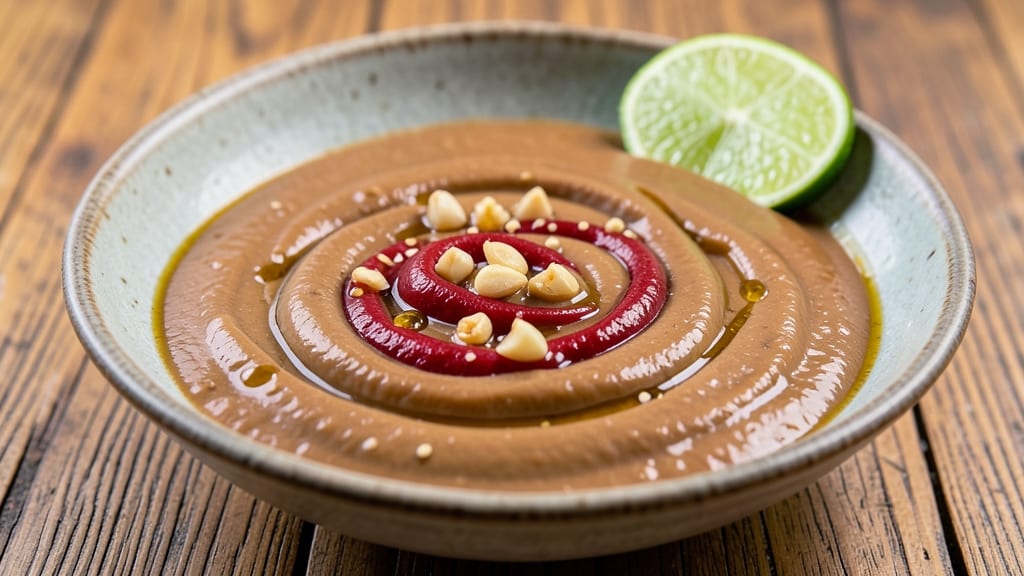
This almond butter satay sauce transforms classic peanut flavors with rich, nutty depth and a vibrant tamarind kick that elevates every dish. The creamy almond butter base creates a luxurious texture while tamarind paste delivers that signature tangy brightness found in traditional satay.
What makes this version special is its versatility—it works as a marinade, dipping sauce, or glaze, and it's completely plant-based.
The foundation of this sauce is simple yet powerful: almond butter blended with coconut milk for creaminess, balanced by soy sauce and lime juice for that perfect tang. A touch of garlic and ginger adds aromatic warmth, while tamarind paste brings the signature satay flavor without overpowering the nutty richness.
The sauce thickens beautifully when reduced, creating that perfect consistency for drizzling or dipping.
What you'll end up with is a sauce that's rich, slightly sweet, and deeply flavorful—ideal for grilled tofu, veggie skewers, or noodle dishes. The almond butter adds a sophisticated depth that peanut butter can't match, while the tamarind keeps it bright and complex.
It stores well in the fridge for up to 2 weeks or freezes for 3 months, making it perfect for meal prep.
Use it as a marinade for 30 minutes before grilling, as a dipping sauce for spring rolls, or as a glaze for roasted vegetables. The possibilities are endless, and the flavor only gets better as it develops over time. Let's make this sauce!
Ingredients for almond butter satay sauce
Rich almond butter meets tangy tamarind for a sauce that's creamy, complex, and utterly addictive.
| Ingredient | Amount | Notes |
|---|---|---|
| Almond Butter 🥜 | ¾ cup | Creamy, unsweetened preferred |
| Full-Fat Coconut Milk 🥥 | 1 can | 13.5 oz can, well shaken |
| Tamarind Paste 🍈 | ⅓ cup | Unsweetened, smooth texture |
| Soy Sauce 🍶 | ¼ cup | Low-sodium preferred |
| Fresh Lime Juice 🍋 | ¼ cup | About 3-4 limes |
| Garlic Cloves 🧄 | 4 cloves | Minced for aromatic punch |
| Fresh Ginger 🌿 | 1 tbsp | Finely grated, zesty kick |
| Maple Syrup 🍁 | ⅛ cup | Pure grade B for depth |
| Sesame Oil 🫒 | 1 tbsp | Toasted for nutty aroma |
| Red Chili Flakes 🌶️ | 1 tsp | Adjust for heat preference |
The almond butter is your flavor anchor here—creamy, not crunchy, and unsweetened so it doesn't overpower. Grab the natural, no-added-sugar kind from Trader Joe's or Whole Foods for best results. Tamarind paste can be tricky to find; check the international aisle or order online if your store doesn't carry it. Look for smooth, block-style paste—it dissolves better than the pulpy kind. The coconut milk? Full-fat only—it's what gives that luxurious texture. Shake the can well before opening, or you'll get a watery sauce instead of creamy goodness.
No tamarind paste? Substitute 1/4 cup lime juice plus 1 tbsp date syrup—it won't be identical, but it'll get you close. Running low on almond butter? Cashew butter works in a pinch, though it's slightly sweeter. The soy sauce can be swapped for coconut aminos if you're avoiding soy. Fresh ginger too spicy? Ground ginger at half the amount is gentler. Want more depth? Add a dash of miso paste—trust me, it elevates everything. The chili flakes are optional but add that signature satay heat. Skip them if you're serving kids or sensitive eaters.
This sauce only gets better with time—make it a day ahead if possible. Store it in an airtight jar in the fridge for up to 2 weeks, or freeze in ice cube trays for 3 months. The flavors meld beautifully overnight, so don't rush it. Thicken it further? Simmer uncovered for 5-10 minutes. Too thin? Stir in a teaspoon of arrowroot powder mixed with water. Perfect for meal prep—double the batch and use it all week on everything from noodles to grilled veggies.
Why You'll Love This Recipe
- Five-Ingredient Magic: I swear, this sauce comes together with four actual steps—just whisk, simmer, stir, and taste. No fancy techniques, no last-minute grocery runs. The almond butter and coconut milk blend like they’ve been friends forever, while the tamarind adds that tangy punch without needing a degree in spice balancing.
- Nutty-Tangy Obsession: That first bite? Rich, creamy almond butter meets bright lime and salty soy—it’s like a hug for your taste buds. Honestly, I’ve made it three times this week, and each time, someone in my house licks the spoon. The tamarind gives it depth, but the lime keeps it from being too heavy.
- Weeknight to Party Star: Slather it on grilled chicken for a quick weeknight dinner, drizzle it over noodles for a 15-minute meal, or serve it at a potluck where people will ask for the recipe. It’s the kind of sauce that works in a takeout container or on a fancy platter—no judgment here.
Step-by-step instructions for almond butter satay sauce
This sauce delivers bold, nutty depth with a perfect balance of tangy tamarind and umami richness.
Bloom the Aromatics in Sesame Oil
Heat a medium saucepan over medium-low heat and add the 1 tablespoon sesame oil. Let it warm for 30 seconds until fragrant—you'll smell that nutty, toasty aroma. Then add the 4 cloves minced garlic and 1 tablespoon finely grated ginger. Cook for 1-2 minutes until the garlic turns golden and the mixture smells irresistibly aromatic.
This step builds the flavor foundation. Don't rush it—properly blooming the aromatics ensures they develop their full potential. If the garlic starts to brown too quickly, reduce the heat slightly. You want color, not burnt bits.
Combine Wet Ingredients for Balanced Flavor
Pour in the 0.75 cup almond butter and stir until completely melted and smooth. Add the 0.33 cup tamarind paste, 0.25 cup soy sauce, 0.125 cup maple syrup, and 0.25 cup fresh lime juice. Stir vigorously to combine all ingredients thoroughly—this is where the magic happens.
The tamarind paste might look thick, but it dissolves completely when heated. If you're using a smooth paste, you won't need to strain anything. The lime juice will add that bright, tangy kick that cuts through the richness of the almond butter.
Incorporate Coconut Milk and Simmer
Pour in the 1 can full-fat coconut milk (make sure it's well shaken first) and scrape up any browned bits from the bottom of the pan. Bring the mixture to a gentle simmer over medium heat. Let it cook for 5-7 minutes until it thickens slightly and coats the back of a spoon.
You're looking for a sauce that's thick enough to cling to satay sticks but still pours smoothly. If it thickens too quickly, add 1-2 tablespoons water to adjust the consistency. The coconut milk adds creaminess while balancing the nutty intensity.
Finish with Heat and Adjust Seasoning
Remove the pan from heat and stir in the 1 teaspoon red chili flakes. Let the sauce sit for 2 minutes to allow all the flavors to meld together. Taste and adjust seasoning—you might need a touch more soy sauce for saltiness or lime juice for acidity. The sauce should be bold but balanced.
This is where you can customize the heat level. If you prefer milder sauce, reduce the chili flakes to ½ teaspoon. For extra depth, you could even add a pinch of smoked paprika. The sauce will continue to thicken slightly as it cools, so don't worry if it looks a bit loose when hot.
Cool and Serve Over Satay
Let the sauce cool to room temperature before serving—this allows all the flavors to fully develop. The sauce should have a glossy sheen and be thick enough to coat the back of a spoon. Serve warm or at room temperature over your favorite grilled satay sticks, drizzled generously for maximum flavor impact.
For best results, make the sauce fresh and use it within 2 days. If storing, keep it refrigerated in an airtight container. The flavors actually improve overnight as everything continues to meld. This sauce transforms simple grilled chicken or tofu into an extraordinary dish with its complex, layered flavors.
Pro Tips For Making Almond Butter Satay Sauce
- STIR CONSTANTLY: The almond butter and coconut milk will separate like oil and water if you’re not paying attention—especially when you add the tamarind. Keep that spoon moving in slow circles, scraping the bottom every 30 seconds. I learned this the hard way when my sauce split into two unappetizing layers mid-recipe.
- USE WARM COCONUT MILK: Cold coconut milk turns the sauce grainy and clumpy. Heat it in a separate saucepan until it’s just warm to the touch (not hot—you don’t want to cook off the fat). Pour it in slowly while whisking, and you’ll get a silky texture instead of a sad, lumpy mess.
- DILUTE THE TAMARIND FIRST: Tamarind paste is a sneaky beast—it’s thick, sticky, and can clog your whisk if you toss it in dry. Mix it with 2 tablespoons of warm water or lime juice before adding it to the sauce. This also helps balance the sourness better, so you’re not left with a sauce that’s either bland or painfully tart.
- SALT THE ALMOND BUTTER: Store-bought almond butter is often unsalted, and skipping this step means your sauce will taste flat. Sprinkle a pinch of salt (about ¼ teaspoon) directly into the almond butter while you’re warming it—it cuts through the richness and makes the tamarind’s tang pop. Trust me, your taste buds will notice.
Perfect pairings for this almond butter satay sauce
Grilled Tofu Pairing
This almond butter satay sauce is a game-changer for grilled tofu—its creamy richness complements the firm texture perfectly. Marinate extra-firm tofu cubes in 2 tablespoons soy sauce and 1 tablespoon lime juice for 30 minutes before grilling. Brush with sauce while hot for that signature sticky glaze. 🔥
Vegetable Skewers
Use the sauce as a marinade for colorful veggie skewers—bell peppers, zucchini, and mushrooms absorb the flavors beautifully. Toss skewers in 1 tablespoon sauce before grilling, then drizzle generously after cooking. The tamarind adds a tangy brightness that cuts through the smokiness. 🥕
Rice Noodle Bowls
Drizzle this sauce over steamed rice noodles for an instant upgrade. I love adding shredded carrots, cucumber, and crushed peanuts for texture. The sauce's nutty depth balances the chewy noodles while keeping the dish light. Double the batch for meal prep—it keeps for 5 days in the fridge. 🍜
Spring Rolls
Skip the peanut sauce entirely and use this almond butter version instead. The sauce's richness pairs perfectly with crispy spring roll wrappers. Serve warm with extra lime wedges for brightness. For extra flair, sprinkle with toasted sesame seeds before serving. 🌿
Dipping Sauce
Thin the sauce slightly with 1-2 tablespoons water for a perfect dipping consistency. It works amazingly with rice paper rolls, fresh spring rolls, or even crispy fried tofu bites. The almond butter adds a sophisticated twist that makes it feel restaurant-quality. 🥢
Roasted Chickpeas
Toss roasted chickpeas in this sauce for a protein-packed snack. Bake at 400°F for 15-20 minutes until crispy, then drizzle with extra sauce. The nutty flavors complement the chickpeas' earthiness beautifully. Store leftovers in an airtight container for 3 days. 💛
Nutrition facts
Frequently asked questions
Can I substitute almond butter with peanut butter?
Yes, but the flavor profile will shift slightly. Peanut butter will make the sauce nuttier and slightly sweeter, while almond butter adds a more sophisticated, slightly floral note. For best results, use creamy peanut butter and reduce the maple syrup to 1 tablespoon to balance sweetness. The texture will be similar, but the almond butter gives that signature satay elegance.
How do I adjust the heat level in this sauce?
Start with the 1 teaspoon red chili flakes as written, but you can easily adjust. For milder heat, reduce to ½ teaspoon or omit entirely. For extra spice, add ½ teaspoon cayenne pepper or a pinch of chili powder. Always taste before serving—you can always add more heat, but you can't remove it!
Why does my sauce look too thin after cooking?
This happens if the coconut milk wasn't shaken well or if you didn't simmer long enough. For a quick fix, simmer uncovered for 5-10 more minutes to reduce the liquid. If that doesn't work, mix 1 teaspoon arrowroot powder with 1 tablespoon water, stir into the sauce, and cook for 2 minutes until thickened. The sauce should coat the back of a spoon but still pour smoothly.
Can I make this sauce ahead of time?
This sauce tastes even better when made a day ahead. Store it in an airtight container in the fridge for up to 2 weeks. The flavors meld beautifully over time, becoming richer and more complex. For longer storage, freeze in ice cube trays for 3 months—thaw overnight in the fridge before using.
What's the best way to use this sauce if I'm not making satay?
This versatile sauce works as a marinade, dipping sauce, or glaze! Use it to baste grilled vegetables, drizzle over noodle bowls, or toss with roasted chickpeas. For extra richness, thin with 1 tablespoon water for dipping, or reduce slightly for glaze consistency. It's perfect for anything that needs that nutty, tangy kick!