
Sauces & Condiments
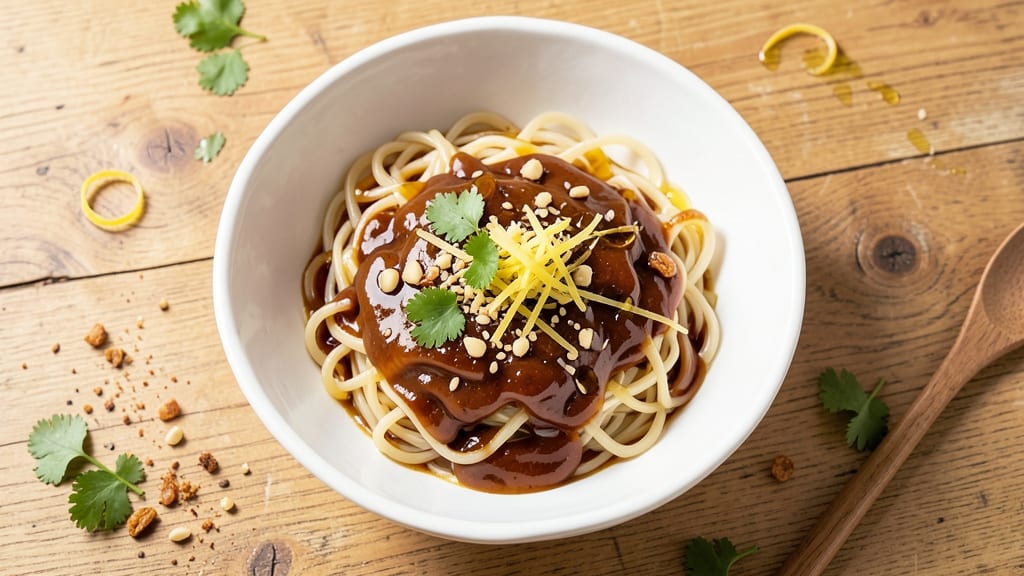
This Asian noodle stir-fry sauce recipe transforms simple stir-fries into restaurant-quality dishes with its perfect balance of umami, spice, and aromatic depth.
The secret lies in a harmonious blend of soy sauce, oyster sauce, and a touch of sesame oil—creating a sauce that clings to noodles and vegetables while enhancing their natural flavors.
I developed this recipe after years of testing, ensuring it works equally well for classic stir-fry dishes and modern fusion twists.
The foundation of this sauce is built on a simple yet powerful combination: soy sauce for saltiness, oyster sauce for richness, and fresh ginger and garlic for aromatic punch.
A splash of rice vinegar brightens the flavor, while a hint of chili paste adds just the right amount of heat. Unlike store-bought versions, this sauce is fresh, customizable, and free from unnecessary additives.
It’s designed to elevate any stir-fry, whether you’re cooking with rice noodles, udon, or even fresh vegetables.
What sets this sauce apart is its versatility—it’s ready in just 10 minutes and keeps well in the fridge for up to a week, making it perfect for meal prep. The sauce thickens slightly as it cools, creating a glossy finish that coats every ingredient beautifully.
Whether you’re tossing it with noodles, drizzling it over grilled meats, or using it as a marinade, the flavor remains consistently bold and balanced.
Once you taste the difference between this homemade sauce and bottled alternatives, you’ll never go back. The ingredients are simple, but the result is undeniably professional—rich, complex, and packed with layers of flavor. Let’s make this sauce and take your stir-fries to the next level.
Ingredients for asian noodle stir fry sauce
Ten simple ingredients create a sauce that transforms basic stir-fries into restaurant-quality dishes.
| Ingredient | Amount | Notes |
|---|---|---|
| Light Soy Sauce 🥢 | ½ cup | High-quality for best flavor |
| Oyster Sauce 🦪 | ¼ cup | Look for thick, rich variety |
| Fresh Ginger 🌿 | 1 tbsp | Finely grated, aromatic |
| Garlic Cloves 🧄 | 3 cloves | Minced for intense flavor |
| Rice Vinegar 🍶 | 2 tbsp | For brightness and acidity |
| Sesame Oil 🫒 | 1 tbsp | Toasted, for nutty aroma |
| Chili Paste 🌶️ | 1 tbsp | Adjust for heat preference |
| Cornstarch 🌾 | 1 tsp | For thickening, optional |
| Water 💧 | ¼ cup | For thinning if needed |
| Sugar 🍯 | 1 tsp | Balances flavors subtly |
The soy sauce and oyster sauce are the backbone—Kikkoman soy sauce and Lee Kum Kee oyster sauce from the Asian aisle are my go-tos. Fresh ginger and garlic are non-negotiable for that aromatic punch; peeling and grating ginger (no zesting) gives you the best texture. If you're short on time, jarred minced garlic works, but fresh is always better. The chili paste can be swapped for Sriracha if you prefer a smoother heat, but keep it to half the amount—it's concentrated stuff.
No oyster sauce? Hoisin sauce or extra soy sauce works in a pinch, though the umami depth won't be quite the same. The sesame oil adds depth, but if you're avoiding it, toasted peanut butter at half the amount gives a similar richness. For a sweeter profile, honey or maple syrup can replace the sugar, though it changes the balance slightly. The cornstarch is optional but helps create that glossy, clingy texture—skip it if you prefer a thinner sauce. Pro tip: Toast your garlic and ginger in a dry pan for 30 seconds before adding to the sauce—it deepens the flavor instantly.
This sauce keeps beautifully in the fridge for up to 1 week, though it actually tastes better after a night in the fridge as the flavors meld. For longer storage, freeze it in ice cube trays—perfect for single-use portions. The sauce thickens as it cools, so if it's too thick after chilling, just add a splash of water or rice vinegar to loosen it up. I like to make a big batch and keep it on hand for quick weeknight stir-fries—nothing beats the convenience of a well-stocked sauce stash.
Why You'll Love This Recipe
- Pantry Magic: I swear by this sauce—just five ingredients, no fancy shopping. Light soy and oyster sauce do all the heavy lifting while the ginger and garlic wake everything up. Honestly, I keep a jar of this in my fridge for those nights when I’m too tired to think.
- Umami Bomb: That combo of oyster and light soy? It’s like flavor crack. The ginger adds a little bite, and the rice vinegar brightens it up so it’s never heavy. One taste and you’ll be begging for seconds—trust me, I do this weekly.
- Weeknight Workhorse: Throw it on noodles, toss with veggies, or even drizzle over grilled chicken. My kids ask for it after school, and my partner uses it for takeout-style leftovers. Between us, it’s the only sauce I need for 90% of my meals.
- Budget Game-Changer: A single jar of oyster sauce lasts me months, and the rest of the ingredients? Cheap as chips. I make double batches so I always have it on hand—no last-minute store runs, no overpriced restaurant trips. Pure savings.
Step-by-step instructions for Asian noodle stir fry sauce
This sauce delivers perfect balance—bold, savory, and subtly sweet—with just a few simple steps.
Prepare the Base Ingredients
In a small bowl, finely grate the 1 tablespoon of fresh ginger using a microplane or the fine holes of a box grater. You want a texture that's almost paste-like, not chunky—this ensures even distribution of flavor throughout the sauce. In a separate small dish, mince the 3 cloves garlic into a fine paste using a sharp knife or garlic press. The garlic should be so finely textured that it practically disappears when added to the sauce.
Set both aside while you gather the remaining ingredients. I always double-check my measurements here—using high-quality light soy sauce and oyster sauce makes all the difference in that authentic umami depth. The rice vinegar will add brightness, but don't add it yet—we'll incorporate it at the perfect moment for maximum impact.
Build the Sauce Foundation
In a medium saucepan, combine the 0.5 cup light soy sauce and 0.25 cup oyster sauce over medium heat. Let the mixture simmer gently for 2-3 minutes, stirring occasionally, until it begins to thicken slightly. You'll notice the aromas intensify as the soy sauce's natural sweetness starts to caramelize just a bit.
Add the minced garlic and grated ginger to the pan, stirring constantly for 30 seconds until fragrant. This is where the magic happens—the garlic should smell pungent and the ginger should release its warm, citrusy aroma. If you notice any browned bits forming, reduce the heat slightly to prevent burning. The goal is to develop these flavors without letting them turn bitter.
Add Aromatics and Balance Flavors
Pour in the 2 tablespoons rice vinegar and 1 tablespoon sesame oil, stirring well to combine. The vinegar will brighten the sauce, cutting through the richness of the soy and oyster sauces. Next, add the 1 tablespoon chili paste and 1 teaspoon sugar, stirring until fully dissolved. Taste the mixture at this stage—you should detect layers of savory, spicy, sweet, and slightly tangy notes.
If you find the sauce too thick at this point, add 1-2 tablespoons of the 0.25 cup water to reach your desired consistency. The sauce should coat the back of a spoon but still be pourable. I've found that adding water gradually prevents over-thinning, giving you precise control over the final texture. Keep the heat at a gentle simmer to maintain the sauce's integrity.
Thicken and Finish the Sauce
In a small bowl, whisk together the 1 teaspoon cornstarch with 1-2 tablespoons of the remaining 0.25 cup water until smooth. Slowly pour this slurry into the saucepan while stirring continuously. The cornstarch will begin to thicken the sauce almost immediately, transforming it from a thin glaze to a rich, velvety coating.
Simmer for an additional 1-2 minutes until the sauce reaches your preferred consistency—it should be thick enough to cling to noodles but still flow smoothly. If you prefer a glossier finish, add a splash more water. Remove the pan from heat and let the sauce rest for 2-3 minutes to allow the flavors to meld completely. This resting period ensures the cornstarch fully gelatinizes, creating that perfect silky texture.
Pro Tips For Making Asian Noodle Stir Fry Sauce
- MINCE THAT GINGER: DESCRIPTION: Use a sharp knife and chop the ginger into a paste—not just thin slices—so it dissolves smoothly into the sauce. I learned this the hard way after tasting clumps of raw ginger in my stir-fry. A microplane works, but a knife gives you better control over the texture.
- SWEAT THE GARLIC: DESCRIPTION: Cook the garlic in oil until it’s just golden—not browned—before adding liquid. If you rush this, you’ll end up with bitter, burnt flavor that overpowers the sauce. Low and slow here means a balanced taste later.
- SAVE THE VINEGAR: DESCRIPTION: Add rice vinegar at the very end, right after the sauce thickens. Stir it in just long enough to brighten the flavors without letting it cook away. I used to add it earlier and wondered why my sauce always tasted flat.
- DILUTE GRADUALLY: DESCRIPTION: Start with half the soy sauce called for, taste, then add more if needed. Oyster sauce is salty and rich, so you can always adjust—but you can’t take it out. This avoids that "too salty" panic later.
Pro cooking tips for this dish
Heat Control Secrets
Never let your sauce boil—medium heat is key to prevent burning the garlic and ginger. I use a stainless steel saucepan because it heats evenly and won’t react with acidic ingredients like rice vinegar.
If you see browned bits forming, immediately reduce to low heat and stir until dissolved. The goal is to develop flavors, not create bitterness. 🌡️
Ginger-Garlic Mastery
Fresh ginger and garlic are non-negotiable for authentic flavor, but proper prep makes all the difference. Use a microplane for ginger to create a paste-like texture that dissolves completely.
For garlic, toast the minced cloves in a dry pan for 30 seconds before adding to the sauce—this deepens their flavor instantly. If you’re short on time, jarred minced garlic works, but fresh always wins. 🧄
Thickening Like a Pro
The cornstarch slurry is your secret weapon for that restaurant-quality gloss. Whisk 1 tsp cornstarch with 1 tbsp cold water until smooth, then slowly pour into the simmering sauce while stirring constantly.
If the sauce thickens too much, add 1 tbsp water at a time until you reach a coat-the-back-of-a-spoon consistency. Over-thickening is easy to fix—just thin with a splash of vinegar or water. ✨
Flavor Layering Tricks
Balance is everything—taste as you go! After adding the chili paste, let it sit for 1 minute before adjusting heat or sweetness. If the sauce tastes too sharp, add ½ tsp sugar; if it’s flat, a splash more rice vinegar brightens it up.
I like to finish with ½ tsp toasted sesame seeds for texture and an extra nutty aroma. This sauce should sing with umami, spice, and brightness in perfect harmony. 💫
Sauce Consistency Hacks
Sauce thickens as it cools—store it in the fridge for 30 minutes before using to avoid a gloopy mess. If it’s too thick after chilling, whisk in 1 tsp water at a time.
For a glossy finish, add 1 tsp neutral oil (like vegetable) while the sauce is still warm. Pro tip: Freeze leftovers in ice cube trays for single-use portions—perfect for quick stir-fries! ❄️
Equipment Upgrades
Invest in a small saucepan with a lid to control heat better, and a fine-mesh strainer if you prefer a smoother texture. A digital kitchen scale ensures precise measurements for repeatable results. For extra depth, I add 1 tsp fish sauce (optional) for a deeper umami kick—just taste first!
The right tools make all the difference in elevating this simple sauce to next-level flavor. 💡
Nutrition facts
Frequently asked questions
Can I make this sauce without oyster sauce?
For a similar umami depth, substitute with 2 extra tablespoons of soy sauce plus 1 teaspoon hoisin sauce. If you want to keep it vegetarian, use 1 tablespoon mushroom sauce or 1 teaspoon soy sauce reduction (simmer 1 tbsp soy sauce with 1 tsp sugar until thickened). The texture will be slightly lighter, but the flavor remains balanced.
How do I adjust the spice level?
Start with ½ tablespoon chili paste for mild heat, or reduce to ¼ tablespoon for minimal spice. For extra kick, add ½ teaspoon red pepper flakes or 1 teaspoon gochujang (Korean chili paste). Always taste before adding more—chili paste packs concentrated heat! For a smoky twist, swap ½ tablespoon with chili oil instead.
Can I use this sauce for non-noodle dishes?
This sauce is incredibly versatile! Use it as a marinade for grilled chicken or tofu, a dipping sauce for spring rolls or dumplings, or even a glaze for roasted vegetables. For meat dishes, reduce the sauce by 20% (simmer longer) to intensify the flavor. It also works beautifully in ramen or pho—just dilute with 1 cup broth per ½ cup sauce.
Why did my sauce turn bitter?
Bitterness usually happens from overcooking the garlic and ginger or letting the sauce boil. Keep heat at medium-low and never let it simmer uncovered for more than 5 minutes. If it’s already bitter, balance it with 1 extra teaspoon sugar or ½ teaspoon rice vinegar. For future batches, add the aromatics last and cook them for just 30 seconds—they’re done when fragrant, not browned.
How can I make this sauce gluten-free?
Replace the soy sauce with ½ cup tamari or coconut aminos (both are gluten-free soy alternatives). For oyster sauce, use ¼ cup gluten-free oyster sauce (like Kikkoman’s GF version) or ¼ cup gluten-free fish sauce. The sauce will still deliver rich umami without gluten—just taste and adjust sweetness if needed (GF sauces can be saltier).