
Sauces & Condiments
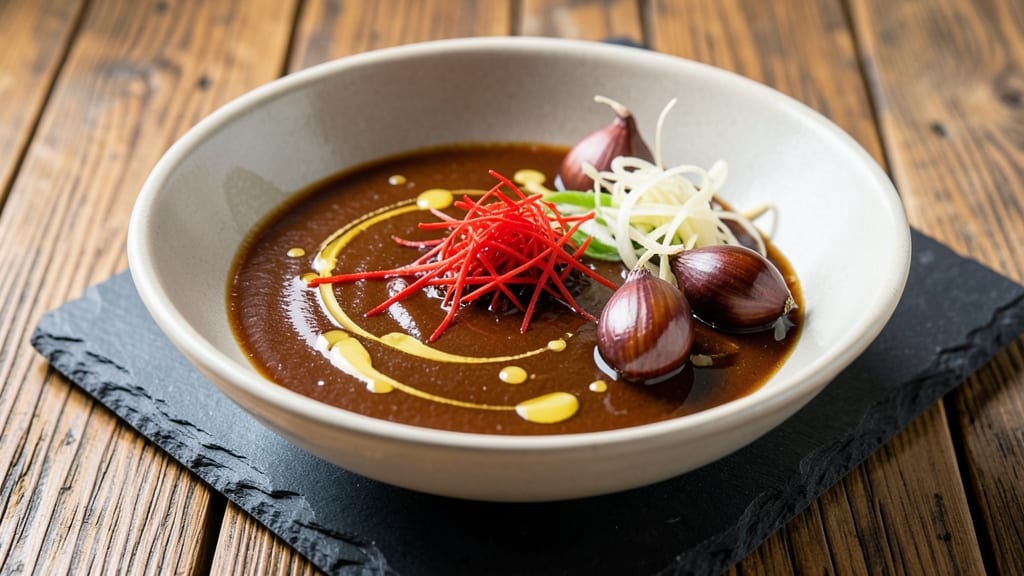
This Asian fusion sauce recipe transforms simple pantry staples into a complex, restaurant-quality condiment that bridges East Asian traditions with modern boldness. The secret lies in balancing umami-rich soy and fish sauce with bright citrus and aromatic ginger—creating a sauce that elevates stir-fries, marinades, and dipping dishes alike. I developed this after years of refining restaurant-style sauces at home, and it never fails to deliver depth without overpowering.
The magic happens in the reduction phase, where high heat intensifies flavors while maintaining a silky texture. Unlike store-bought versions, this sauce builds layers: salty from the soy, funky from the fish sauce, sweet from honey or brown sugar, and a zesty kick from rice vinegar and lime.
The ginger and garlic add warmth, while chili flakes introduce just enough heat to make it addictive. What you'll end up with is a versatile sauce that's both restaurant-worthy and effortlessly homemade.
Perfect for weeknight cooking, this sauce comes together in 15 minutes with ingredients you likely already have. It keeps well in the fridge for up to two weeks, making it ideal for meal prep.
Whether you're tossing it with noodles, glazing proteins, or serving as a dipping sauce, this fusion sauce delivers professional results with minimal effort. The best part? You can customize the sweetness, spice, or acidity to match your taste preferences.
For extra depth, let the sauce sit overnight before using—this allows the flavors to meld even more. Store it in an airtight container, and you'll have a pantry staple that transforms ordinary meals into extraordinary ones. Let's make this sauce!
Ingredients for asian fusion sauce
Pantry staples meet bold flavors—this fusion sauce transforms simple ingredients into restaurant-quality depth.
| Ingredient | Amount | Notes |
|---|---|---|
| Light Soy Sauce 🥄 | ½ cup | High-quality, low-sodium preferred |
| Dark Soy Sauce 🥄 | ¼ cup | For deep umami richness |
| Rice Vinegar 🍶 | ¼ cup | Seasoned or unseasoned works |
| Sesame Oil 🫒 | 1 tbsp | Toasted, for nutty aroma |
| Fresh Ginger 🌿 | 2 tbsp | Finely grated, aromatic |
| Garlic Cloves 🧄 | 4 cloves | Minced, for bold flavor |
| Honey 🍯 | 2 tbsp | Or brown sugar for depth |
| Red Chili Flakes 🌶️ | 1 tsp | Adjust for heat preference |
| Fish Sauce 🐟 | 1 tbsp | Red Boat preferred |
| Fresh Lime Juice 🍋 | 2 tbsp | Bright citrus finish |
The soy sauces are the foundation, so Red Boat or Kikkoman are my go-tos—they’ve got that perfect balance of saltiness and umami. Grocery store brands work fine if they’re fresh, but avoid anything with a metallic or off smell. Fresh ginger is a must here—organic ginger from the produce section has more punch than pre-grated. The garlic? Freshly minced makes all the difference, but if you’re in a pinch, jarred minced garlic will do. For the fish sauce, Red Boat is my absolute favorite—it’s clean, not overpowering, and has just the right funkiness. If you don’t have it, Three Crabs is a solid backup. The lime juice should be freshly squeezed—Mexican limes if you can find them, but regular Key limes work too.
No fish sauce? Extra soy sauce plus a splash of Worcestershire gets you close, though it won’t have that same deep umami. Running low on honey? Brown sugar or maple syrup works in a pinch—just dissolve it first. Short on sesame oil? Toasted sesame seeds (1 tsp) can mimic the aroma, though it won’t be as rich. The chili flakes can be swapped for fresh chili paste or sriracha, but adjust the heat to your taste. If you’re making this ahead, skip the lime juice until serving—it keeps better without it. The sauce is incredibly versatile, so don’t stress if you tweak ratios: more sweetness? Add another teaspoon of honey. Need more acid? A splash of extra rice vinegar does the trick.
This sauce keeps beautifully in the fridge for up to 2 weeks, though it tastes even better after a day or two when the flavors meld. For longer storage, freeze in ice cube trays—just thaw and stir before using. The texture stays silky if you store it in an airtight container, but a thin layer of oil on top prevents a skin from forming. I like to portion mine into small jars so I can grab just what I need for a quick stir-fry or marinade. If you’re prepping for a crowd, double the batch—it disappears fast!
Why You'll Love This Recipe
- Five-Ingredient Magic: I swear by this combo—just mix, stir, and boom, flavor explosion. No fancy techniques, no stress, just the perfect balance of salty (dark soy), tangy (rice vinegar), and zing (fresh ginger) that takes zero effort to pull off.
- Umami Bomb: That dark soy sauce? It’s the secret weapon—deep, caramelized richness that turns simple dishes into something ridiculously good. Add a splash of sesame oil at the end, and suddenly everything tastes like it’s been kissed by a wok master.
- Weeknight Wonder: Slap this on stir-fries, noodles, or even grilled chicken—it’s my go-to when I’m too tired to think. Honestly, I’ve used it for everything from takeout-style bowls to quick marinades, and it never lets me down.
- Budget-Friendly Staple: Light soy for saltiness, dark soy for depth, ginger for warmth—all pantry basics that cost pennies but act like gourmet upgrades. A little goes a long way, so you’ll have leftovers for days without breaking the bank.
Step-by-step instructions for Asian fusion sauce
This sauce comes together faster than you can say "umami bomb"—just 10 minutes of active work.
Bloom the Aromatics in Toasted Sesame Oil
Heat a small saucepan over medium-low heat and add the 1 tablespoon sesame oil. Let it warm for 30 seconds until it shimmers and releases its nutty aroma—this is your flavor foundation. Add the 2 tablespoons finely grated fresh ginger and 4 minced garlic cloves, stirring constantly for 1 minute until fragrant but not browned. Here's the thing—ginger burns faster than garlic, so watch closely. If it starts to darken, reduce heat immediately.
This step transforms your sauce from ordinary to extraordinary. The toasted sesame oil carries the ginger and garlic flavors deeply into every drop, creating that signature aromatic depth. Don't skip the blooming—raw aromatics will make your sauce taste flat and one-dimensional.
Build the Umami Base with Soy Sauces
Pour in the 0.5 cup light soy sauce and 0.25 cup dark soy sauce simultaneously, whisking vigorously to combine. Increase heat to medium and let the mixture simmer gently for 2 minutes until slightly reduced by about 10%—you'll see the sauce thicken just slightly and darken in color. This reduction concentrates the flavors and removes any raw taste from the aromatics.
The dark soy sauce here is non-negotiable—it adds that rich, molasses-like depth that makes this sauce restaurant-quality. If you're using high-quality soy sauces, you might taste subtle sweetness notes that balance perfectly with the acidity coming later. Taste now—you should detect layers of salty, savory, and a hint of caramelized complexity.
Balance with Sweet and Acid
Reduce heat to low and stir in the 2 tablespoons honey and 1 tablespoon fish sauce. Let it simmer for 30 seconds just to meld these ingredients—you don't want to cook the honey or fish sauce, just integrate them smoothly. Then add the 0.25 cup rice vinegar and 2 tablespoons fresh lime juice simultaneously. The vinegar will make the sauce bubble slightly—this is normal and actually helps distribute the acid evenly.
Here's where the magic happens: the honey rounds out the acidity while the fish sauce adds that signature umami punch. The lime juice brightens everything, cutting through the richness. Taste again—you should have a perfect balance of salty, sweet, sour, and funky all in one spoonful. If it needs more brightness, add another teaspoon of lime juice. If it's too sharp, a tiny pinch of honey will smooth it out.
Finish with Heat and Emulsify
Remove the sauce from heat and stir in the 1 teaspoon red chili flakes—this is where you can adjust for heat preference. For a smoother texture, whisk vigorously for 30 seconds to help emulsify the sauce. The residual heat from the pan will help bind all the components together. If the sauce looks separated, add 1 tablespoon water and whisk until silky smooth.
This final step ensures your sauce has that professional restaurant quality. The chili flakes add warmth without overpowering, while the emulsification creates that luxurious mouthfeel. Let it sit at room temperature for 5 minutes** before using—this resting period allows all the flavors to fully meld together. Your sauce should now have the perfect balance of complexity: deep umami from the soy sauces and fish sauce, bright acidity from the vinegar and lime, sweetness from the honey, and just enough heat to make it interesting.
Pro Tips For Making Asian Fusion Sauce
- Simmer Ginger Low: After burning three batches of ginger, I finally figured out: low heat is your friend. Slice it thin (about 1/8-inch) and cook it in the sauce on the very lowest setting—just until it fragrant but still faintly visible. High heat turns it bitter, and nobody wants that in their fusion sauce.
- Balance Soy Sauces First: I used to eyeball it, and the sauce always tasted off. Mix equal parts light and dark soy before adding anything else—start with 1:1 ratio, then adjust. Dark soy adds depth, but too much makes it cloying. Taste as you go; you’re closer than you think.
- Add Sesame Oil Last: Sounds weird, but it works: toss it in after everything else is off heat. That way, you preserve its nutty aroma instead of cooking it into oblivion. A splash (1/2 tsp) at the end makes a real difference—trust me, I’ve drowned it in the sauce before.
- Use Vinegar Early: Skip the crowding—add rice vinegar with the ginger, not at the end. It mellows out the sharpness as it simmers, giving you a smoother, more layered flavor. If you add it last, it’ll hit like a wall of acid. (Yes, even if you’re impatient like me.)
Essential equipment for this recipe
Small Saucepan
You don’t need anything fancy—a small, heavy-bottomed saucepan (like a 2-quart stainless steel or enamel-coated pan) is perfect for this sauce. I use my All-Clad 2-quart saucepan because it heats evenly and prevents scorching.
If you don’t have one, a nonstick pan works in a pinch, but avoid cheap aluminum—it reacts with acidic ingredients like vinegar. 🔥
Whisk or Fork
A balloon whisk or sturdy fork is essential for emulsifying the sauce smoothly. I prefer a balloon whisk because it incorporates air while blending, creating that silky texture. If you’re short on time, a fork works just fine—just whisk vigorously for 30 seconds after adding the chili flakes.
Pro tip: A silicon spatula helps scrape every last bit of sauce from the pan.
Fine-Mesh Strainer
If you prefer a smooth, silky sauce without any ginger or garlic bits, strain it through a fine-mesh strainer before serving. I use a stainless steel mesh strainer (like the OXO Good Grips) because it’s durable and won’t rust. For a textured sauce, skip this step—those aromatics add depth! Just
Measuring Spoons
Precision matters here—accurate measuring spoons ensure the perfect balance of sweet, sour, and umami. I keep a set of stainless steel spoons (like OXO’s 5-piece set) near my stove for quick adjustments. For the chili flakes, a 1/4-teaspoon measure helps control heat levels. Pro move: Use glass measuring spoons for easy visibility when adding liquids like rice vinegar.
Air-Tight Container
For storage, an airtight container (like a glass mason jar or BPA-free plastic container) keeps your sauce fresh for up to 2 weeks in the fridge. I love Le Parfait containers because their tight seals prevent leaks and odors.
For freezer storage, ice cube trays work great—just thaw and stir before using. Label your containers with the date to track freshness!
Citrus Juicer
A handheld citrus juicer (like the OXO Good Grips) makes fresh lime juice extraction effortless. If you don’t have one, a fork and bowl work fine—just roll the lime on the counter first to soften it.
Fresh juice is non-negotiable here: bottled lime juice lacks brightness and can make your sauce taste flat. Trust me, the difference is night and day. 🍋
Nutrition facts
Frequently asked questions
Can I make this sauce without fish sauce?
The fish sauce adds that signature umami depth, but you can substitute 1 tablespoon extra soy sauce plus 1 teaspoon Worcestershire sauce for a similar funky-savory profile. For a vegetarian version, use 1 tablespoon coconut aminos plus 1 teaspoon mushroom powder—it won’t be identical, but still delicious. Taste as you go and adjust sweetness or acidity to balance.
How spicy should this sauce be?
The 1 teaspoon chili flakes is a gentle heat baseline—adjust to your taste! For mild, reduce to ½ teaspoon; for fiery, increase to 1½ teaspoons or add ½ teaspoon gochugaru (Korean chili flakes) for smokier heat. Pro tip: Toast the chili flakes in the dry pan for 30 seconds first to deepen their flavor without adding liquid.
Can I use this sauce as a marinade?
This sauce marinates beautifully for 30 minutes to 2 hours (no longer to avoid overcooking proteins). For extra tenderness, add 1 tablespoon cornstarch or arrowroot powder to thicken it slightly before using. It works wonders on chicken, shrimp, or tofu—just pat dry the protein first to help it sear properly.
Why did my sauce separate?
Sauces separate when oil and water components aren’t properly emulsified. Fix it by whisking in 1 tablespoon cold water or 1 teaspoon cornstarch slurry (mix cornstarch with water) while stirring vigorously over low heat until silky. For prevention, always whisk after adding the chili flakes and let the sauce rest 5 minutes before using.
What’s the best way to store leftovers?
Transfer to an airtight container and refrigerate for up to 2 weeks. For longer storage, freeze in ice cube trays—thaw and stir before using. To preserve freshness, add a thin layer of oil on top before sealing. If the sauce thickens in the fridge, whisk in 1 teaspoon water to restore consistency.