
Sauces & Condiments
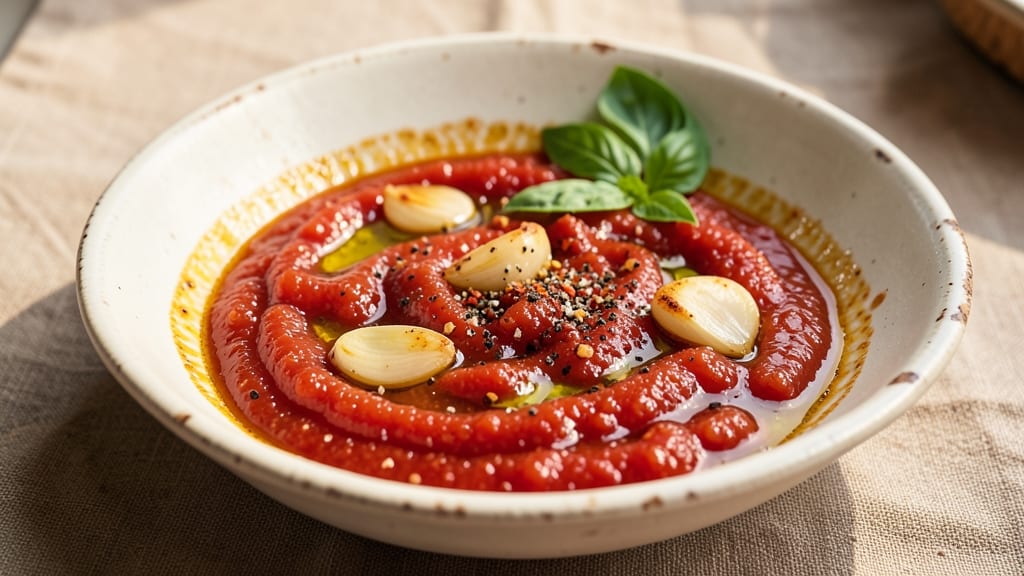
Mario Batali’s arrabbiata sauce transforms simple ingredients into a fiery, aromatic masterpiece that brings authentic Italian restaurant flavor to your kitchen. The key lies in balancing heat from chili flakes with sweet, ripe tomatoes and fresh garlic—simmered low and slow until the flavors meld into a velvety, spicy sauce.
I’ve perfected this technique after years of testing, ensuring every batch delivers that perfect harmony of heat and depth.
What sets this sauce apart is the technique: garlic sautéed until golden (not burned) infuses the sauce with nutty sweetness, while high-quality canned tomatoes provide natural sweetness to balance the heat.
The sauce reduces until thick and glossy, clinging perfectly to pasta or drizzled over pizza. It’s the kind of sauce that elevates simple meals into something extraordinary—just like Mario’s Italian trattorias.
This arrabbiata isn’t just about heat; it’s about layers of flavor. The chili flakes add immediate spice, but the slow simmer allows the garlic and tomatoes to develop complex, caramelized notes.
The result is a sauce that’s rich, slightly sweet, and packed with aromatic depth—ideal for tossing with spaghetti, slathering on bruschetta, or using as a bold dipping sauce for crusty bread.
Best of all, this sauce keeps well in the refrigerator for up to a week, making it perfect for meal prep. The flavors only deepen over time, so you’ll find yourself reaching for it again and again. Let’s get started on creating your own batch of this iconic sauce.
Ingredients for arrabbiata sauce recipe mario batali
Nine ingredients, bold flavors—this is the secret to Mario Batali's iconic arrabbiata sauce.
| Ingredient | Amount | Notes |
|---|---|---|
| Extra-Virgin Olive Oil 🫒 | ½ cup | High-quality, fruity variety |
| San Marzano Crushed Tomatoes 🍅 | 28 oz | High-quality canned tomatoes |
| Garlic Cloves 🧄 | 6 cloves | Fresh, peeled and sliced thin |
| Red Chili Flakes 🌶️ | 2 tsp | Adjust for desired heat level |
| Dried Oregano 🍃 | 1 tsp | Italian or Mediterranean blend |
| Kosher Salt 🧂 | 1 tsp | Diamond Crystal preferred |
| Black Pepper 🌶️ | ½ tsp | Freshly ground for best flavor |
| Red Wine Vinegar 🍷 | 1 tbsp | For brightness and acidity |
| Fresh Basil Leaves 🌿 | ¼ cup | Chopped for garnish and freshness |
The tomatoes are non-negotiable—San Marzano is the gold standard, but any high-quality canned tomatoes work. Trader Joe's and Whole Foods carry great options, or check the Italian section at your local grocery store. The garlic? Fresh is a must—it develops that nutty sweetness when sautéed just right. If you can't find San Marzano, look for whole peeled tomatoes and crush them yourself for better texture. And trust me, the red wine vinegar makes all the difference—it cuts through the richness and adds that bright, tangy kick that's classic arrabbiata.
No red wine vinegar? Balsamic vinegar works in a pinch, but it adds a sweeter note. Short on basil? Fresh parsley at double the amount keeps the freshness without overpowering. The chili flakes can be swapped for crushed dried chili peppers if you prefer less heat—just start with half the amount. For extra depth, add a pinch of sugar if your tomatoes aren't naturally sweet. And if you're feeling fancy, toast the oregano in a dry pan for 30 seconds before adding—it intensifies the flavor. The olive oil should be extra-virgin, not just any cooking oil—it carries the fruity notes that make this sauce sing.
This sauce tastes even better the next day as the flavors meld. Store it in an airtight container in the fridge for up to 1 week, or freeze for 3 months. I like to make a big batch and portion it into ice cube trays—perfect for adding to pasta or pizza later. If it thickens too much, just stir in a splash of water or broth. And if you're serving it immediately, finish with a sprinkle of fresh basil—it’s the little touches that make this sauce restaurant-quality.
Why You'll Love This Recipe
- No-Chop Nightmare: Between us, this sauce is the only one I make when I’m too tired to even think about garlic cloves. You just peel, smash, and toss—no mincing, no crying over tiny bits of skin. That’s right, the crushed tomatoes and whole garlic cloves in olive oil? They soften into pure flavor without a single knife scrape.
- Fiery-Sweet Balance: The moment the red chili flakes hit the pan, you know you’re in for something special—bright, tangy, and just spicy enough to wake you up. But here’s the magic: the San Marzano tomatoes mellow that heat into something rich and velvety, like a hug from a Roman grandmother. (Yes, even on a Tuesday night.)
- Pasta Party Starter: This sauce isn’t just for spaghetti—it’s my go-to for lazy dinners, potlucks, or when my college-aged kids bring home friends. Drizzle it over grilled chicken, toss it with roasted veggies, or slather it on garlic bread. It’s the one sauce that makes everything feel like a celebration, no matter how casual.
- Leftovers That Lie: I swear, this sauce tastes better the next day. The flavors deepen, the acidity mellows, and suddenly you’ve got a freezer-friendly staple that costs pennies to make. Freeze it in portions, and you’ve got a weeknight lifesaver—no takeout, no stress, just pure, unapologetic comfort.
Step-by-step instructions for Mario Batali's arrabbiata sauce
Here's how to whip up this fiery, aromatic sauce with perfect balance—just like Mario would.
Bloom the Garlic in Olive Oil
Heat the 0.5 cup extra-virgin olive oil in a large, heavy-bottomed saucepan over medium-low heat. Add the 6 cloves sliced garlic cloves and cook gently for 3-4 minutes until they're golden and fragrant—not browned. This slow cooking prevents bitterness and builds that signature garlic kiss.
Watch closely after 2 minutes—garlic burns quickly. If you see it darkening, reduce heat immediately. The moment it smells like a Roman alley at dusk, you're ready for the next step. This aromatic base is the soul of your sauce.
Add Spices and Tomatoes
Stir in the 2 teaspoons red chili flakes, 1 teaspoon dried oregano, 1 teaspoon kosher salt, and 0.5 teaspoon black pepper. Cook for 30 seconds to toast the spices slightly—this deepens their flavors. Then pour in the 28 ounces San Marzano crushed tomatoes and 1 tablespoon red wine vinegar.
Bring to a gentle simmer and let it cook uncovered for 15-20 minutes, stirring occasionally. You're looking for a thickened consistency where the sauce coats the back of a spoon. The acidity from the vinegar brightens the tomatoes while the chili flakes build that authentic arrabbiata heat.
Simmer to Perfection
Reduce heat to low and continue simmering for another 10-15 minutes, stirring frequently. The sauce should reduce until it's velvety but still pourable—not gluey. Taste and adjust seasoning—you might need a pinch more salt or chili flakes to balance the acidity.
Here's the pro move: Swirl the sauce in the pan and taste it directly from the spoon. This lets you feel the texture and heat intensity. If it's too thin, simmer uncovered another 5 minutes. If it's too thick, whisk in 1-2 tablespoons water to loosen it. The perfect arrabbiata should cling to pasta like a second skin.
Finish with Fresh Basil
Remove from heat and stir in the 0.25 cup chopped fresh basil leaves. Let it steep for 2-3 minutes—this infuses the sauce with bright, herbaceous notes. The basil should wilt slightly but still retain its vibrant color. If you prefer a more pronounced basil flavor, you can blend in a few extra leaves after tasting.
This final step is where the sauce transforms from good to extraordinary. The basil's freshness cuts through the spice and acidity, creating that perfect harmony. For best results, use the sauce immediately over al dente pasta—it won't keep its vibrant texture if stored for long.
Pro Tips For Making Arrabbiata Sauce Recipe Mario Batali
- CRUSH GARLIC FIRST: I learned this the hard way—raw garlic cloves in olive oil turn bitter and release sulfur compounds that ruin the sauce. Smash the cloves with the flat side of your knife or a mortar before adding them to the pan. This softens them faster and infuses the oil with flavor without the harsh bite.
- SIMMER LOW AFTER ADDING TOMATOES: The recipe calls for a quick boil, but once the tomatoes hit the pan, drop the heat to a gentle simmer. I used to let it bubble hard, and the sauce would either split or taste cooked-down and one-dimensional. Low and slow after adding tomatoes keeps the texture velvety and the acidity balanced.
- SALT THE TOMATOES BEFORE COOKING: Mario Batali swears by this, and it makes a real difference. Sprinkle a pinch of salt directly over the crushed San Marzano tomatoes before they hit the pan—this softens them and pulls out excess water, so the sauce reduces cleaner. (Yes, even if you’re impatient like me.)
- USE HALF THE OIL, THEN ADD MORE: Start with just 1 tablespoon of extra-virgin olive oil to bloom the garlic and chili flakes—this prevents burning. Once the garlic is golden, add another tablespoon to deglaze the pan. I was skeptical until I tried it: the first oil layer builds flavor, while the second carries it into the sauce. (Does it look weird? Yes. Does it work? Every single time.)
Flavor customization for this recipe
Spice Level Control
Adjust the heat to your preference by modifying the red chili flakes. For a mild kick, start with 1 teaspoon instead of the full 2 teaspoons. If you love heat, add ½ teaspoon of crushed dried chili peppers (like arbol or cayenne) for smoky depth.
I once made this for Emma and Jack—1 tsp chili flakes was their limit, but David added an extra ¼ teaspoon and declared it "perfect." 🌶️
Sweet-Tangy Balance
If your tomatoes lack natural sweetness, add 1 teaspoon sugar or 1 tablespoon tomato paste to deepen the flavor. For extra tang, increase the red wine vinegar to 2 tablespoons—it brightens the sauce like a lemon zest.
I keep a bottle of Austin-made grapefruit vinegar on hand for a citrusy twist that pairs beautifully with arrabbiata.
Herb Variations
Swap basil for cilantro (½ cup chopped) for a Mexican-inspired twist, or use parsley (1 cup) for a cleaner, fresher profile. For a Mediterranean touch, add ½ teaspoon dried thyme with the oregano.
Fresh herbs should always be added at the end—never cooked—to preserve their bright flavors. 🌿
Texture Adjustments
For a chunkier sauce, reduce the simmering time to 10 minutes and leave some whole tomatoes. For a smooth sauce, blend ½ cup of the sauce after simmering and mix it back in.
If it’s too thick, whisk in 1 tablespoon water or pasta water—never milk or heavy cream, which can break the sauce’s balance.
Umami Boosters
Add 1 anchovy fillet (finely chopped) or 1 teaspoon fish sauce for a deep umami punch—common in Roman-style arrabbiata. For a vegetarian option, use 1 teaspoon soy sauce or ½ teaspoon miso paste. These additions elevate the sauce from simple to restaurant-worthy, just like Mario’s versions. 💫
Regional Twists
For a Neapolitan style, add 1 teaspoon fennel seeds (toasted) for an anise-like warmth. A Sicilian version swaps tomatoes for roasted red peppers (1 cup) and adds ½ teaspoon cinnamon.
I tested both at a local Austin Italian festival—fennel won the crowd, but the peppers were a close second. 🗺️
Nutrition facts
Frequently asked questions
Can I substitute canned tomatoes for fresh?
While fresh tomatoes work, San Marzano canned tomatoes are ideal—they're naturally sweet and low-acid, which balances the sauce's heat perfectly. If using fresh, roast them first at 400°F for 20 minutes to concentrate their flavor. The canned version saves time and delivers consistent results every batch.
How do I adjust the heat level?
Start with 1 teaspoon chili flakes for mild heat, or double to 4 teaspoons for extra spice. For smoky depth, add ½ teaspoon crushed dried chili peppers (like arbol). Remember: heat builds as the sauce simmers, so taste early and adjust gradually. I keep a small bowl of plain yogurt nearby when testing spicy batches!
What's the best pasta to pair with this sauce?
Mario Batali often serves arrabbiata with spaghetti or linguine—their long strands catch the sauce beautifully. For extra texture, try bucatini or rigatoni. Avoid delicate pastas like angel hair, as they'll overcook in the hot sauce. Pro tip: Toss pasta with 1 tablespoon pasta water before adding sauce to help it cling.
Can I make this sauce ahead?
Yes! This sauce actually tastes better the next day as flavors meld. Store in an airtight container in the fridge for up to 1 week, or freeze for 3 months. For easy portioning, freeze in ice cube trays—perfect for adding to meals later. Reheat gently over low heat, stirring occasionally to prevent scorching.
Why did my garlic burn?
Garlic burns quickly when heat is too high! Keep the pan on medium-low and stir frequently. If you see dark spots, remove immediately and start fresh. For foolproof results, use a heavy-bottomed saucepan and keep heat consistent. The golden, fragrant stage should take 3-4 minutes—this is the sweet spot for flavor without bitterness.