
Sauces & Condiments
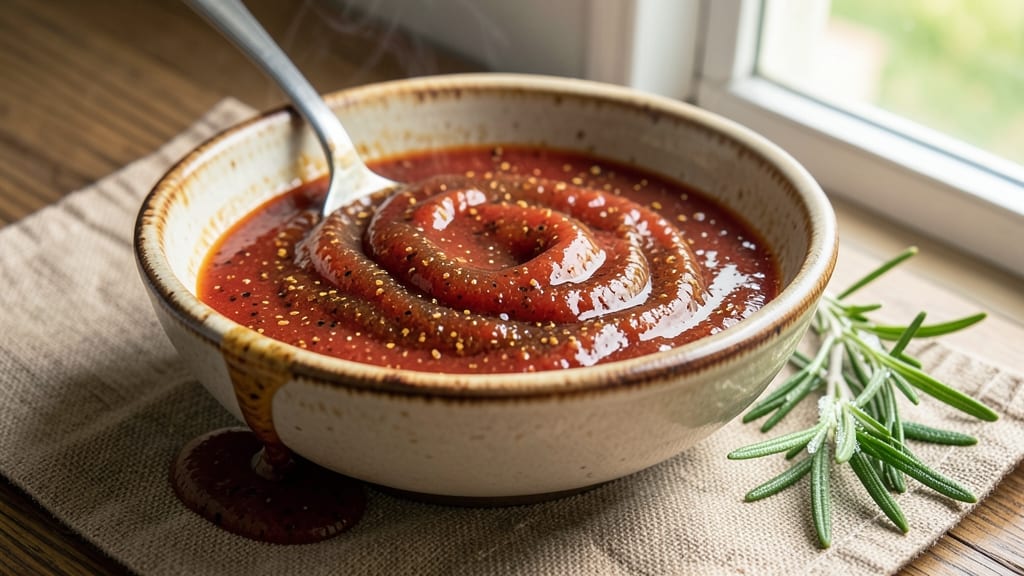
This applewood BBQ sauce recipe transforms grilled meats into smoky masterpieces with just a few pantry staples. The secret lies in balancing sweet brown sugar, tangy apple cider vinegar, and the deep, smoky essence of applewood-smoked paprika—plus a touch of liquid smoke for that authentic pitmaster flavor.
I developed this sauce after years of experimenting with homemade BBQ blends, and it’s become my go-to for everything from ribs to pulled pork.
The process is straightforward but precise: simmer tomato paste, vinegar, and spices until thickened, then blend with applewood-infused ingredients for a velvety, well-rounded sauce. Unlike store-bought versions, this one delivers layers of complexity—smoky, slightly sweet, with a tangy kick—that elevates any dish.
It’s also versatile enough to use as a marinade, dipping sauce, or finishing glaze.
What sets this sauce apart is its adaptability—whether you’re slow-cooking brisket for hours or slathering it on grilled chicken in minutes, the flavor stays consistent.
The recipe yields enough for multiple uses, and it keeps well in the fridge for up to two weeks or can be canned for long-term storage. No shortcuts here; just pure, smoky satisfaction in every bite.
Ready to master the art of homemade BBQ sauce? This recipe delivers restaurant-quality results with minimal effort, proving that great flavor doesn’t require fancy ingredients—just the right technique. Let’s get cooking.
Ingredients for applewood bbq sauce
Eleven ingredients blend smoky depth with tangy sweetness for restaurant-quality BBQ sauce.
| Ingredient | Amount | Notes |
|---|---|---|
| Tomato Paste 🍅 | ½ cup | High-quality, unsweetened preferred |
| Apple Cider Vinegar 🍏 | ½ cup | Raw, unfiltered for best flavor |
| Brown Sugar 🍚 | ½ cup | Light or dark, packed firmly |
| Applewood-Smoked Paprika 🌶️ | 2 tbsp | Essential for authentic smokiness |
| Liquid Smoke 🔥 | 1 tbsp | Pure liquid smoke, no additives |
| Apple Cider 🍎 | ½ cup | Unfiltered, for depth of flavor |
| Garlic Cloves 🧄 | 4 cloves | Fresh, minced for aromatic punch |
| Onion Powder 🧅 | 1 tbsp | Freshly ground preferred |
| Mustard Powder 🌶️ | 1 tsp | Yellow or Dijon for balance |
| Salt 🧂 | 1 ½ tsp | Diamond Crystal kosher salt |
| Black Pepper 🌶️ | ½ tsp | Freshly cracked for warmth |
The applewood-smoked paprika is non-negotiable—Penzeys or Gourmet Spice Shop carry the best varieties. Look for vibrant, deep-red hues and a rich, smoky aroma. If you can't find applewood, hickory-smoked paprika with an extra 0.5 tbsp liquid smoke works as a substitute. The tomato paste should be unsweetened; brands like Muir Glen deliver the most concentrated flavor. For the vinegar, Bragg Organic is my go-to—its raw, unfiltered profile enhances the sauce's complexity. Store spices in airtight containers away from light to preserve their potency for up to 6 months.
No applewood paprika? Substitute with a blend of 1.5 tbsp hickory-smoked paprika plus 0.5 tbsp liquid smoke—it mimics the smoky depth. Swap apple cider vinegar for white vinegar or balsamic if needed, but the tang will be slightly milder. For the brown sugar, coconut sugar adds a caramel note, though it’s pricier. The garlic and onion powder can be replaced with 1 tbsp garlic powder and 1 tbsp onion powder if fresh isn’t available, though the texture will differ slightly. If you’re sensitive to heat, reduce the mustard powder to 0.5 tsp—it adds a subtle kick.
This sauce thickens as it cools, so store it in a sealed glass jar in the fridge for up to 2 weeks. For long-term storage, canning is ideal—process in a water bath for 15 minutes to ensure safety. Freeze portions in ice cube trays for easy single-use applications. The flavor actually improves after 24 hours, as the ingredients meld. If the sauce separates, simply stir vigorously before use—it’s normal and won’t affect taste.
Why You'll Love This Recipe
- Fewer Pantry Trips: I keep exactly five things on hand for this—no hunting for obscure spices or last-minute store runs. The tomato paste and brown sugar are my staples, and that applewood paprika? One jar lasts me months.
- Smoky Depth in Minutes: That liquid smoke and smoked paprika combo gives it a campfire vibe without lighting a grill. Honestly, it’s the kind of flavor that makes you pause mid-bite—like someone snuck a whole smoked brisket into your weeknight dinner.
- Dual-Purpose Magic: Slather it on ribs, toss it with baked beans, or drizzle it over grilled chicken. I’ve even used it as a marinade for tofu—works every time. It’s the one sauce that turns “meh” meals into “why didn’t I think of this sooner?” moments.
- Budget-Friendly Batch Cooking: A single batch stretches across three meals for my family of four. The vinegar and sugar cut costs, and it keeps in the fridge for weeks. I’ll be real: I’ve made this on a Tuesday, saved half for Friday, and still had leftovers for sandwiches the next week.
Step-by-step instructions for crafting applewood BBQ sauce
This smoky, balanced sauce develops through precise technique and layered flavors.
Create the Base with Tomato Paste and Vinegar
In a medium saucepan over medium heat, combine the 0.5 cup tomato paste and 0.5 cup apple cider vinegar. Stir continuously for 3-4 minutes until the mixture begins to bubble and thicken slightly. This step develops the foundational tanginess that prevents the sauce from becoming overly sweet.
Watch for the mixture to darken slightly as it cooks—the tomato paste will transform from its raw, brick-red color to a deeper, more complex hue. This color change signals the breakdown of raw starches and the beginning of flavor development. Keep the heat at medium to prevent scorching while allowing the vinegar's acidity to mellow into the paste.
Build Depth with Sweetness and Aromatics
Reduce the heat to low and whisk in the 0.5 cup brown sugar, 2 tbsp applewood-smoked paprika, and 1 tbsp liquid smoke. Stir constantly for 5 minutes until the sugar fully dissolves and the mixture becomes smooth. The sauce should begin to thicken noticeably as the sugars caramelize.
Here's where the sauce's character emerges. The applewood-smoked paprika introduces that signature campfire aroma, while the liquid smoke adds an instant depth of smokiness that's impossible to achieve through cooking alone. Taste the mixture now—it should balance sweet, tangy, and smoky notes, with no single element overpowering the others.
Incorporate the Apple Cider and Spices
Pour in the 0.5 cup apple cider and minced 4 cloves garlic. Add the 1 tbsp onion powder, 1 tsp mustard powder, 1.5 tsp salt, and 0.5 tsp black pepper. Bring the mixture to a gentle simmer over medium-low heat and cook for 10-12 minutes, stirring occasionally.
The apple cider introduces subtle fruitiness that cuts through the richness, while the mustard powder adds a subtle tang that prevents the sauce from tasting one-note. The onion powder and garlic work together to create a complex aromatic base. You'll notice the sauce gradually thickens as moisture evaporates—this is when the sauce begins to develop its signature glossy finish.
Simmer to Perfect Consistency
Continue simmering the sauce for an additional 8-10 minutes until it reaches your desired consistency. It should coat the back of a spoon but still be pourable—not syrupy. The sauce is ready when it leaves a visible trail when drizzled, indicating proper thickness for both basting and dipping.
For a smoother sauce, strain it through a fine-mesh sieve to remove any garlic particles. If the sauce thickens too much during simmering, whisk in 1-2 tablespoons of water to adjust the consistency. The final product should have a deep amber color with a glossy sheen that indicates perfect balance between sweetness, acidity, and smokiness.
Pro Tips For Making Applewood Bbq Sauce
- Simmer Slow and Steady: I learned this the hard way—rushing the sauce on high heat turns it into glue. Keep the heat at a gentle simmer (medium-low) and let it cook for at least 20 minutes. This breaks down the sugar properly and lets the applewood flavors meld without burning the tomato paste.
- Bloom the Paprika First: Toss that smoked paprika into your pot before adding liquids—let it sizzle for 30 seconds until it releases its aroma. Skipping this step means you’re basically eating dust instead of deep, smoky flavor. (Yes, even if you’re impatient like me.)
- Balance the Vinegar Gradually: Apple cider vinegar packs a punch, so add it in stages—start with half, taste, then adjust. Too much upfront and you’ll regret it later. The goal is tangy, not puckery. (Your taste buds will thank you.)
- Use Real Liquid Smoke Sparingly: A teaspoon or two is enough—this stuff is potent. Drizzle it in at the end and stir just until combined. Overdo it, and your sauce tastes like a campfire mishap. (I’ve been there.)
Flavor customization for this recipe
Sweet vs. Smoky Ratio
Adjust the brown sugar to apple cider vinegar ratio to fine-tune sweetness. For a sweeter sauce, add an extra 2 tbsp brown sugar and reduce vinegar by 1 tbsp. For a smokier profile, increase applewood-smoked paprika to 2.5 tbsp and add ½ tbsp extra liquid smoke.
I often tweak this for ribs—more sugar for caramelized crusts, more smoke for pulled pork. 🌶️
Spice Level Control
Reduce mustard powder to ½ tsp for mild heat or increase to 1.5 tsp for a tangy kick. For extra spice, add ½ tsp cayenne pepper or 1 tsp chipotle powder—both work beautifully with applewood’s smokiness.
I’ve found that chipotle adds a deeper, earthier heat that pairs perfectly with grilled chicken. 🔥
Apple Cider Variations
Swap apple cider for pear nectar (½ cup) for a fruity twist or ginger beer (¼ cup) for a fizzy, spicy note. For a richer sauce, replace half the cider with apple juice—it adds body without altering the smoky balance.
I love using hard cider (½ cup) for a boozy depth, especially when serving with pork chops. 🍎
Herb Infusions
Stir in 1 tsp dried thyme or 1 tbsp fresh rosemary during the final simmer for an herbal touch. For a brighter flavor, add 1 tbsp apple cider reduction (simmer ½ cup cider until reduced by half) after cooking.
I often finish with 1 tbsp chopped fresh cilantro or parsley for freshness. These herbs elevate the sauce’s complexity without overpowering the applewood. ✨
Texture Adjustments
For a chunkier sauce, reserve 2 tbsp minced garlic and stir it in at the end. For ultra-smooth sauce, blend with an immersion blender after simmering. If the sauce is too thick, whisk in 1 tbsp water or apple cider.
For a glossy finish, add 1 tsp corn syrup or honey while warm. 💫
Regional Twists
For a Carolina-style version, add ½ tsp ground mustard and ¼ tsp cayenne. For Kansas City vibes, boost sweetness with ¼ cup molasses and reduce vinegar by 1 tbsp.
My Texas-inspired tweak? Add 1 tsp smoked salt and a pinch of ground coriander**. Each regional style keeps the applewood base but adjusts the supporting flavors. 🗺️
Nutrition facts
Frequently asked questions
Can I make this applewood BBQ sauce without liquid smoke?
Yes! Replace the 1 tbsp liquid smoke with an extra 1.5 tbsp applewood-smoked paprika and ½ tsp smoked salt. Simmer the sauce for 5 extra minutes to deepen the smoky flavor naturally. The paprika will develop more aroma through cooking, though you’ll lose some of the instant smokiness.
How long does homemade applewood BBQ sauce keep?
Store in an airtight glass jar in the fridge for up to 2 weeks. For longer storage, can the sauce using a 15-minute water bath—it’ll last 6-12 months unopened. Freeze portions in ice cube trays for single-use convenience. The flavor actually improves after 24 hours as ingredients meld.
What’s the best way to use this sauce on grilled meats?
For ribs or brisket, brush on during the last 30-45 minutes of cooking to prevent burning. For chicken or pork chops, marinate for 30-60 minutes before grilling. Use as a dipping sauce by thinning with 1 tbsp apple cider per ½ cup sauce. The smoky depth shines best when paired with applewood-smoked meats!
Why did my sauce turn out too sweet?
This happens when the vinegar’s acidity isn’t balanced. Next time, reduce brown sugar by 1 tbsp and add 1 extra tbsp apple cider vinegar. Simmer 2 extra minutes to let flavors meld. For immediate fixes, stir in 1 tsp lemon juice or ½ tsp extra mustard powder to cut sweetness.
Can I use this sauce for non-meat dishes?
Drizzle over grilled vegetables like portobello mushrooms or eggplant for a smoky twist. Use as a marinade for tofu or tempeh (reduce sugar by 1 tbsp). It also works as a glaze for baked beans or roasted potatoes. The applewood flavor pairs surprisingly well with cheese boards too—try it with sharp cheddar!