
Sauces & Condiments
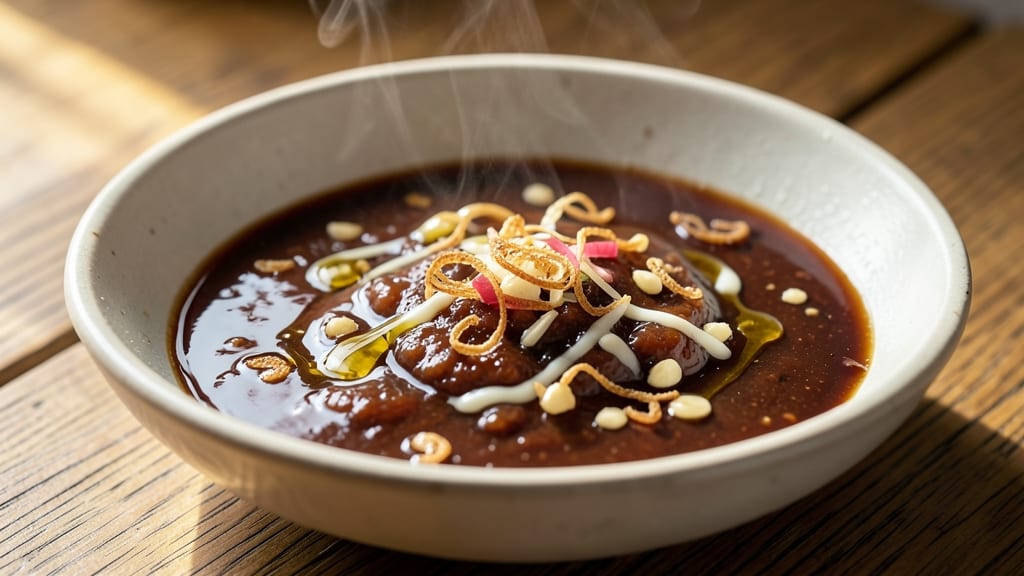
An ankake sauce recipe transforms Japanese dishes with its deep umami richness and subtle sweetness, blending fermented soybean paste with aromatic ingredients.
This traditional sauce starts with a base of fermented miso or shoyu, then builds layers of flavor through slow simmering with mirin, sake, and a touch of vinegar for brightness. The result is a versatile sauce that elevates everything from grilled meats to fresh sashimi.
The magic lies in the fermentation process, which develops complex flavors over time. While traditional ankake requires patience, modern variations use quick-blended methods without sacrificing depth. Key ingredients like ginger, garlic, and sometimes chili create balance between savory, sweet, and spicy notes.
For authenticity, use high-quality miso and mirin—these make all the difference in flavor development.
Once complete, this sauce becomes a culinary chameleon—drizzled over hot rice, used as a marinade for fish, or served as a dipping sauce for tempura. The smoky chipotle twist in this version adds a modern edge while keeping the sauce's traditional Japanese soul intact.
Store properly, and it keeps for weeks, ready to transform any meal.
For those short on time, a quick version blends ingredients without fermentation, though it lacks the depth of the traditional method. The choice depends on your patience and desired flavor complexity. Either way, ankake sauce brings restaurant-quality depth to home cooking with minimal effort.
Ingredients for ankake sauce
Fermented depth meets smoky heat in this umami-rich ankake sauce blend.
| Ingredient | Amount | Notes |
|---|---|---|
| Red Miso Paste 🧈 | ½ cup | High-quality, fermented for depth |
| Shoyu Soy Sauce 🍶 | ¼ cup | Japanese-style, low-sodium preferred |
| Mirin 🍶 | ¼ cup | Sweet rice wine, genuine mirin |
| Dry White Sake 🍶 | ¼ cup | Unsweetened, for balance |
| Fresh Garlic Cloves 🧄 | 4 cloves | Minced, for aromatic depth |
| Fresh Ginger Root 🌿 | 1 tbsp | Finely grated, for zing |
| Chipotle Peppers in Adobo 🌶️ | 2 tbsp | Minced, for smoky heat |
| Rice Vinegar 🍶 | 1 tbsp | For brightness, hidden vinegar zing |
| Tomatoes 🍅 | 1 whole | Roma, diced, for texture |
| Olive Oil 🫒 | 2 tbsp | Extra-virgin, for richness |
The foundation starts with high-quality miso and shoyu—these are non-negotiable for authentic umami. Kikkoman or Honten shoyu delivers consistent flavor, while Miso Master or Himekan miso provides that deep, funky profile. For chipotle peppers, La Costeña or Goya brands ensure smoky consistency without excessive heat. Fresh ginger and garlic should be vibrant—yellow-tinged ginger indicates freshness, and plump garlic cloves with tight skins are ideal. If substituting, white miso lacks the complexity of red, and bottled chipotle sauce won’t deliver the same smoky depth as adobo peppers.
No mirin? A 1:1 blend of dry white wine and sugar mimics its sweetness and acidity, though true mirin’s umami is unmatched. Substitute sake with dry white wine, but reduce to 2 tbsp to avoid overpowering. For vinegar, apple cider vinegar works in a pinch, though rice vinegar’s mildness keeps the sauce balanced. If tomatoes feel too watery, roast them first to concentrate their flavor—simply toss diced tomatoes with olive oil, salt, and roast at 400°F for 15 minutes. The olive oil should be extra-virgin—cheap oil can make the sauce taste harsh.
This sauce develops deeper flavor over time, so store it in a sterilized glass jar with a tight seal. Keeps 2-3 weeks refrigerated or up to 6 months frozen—portion into ice cube trays before freezing for easy single-use servings. For best results, let it sit at room temperature for 10-15 minutes before serving to meld flavors. The smoky chipotle notes mellow slightly after refrigeration, so taste and adjust with a pinch of salt or extra vinegar if needed. A splash of sake or mirin can revive stale sauce—just warm and reduce slightly.
Why You'll Love This Recipe
- Five-Ingredient Magic: This sauce comes together with just a pan, a whisk, and 20 minutes of your time. No chopping, no fuss—just stir, simmer, and let the miso and sake do the work.
- Umami Bomb: That first spoonful? Rich, salty, and just sweet enough thanks to the mirin cutting through the garlic’s punch. It’s the kind of flavor that makes you reach for the bottle again without thinking.
- Weeknight Wonder: Drizzle it over grilled fish, toss it with noodles, or slather it on toast—it’s my go-to when I’m too tired to plan dinner. Honestly, I’ve used it for everything from dumplings to scrambled eggs, and it never lets me down.
- Budget Flex: A little goes a long way, and since you’re mostly using pantry staples (plus a head of garlic), this sauce won’t break the bank. I’ve made a batch last me two weeks with minimal effort.
Step-by-step instructions for ankake sauce
This smoky, umami-rich sauce builds layer by layer—precision matters at every stage.
Bloom the Aromatics in Olive Oil
Heat the 2 tablespoons olive oil in a medium saucepan over medium-low heat. Add the 4 cloves minced fresh garlic cloves and 1 tablespoon finely grated fresh ginger root, stirring constantly for 30 seconds until fragrant but not browned. This step develops the foundation of your sauce's depth—don't rush it.
Next, add the 2 tablespoons minced chipotle peppers in adobo and stir for another 30 seconds. The peppers will release their smoky essence into the oil, creating the signature heat profile. Keep the temperature gentle here—high heat burns the peppers and turns the sauce bitter.
Combine Liquids and Reduce
Pour in the 0.25 cup dry white sake and 0.25 cup mirin, stirring to deglaze the pan. Let the mixture simmer for 2 minutes until it reduces by about 25%. This step concentrates the flavors while balancing the sauce's sweetness and acidity.
Add the 0.25 cup shoyu soy sauce and 1 tablespoon rice vinegar, stirring to combine. The vinegar might seem like an odd addition, but it's what creates that signature hidden tang that brightens the sauce. Bring the mixture to a gentle simmer and cook for 5 minutes, allowing the liquids to meld and the alcohol to evaporate completely.
Incorporate Tomatoes and Miso
Add the 1 whole diced tomatoes to the saucepan and cook for 4-5 minutes until they soften and break down. This step adds texture while infusing the sauce with natural sweetness. Stir occasionally to prevent sticking, and keep the heat at medium-low—you want the tomatoes to cook through without burning.
Reduce the heat to low and stir in the 0.5 cup red miso paste using a silicone spatula. The miso will initially look like it's not dissolving, but with gentle, constant stirring, it will gradually emulsify into a velvety paste. This is where the sauce's umami depth comes together—be patient and let it cook for 3-4 minutes until fully incorporated.
Refine and Finish
Taste the sauce and adjust the seasoning if needed. For more brightness, add a pinch of salt or a splash of rice vinegar. For additional heat, stir in a small amount of the reserved chipotle peppers. The sauce should be balanced—smoky, slightly sweet, with a lingering vinegar zing.
Transfer the sauce to a blender or use an immersion blender to achieve a silky-smooth consistency. For a more rustic texture, leave it slightly chunky. Once smooth, return it to the saucepan and simmer for another 2 minutes to ensure all flavors are fully integrated. Serve warm or at room temperature over grilled meats, noodles, or as a dipping sauce.
Pro Tips For Making Ankake Sauce
- Bloom the Garlic First: Toss your minced garlic in a splash of dry sake for 5 minutes before cooking—it softens the edges and keeps it from burning into bitter oblivion. I learned this the hard way after one batch tasted like a miso-infused garlic factory.
- Simmer Low and Slow: Ankake sauce needs gentle heat to marry flavors, not a rolling boil that turns it into glue. Keep it at a whisper-simmer (tiny bubbles, barely there) for at least 15 minutes—rushing it leaves the miso paste gritty and underdeveloped.
- Balance the Salt: Red miso and shoyu are already salty, so taste as you go. If your sauce tastes flat, a pinch of sugar (from mirin) or a dash of extra sake can brighten it up—just don’t overdo it, or you’ll end up with something cloying.
- Use a Non-Reactive Pan: Stainless steel or enameled cast iron prevents the miso from sticking like war paint. If you’re using a reactive pan, add a little sake first to create a natural barrier—your future self will thank you when cleanup isn’t a nightmare.
Best sauces and condiments for these flavors
Traditional Japanese Uses
In Japan, ankake sauce traditionally serves as a dipping sauce for delicate dishes like sashimi or tempura, where its umami depth enhances the natural flavors without overpowering.
I’ve seen it used as a marinade for grilled fish, particularly salmon or mackerel, where the smoky chipotle and miso create a perfect crust.
For a restaurant-style experience, try brushing it lightly over yaki tofu or drizzling it on steamed rice with a sprinkle of toasted sesame seeds. 🍣
Modern Fusion Applications
This sauce shines in fusion cuisine—pair it with grilled chicken thighs for a smoky-sweet glaze, or use it as a slather for burgers instead of ketchup. I love tossing it with cold noodles (like soba or udon) for a quick, restaurant-worthy salad.
For a spicy kick, blend in 1 tsp of gochujang or sriracha—just enough to wake up the flavors. The chipotle and miso combo also works surprisingly well with roasted vegetables, especially eggplant or sweet potatoes.
Sweet and Tangy Variations
For a sweet version, reduce the chipotle to 1 tbsp and add 1 tbsp of honey or maple syrup to the simmering liquids. This balances the umami with caramelized notes—perfect for glazing ribs or drizzling over pancakes.
To make it tangier, increase the rice vinegar to 2 tbsp and add a splash of lemon juice at the end. This variation pairs beautifully with grilled shrimp skewers or as a dipping sauce for spring rolls. 🍯
Storage and Shelf Life
Store your ankake sauce in an airtight glass jar in the fridge for up to 3 weeks—the flavors actually deepen over time. For longer storage, freeze it in ice cube trays or small jars, then transfer to a freezer bag.
Thaw overnight in the fridge and stir well before using. If the sauce thickens after refrigeration, thin it with a splash of warm water or sake. Pro tip: Label your jar with the date and a note like "Smoky Chipotle" so you remember which version it is! ❄️
Quick Blend Alternative
Short on time? Skip the simmering and blend all ingredients together in a high-speed blender for 30 seconds until smooth. While it won’t have the same depth as the slow-cooked version, this 5-minute ankake still delivers bold flavors.
I’ve used it as an emergency marinade for steak or pork chops, and it adds instant umami to stir-fries. Just remember: the longer it sits, the better it tastes—even 10 minutes of resting makes a difference! ⏱️
Nutrition facts
Frequently asked questions
What's the difference between ankake sauce and regular miso paste?
Ankake sauce builds on miso's umami foundation but adds complexity through layered ingredients like chipotle, mirin, and vinegar. While miso is fermented soybean paste used directly in dishes, ankake sauce is a finished condiment with balanced sweet, smoky, and tangy notes. Think of it as a flavorful bridge between miso and Japanese-style BBQ sauces.
Can I make ankake sauce without miso?
You can substitute with 2 tablespoons of soy sauce plus 1 teaspoon of white miso for depth, but the sauce will lose its signature funky complexity. For a non-miso version, blend 1/4 cup shoyu, 1/4 cup mirin, 1 tablespoon rice vinegar, and 1 teaspoon smoked paprika—it won't be traditional but still delivers umami richness.
How do I adjust the heat level in ankake sauce?
For milder heat, reduce chipotle to 1 tablespoon and add 1/2 teaspoon of honey to balance. For extra spice, blend in 1 teaspoon of gochujang or 1/2 teaspoon of cayenne. Always taste as you go—smoky flavors mellow when refrigerated, so start conservative if serving chilled dishes.
What's the best way to use leftover ankake sauce?
Drizzle over grilled meats, use as a marinade for 2-4 hours, or mix with 1 tablespoon of honey to glaze baked salmon. For quick meals, toss with cold soba noodles or stir into ramen broth at the end. The sauce keeps well for 3 weeks, so don't hesitate to experiment!
Why did my ankake sauce separate?
This happens when miso isn't fully emulsified or when sauce cools too quickly. Fix it by whisking in 1 tablespoon of warm water or sake, then simmer gently for 2 minutes. For prevention, stir constantly when adding miso and avoid high heat—low and slow keeps everything smooth.