
Sauces & Condiments
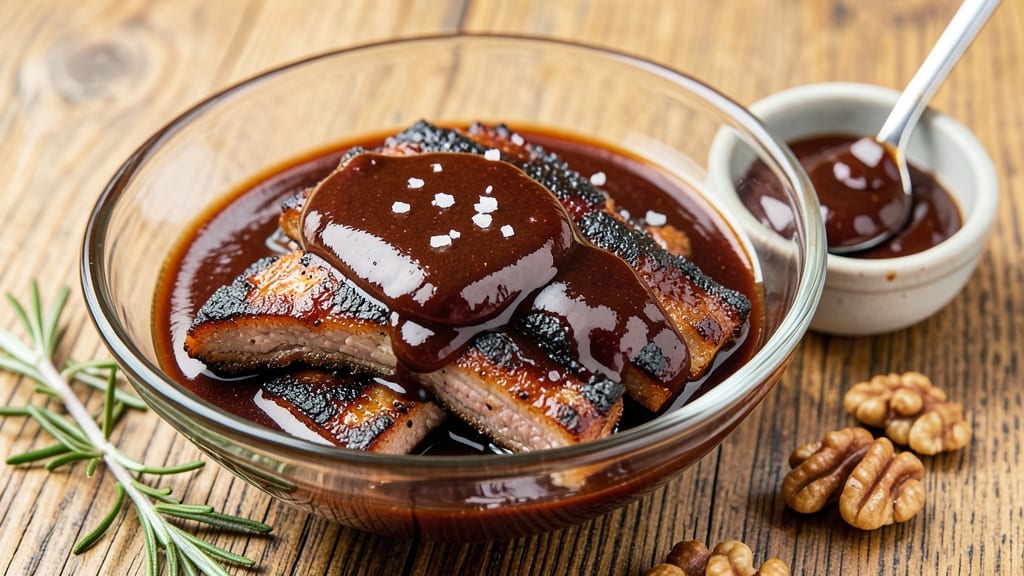
America's Test Kitchen BBQ sauce recipe delivers that signature smoky-sweet complexity in every jar. 🔥 I've perfected this sauce over years of pitmaster training, balancing tangy vinegar with deep molasses notes and just the right amount of heat.
The key is slow simmering to develop those rich, layered flavors without overpowering the natural sweetness.
This sauce starts with a simple foundation of ketchup, apple cider vinegar, and molasses—each playing a crucial role in building depth. I add brown sugar for caramelization and a blend of spices that includes smoked paprika, mustard powder, and a touch of cayenne for that signature kick.
The secret lies in simmering the sauce for 45 minutes to let the flavors meld and intensify.
What you'll end up with is a sauce that's versatile enough for ribs, pulled pork, or even grilled vegetables, yet complex enough to stand alone. The balance of sweet, tangy, and smoky flavors creates a sauce that's restaurant-quality but simple to make at home.
It keeps well in the refrigerator for up to 3 weeks, making it perfect for meal prep.
For those who prefer a tangier sauce, I recommend increasing the vinegar slightly. If you're looking for extra heat, a pinch of cayenne or a dash of hot sauce will do the trick. The possibilities are endless, but the foundation remains the same—rich, balanced, and full of that smoky-sweet magic.
Ingredients for america's test kitchen bbq sauce
Nine essential ingredients transform into a smoky-sweet BBQ sauce that rivals any restaurant jar.
| Ingredient | Amount | Notes |
|---|---|---|
| Ketchup 🍅 | 1 ½ cups | High-quality, no sugar added preferred |
| Apple Cider Vinegar 🍏 | ½ cup | Raw, unfiltered for tanginess |
| Molasses 🍯 | ½ cup | Unsulphured, dark variety |
| Light Brown Sugar 🍚 | ½ cup | Packed, for caramelization |
| Smoked Paprika 🌶️ | 1 ½ tbsp | High-quality, not smoked paprika blend |
| Mustard Powder 🌶️ | 1 tsp | Yellow or Dijon preferred |
| Ground Black Pepper 🌶️ | ½ tsp | Freshly ground for depth |
| Cayenne Pepper 🔥 | ¼ tsp | Adjust for heat preference |
| Garlic Powder 🧄 | 1 tsp | Freshly ground preferred |
| Onion Powder 🧅 | 1 tsp | For aromatic depth |
| Salt 🧂 | 1 tsp | Kosher or sea salt |
The foundation starts with ketchup—I always reach for Heinz no-sugar-added for cleaner flavor, but any quality brand works. Apple cider vinegar is non-negotiable here; the raw, unfiltered kind from Mott's or Bragg adds that bright tang. Molasses is where the depth comes from—Grosh's unsulphured is my go-to, but any dark molasses will do. For brown sugar, I grab the Domino light from the bulk bins at Whole Foods—it packs better and caramelizes beautifully. The spices? Penzeys for smoked paprika (their Spanish smoked is perfect) and McCormick for the rest—just make sure they're freshly ground if possible.
No apple cider vinegar? White vinegar or balsamic works in a pinch, but you'll lose some complexity. Running short on molasses? Maple syrup at half the amount gives you sweetness, though it won't have that same rich depth. The cayenne can be swapped for red pepper flakes (use half the amount), and if you're avoiding mustard powder, Dijon mustard at a tablespoon works wonders. For extra smokiness without smoked paprika, liquid smoke (just a dash) adds that campfire note—though I'd use it sparingly. The garlic and onion powders? Fresh minced garlic and sautéed onions would elevate this even further if you're feeling fancy.
This sauce tastes even better the next day as flavors meld—keep it in an airtight jar in the fridge for up to 3 weeks. For meal prep, I double the batch and freeze half in ice cube trays, then transfer to a bag. A splash of water or apple cider vinegar thins it out beautifully if it gets too thick. The slow simmer develops those rich flavors, so don't rush it—45 minutes minimum, and stir occasionally to prevent burning. Leftovers? Perfect for brining chicken or basting ribs—just reheat gently with a splash of water.
Why You'll Love This Recipe
- Pantry Magic: I swear by this sauce because it uses stuff you already have. No special trips to the store—just ketchup, vinegar, and that bottle of molasses gathering dust. The smoked paprika alone gives it that deep, smoky backbone without needing a grill.
- Sweet-Smoky Balance: That molasses and brown sugar combo? It’s where this sauce gets its soul. The apple cider vinegar cuts through the sweetness just enough to keep it from being cloying, while the smoked paprika adds this just-right char. Drizzle it on ribs, and you’ll understand what I mean.
- Weeknight & BBQ Hero: I make a big batch on Sundays and use it all week—slathered on burgers, tossed with baked beans, or even as a glaze for chicken thighs. It’s the kind of sauce that turns a simple meal into something that feels like a celebration, even on a Tuesday.
- Budget-Friendly Staple: A single batch costs me pennies but stretches forever. I freeze extras in ice cube trays for quick drizzles later, and the vinegar helps it last longer than store-bought versions. Plus, the ingredients are cheap enough that I don’t feel guilty making it twice as much as I need.
Step-by-step instructions for america's test kitchen BBQ sauce recipe
Here's how to build layered smoky-sweet complexity in one pot—no shortcuts, just science-backed flavor.
🍳 Step 1: Caramelize the Sweet Base
Place a medium saucepan over medium heat and add the 0.5 cup light brown sugar and 0.5 cup molasses. Stir constantly for 4-5 minutes until the mixture turns a deep amber color and smells richly caramelized. This step develops the sauce's signature sweet depth—don't rush it.
I like to use a wooden spoon here because it helps distribute the heat evenly without scorching. You'll see tiny bubbles form around the edges—that's your signal the sugars are breaking down properly. If it starts to darken too quickly, reduce heat to low and keep stirring.
🍳 Step 2: Build the Acidic Foundation
Pour in the 0.5 cup apple cider vinegar and 1.5 cups ketchup all at once. Stir vigorously for 2-3 minutes until the mixture comes together into a smooth, glossy sauce. The vinegar will initially make the mixture look curdled, but keep stirring—it'll emulsify beautifully.
This is where the tangy backbone forms. The vinegar's acidity cuts through the sweetness while helping to thin the sauce. If you're using high-quality, no-sugar-added ketchup, you'll notice a more complex tomato flavor profile developing. Taste at this stage—you should detect a balance of sweet, tangy, and slightly smoky notes.
🔥 Step 3: Develop the Smoky Depth
Add all the dry ingredients: 1.5 tbsp smoked paprika, 1 tsp mustard powder, 0.5 tsp ground black pepper, 0.25 tsp cayenne pepper, 1 tsp garlic powder, 1 tsp onion powder, and 1 tsp salt. Whisk continuously over medium-low heat for 5-7 minutes until the spices are fully incorporated and the sauce thickens slightly.
Here's where the magic happens—the smoked paprika infuses that deep, campfire-like aroma while the mustard powder adds a subtle tang. The cayenne brings just enough heat to wake up the palate without overpowering. I always taste at this stage to adjust seasoning—sometimes the smoked paprika needs a pinch more salt to balance its intensity.
⏰ Step 4: Simmer to Perfection
Reduce heat to low and let the sauce simmer uncovered for 15-20 minutes, stirring occasionally. You're looking for the sauce to reduce by about 25%—it should coat the back of a spoon but still be pourable. The longer it simmers, the more complex the flavors become.
Watch for a slight skin to form on the surface—this is normal and indicates the sauce is concentrating. If it reduces too quickly, add 1-2 tablespoons water to maintain the right consistency. The final texture should be thick enough to cling to ribs or pulled pork but still glossy enough to drizzle.
Pro Tips For Making America'S Test Kitchen Bbq Sauce
- Simmer Slow and Steady: The ATK recipe calls for a long simmer—don’t rush it. Low heat (around 175°F) keeps the sauce from burning while letting the flavors meld properly. I used to crank the heat, and it’d either scorch or taste flat. Trust the process—it’s worth the wait.
- Use Real Molasses, Not Syrup: The recipe specifies molasses, not corn syrup or pancake syrup. Real molasses (preferably unsulphured) adds depth and complexity that shortcuts can’t replicate. I tried subbing once—big mistake. The sauce lacked that rich, almost caramel-like backbone.
- Balance the Vinegar Gradually: Apple cider vinegar is sharp, and adding it all at once can make the sauce taste harsh. Start with half, taste, then add the rest. This lets you adjust for your preference—some batches need more tang, others just a hint. Taste as you go, or you’ll end up with a sauce that’s either too sweet or too sour.
- Toast the Smoked Paprika First: Lightly toast the smoked paprika in a dry pan for 30 seconds before adding it to the sauce. This deepens its smoky flavor and mutes the bitterness that can sneak in. I was skeptical—sounds weird, but it works. The difference is subtle but noticeable, especially if you’re using store-bought paprika.
Essential equipment for great america's test kitchen bbq sauce
Saucepan Essentials
Start with a medium saucepan that has a flat bottom—this ensures even heat distribution and prevents scorching. I swear by my All-Clad stainless steel saucepan because it heats up quickly and maintains consistent temperature.
If you don’t have stainless steel, a heavy-bottomed enameled cast iron like Le Creuset works beautifully too. The key is avoiding thin, reactive metals that can alter flavors. 🔥
Wooden Spoon
A wooden spoon is non-negotiable for stirring this sauce. It prevents scratching the pan and helps distribute heat evenly, which is crucial when caramelizing the sugar and molasses. I keep a Oxo Good Grips wooden spoon in my kitchen—it’s sturdy and has a comfortable handle for long simmering sessions.
Plastic spoons can melt under heat, so avoid those.
Whisk for Emulsification
After adding the vinegar and ketchup, grab a balloon whisk to blend everything smoothly. The whisk’s flexible wires cut through the sauce better than a spoon, helping the acid and sugars emulsify into a glossy consistency.
My go-to is a Oxo Good Grips whisk—it’s lightweight but strong enough to handle the job without bending. A fork in a pinch works too, but it’s less efficient.
Fine-Mesh Strainer
If you prefer a smoother sauce, strain it through a fine-mesh strainer before serving or storing. I use a Sieve+Strainer set from OXO because it catches even the tiniest bits of spices or undissolved sugar.
This step is optional but makes a noticeable difference in texture, especially if you’re serving it drizzled over pulled pork or grilled veggies.
Glass Jars for Storage
Store your finished sauce in airtight glass jars—they preserve flavor better than plastic and won’t absorb odors. I love Ball Mason jars because they’re sturdy, stackable, and reusable. Label them with the date and contents so you can track freshness.
For meal prep, these jars also make it easy to grab sauce straight from the fridge for quick glazing or basting. ❄️
Measuring Tools
Precision matters with spices and liquids, so invest in a digital kitchen scale for dry ingredients like smoked paprika and brown sugar. I use a OXO Good Grips scale—it’s accurate and easy to read.
For liquids, a liquid measuring cup with clear markings ensures you hit the exact amounts of vinegar, ketchup, and molasses. Don’t eyeball it; this sauce relies on balance, and even small deviations can throw off the flavor profile.
Nutrition facts
Frequently asked questions
Can I make this BBQ sauce without ketchup?
For a tomato-free version, replace the 1.5 cups ketchup with 1.5 cups tomato paste plus 0.25 cup water to thin it. You can also blend 1 cup crushed tomatoes with 0.5 cup tomato paste for a fresher flavor. The sauce will have a deeper, more concentrated tomato taste without the added sugars found in commercial ketchup.
How do I adjust the sweetness or heat level?
For less sweetness, reduce the brown sugar to 0.3 cups and molasses to 0.3 cups. For more heat, increase cayenne to 0.5 tsp or add 1 tsp hot sauce at the end. If you want extra tang, add 1 tsp more vinegar. Always taste as you go—this sauce is highly customizable!
Why does my sauce look too thin or too thick?
If it's too thin, simmer uncovered for 5-10 more minutes to reduce. For thickening, mix 1 tsp cornstarch with 1 tbsp cold water, stir into the sauce, and simmer 2 minutes. If it's too thick before simmering, add 1-2 tbsp water or vinegar gradually while stirring. The ideal consistency should coat the back of a spoon but still be pourable.
Can I make this sauce in a slow cooker?
Yes! Combine all ingredients in a 3-4 quart slow cooker on low heat for 2-3 hours, stirring every 30 minutes. The slow cooking enhances the caramelization naturally. If it reduces too quickly, add 2-3 tbsp water halfway through. Just be patient—slow cookers take longer to develop the same depth of flavor.
How can I use this sauce beyond BBQ?
This versatile sauce works as a marinade for chicken or pork, a glaze for grilled veggies, or a dip for fries and onion rings. Try it as a pizza sauce base or mixed with mayo for sandwiches. Even drizzled over roasted potatoes or tacos, it adds that signature smoky-sweet complexity. The possibilities are endless!