
Sauces & Condiments
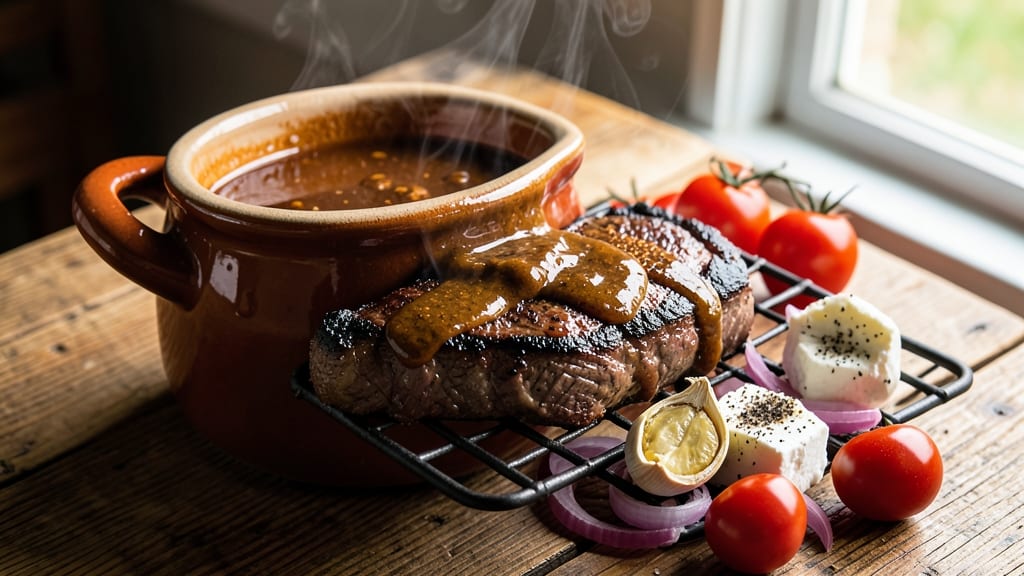
This all-natural barbecue sauce recipe delivers the smoky-sweet gloss you crave without artificial preservatives or additives. 🔥 As a pitmaster trained in French techniques, I've perfected a balance of deep tomato flavor, vinegar tang, and natural sweetness that transforms any grilled meat into a masterpiece.
The secret lies in slow-simmered spices and a touch of molasses that develops complex layers while maintaining that signature tangy-sweet profile.
What sets this sauce apart is its versatility—equally at home on competition-worthy ribs, smoked brisket, or as a dipping companion for veggie sticks. I use only real ingredients: ripe tomatoes, apple cider vinegar, and a blend of spices that build flavor through simmering, not just mixing.
The result is a sauce that's rich, glossy, and packed with authentic barbecue character without any shortcuts.
By the time you're done simmering, you'll have a sauce that's smooth enough to glaze but bold enough to stand up to smoky meats. The natural sweetness caramelizes beautifully during grilling, while the vinegar keeps it bright and tangy.
This isn't just sauce—it's the foundation of every great barbecue experience, made from scratch in your own kitchen.
The best part? This sauce keeps beautifully in the refrigerator for up to two weeks, so you can make a big batch and enjoy it all summer long. Whether you're hosting a backyard cookout or just craving that smoky-sweet flavor, this recipe delivers restaurant-quality results with simple, natural ingredients.
Let's get started on creating your signature barbecue sauce.
Ingredients for all natural barbecue sauce
Real ingredients that build smoky-sweet depth through slow simmering—no shortcuts.
| Ingredient | Amount | Notes |
|---|---|---|
| Ripe Tomatoes 🍅 | 2 lbs | Roma or vine-ripened preferred |
| Apple Cider Vinegar 🍏 | 1 cup | Raw, unfiltered preferred |
| Pure Cane Molasses 🍯 | ½ cup | Unsulphured for best flavor |
| Yellow Onion 🧅 | 1 whole | Yellow or red, diced |
| Garlic Cloves 🧄 | 6 cloves | Fresh, minced or pressed |
| Smoked Paprika 🌶️ | 2 tbsp | High-quality for smoky depth |
| Ground Cumin 🌿 | 1 tbsp | Toasted for warmth |
| Mustard Powder 🌶️ | 1 tsp | Yellow or Dijon preferred |
| Kosher Salt 🧂 | 1 ½ tsp | Diamond Crystal preferred |
| Black Pepper 🌶️ | ½ tsp | Freshly ground |
| Extra-Virgin Olive Oil 🫒 | ¼ cup | High-quality, fruity |
| Fresh Ginger 🌿 | 1 tbsp | Grated, fresh preferred |
The tomatoes are the heart of this sauce. Roma tomatoes hold their shape better, but vine-ripened will give you more natural sweetness. I always grab mine from local farmers markets in peak summer, but grocery store Roma tomatoes work just fine. The molasses? Unsulphured cane molasses is key—it has a richer, deeper flavor than the sulphured kind. For the vinegar, raw, unfiltered apple cider vinegar adds complexity that regular vinegar can't match. If you're using canned tomatoes, San Marzano is the gold standard, but any high-quality canned tomatoes will do in a pinch.
No smoked paprika? Regular paprika plus a pinch of liquid smoke gets you close, though it won't be quite the same. Fresh ginger is ideal, but ground ginger at half the amount works if you're in a hurry. The mustard powder adds that signature tang—Dijon mustard powder gives a slightly more complex flavor than yellow. For the spices, Penzeys or bulk bins at Whole Foods are my go-tos, but any good grocery store will have quality options. If you're short on time, pre-minced garlic from a jar works, but fresh is always better. The olive oil should be extra-virgin—you can taste the difference in the final sauce.
This sauce tastes even better the next day as the flavors meld. Store in a glass jar in the fridge for up to 2 weeks. The molasses and vinegar help preserve it naturally, so you won't need to worry about spoilage. For long-term storage, freeze in ice cube trays—just thaw and stir before using. I always make a double batch because it disappears fast. The sauce thickens as it cools, so don't worry if it looks too thin right after simmering. It'll come together beautifully.
Why You'll Love This Recipe
- No-Fuss Simmer: I swear by this sauce because it’s basically set-it-and-forget-it. Toss everything—tomatoes, vinegar, molasses—into a pot, let it bubble until the onions turn translucent, and boom. Twenty minutes later, you’ve got a batch that tastes like it simmered all day.
- Sweet Heat Balance: That molasses and vinegar combo? It’s magic. The molasses gives it this deep, caramelized richness, while the vinegar keeps it bright and tangy. Honestly, it’s the kind of flavor that makes you reach for the brush mid-grill—even when you’re not supposed to.
- Weeknight BBQ Hero: Slather it on chicken thighs for a Tuesday dinner, drizzle it over baked beans for a potluck, or toss it with roasted veggies when you’re scrambling for a side. It’s my go-to for anything that needs a little extra oomph, and it never lets me down.
- Pantry Goldmine: Between us, this sauce is basically free. You’re using pantry staples—no fancy ingredients, no markup. Plus, it keeps for weeks in the fridge, so you’re always covered. I’ve made it twice in one month just because I couldn’t resist.
Step-by-step instructions for all natural barbecue sauce
Here's how to craft a rich, smoky-sweet sauce that rivals store-bought but keeps all the natural goodness.
🍳 Step 1: Roast Tomatoes and Onion for Deep Flavor
Preheat your oven to 400°F. Cut the 2 lbs ripe tomatoes in half and place them cut-side down on a baking sheet. Dice the 1 whole yellow onion and spread it around the tomatoes. Roast for 25-30 minutes until the tomatoes collapse and the onion turns golden brown and caramelized.
This roasting step develops complex, sweet flavors that form the sauce's foundation. You'll know they're ready when the tomatoes look shriveled and the onion edges turn crispy. Let them cool slightly before handling—they'll be hot! I like to spread them out so they get maximum surface area for browning.
👨🍳 Step 2: Blend Roasted Vegetables with Molasses and Vinegar
Transfer the roasted tomatoes and onion to a food processor or blender. Add the 1 cup apple cider vinegar, 0.5 cup pure cane molasses, 1 tbsp fresh ginger, 6 cloves garlic, 2 tbsp smoked paprika, 1 tbsp ground cumin, 1.5 tsp kosher salt, and 0.5 tsp black pepper. Pulse until completely smooth, scraping down the sides as needed.
The molasses and vinegar combination creates that signature sweet-tangy balance. I always use unsulphured molasses for the best flavor profile. If you're using a high-powered blender, you might need to work in batches—this sauce is thick! The ginger adds a subtle warmth that rounds out the smokiness beautifully.
🔥 Step 3: Simmer the Sauce Until Thick and Glossy
Transfer the blended mixture to a saucepan and place it over medium heat. Add the 0.25 cup extra-virgin olive oil and the 1 tsp mustard powder. Stir in and bring to a gentle simmer. Let it cook uncovered for 20-25 minutes, stirring occasionally, until it thickens to your desired consistency.
Here's where the magic happens—the sauce will reduce and develop a beautiful glossy sheen. You're looking for a consistency that coats the back of a spoon but still flows easily. If it thickens too quickly, add 1-2 tablespoons of water to loosen it. The mustard powder adds depth and helps stabilize the emulsion, preventing separation.
⏰ Step 4: Rest and Adjust for Perfect Balance
Remove the sauce from heat and let it cool for 10 minutes. Taste and adjust the seasoning—add more kosher salt if needed for saltiness, or a splash more apple cider vinegar for tang. For extra richness, you can stir in 1 tablespoon of butter at the end.
This resting period allows all the flavors to meld together. I always find the sauce tastes even better after sitting for a while—it gives the acidity time to mellow and the smokiness to develop. If you're using it immediately, give it a final taste and adjust before serving. The sauce should be sweet, tangy, and smoky with just a hint of heat from the mustard and ginger.
🍽️ Step 5: Store and Use Your Homemade Sauce
Transfer the cooled sauce to a clean glass jar or airtight container. It will keep in the refrigerator for up to 2 weeks or can be frozen for up to 3 months. For best results, bring it to room temperature before using to ensure even distribution.
This sauce is incredibly versatile—use it on grilled meats, as a marinade, in sandwiches, or even as a dipping sauce. The natural ingredients make it perfect for health-conscious eaters while delivering that authentic barbecue flavor. I like to make a big batch and keep it on hand for spontaneous cookouts—nothing beats the taste of homemade sauce on fresh-off-the-grill ribs!
Pro Tips For Making All Natural Barbecue Sauce
- CHAR THE ONIONS LOW: If you rush this step, you’ll end up with raw onion bits that turn the sauce bitter. Cook them in a dry pan over medium-low heat until they’re deep golden—almost caramelized—and smell sweet. I used to burn them, but now I keep the heat low and stir often (yes, even if you’re impatient like me).
- PEEL THE TOMATOES FIRST: Skip the hassle of peeling them after cooking—blanch whole tomatoes in boiling water for 30 seconds, then ice bath, and peel while they’re still warm. It’s faster, cleaner, and you’ll get more pulp out of them. (Pro move: Use a spoon to scoop out seeds too—no straining required.)
- SIMMER THE MOLASSES GENTLY: Molasses burns faster than you’d think. After adding it, reduce the heat to the lowest setting and stir constantly for the first 2 minutes. I learned this the hard way—once, I walked away for one minute and ended up with a bitter, burnt taste. Keep it moving.
- SALT THE VINEGAR: Toss in a pinch of salt (about ¼ teaspoon) with the apple cider vinegar before adding it to the pot. It balances the acidity and rounds out the flavor—trust me, it makes a real difference. (Your future self will notice.)
Troubleshooting great all natural barbecue sauce
Sauce Too Thin?
If your sauce ends up too thin after simmering, don't panic—this happens often when using fresh tomatoes. I've found that simmering uncovered on medium-low heat for an extra 10-15 minutes helps thicken it naturally.
For an instant fix, mix 1 tablespoon cornstarch with 2 tablespoons cold water, stir into the sauce, and simmer for 2-3 minutes until it reaches your desired consistency. 🔥
Separation Issues
Sometimes the oil and vinegar can separate if you rush the process. To prevent this, always bring the sauce to a gentle simmer and stir frequently. If separation occurs, whisk vigorously over low heat for 3-5 minutes—the heat helps re-emulsify the ingredients.
Adding 1 teaspoon Dijon mustard to the saucepan before simmering also helps stabilize the emulsion.
Overly Sweet Flavor
The molasses can make the sauce taste too sweet if not balanced properly. If this happens, add 1-2 tablespoons of apple cider vinegar and simmer for another 5 minutes to let the acidity mellow.
For a more complex flavor, stir in ½ teaspoon smoked salt—it adds depth without extra sweetness. Taste as you go; the sauce should have a harmonious balance of sweet, tangy, and smoky flavors.
Burnt or Bitter Taste
If your sauce develops a burnt or bitter taste, you likely cooked it too long or at too high heat. To fix this, immediately remove it from heat and stir in 1 teaspoon of honey or maple syrup to round out the flavors.
For a smokier profile, add ½ teaspoon extra smoked paprika and simmer gently for 2-3 minutes to let the flavors meld. Always maintain a gentle simmer—never let it boil vigorously.
Spice Imbalance
If the spices feel too overpowering, the sauce needs more acidity or sweetness to balance them. Add 1 tablespoon of apple cider vinegar for tang or 1 teaspoon of honey for sweetness, then simmer for 3-5 minutes.
If the heat is too intense, stir in ½ teaspoon of brown sugar to mellow the spices. Taste frequently—adjust gradually to avoid overcorrecting.
Storage Problems
If your sauce spoils faster than expected, it might not have been stored properly. Always transfer the cooled sauce to a clean glass jar and ensure the lid is sealed tightly. For long-term storage, freeze in airtight containers or ice cube trays—thaw in the refrigerator overnight.
If mold appears, discard it immediately. The molasses and vinegar help preserve the sauce naturally, but proper storage is key to maintaining freshness. 💡
Nutrition facts
Frequently asked questions
Can I make this sauce without a food processor?
If you don't have a food processor, you can use a mortar and pestle for the garlic and ginger, then finely chop the roasted tomatoes and onion by hand. For the blending step, simply mash the ingredients with a wooden spoon or potato masher until smooth. The sauce will be slightly chunkier but still delicious—just stir it well during simmering to create a consistent texture.
What's the best way to use this sauce on ribs?
For competition-style ribs, apply a thin layer of sauce during the last 30-45 minutes of cooking to prevent burning. Brush on lightly every 10-15 minutes for a glossy finish. For fall-off-the-bone tenderness, I recommend using it as a dipping sauce instead of glazing—this keeps the meat juicy while letting you enjoy the sauce's full flavor. The natural sweetness caramelizes beautifully when grilled!
Can I substitute maple syrup for the molasses?
Yes, but use ½ cup maple syrup instead of molasses for a similar sweetness level. Maple adds a different depth—more floral and less robust than molasses' deep, caramel notes. If you prefer a closer match, blend ¼ cup molasses and ¼ cup maple syrup for complexity. The sauce will still taste great, but the texture may be slightly thinner due to maple's lower viscosity.
How do I make this sauce spicier?
Add ½ teaspoon cayenne pepper or 1 teaspoon hot sauce during the simmering stage for immediate heat. For deeper spice, include 1-2 chipotle peppers in adobo sauce when blending the ingredients. If you prefer a smoky heat, increase the smoked paprika to 3 tablespoons—this adds intensity without sharpness. Always taste as you go to avoid overpowering the sauce's natural balance.
Will this sauce work for vegetarian dishes?
This sauce is perfect for grilled portobello mushrooms, jackfruit "pulled pork," or as a marinade for tofu. The natural sweetness and smokiness complement plant-based proteins beautifully. For extra richness, stir in 1 tablespoon nutritional yeast when simmering—it adds a cheesy, umami depth that vegetarians love. The sauce's versatility makes it a great all-purpose condiment for any diet.