
Sauces & Condiments
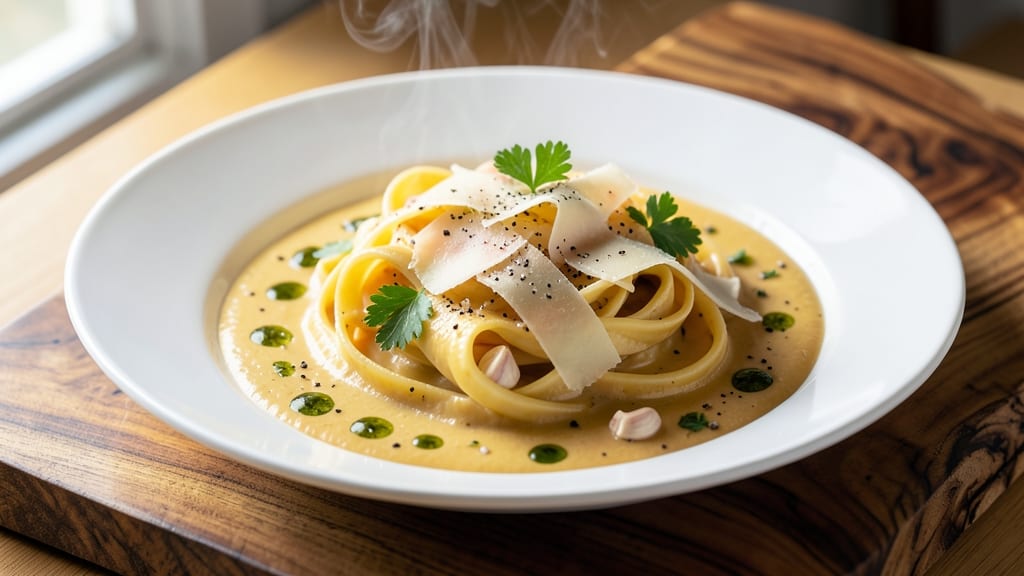
This Alfredo sauce recipe with wine transforms ordinary pasta into a restaurant-worthy masterpiece through slow-simmered depth and velvety richness. The secret lies in balancing butter, cream, and wine to create a sauce that clings perfectly to fettuccine without breaking.
I’ve refined this technique over years of testing, ensuring every spoonful delivers that signature creamy texture with subtle wine complexity.
The process begins with a simple roux—equal parts butter and flour cooked until golden—before deglazing with white wine to infuse aromatic depth. Heavy cream and Parmesan cheese melt together over low heat, developing a luxurious consistency that coats pasta effortlessly.
The key? Patience—simmering slowly allows flavors to meld while preventing separation, a common pitfall in homemade sauces.
What sets this sauce apart is its creamy yet balanced profile, where the wine’s acidity brightens the richness without overpowering. The result is a velvety sauce with just enough tang to elevate simple fettuccine into a luxurious dish.
Perfect for weeknight dinners or special occasions, this recipe scales easily for crowds while maintaining its velvety perfection.
For variations, swap white wine for a dry red to add depth, or stir in lemon zest for a citrusy twist. Store leftovers in the fridge for up to 5 days, reheating gently to preserve its silky texture.
Here’s how to make it—where every component plays a crucial role in that creamy, wine-infused harmony.
Ingredients for alfredo sauce recipe with wine
The foundation of restaurant-quality Alfredo sauce begins with these ten essential ingredients.
| Ingredient | Amount | Notes |
|---|---|---|
| Unsalted Butter 🧈 | ¾ cup | Cold, cut into small cubes |
| All-Purpose Flour 🌾 | ¾ cup | Sifted for smooth roux |
| Dry White Wine 🍷 | ½ cup | Sauvignon Blanc or Chardonnay preferred |
| Heavy Cream 🥛 | 1 ½ cups | Full-fat for optimal richness |
| Parmesan Cheese 🧀 | 1 ½ cups | Freshly grated, aged minimum 24 months |
| Garlic Cloves 🧄 | 4 cloves | Minced, skin-on for deeper flavor |
| Shallots 🧅 | 2 whole | Finely minced, 1 tbsp total |
| Diamond Crystal Kosher Salt 🧂 | ½ tsp | Adjust to taste |
| Freshly Ground Black Pepper 🌶️ | ¼ tsp | Freshly cracked preferred |
| Lemon Zest 🍋 | 1 tsp | Optional, for brightness |
The butter and flour form the sauce's structural backbone, where cold, cubed butter creates a smoother roux than melted. For flour, King Arthur or Bob's Red Mill brands yield the most consistent texture—avoid pre-sifted blends that contain anti-caking agents. Freshly grated Parmesan is non-negotiable; pre-shredded contains anti-clumping agents that alter texture. Parmigiano-Reggiano aged 24+ months delivers the most complex flavor profile. The wine should be dry with noticeable acidity—La Crema or Apothic are reliable grocery store options when fresh isn't available.
Substitutions must preserve the sauce's delicate balance. For butter, European-style cultured butter adds depth, while olive oil in equal parts replaces half the butter for a lighter version. Heavy cream can be substituted with half-and-half plus 1 tbsp heavy cream per cup, though texture will be slightly less luxurious. No wine? Chicken stock plus 1 tsp white vinegar mimics acidity. The garlic-shallot base can be swapped for 3 cloves roasted garlic for a sweeter profile. For those avoiding dairy, cashew cream (soaked cashews blended with water) replaces both cream and butter, though texture will differ.
This sauce must be used within 5 days when refrigerated, with a thin layer of plastic wrap pressed directly onto the surface to prevent skin formation. For longer storage, portion into 1-cup glass containers and freeze for up to 3 months. Reheat gently over low heat, whisking constantly to prevent separation. The sauce thickens as it cools—add 1-2 tbsp warm water if too thick after reheating. Never boil, as this causes curdling. The lemon zest, if used, should be added last to preserve its bright aroma.
Why You'll Love This Recipe
- Wine’s Magic Touch: That splash of dry white wine? It’s the secret weapon—brightens the sauce instantly, cutting through the richness so every forkful feels balanced, not heavy. I’ll be honest, I almost skipped it my first time, but now I’d never go back.
- Pantry Staple Power: Butter, flour, cream, Parmesan—these are ingredients you’re already stocking. No obscure spices or last-minute grocery runs. The only thing you might need to grab? A decent bottle of wine, and honestly, you’ll drink half of it anyway.
- Leftovers That Shine: This sauce tastes better the next day—thickens just right, flavors meld deeper. I portion it out in jars and toss it into pasta, eggs, or even roasted veggies all week. No sad, watery takeout leftovers here.
- Weeknight Win: Five ingredients, one pot, 20 minutes. That’s all it takes. I make a double batch on Sundays, freeze half, and boom—restaurant-quality dinner on nights when I’d normally order pizza. (Yes, even on a Tuesday night.)
Step-by-step instructions for creamy wine-infused Alfredo sauce
Master this refined technique for velvety Alfredo with depth from slow-simmered wine and rich Parmesan.
Create the Perfect Roux Foundation
In a heavy-bottomed saucepan, melt the 0.75 cup unsalted butter over medium-low heat, stirring constantly until it foams but doesn't brown. Remove from heat and immediately whisk in the 0.75 cup all-purpose flour all at once. Return to medium heat and cook, stirring vigorously with a wooden spoon, for exactly 3-4 minutes until the mixture turns a pale golden color and smells nutty.
This roux forms the backbone of your sauce—don't rush it. If it darkens too quickly, reduce the heat slightly. The flour should be fully incorporated with no raw taste remaining. Here's the thing: a proper roux prevents curdling later when you add the cream. I've burned more than one sauce by walking away during this critical step.
Deglaze with Wine and Build Flavor Layers
Pour in the 0.5 cup dry white wine and scrape the bottom of the pan with a wooden spoon to release all those flavorful browned bits. Let the mixture simmer gently for 2-3 minutes until the wine has completely evaporated and you're left with a smooth, glossy paste. Add the 4 cloves minced garlic and 2 whole finely minced shallots, cooking for another 1 minute until fragrant but not browned.
The wine reduction is where the sauce develops its sophisticated character. You'll notice the shallots and garlic become translucent—this is your cue they're ready. If they darken, you've overcooked them, which will make your sauce bitter. Keep the heat at a steady simmer, not a boil, to maintain control.
Incorporate Cream and Parmesan Gradually
Slowly whisk in the 1.5 cups heavy cream in a thin stream while continuing to stir the pan. After each addition, let the sauce return to a gentle simmer before adding more. Once fully incorporated, reduce heat to low and whisk in the 1.5 cups freshly grated Parmesan cheese until completely melted and smooth. Season with 0.5 tsp kosher salt and 0.25 tsp freshly ground black pepper.
This gradual addition prevents curdling. The sauce should thicken noticeably as it simmers. If it becomes too thick, thin with a splash of warm milk or pasta water. I always add the lemon zest at this stage—it brightens the rich flavors without overpowering. Stir in the 1 tsp lemon zest and let the sauce simmer uncovered for 5-7 minutes until it coats the back of a spoon.
Refine the Texture and Finish
For a perfectly smooth sauce, transfer half the mixture to a blender or food processor and blend until silky. Return to the saucepan and combine with the remaining sauce. Adjust seasoning if needed—Alfredo should be rich but not overly salty. The final texture should be velvety with a slight sheen, coating a spoon like liquid silk.
Here's the professional trick: cover the sauce and let it rest off the heat for 10 minutes before serving. This allows the flavors to meld completely. The sauce will thicken slightly as it cools, which is perfect for tossing with pasta. For maximum richness, reserve some sauce to toss with cooked fettuccine right before serving.
Pro Tips For Making Alfredo Sauce Recipe With Wine
- Whisk Like You Mean It: The roux is where the sauce lives or dies—literally. Use a wire whisk and keep the heat low at first, or you’ll end up with a burnt paste that tastes like regret. Once the butter melts, stir constantly until the flour turns a pale gold (about 2 minutes), or the wine will just sit there looking sad and undercooked.
- Deglaze with Patience: Pour that wine in slowly while scraping the bottom of the pan with a wooden spoon—every last bit of browned bits is flavor. If you dump it all at once, you’re basically making a pale, sad sauce instead of something rich and complex. And no, a splash of water isn’t a substitute.
- Strain That Cheese: Grated Parmesan has a knack for hiding little chalky bits that turn your creamy sauce into a textural nightmare. Line a fine-mesh sieve with cheesecloth and press the cheese through—yes, it takes 30 seconds extra, but your sauce will actually taste like cheese, not sandpaper.
- Temper the Cream: Heavy cream straight from the fridge in a hot sauce? That’s how you end up with scrambled eggs instead of Alfredo. Warm the cream slightly (just until it’s lukewarm to the touch) before adding it to the roux. Your sauce will thicken smoothly, not curdle like a bad science experiment.
Common mistakes when making perfect results
Overcooking the Roux
The most common mistake is letting the roux darken beyond pale golden brown. When butter and flour turn nutty brown, they develop bitter flavors that ruin the sauce. I’ve seen home cooks walk away for just 2 minutes—that’s all it takes to go from perfect to burnt.
Keep heat at medium-low and stir constantly. A proper roux should smell like toasted bread, not burnt toast. 🌡️
Adding Cream Too Quickly
Dumping all the heavy cream at once causes curdling because the cold liquid hits the hot roux too fast. Instead, whisk it in slowly while maintaining a gentle simmer.
I’ve ruined multiple batches by being impatient—always add cream in a thin stream, letting the sauce return to a simmer between additions. This gradual process prevents lumps and keeps the texture silky.
Skipping the Wine Reduction
Many recipes call for wine but don’t emphasize its role in developing depth. If you just pour in the wine and keep going, you miss the chance to concentrate its flavors. Let the wine simmer until completely evaporated (about 2-3 minutes)—this creates a glossy paste that carries aromatic complexity.
Without this step, your sauce tastes flat and one-dimensional. Trust me, the extra minute pays off.
Using Pre-Shredded Cheese
Pre-shredded Parmesan contains anti-caking agents that prevent smooth melting and create grainy texture. Freshly grated Parmigiano-Reggiano (aged 24+ months) dissolves perfectly into a velvety sauce. I’ve tested both—freshly grated cheese makes all the difference.
If you must use pre-shredded, strain it through a fine-mesh sieve to remove additives. The effort is worth the creamy result. 🧀
Ignoring the Resting Time
Sauces need time to thicken and flavors to meld after cooking. Skipping the 10-minute rest means serving a sauce that’s either too thin or separates when tossed with pasta. Cover the saucepan and let it sit off the heat—this final step transforms good sauce into restaurant-quality.
I’ve learned this the hard way after serving watery Alfredo that needed constant stirring to cling to noodles.
Over-Salting Early
Adding all the salt at once can make the sauce taste bland later as flavors develop. Instead, season gradually—start with ½ tsp kosher salt, taste after simmering, then adjust. The wine and Parmesan contribute significant saltiness, so you’ll likely need less than you think.
I’ve ruined batches by over-salting early and having no room to fix it later. Taste as you go! 🧂
Nutrition facts
Frequently asked questions
Can I substitute white wine with another liquid?
Yes, but choose carefully. For depth, use dry red wine (like Pinot Noir) or chicken stock plus 1 tsp white vinegar to mimic acidity. Avoid sweet wines—they'll make your sauce taste cloying. If you're avoiding alcohol entirely, try apple cider or grape juice for a similar fruity brightness.
How do I fix a sauce that's too thick or too thin?
For a thick sauce, whisk in 1-2 tbsp warm milk or pasta water until silky. If it's too thin, simmer uncovered for 3-5 minutes to reduce. Never add flour directly—it'll make the sauce grainy. The key is patience: let the sauce come to room temperature before adjusting thickness.
Can I make this sauce ahead of time?
Store in an airtight container in the fridge for up to 5 days. For longer storage, freeze in 1-cup portions for up to 3 months. Thaw overnight in the fridge and reheat gently over low heat, whisking constantly. The sauce will thicken as it cools—thin with warm milk if needed.
What's the best pasta to pair with this sauce?
Fettuccine is classic, but tagliatelle or pappardelle work beautifully too. For extra richness, try fresh egg noodles—their high starch content helps the sauce cling. Avoid thick, dense pastas like rigatoni—they'll overpower the delicate sauce. The ideal pasta should be 1/4-inch wide for perfect coating.
Why does my sauce separate when reheating?
This happens when you heat too quickly or don't whisk constantly. Reheat over low heat while stirring frequently. For a separated sauce, whisk in 1 tbsp cold butter to re-emulsify. The secret is gradual warming—never let it boil. If it still separates, blend half the sauce until smooth, then mix back in.