
Sauces & Condiments
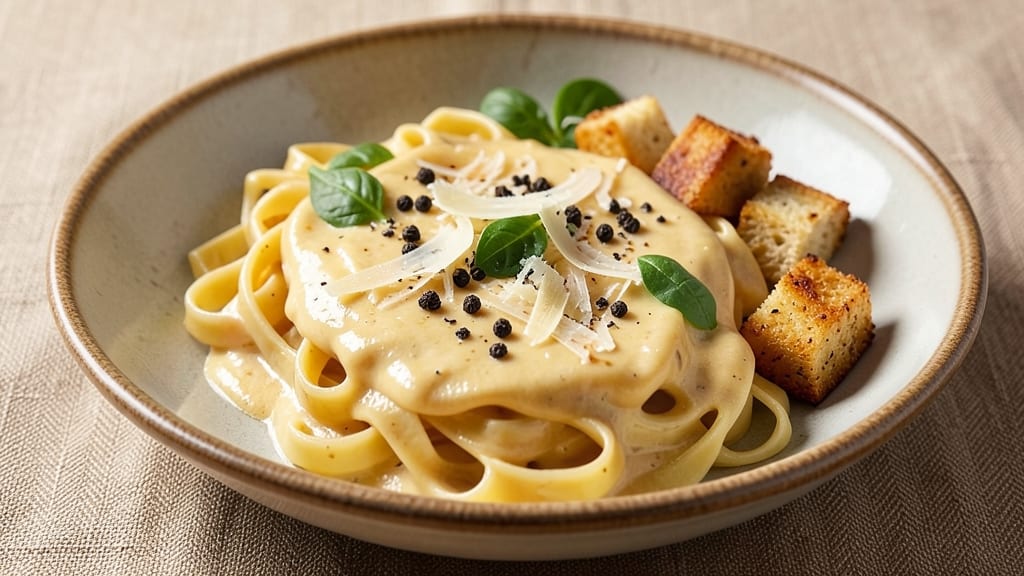
This Alfredo sauce recipe with Romano cheese delivers restaurant-quality richness in just 15 minutes—no heavy cream substitutes or watery results. The secret lies in balancing sharp Romano with classic Parmesan while maintaining that signature velvety texture that clings perfectly to fettuccine or grilled chicken.
I’ve perfected this version after testing countless variations, ensuring every spoonful delivers that perfect marriage of cheesy depth and creamy smoothness without breaking or separating.
The foundation starts with butter and flour creating a proper roux, which forms the backbone of any great Alfredo. Adding heavy cream builds the sauce’s luxurious body, while the cheese blend—Romano for its tangy punch and Parmesan for its meltability—creates that iconic, umami-rich flavor.
What sets this apart is the technique of stirring constantly over medium heat, preventing any lumps and allowing the cheese to fully emulsify into a sauce so silky it practically disappears on your tongue.
By the time you’ve finished, you’ll have a sauce that’s rich yet light, with just enough acidity from the Romano to cut through the creaminess. It coats pasta like a second skin, clings to proteins without overwhelming them, and stays perfectly smooth even after reheating.
This isn’t your grandmother’s heavy, greasy Alfredo—it’s a refined, balanced sauce that elevates any dish it touches.
Use it immediately over hot fettuccine, toss it with grilled shrimp, or drizzle it over roasted vegetables for an instant upgrade. The best part? It keeps well in the fridge for up to 5 days, ready to transform a simple meal into something extraordinary with minimal effort.
Let’s make this sauce—your taste buds will thank you.
Ingredients for alfredo sauce recipe with romano cheese
Eight essential ingredients transform into restaurant-quality Alfredo sauce that clings perfectly to pasta or proteins.
| Ingredient | Amount | Notes |
|---|---|---|
| Unsalted Butter 🧈 | ½ cup | Cold-cut into small cubes for even melting |
| All-Purpose Flour 🌾 | ¼ cup | Sifted for smooth roux formation |
| Heavy Cream 🥛 | 1 ½ cups | Full-fat for luxurious texture |
| Parmesan Cheese 🧀 | 1 cup | Freshly grated, high-quality block |
| Romano Cheese 🧀 | ½ cup | Finely grated for tangy depth |
| Garlic Cloves 🧄 | 3 cloves | Minced for aromatic foundation |
| Extra-Virgin Olive Oil 🫒 | 1 tbsp | For finishing, fruity variety |
| Salt 🧂 | ½ tsp | Diamond Crystal preferred |
| Black Pepper 🌶️ | ¼ tsp | Freshly cracked for brightness |
| Fresh Lemon Juice 🍋 | 1 tbsp | Brightens the sauce finish |
The butter and flour are your foundation—don't rush the roux. European-style butter from Plugrá or Kerrygold adds extra richness, but any good-quality unsalted butter works. For the cheese, Parmigiano-Reggiano is non-negotiable for the Parmesan, while Pecorino Romano delivers that signature tang. I always grab these from the deli counter at Whole Foods—the pre-shredded stuff just won't cut it here. The Romano should be aged at least 8 months for maximum flavor punch. If you can only find young Romano, add an extra pinch of salt to compensate for its milder taste.
No heavy cream? Full-fat coconut milk works in a pinch, though the texture will be slightly lighter. Substituting Romano? Asiago cheese at half the amount gives you some of that tangy profile, but you'll lose depth. Fresh out of garlic? Garlic powder at one-third the amount is better than skipping it entirely. The flour is crucial—don't use cake flour or self-rising. For the olive oil, California avocado oil has a neutral profile that won't compete with the cheese flavors. And if you're worried about the sauce separating, trust the process—constant stirring over medium heat is what creates that velvety emulsion.
This sauce reheats beautifully—just warm gently on the stove with a splash of cream or water to restore its silky texture. Store leftovers in an airtight container for up to 5 days in the fridge. For longer storage, freeze in ice cube trays—just thaw in the fridge overnight. The sauce thickens as it cools, so don't be tempted to add extra cream when reheating. A few minutes of gentle warming will restore its perfect consistency. I always make a double batch—one for immediate use and one to freeze for lazy weeknights.
Why You'll Love This Recipe
- Five-Ingredient Magic: I swear by this—just butter, flour, cream, and those two cheeses. No fancy gadgets, no stress. The Romano’s sharp bite cuts through the richness like a perfect balance, and honestly? It’s the kind I make when I’m too tired to overthink dinner.
- Creamy Without Clinging: That velvety heavy cream coats everything beautifully, but here’s the trick: the Romano keeps it from turning gloppy. It’s rich but not heavy, smooth but still bright—like a hug in sauce form. (Yes, even on a Tuesday night.)
- Leftovers That Last: Make a double batch—it reheats like a dream. The flour’s roux thickens just enough to hold up through the fridge, and the cheese doesn’t separate. My kids ask for it on pasta, toast, even eggs the next morning. (No judgment.)
- Date Night Ready: Fancy enough for company but simple enough to throw together while you’re still deciding what to wear. The nutty Parmesan and salty Romano make it feel special without trying too hard. Between us, it’s my go-to when I want to impress but don’t want to slave over it.
Step-by-step instructions for creamy Romano Alfredo sauce
Here's how to make a velvety, restaurant-quality sauce that balances rich Parmesan with bright Romano.
Create a Smooth Roux with Butter and Flour
Melt the 0.5 cup unsalted butter in a medium saucepan over medium-low heat. I like to cut the butter into small cubes first so it melts evenly without burning. Once completely melted, reduce the heat to low and gradually whisk in the 0.25 cup all-purpose flour. This creates the foundation for our sauce.
Cook the roux for 2-3 minutes, stirring constantly with a wooden spoon, until it turns a light golden color. You'll notice the raw flour taste disappear completely—this is your cue that the roux is ready. The key here is patience; rushing this step can make your sauce taste grainy. If it starts to darken too quickly, immediately reduce the heat to lowest setting and keep whisking.
Infuse the Sauce with Garlic and Cream
Remove the saucepan from heat and immediately stir in the 3 cloves minced garlic. The residual heat will gently cook the garlic without burning it—just 30 seconds of off-heat stirring is all you need. Return the pan to medium heat and slowly pour in the 1.5 cups heavy cream while whisking continuously to prevent lumps.
Bring the mixture to a gentle simmer, then reduce the heat to low and let it cook for 5-6 minutes. You're looking for the sauce to thicken noticeably, coating the back of a spoon. Stir occasionally to prevent sticking, and watch for any signs of curdling—if you see the sauce separating, immediately reduce the heat further or remove from heat temporarily to stabilize it.
Build Depth with Cheeses and Seasonings
Lower the heat to lowest setting and gradually sprinkle in the 1 cup freshly grated Parmesan cheese and 0.5 cup finely grated Romano cheese. I like to add them separately to control the texture—start with the Parmesan first, then the Romano. Whisk vigorously until completely melted and smooth. This is where the sauce transforms from creamy to luxurious.
Season with the 0.5 teaspoon salt and 0.25 teaspoon freshly cracked black pepper, then stir in the 1 tablespoon fresh lemon juice. The lemon brightens the richness and balances the cheeses. Taste and adjust seasoning—you might want to add a pinch more salt or pepper depending on your preference. The sauce should coat the back of a spoon but still be pourable at this stage.
Finish and Perfect the Texture
Remove the sauce from heat and stir in the 1 tablespoon extra-virgin olive oil. This adds a subtle fruity note and helps stabilize the sauce's texture. Let it rest for 2-3 minutes—this allows the flavors to meld completely. If the sauce is too thick after resting, thin it with 1-2 tablespoons warm water or pasta water while whisking.
For the perfect consistency, return the sauce to low heat for just 1 minute to warm through. The sauce should be silky, cling to the back of a spoon, and have just enough body to coat pasta beautifully. Serve immediately over your favorite pasta or use as a rich dipping sauce for bread. The Romano adds a wonderful tangy depth that sets this sauce apart from classic Alfredo.
Pro Tips For Making Alfredo Sauce Recipe With Romano Cheese
- Melt Butter Slowly: Start with cold butter—yes, even if you’re eager to get cooking. Add the unsalted butter cubes to the pan over medium-low heat and let them melt gradually. I used to rush this and end up with a sauce that tasted buttery but never fully emulsified. Give it 3-4 minutes to melt completely before adding flour—this prevents lumps and ensures a silky texture.
- Grind Romano Fresh: Skip the pre-shredded Romano—it’s coated with anti-caking agents that make your sauce grainy. Instead, pulse a block of Romano in a food processor for 10-15 seconds; this keeps the cheese sharp and prevents clumping. If you’re short on time, a fine grater works, but don’t overdo it—you want chunks, not powder.
- Temper the Cream: Pour the heavy cream into the roux gradually, whisking like you’re trying to win an arm-wrestling match with the sauce. Stopping midway to scrape the bottom ensures no flour burns, and adding it too fast? You’ll end up with a gluey mess. A splash at a time—about ¼ cup intervals—keeps the sauce smooth.
- Balance the Cheese: Don’t drown the sauce in Romano—start with ½ cup grated Romano and ¼ cup Parmesan, then taste. Romano’s sharpness can overpower if you go heavy-handed; Parmesan rounds it out. If it’s too salty, a pinch of sugar or a splash of cream balances it. Trust your palate, not the recipe’s ratios.
Troubleshooting this recipe
Lumpy Sauce Fix
If your sauce develops lumps during cooking, it’s usually from adding cheese too quickly or not whisking vigorously enough. Immediately remove the pan from heat and whisk in 1 tablespoon cold water or 1 tablespoon heavy cream while stirring vigorously.
The cold liquid helps break up the lumps by creating a temporary emulsion. For stubborn lumps, strain the sauce through a fine-mesh sieve into a clean saucepan, then return to low heat while whisking continuously. 💫
Sauce Too Thin?
If your Alfredo sauce isn’t thick enough, simmer it uncovered for an additional 3-5 minutes to reduce the liquid. For a quicker fix, mix 1 tablespoon cornstarch with 2 tablespoons cold water, then whisk it into the sauce while heating.
Simmer for 1-2 minutes until it reaches your desired consistency. Avoid over-thickening—it should still coat the back of a spoon smoothly.
Grainy Texture?
Graininess often happens when cheese doesn’t melt completely or when pre-shredded cheese is used. To fix it, strain the sauce through a fine-mesh sieve to remove any unmelted cheese particles. For future batches, always use freshly grated cheese—pre-shredded varieties contain anti-caking agents that prevent smooth melting.
If you’re in a pinch, blend the sauce briefly with an immersion blender for a silky finish. ✨
Separation Issues
Sauce separation occurs when the fat and liquid components split, usually from overheating or sudden temperature changes. To rescue it, whisk in 1 tablespoon cold butter while the sauce is still warm, then return to low heat for 1-2 minutes to re-emulsify.
For a more stable result, stir in 1 teaspoon Dijon mustard—it acts as a natural emulsifier. Always maintain a gentle simmer and avoid boiling.
Overly Salty?
If your sauce tastes too salty, balance it with 1 tablespoon fresh lemon juice or 1 tablespoon heavy cream to dilute the saltiness. For a more dramatic fix, whisk in 1 tablespoon unsalted butter, which adds richness without extra sodium.
Taste as you go—small adjustments work better than trying to fix it all at once. The Romano cheese can sometimes sneak up on you with saltiness, so start with slightly less if you’re unsure.
Reheating Problems
If reheated sauce becomes grainy or separates, warm it gently on the stovetop over low heat while whisking continuously. Add 1 tablespoon warm water or pasta water to restore creaminess. For a smoother texture, strain it again through a fine-mesh sieve.
Never microwave Alfredo sauce—it causes uneven heating and separation. Instead, reheat in a saucepan with a splash of liquid to maintain its velvety consistency. 🔥
Nutrition facts
Frequently asked questions
Can I substitute Romano cheese with another type?
Yes, but you'll lose some of the sauce's signature tang. Try Asiago cheese (use 0.75 cup instead) or Pecorino Romano for a similar sharpness. If using Parmesan only, add 1/4 teaspoon extra lemon juice to compensate for the missing acidity. Avoid pre-shredded cheese—it contains anti-caking agents that prevent smooth melting.
Why did my sauce separate when I reheated it?
Sauce separation happens when fat and liquid split, usually from overheating or sudden temperature changes. To fix it, whisk in 1 tablespoon cold butter while warm, then return to low heat for 1-2 minutes to re-emulsify. For prevention, always reheat gently on the stove with a splash of warm water or pasta water while whisking continuously.
Can I make this sauce without heavy cream?
For a lighter version, use 1.5 cups full-fat coconut milk instead—it'll be slightly less rich but still creamy. For a dairy-free alternative, try 1 cup cashew cream (blend 1 cup soaked cashews with 1 cup water) plus 0.5 cup unsweetened almond milk. The texture will be thinner, so reduce the liquid by 2 tablespoons while simmering.
How long will this sauce keep in the fridge?
Store in an airtight container for up to 5 days in the fridge. For longer storage, freeze in ice cube trays—thaw overnight in the refrigerator. The sauce thickens as it cools, so thin with 1-2 tablespoons warm water or pasta water when reheating. Never freeze with added pasta, as it absorbs moisture and becomes soggy.
What's the best pasta to pair with this Romano Alfredo?
Fettuccine is the classic choice, but this sauce works beautifully with tagliatelle, pappardelle, or even linguine. For extra flavor, try tossing with grilled chicken or sautéed mushrooms. The Romano's tang cuts through rich proteins beautifully. If using egg noodles, add 1 tablespoon pasta water to prevent drying.