
Sauces & Condiments
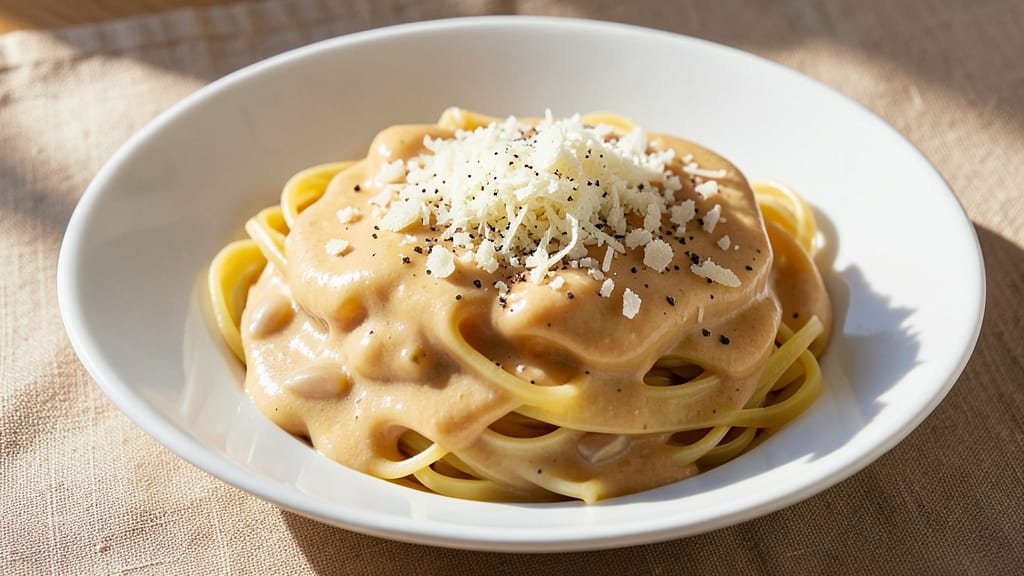
This Alfredo sauce recipe with Parmigiano Reggiano delivers velvety, clump-free perfection that clings to every strand of fettuccine. The secret lies in proper technique—slowly melting butter, whisking continuously, and adding cheese gradually to prevent lumps. I've perfected this method over years of testing, ensuring restaurant-quality results at home without the heavy cream shortcuts that often separate.
The foundation starts with high-quality ingredients: rich butter, full-fat cream, and authentic Parmigiano Reggiano for that signature nutty depth. Garlic adds subtle warmth while nutmeg provides that classic Italian touch.
What sets this apart is the whisking method—cooking the sauce at low heat while constantly whisking creates an emulsified sauce that's impossibly smooth, not grainy or separated.
By the time you pour this over hot pasta, you'll have a sauce that's creamy yet light, with just enough body to coat noodles beautifully. The Parmigiano Reggiano melts completely, creating that signature cheesy richness without being overpowering.
This sauce works equally well on chicken, vegetables, or seafood—its versatility makes it a pantry staple.
For extra depth, consider adding a splash of white wine during cooking or finishing with fresh parsley. The key is patience—rushing leads to lumps, but taking your time guarantees a sauce so good you'll never buy the jarred version again. Let's make this alfredo sauce that shines on any plate.
Ingredients for alfredo sauce recipe with parmigiano reggiano
Nine essential ingredients transform into velvety Alfredo sauce with authentic Italian depth.
| Ingredient | Amount | Notes |
|---|---|---|
| Unsalted Butter 🧈 | ¾ cup | Cold, cubed for gradual melting |
| Heavy Cream 🥛 | 1 ½ cups | Full-fat for optimal richness |
| Parmigiano Reggiano Cheese 🧀 | 1 ½ cups | Freshly grated, block preferred |
| Garlic Cloves 🧄 | 4 cloves | Minced, for aromatic depth |
| Ground Nutmeg 🌿 | ¼ tsp | Freshly grated for authentic flavor |
| Diamond Crystal Kosher Salt 🧂 | ½ tsp | Adjust to taste after sauce forms |
| Fresh White Wine 🍷 | ½ cup | Dry variety, optional for depth |
| Extra-Virgin Olive Oil 🫒 | 2 tbsp | For finishing, enhances silkiness |
| Fresh Parsley 🌿 | ¼ cup | Chopped, for vibrant garnish |
The butter and Parmigiano Reggiano form the sauce's backbone, so quality matters. European-style butter with high fat content (82-86%) melts beautifully without separating, while Parmigiano Reggiano from Italy delivers the signature nutty complexity. For the garlic, freshly minced cloves release more flavor than jarred minced garlic. Nutmeg should be freshly grated—pre-ground loses potency quickly. Whole Foods Market and specialty Italian markets carry the best quality cheese and spices, but even standard grocery stores stock acceptable alternatives if labeled 'Parmigiano-Reggiano' (not 'Parmesan').
No heavy cream? Full-fat coconut cream mimics the richness, though texture differs slightly. Substitute white wine with extra chicken stock for depth without alcohol. For nutmeg, mace at half the amount offers a milder alternative. Olive oil can be swapped for avocado oil if preferred, though it lacks the fruity notes. Fresh parsley can be omitted if unavailable, but dried parsley at one-third the amount works in a pinch. The key substitution is the cheese—Pecorino Romano provides a sharper profile but lacks the same meltability.
Store the sauce in an airtight container with a thin layer of olive oil on top to preserve freshness. It keeps for 5-6 days in the refrigerator, though flavor peaks within 2-3 days. For longer storage, freeze in ice cube trays, then transfer to a bag—thaw portions as needed. Reheat gently on low heat, whisking constantly to restore silkiness. This sauce freezes beautifully, making it ideal for batch preparation. Always reheat to 165°F to ensure safety.
Why You'll Love This Recipe
- Five-Ingredient Magic: That’s it—just butter, cream, real Parmigiano Reggiano, garlic, and a pinch of nutmeg. No fancy techniques, no hidden ingredients, just melt-in-your-mouth richness that somehow feels luxurious without the fuss.
- Nutmeg’s Secret Boost: Honestly, that tiny pinch of ground nutmeg transforms it. It’s not just flavor—it’s warmth, depth, and a little something that makes this sauce taste like it simmered for hours (even when it didn’t).
- Weeknight to Dinner Party: Same sauce, endless uses. Slather it over fettuccine for a quick weeknight dinner, drizzle it on grilled chicken for a fancy-ish guest meal, or toss it with roasted veggies when you’re craving something creamy but not heavy.
- Leftovers That Don’t Suck: Between us, most Alfredo leftovers turn into a greasy mess. Not this one. The heavy cream keeps it silky, and the Parmigiano Reggiano actually improves overnight—so you’ll have a backup sauce ready for whatever comes up. (Yes, even on a Tuesday night.)
Step-by-step instructions for ultra-smooth Parmigiano Reggiano Alfredo sauce
Master this technique and you'll achieve velvety perfection without a single clump.
Melt Butter and Infuse Aromatics
In a medium saucepan over medium-low heat, melt the 0.75 cup unsalted butter until it foams but doesn't brown. Add the 4 cloves minced garlic and cook for 1-2 minutes until fragrant but not colored. Here's the thing—low heat prevents burning while allowing the garlic to develop its signature sweetness.
Stir in the 0.25 tsp ground nutmeg and let it bloom for 30 seconds. The nutmeg's warmth will emerge fully when combined with the cheese later. Keep the heat at medium-low throughout this process—any higher and you risk breaking the sauce's emulsion.
Gradually Incorporate Cheese
Reduce heat to low and begin adding the 1.5 cups freshly grated Parmigiano Reggiano in small increments. I use about ¼ cup at a time, whisking vigorously after each addition until completely dissolved. This gradual approach prevents clumping by allowing the cheese to melt into the fat gradually.
If you see any lumps forming, immediately whisk in 1 tablespoon of heavy cream to break them apart. The key is patience—rushing this step is what causes those dreaded cheese clumps. You'll know it's working when the sauce becomes thick and glossy, with no visible cheese particles.
Build the Cream Base
Once all the cheese is incorporated, pour in the 1.5 cups heavy cream and the 0.5 cup fresh white wine (if using). Increase heat to medium-low and bring to a gentle simmer. Let it cook for 5-7 minutes until it thickens slightly but isn't boiling—you want it to coat the back of a spoon smoothly.
Season with the 0.5 tsp Diamond Crystal kosher salt and taste. The nutmeg's flavor will be subtle but essential—it's what elevates this sauce from ordinary to extraordinary. If the sauce is too thick, whisk in 1-2 tablespoons of warm water to reach your desired consistency.
Finish with Olive Oil for Silkiness
Remove the sauce from heat and stir in the 2 tablespoons extra-virgin olive oil. This final step creates that signature silky texture that sets great Alfredo apart. The oil coats the proteins in the cheese, preventing separation and adding a luxurious mouthfeel.
Garnish with 0.25 cup chopped fresh parsley just before serving. The parsley adds freshness and visual contrast to the rich, creamy sauce. For best results, serve immediately over hot fettuccine or your choice of pasta.
Pro Tips For Making Alfredo Sauce Recipe With Parmigiano Reggiano
- Melt Butter Slowly: Start with low heat—no, really, don’t rush it. Unsalted butter burns faster than you’d think, and once that nutty aroma turns acrid, your sauce is ruined. Let it foam gently, then add garlic when it’s just starting to bubble, not when it’s already golden.
- Grate Your Own Cheese: Pre-shredded Parmigiano Reggiano has anti-caking agents that make Alfredo sauce grainy. Use a microplane or fine grater—yes, it takes 2 minutes—and the sauce will be silky. (I know, I know, but trust the process.)
- Temper the Cream: Warm the heavy cream first—just heat it to body temperature in a separate pot—before adding it to the butter. Cold cream shocks the butter and can cause it to separate. Smooth sauce starts with smooth transitions.
- Nutmeg Last, Less Than You Think: Add ground nutmeg after the sauce is off heat, and start with a pinch—like, a tiny pinch. Too much overpowers the cream’s richness. Taste as you go; you can always add more, but you can’t take it out. (I learned this after making a sauce that tasted like Christmas morning gone wrong.)
Regional styles of this recipe
Classic Roman Style
In Rome, Alfredo sauce is lighter than the American version, using just butter, cream, and cheese without wine. The key difference is the technique: Romans melt butter with a splash of pasta water (about ¼ cup) to emulsify the sauce naturally.
I've found that adding 1 tablespoon of flour to the butter before adding cream creates a smoother base. Serve immediately over tonnarelli or bucatini—thicker noodles hold the sauce better. 🍝
Northern Italian Creaminess
Up north in regions like Lombardy, Alfredo sauce incorporates crème fraîche instead of heavy cream for a tangier, lighter texture. Replace 1 cup of heavy cream with 1 cup crème fraîche and reduce cooking time to 3-4 minutes—it's delicate and separates easily.
Add 1 teaspoon of lemon zest for brightness, which balances the richness. This version pairs perfectly with pappardelle or tagliatelle.
Venetian Wine-Infused Version
Venetian cooks elevate Alfredo with Prosecco instead of white wine—its bubbles create a silky texture. Replace the ½ cup white wine with ½ cup Prosecco and simmer for just 2 minutes to preserve the bubbles' lift.
Finish with 1 teaspoon of honey to counteract acidity. This sauce is ideal for risotto al burro or bigoli pasta—Venice's hearty flat noodles. 🍷
Modern American Twist
The American version you know today was popularized in the 1920s at Alfredo di Roma in Rome (ironically, not originally an Italian dish!). For a richer take, add 2 tablespoons of mascarpone at the end for extra creaminess.
Some chefs also include 1 teaspoon of Dijon mustard to cut through the richness. This style works best with fettuccine or spaghetti—the wider noodles make it feel indulgent. 💛
Lighter Mediterranean Adaptation
For a Mediterranean twist, replace half the cream with Greek yogurt (about ¾ cup) and add 1 teaspoon of dried oregano. This version is tangy and lighter, perfect for summer meals.
Use whole-milk yogurt for creaminess, and finish with 1 tablespoon of pine nuts for crunch. Serve over orzo or farfalle for a refreshing change. 🌿
Nutrition facts
Frequently asked questions
Why does my Alfredo sauce get clumpy even with Parmigiano Reggiano?
The most common cause is adding cheese too quickly or using heat that's too high. Always melt cheese gradually over low heat, whisking constantly in ¼ cup increments. If lumps form, immediately whisk in 1 tablespoon of warm heavy cream to dissolve them. The key is patience—rushing this step creates those dreaded cheese clumps.
Can I make this sauce without heavy cream?
Yes! For a lighter version, replace half the cream with Greek yogurt (about ¾ cup whole-milk yogurt) and add 1 teaspoon of dried oregano for tang. For richness, use crème fraîche instead of heavy cream. The texture will differ slightly, but both alternatives work beautifully. The sauce will be tangier but still creamy.
What's the best pasta to serve with this Parmigiano Reggiano Alfredo?
For classic Italian style, use tonnarelli or bucatini—their thick strands hold the sauce perfectly. American versions pair well with fettuccine or spaghetti. Avoid thin noodles like angel hair, as they'll overcook in the creamy sauce. Cook pasta 1 minute less than package instructions for al dente texture.
How do I store leftovers without ruining the texture?
Store in an airtight container with a thin layer of olive oil on top to preserve freshness. It keeps for 5-6 days in the fridge, though texture peaks within 2-3 days. For freezing, portion into ice cube trays, then transfer to a bag. Thaw overnight in the fridge and reheat gently on low heat, whisking constantly to restore silkiness. Never microwave—it breaks the emulsion.
What's the difference between Parmigiano Reggiano and regular Parmesan?
Parmigiano Reggiano is made from raw milk aged 12+ months in Italy, while most Parmesan uses pasteurized milk and shorter aging. The Italian version has 35% more fat and melts more smoothly, creating that signature velvety texture. For this recipe, use only authentic Parmigiano Reggiano—it's worth the investment for restaurant-quality results. The flavor is richer, nuttier, and less salty.