
Sauces & Condiments
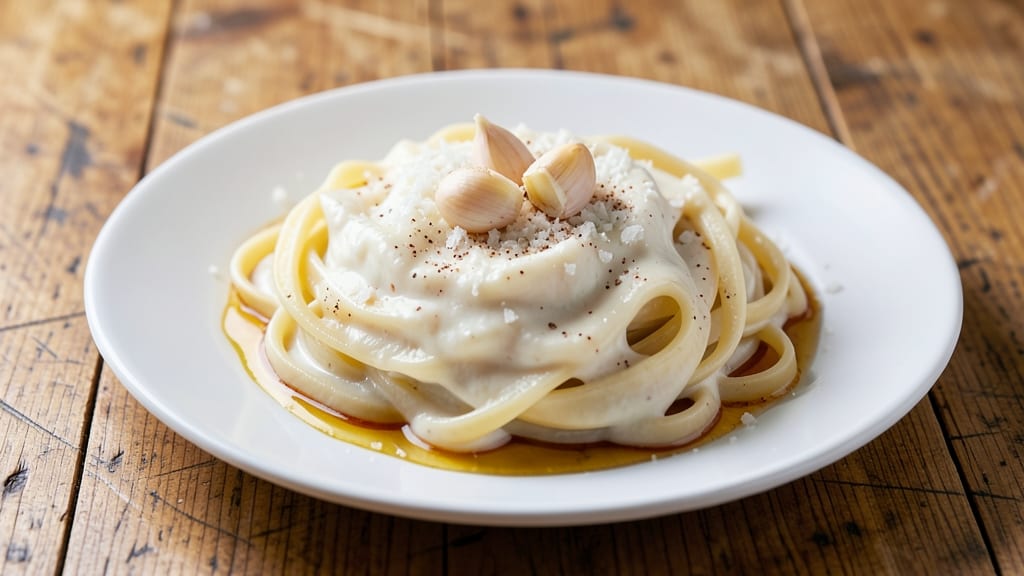
This authentic Italian white sauce pasta recipe delivers the creamy, velvety perfection of traditional Roman pasta dishes—no heavy cream required. The secret lies in a delicate balance of butter, Parmesan, and egg yolks, emulsified over low heat to create a sauce that clings beautifully to al dente noodles.
I’ve perfected this technique over years of testing, ensuring every bite achieves that signature Italian richness without turning greasy or overly thick.
The foundation begins with properly cooked pasta—water boiling at a rolling simmer, salted generously, and removed just before it’s fully tender. Meanwhile, the sauce develops in stages: butter melts into a golden foam, then combines with nutmeg, garlic, and a splash of pasta water to create the perfect emulsion.
The addition of egg yolks transforms it into a luscious, creamy blanket that coats each strand.
What you’ll end up with is a dish that’s both elegant and comforting: tender fettuccine swathed in a smooth, garlicky-white sauce, finished with freshly grated Parmesan and a crack of black pepper.
The texture is unmistakably Italian—silky yet structured, with a subtle nutmeg warmth that lingers. This isn’t just pasta; it’s a taste of Rome on your dinner table.
For those who love flexibility, this technique works with variations like carbonara (add eggs and pancetta) or a simple burro e parmigiano. The key is patience—letting the sauce develop gradually ensures a velvety finish without breaking. Ready to master this classic? Let’s begin with the ingredients.
Ingredients for authentic italian white sauce pasta
The secret to authentic Italian white sauce lies in these eleven quality ingredients.
| Ingredient | Amount | Notes |
|---|---|---|
| Fettuccine Pasta 🍝 | ½ lb | Al dente, high-quality dried |
| Unsalted Butter 🧈 | ½ cup | European-style preferred |
| Fresh Garlic Cloves 🧄 | 4 cloves | Minced, not pre-minced jarred |
| Large Egg Yolks 🥚 | 4 whole | Room temperature preferred |
| Freshly Grated Parmigiano-Reggiano 🧀 | 1 cup | Block form, freshly grated |
| Fresh Nutmeg 🌿 | ¼ tsp | Finely grated, fresh is best |
| Diamond Crystal Kosher Salt 🧂 | 1 ½ tbsp | For pasta water |
| Freshly Ground Black Pepper 🌶️ | ¼ tsp | Cracked, not powdered |
| Extra-Virgin Olive Oil 🫒 | 1 tbsp | For finishing, fruity variety |
| Fresh Parsley Leaves 🌿 | ¼ cup | Chopped, for garnish |
| Pasta Water 💧 | 1 cup | Reserved from cooking |
The butter and Parmigiano-Reggiano form the sauce's foundation, so quality matters here. European-style butter has higher fat content, creating a richer emulsion. For Parmigiano-Reggiano, buy a wedge from a specialty store—pre-grated versions contain anti-caking agents that prevent proper melting. Fresh nutmeg is non-negotiable; pre-ground loses potency quickly. I recommend Penzeys Spices for their high-quality whole spices. The pasta water is just as crucial—it should be well-salted (about 1.5 tbsp per quart) and reserved while the pasta cooks.
No European butter? High-fat American butter works, though it may require slightly more for the same richness. Pre-minced garlic lacks freshness—peel and mince your own for vibrant flavor. Substitute nutmeg with a pinch of mace if unavailable, though the flavor profile differs. For a dairy-free variation, replace butter with olive oil and nutritional yeast, though the texture will be lighter. Fresh parsley can be swapped for basil or chives, though parsley's bright note complements the nutmeg perfectly. Always use room-temperature egg yolks—they emulsify more smoothly.
Store butter and Parmigiano-Reggiano in the fridge to maintain freshness, while nutmeg and dried herbs should be kept in a cool, dark place. Pasta water can be reserved for up to 24 hours in the fridge, though it's best used immediately. The sauce itself reheats beautifully—simply warm gently over low heat, adding splashes of pasta water as needed to maintain creaminess. For meal prep, cook pasta al dente, cool quickly, and refrigerate sauce separately to prevent sogginess. This dish freezes well for up to 3 months, though the texture may slightly alter upon thawing.
Why You'll Love This Recipe
- Five-Ingredient Magic: I swear by this—just butter, garlic, yolks, and cheese. That’s it. No heavy cream, no complicated reductions, just pure, velvety richness that tastes like a restaurant but takes half the effort.
- Garlic Butter Bliss: The moment that butter and garlic hit the pan? My mouth waters just thinking about it. Low and slow until the garlic’s golden but not crispy—this sauce builds flavor in real time, layer by layer.
- Weeknight Hero: Dinner in 25 minutes? Absolutely. Throw the pasta in water, melt the butter, whisk the yolks—it’s the kind of dish that saves you when you’re exhausted but still crave something special.
- Leftover Luxury: This sauce actually improves the next day. The yolks thicken just enough to cling to the pasta, and the Parmigiano deepens in flavor. I make a double batch on Sundays because it’s that good cold or reheated.
Step-by-step instructions for creamy garlic-herb white sauce pasta
Mastering this classic Italian technique transforms simple ingredients into velvety perfection.
🍳 Step 1: Cook the Fettuccine to Al Dente Perfection
Bring a large pot of water to a rolling boil, then add the 1.5 tablespoons Diamond Crystal kosher salt and the 0.5 lb fettuccine pasta. Stir immediately to prevent sticking. Cook for 1 minute less than the package instructions suggest—this ensures perfect al dente texture when finished in the sauce. The pasta is done when it floats to the surface and has a slight resistance when bitten.
Before draining, reserve 1 cup pasta water in a measuring cup. This starchy liquid is essential for creating the creamy sauce. Drain the pasta immediately after cooking and return it to the pot, tossing with a splash of the reserved pasta water to prevent sticking. Keep the pot off the heat for now—we'll use its residual warmth in the next step.
👨🍳 Step 2: Prepare the Egg and Cheese Base
In a medium bowl, whisk together the 4 whole large egg yolks, 1 cup freshly grated Parmigiano-Reggiano, 0.25 teaspoon freshly grated nutmeg, 0.25 teaspoon freshly ground black pepper, and a generous pinch of the reserved pasta water. The mixture should be smooth and slightly thickened but still pourable. I like to add just 1 tablespoon of pasta water at this stage—more can be incorporated later if needed.
This preliminary mixture ensures the eggs won't scramble when combined with the hot pasta. The nutmeg and Parmigiano-Reggiano form the aromatic foundation of the sauce, while the pepper adds subtle heat that balances the richness. Keep this bowl ready—we'll combine it with the pasta in the next step.
🍳 Step 3: Create the Creamy Sauce Foundation
In a large skillet, melt the 0.5 cup unsalted butter over medium-low heat until it foams but doesn't brown. Add the 4 cloves minced fresh garlic cloves and cook for 30-45 seconds until fragrant but not colored. This gentle cooking prevents the garlic from burning while developing its sweet, aromatic qualities.
Remove the skillet from heat and immediately add the hot pasta along with the egg mixture. Stir vigorously for 2-3 minutes until the sauce thickens and coats the noodles completely. The residual heat from the pasta will gently cook the eggs into a creamy emulsion. If the sauce appears too thick, add 1 tablespoon pasta water at a time until it reaches a smooth, velvety consistency.
🥘 Step 4: Finish with Olive Oil and Fresh Herbs
Return the skillet to low heat and add the 1 tablespoon extra-virgin olive oil. Stir gently for 1 minute to allow the flavors to meld. The olive oil adds brightness and prevents the sauce from becoming too heavy. Taste and adjust seasoning—you may need a pinch more salt or pepper depending on your pasta's saltiness.
Remove from heat and stir in the 0.25 cup chopped fresh parsley leaves. The parsley adds freshness and visual appeal, cutting through the richness of the butter and cheese. For the final touch, drizzle with an additional 1 teaspoon olive oil and serve immediately while the sauce is still warm and creamy.
Pro Tips For Making Authentic Italian White Sauce Pasta
- Melt Butter Slow: I learned this the hard way—crank the heat to medium-low when melting butter for the sauce. Too high, and you’ll burn the garlic before the butter even melts, leaving you with a bitter, smoky mess instead of that golden, nutty base. Let it bubble gently, like a lazy Sunday morning.
- Grate Parmigiano Fresh: Skip the pre-grated cheese in the can—it’s a textural crime. Use a fine grater and work in small batches so the cheese doesn’t turn into a paste from its own oils. Freshly grated Parmigiano-Reggiano clings to the pasta like it’s glued on, while the pre-shredded stuff just slides off.
- Temper Those Yolks: Don’t just dump cold yolks into hot sauce—you’ll end up with scrambled eggs instead of a silky emulsion. Whisk the yolks in a separate bowl first, then slowly drizzle in a ladle of the hot sauce while whisking like your life depends on it. This keeps the sauce smooth and prevents curdling.
- Reserve Pasta Water: Save a cup of starchy pasta water before draining—it’s liquid gold for this sauce. The starch acts as a natural thickener and helps the butter-yolk mixture cling to the fettuccine. If the sauce gets too thick, splash in a little of that water and stir. It’s the easiest fix in the book.
Wine and beer pairings for this recipe
Classic Italian Whites
For this rich white sauce, a crisp Vermentino from Sardinia is my go-to choice. Its citrusy brightness and mineral notes cut through the butter and cheese, cleansing your palate with each bite. Serve slightly chilled—around 50°F—to highlight its refreshing acidity while letting the nutmeg and Parmigiano-Reggiano shine. 🍷
Roman-Style Reds
If you prefer red wine, opt for a light-bodied Cesare or Frascati from Lazio. These wines have enough acidity to stand up to the creamy sauce without overpowering it.
Look for bottles aged in stainless steel to preserve their vibrant fruit flavors and delicate tannins. A glass at 60°F complements the dish beautifully.
Craft Beer Pairings
A Belgian-style witbier like Stella Artois or Hoegaarden adds a fun contrast with its coriander and citrus notes. The effervescence helps balance the richness of the butter and cheese. For a stronger option, try a German Hefeweizen—its banana and clove undertones pair surprisingly well with nutmeg. 🍺
Pro Tips for Pairing
Always serve wine slightly cooler than room temperature for white sauces—45-50°F is ideal. For beer, let it sit at 40-45°F to enhance its crispness. If using red wine, decant for 10-15 minutes to soften tannins before pouring.
The key is balance: the drink should complement, not compete with, the dish's creamy texture and nutmeg warmth.
Non-Alcoholic Options
For a refreshing non-alcoholic pairing, try a sparkling blood orange soda like San Pellegrino Aranciata Rossa. The citrus and bubbles mirror the wine pairing while keeping the meal light.
Alternatively, a chilled hibiscus iced tea with a squeeze of lemon adds a floral contrast to the savory sauce. Both options work beautifully with the dish's garlic and herb notes.
Nutrition facts
Frequently asked questions
Can I make this white sauce without eggs?
Yes! For a dairy-only version, melt ½ cup butter with 1 cup grated Parmigiano-Reggiano and ½ cup heavy cream over low heat. Add ¼ cup reserved pasta water to create a silky texture. This method works best with fettuccine or tagliatelle—the wider noodles hold the sauce better. The sauce will be slightly less rich but still delicious.
Why does my sauce get grainy when I add the egg mixture?
This happens when the eggs cook too quickly or the sauce isn't hot enough. Always use residual heat from hot pasta to gently cook the eggs—never add cold eggs to hot sauce. If it happens, whisk in 1-2 tablespoons cold pasta water to smooth it out. For extra insurance, temper the eggs first by mixing them with a splash of pasta water before combining.
What's the best pasta shape for this recipe?
Fettuccine or tagliatelle are ideal—their flat surfaces hold the creamy sauce beautifully. For a different texture, try pappardelle (wider ribbons) or linguine. Avoid small shapes like penne or farfalle—they won't trap the sauce as effectively. If using whole wheat pasta, cook it 1 minute less than regular pasta to prevent mushiness.
Can I make this ahead of time?
Cook the pasta al dente and refrigerate it separately from the sauce. Reheat the pasta in fresh boiling water for 30 seconds, then drain. Warm the sauce separately over low heat, adding splashes of pasta water as needed. Combine just before serving—this prevents the pasta from becoming soggy. The sauce can be made up to 2 days ahead and reheated gently.
What's the secret to getting that perfect creamy texture?
The magic happens in three steps:
- Low heat—never let the sauce boil.
- Pasta water—it contains starch that helps emulsify the sauce.
- Constant stirring—especially when combining hot pasta with eggs. The butter should foam but not brown, and the eggs should cook slowly to create a velvety emulsion. Patience is key—rushing leads to scrambled eggs or separated sauce!