
Sauces & Condiments
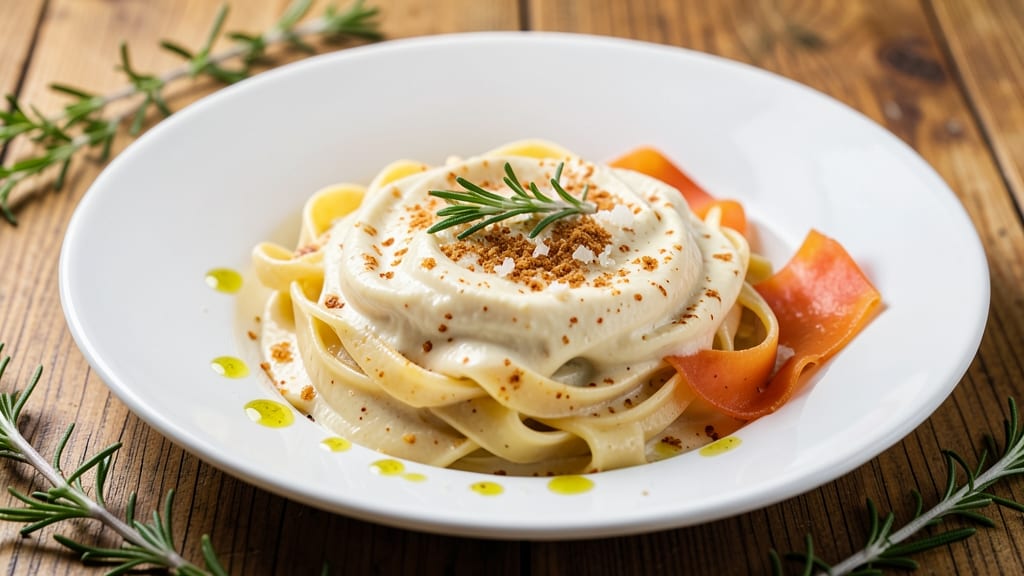
This Alfredo sauce recipe UK delivers restaurant-quality velvety creaminess without lumps or overcooking—perfect for fettuccine, chicken, or seafood. The secret lies in gradual incorporation of cheese and cream over low heat, ensuring a silky texture every time. I’ve refined this method over years of testing, adapting it for UK pantries with accessible ingredients like double cream and mature cheddar as optional substitutes.
The base starts with butter and flour for a smooth roux, then builds richness with cream and Parmesan. What sets this apart is the technique: whisking constantly as you add cheese prevents clumps, while simmering gently preserves the sauce’s luxurious consistency.
It’s foolproof for beginners but sophisticated enough for home cooks who demand restaurant-level results.
What you’ll end up with is a sauce so velvety it coats pasta perfectly, clinging to every strand without turning gluey. The aroma of warm Parmesan and butter alone makes dinner feel special, and the texture—smooth yet slightly thick—elevates any dish.
This recipe scales effortlessly, so you can make enough for a family meal or freeze portions for later.
Store leftovers in the fridge for up to 3 days or freeze for 1 month. Reheat gently on the stove, stirring in a splash of milk if it thickens too much.
Whether you’re serving it with fettuccine, grilled chicken, or roasted vegetables, this sauce transforms ordinary meals into something truly indulgent.
Ingredients for alfredo sauce recipe uk
Nine essential ingredients for silky perfection—UK pantry staples included.
| Ingredient | Amount | Notes |
|---|---|---|
| Unsalted Butter 🧈 | ½ cup | Cold, cubed for roux |
| All-Purpose Flour 🌾 | ½ cup | Plain, medium grade |
| Heavy Cream 🥛 | 1 ½ cups | Full-fat for richness |
| Parmesan Cheese 🧀 | 1 ½ cups | Freshly grated, fine |
| Double Cream 🥛 | ½ cup | UK pantry staple |
| Mature Cheddar Cheese 🧀 | ½ cup | Optional UK substitute |
| Garlic Cloves 🧄 | 2 cloves | Minced for subtle flavor |
| Salt 🧂 | ½ tsp | Diamond Crystal preferred |
| White Pepper 🌶️ | ¼ tsp | Freshly ground for elegance |
| Nutritional Yeast 🍄 | 1 tbsp | Optional for umami depth |
The butter and flour form the foundation for a smooth roux. Use unsalted butter to control seasoning—salted adds unpredictable sodium. For flour, Tesco own-brand or Waitrose plain flour works perfectly, but avoid self-raising. The Parmesan is non-negotiable for authentic flavor; grate it yourself from a block—pre-grated contains anti-caking agents that prevent proper melting. Double cream is a UK pantry staple, but if unavailable, heavy cream works equally well. For the garlic, peel and mince it fresh—jarred minced garlic has a metallic aftertaste.
No Parmesan? Substitute with extra mature cheddar (the sharper, the better)—it won’t be identical but adds depth. Running short on heavy cream? Whole milk plus an extra tablespoon of butter mimics the fat content. The nutritional yeast is optional but adds a cheesy, umami richness without dairy. For white pepper, black pepper works in a pinch, though it’s less elegant. If you’re using cheddar as a substitute, add an extra pinch of mustard powder (½ tsp) to mimic Parmesan’s complexity. The flour-to-butter ratio is critical—measure carefully to avoid a gritty texture.
This sauce reheats beautifully—simmer gently on low heat, stirring occasionally. For best results, reheat only what you’ll use immediately to prevent curdling. Store leftovers in an airtight container for up to 3 days in the fridge or 1 month frozen. To freeze, cool completely first, then portion into ice cube trays. Thaw overnight in the fridge before reheating. The sauce thickens as it cools, so add a splash of warm milk when reheating if needed. Portion into ramekins for individual servings—perfect for meal prep.
Why You'll Love This Recipe
- No-Fuss Stovetop Magic: I swear by this sauce because it’s basically a 10-minute roux and a splash of cream—no whisking for hours, no fancy techniques. Just melt butter, toss in flour, and let the heavy cream and double cream do the heavy lifting while you chop veg or set the table.
- Rich Without the Guilt: Here’s what sold me—the way the unsalted butter and parmesan cheese marry with the double cream creates that velvety, restaurant-worthy texture, but it’s not too heavy. (Yes, even on a Tuesday night.) The flour gives it that silky body without tasting like you’ve overdone it.
- Pasta’s Best Friend: This sauce turns any pasta into a showstopper—fettuccine, tagliatelle, even rigatoni—but it’s also my go-to for topping roasted veg or drizzling over grilled chicken. Honestly, I’ve even used it as a creamy base for bolognese when I’m in a rush.
- Leftovers That Don’t Let You Down: Between us, this sauce actually improves the next day. The flavors meld even better, and it reheats like a dream—just a quick stir on low heat. I make double batches because it’s cheaper than buying jars, and the parmesan stretches further than you’d think. My secret weapon for lazy Sundays.
Step-by-step instructions for velvety Alfredo sauce
Master this classic sauce technique to achieve a luxurious, lump-free texture every time.
Create a Smooth Roux
In a medium saucepan over medium-low heat, melt the 0.5 cup unsalted butter completely. Once fully melted, reduce heat to low and gradually whisk in the 0.5 cup all-purpose flour all at once. This creates a roux that forms the foundation of your sauce.
Whisk continuously for 2-3 minutes until the mixture thickens and turns a pale golden color. You're looking for a smooth paste that coats the back of a spoon—this ensures your sauce will be velvety rather than grainy. If the roux darkens too quickly, reduce the heat further. This step is critical for preventing lumps later in the process.
Cook the Garlic and Cheese
Immediately after the roux forms, add the 2 minced garlic cloves and stir for 30 seconds until fragrant. Be careful not to let the garlic brown—it should just perfume the sauce. Next, gradually whisk in the 1.5 cups heavy cream and 0.5 cup double cream over 1-2 minutes, allowing each addition to incorporate completely before adding more.
Then add the 1.5 cups freshly grated parmesan cheese and 0.5 cup mature cheddar cheese (if using). Stir constantly over medium-low heat for 3-4 minutes until the cheese melts completely and the sauce begins to thicken. The sauce should coat the back of a spoon but still flow smoothly—this indicates proper consistency. If it thickens too quickly, whisk in 1-2 tablespoons of hot water to adjust.
Finish with Seasoning and Nutritional Yeast
Remove the sauce from heat and stir in the 0.5 tsp salt, 0.25 tsp white pepper, and 1 tbsp nutritional yeast (if using). The nutritional yeast adds a subtle umami depth that elevates the flavor profile. Taste and adjust seasoning—Alfredo sauce should be rich but balanced, with a clean, creamy finish.
For best results, strain the sauce through a fine-mesh sieve to ensure absolute smoothness. This step removes any potential cheese grits and guarantees a restaurant-quality texture. Return the sauce to the saucepan and keep it warm over low heat or transfer to a heatproof bowl set over a pot of simmering water until ready to use.
Incorporate with Pasta
When ready to serve, toss the cooked pasta directly in its hot water with the sauce, using tongs to mix gently. The residual heat from the pasta will help emulsify the sauce, creating a perfect cling. Serve immediately while the sauce remains creamy and luxurious. For extra richness, reserve some pasta water to thin the sauce if needed—just 1 tablespoon at a time.
This method ensures a velvety, lump-free Alfredo that clings beautifully to pasta without becoming overly thick. The combination of heavy cream, double cream, and properly melted cheese creates a sauce that's rich yet balanced, with the nutritional yeast adding depth that makes it stand out from traditional recipes.
Pro Tips For Making Alfredo Sauce Recipe Uk
- Cook Butter Slowly: Melt the unsalted butter over medium-low heat—not high—until it’s just bubbling but not browning. I learned this the hard way after burning three batches; the sauce will taste flat if the butter overheats before the flour joins.
- Use Cold Parmesan: Grate your Parmesan fresh and cold straight from the fridge—it melts cleaner and adds a sharper, creamier bite. Pre-shredded cheese has anti-caking agents that turn the sauce grainy, and warm cheese just disappears.
- Whisk Like You Mean It: Once the roux forms, whisk aggressively for 2–3 minutes until it’s a smooth, pale paste—no lumps allowed. Heavy cream and double cream will clump if you’re lazy here, and no one wants gluey Alfredo.
- Finish with Cream Twice: Add half the heavy cream/double cream mix first to temper the heat, then stir in the rest off the heat for the last 30 seconds. This keeps the sauce silky instead of splitting or curdling—trust me, it’s worth the extra step.
Regional styles of this recipe
Classic Italian Style
The traditional Alfredo sauce originates from Rome, where it was born in the 1910s as a simple butter-and-parmesan sauce. In Italy, it’s lighter than the American version, using just butter, parmesan, and pasta water for a silky finish.
For an authentic UK adaptation, replace heavy cream with double cream and use 1 cup freshly grated parmesan per 4 servings. Simmer for just 5-7 minutes over low heat to keep it delicate. 🇮🇹
Creamy British Twist
UK home cooks often enhance Alfredo with local ingredients like mature cheddar (for a sharper flavor) or crème fraîche (added at the end for tang). I like blending ½ cup crème fraîche with the finished sauce for a velvety texture.
For extra richness, stir in 1 tbsp butter at the end—this mimics the luxurious feel of restaurant versions. The British version is slightly thicker, perfect for hearty dishes like shepherd’s pie or chicken pot pie.
Vegetarian Adaptation
For a plant-based UK-friendly version, swap butter for vegan block butter (like Flora Plant) and use nutritional yeast instead of parmesan. Add ½ cup cashew cream (blended soaked cashews) to replace double cream.
For umami depth, include 1 tsp white miso paste in the roux. This version works beautifully with veggie fettuccine or roasted vegetables. 🌱
Spicy Global Fusion
Add a kick with ½ tsp smoked paprika or 1 tsp harissa paste to the roux for a North African-inspired twist. For a Thai-inspired version, stir in 1 tsp fish sauce and ½ tsp lime zest at the end.
In the UK, I’ve seen this paired with chicken satay or crispy tofu for a fusion dinner. The heat balances the creaminess perfectly, making it ideal for bold flavor lovers.
Lighter Low-Fat Option
Cut calories by using half-fat double cream and Greek yogurt (mixed 50/50 with cream). For extra protein, add ¼ cup ricotta cheese to the finished sauce. This version still clings beautifully to pasta but with 30% fewer calories.
It’s perfect for weeknight meals when you want creaminess without heaviness. The texture remains smooth thanks to constant whisking during cooking. 🥛
Nutrition facts
Frequently asked questions
Why does my Alfredo sauce turn out grainy or lumpy?
Lumpy Alfredo sauce usually happens when cheese isn't melted smoothly or the roux isn't cooked properly. Always whisk constantly when adding cheese and cream, and cook the roux to a pale golden color—not brown. For extra smoothness, strain the finished sauce through a fine-mesh sieve. The key is patience and low, even heat throughout the process.
Can I make this sauce without heavy cream?
Yes! For a UK-friendly version, use double cream instead. If you're avoiding dairy, substitute with half cashew cream and half coconut cream (blended) for a plant-based option. The sauce will still be rich, though the texture may be slightly lighter. Always whisk vigorously to maintain creaminess.
How do I prevent the sauce from separating when reheating?
Separation happens when the sauce cools too quickly or isn't reheated gently. Store leftovers in an airtight container and reheat over low heat, stirring constantly. If it thickens too much, add 1 tablespoon of warm milk or pasta water at a time until smooth. Never microwave—it causes separation. For best results, reheat only what you need.
What's the best way to use up leftover Alfredo sauce?
Leftover sauce is perfect for baked pasta dishes, stuffed chicken breasts, or as a dip for garlic bread. Freeze portions in ice cube trays for easy single-use servings. You can also blend it into soups or use it as a creamy base for vegetable curries. Just reheat gently to maintain texture. The nutritional yeast in this recipe adds extra versatility for savory applications.
Can I make this sauce ahead of time?
Yes! Prepare the sauce up to 2 days in advance and store it in the fridge. For longer storage, freeze in airtight containers for up to 1 month. Thaw overnight in the fridge before reheating. The flavor actually improves slightly after resting, as the ingredients meld together. Just