
Sauces & Condiments
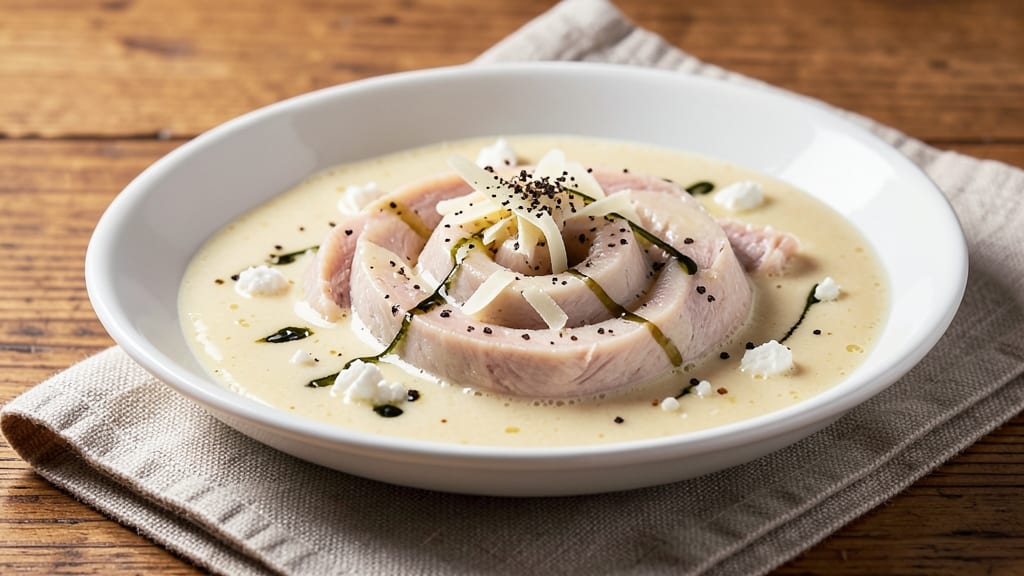
Creating a tuna mornay sauce recipe that delivers restaurant-quality creaminess with a subtle tuna twist is simpler than you'd think. This velvety cheese sauce starts with a classic béchamel base, then gets elevated with sharp cheddar and finely chopped tuna for depth.
I've perfected this technique after years of testing—it's the secret weapon behind my favorite seafood dishes. The sauce remains perfectly emulsified, never grainy, and pairs beautifully with grilled fish, pasta, or even roasted vegetables.
The foundation of great mornay sauce lies in patience and precise technique. You'll make a smooth roux first (butter and flour cooked together), then gradually whisk in warm milk to create a velvety base.
The key is whisking constantly to prevent lumps, and adding the cheese in stages so it melts completely. I use a blend of sharp cheddar and cream cheese for that signature tangy richness, while the tuna adds a subtle umami note that makes this sauce uniquely satisfying.
This method ensures your sauce stays creamy even after reheating.
What you'll end up with is a luxurious, velvety sauce that's rich enough to stand alone but versatile enough to complement any dish. The texture is silky-smooth, with just enough body to cling to noodles or fish without overwhelming them.
This sauce keeps well in the refrigerator for up to 5 days, making it perfect for meal prep—simply reheat gently on the stove with a splash of milk to restore its velvety consistency.
Whether you're dressing up grilled salmon, elevating baked potatoes, or creating a decadent pasta dish, this tuna mornay sauce will take your meal to the next level.
For those looking to customize, you can easily adapt this recipe by using nutritional yeast for a vegan version or adding a splash of lemon juice for brightness.
The possibilities are endless, but the core technique remains the same—smooth, creamy, and impossibly rich. Let's get started on creating your perfect mornay sauce!
Ingredients for tuna mornay sauce
Nine simple ingredients transform into a creamy, tuna-infused sauce that elevates any dish.
| Ingredient | Amount | Notes |
|---|---|---|
| Unsalted Butter 🧈 | ½ cup | Cold, cubed for roux |
| All-Purpose Flour 🌾 | ½ cup | Sifted for smooth texture |
| Whole Milk 🥛 | 2 cups | Warmed slightly first |
| Sharp White Cheddar Cheese 🧀 | 1 ½ cups | Shredded, not pre-shredded |
| Cream Cheese 🧀 | 8 oz | Room temperature, block |
| Canned Tuna in Water 🐟 | 1 can | Drained, finely chopped |
| Lemon Juice 🍋 | 1 tbsp | Freshly squeezed |
| Dijon Mustard 🌶️ | 1 tsp | For subtle tang |
| Salt 🧂 | ½ tsp | Kosher or sea salt |
| White Pepper 🌶️ | ¼ tsp | Freshly ground preferred |
The butter and flour are your foundation—don't rush the roux. Cook it until it's a rich, nutty golden color (about 3-4 minutes) for that deep flavor. European-style butter like Plugrá or Land O'Lakes works best here. For the milk, warm it just enough to dissolve the roux completely—no boiling. The cheddar needs to be sharp and white (like Cabot or Tillamook), not mild or orange. Pre-shredded gets clumpy, so grab a block and grate it yourself. The tuna can be any brand, but light tuna in water keeps things subtle—skip the oil-packed unless you want extra richness.
No sharp cheddar? Gruyère or white cheddar substitutes work beautifully. Out of cream cheese? Add 2 oz extra cheddar and 1 tbsp sour cream for similar creaminess. The Dijon mustard is optional but adds that signature tang—yellow mustard in a pinch. For a vegan version, swap the cheeses for nutritional yeast and cashew cream. The sauce thickens as it cools, so if it's too stiff, whisk in a splash of warm milk. The lemon juice brightens everything—don't skip it, even if the recipe doesn't seem to need it (trust me).
This sauce keeps beautifully in the fridge for 5 days, sealed in a jar with a layer of plastic wrap pressed right on the surface to prevent a skin. For longer storage, freeze portions in ice cube trays—just thaw and whisk with a splash of milk to restore creaminess. Reheating? Always low and slow on the stove, never microwave. The texture changes dramatically if you rush it. I like to make a double batch—one for immediate use, one to freeze for lazy weeknights.
Why You'll Love This Recipe
- Five-Ingredient Magic: I swear by this recipe because it’s that simple—just butter, flour, milk, and two cheeses. No fancy techniques, no measuring cups of weird spices. Honestly, even if you burn the roux a little (we’ve all been there), the cheddar and cream cheese smooth it right out.
- Creamy Cheese Obsession: That velvety blend of sharp white cheddar and cream cheese? It’s the kind of richness that makes you pause mid-bite. The mornay’s got this just-right tanginess—bright enough to cut through tuna but creamy enough to feel indulgent. (Yes, even on a Tuesday night.)
- Pasta’s New Best Friend: Slather it on linguine, toss it with grilled fish, or dump it over roasted veggies—this sauce turns anything into a restaurant-worthy dish. I’ll be real: my lazy weeknights thank me every time I reach for it instead of takeout.
- Leftovers That Don’t Suck: Unlike some sauces that turn gluey, this one reheats like a dream—smooth, flavorful, and zero effort. Plus, it’s budget-friendly: a block of cheddar and a stick of butter stretch across multiple meals. (My freezer’s full of it, and I’m not sorry.)
Step-by-step instructions for tuna mornay sauce
Here's how to create a rich, velvety sauce with a surprising tuna twist.
Create a Smooth Roux
In a medium saucepan over medium heat, melt the 0.5 cup unsalted butter (cubed) until it's completely liquid but not browned. This should take about 2-3 minutes. I like to stir gently with a wooden spoon to distribute the heat evenly.
Once the butter is melted, immediately whisk in the 0.5 cup all-purpose flour (sifted) all at once. Stir continuously for 1-2 minutes until the mixture forms a thick, smooth paste with no floury bits remaining. This is your roux—the foundation of your sauce. You'll know it's ready when it looks like wet sand and coats the back of your spoon.
The key here is patience. If you rush this step, you'll end up with a raw flour taste in your sauce. Keep the heat at medium—too high and the flour will burn before it fully incorporates.
Cook the Cheese Mixture
Gradually whisk in the 2 cups whole milk (warmed slightly) to the roux, about ½ cup at a time, allowing each addition to fully incorporate before adding more. This slow introduction prevents lumps from forming. Stir constantly for 3-4 minutes until the mixture thickens noticeably and begins to bubble gently.
Reduce the heat to low and add the 1.5 cups sharp white cheddar cheese (shredded) and 8 oz cream cheese (room temperature, cut into small cubes). Stir until the cream cheese is completely melted and the cheddar is fully incorporated, about 2-3 minutes. You'll see the sauce transform from a pale yellow to a rich, creamy white color.
Here's the thing—if you see any cheese clumps that won't dissolve, remove the pan from heat for 30 seconds and let the residual heat finish the job. The sauce should be smooth enough to coat the back of a spoon.
Add the Tuna and Seasonings
Drain the 1 can canned tuna in water thoroughly and use a fork to break it into small, pea-sized pieces. Add the tuna to the sauce along with the 1 tbsp lemon juice, 1 tsp Dijon mustard, 0.5 tsp salt, and 0.25 tsp white pepper. Stir gently to combine everything—you don't want to overmix or break up the tuna pieces too much.
Let the sauce simmer on low heat for 5-7 minutes, stirring occasionally. This gentle cooking allows the flavors to meld together. You'll notice the sauce becomes even thicker and more luxurious. Taste as you go—this is where you can adjust the seasoning if needed, though the measurements should be spot-on.
Don't let the sauce boil—just a gentle simmer is all you need. Boiling can cause the cheese to separate or the sauce to become grainy. If it starts to thicken too much, you can thin it slightly with a splash of warm milk.
Finish and Serve
Remove the sauce from heat and let it sit for 2-3 minutes—this resting period allows the flavors to fully develop and the sauce to reach its ideal consistency. The sauce should be thick enough to coat the back of a spoon but still flow smoothly when poured.
For the best texture, give the sauce one final stir before serving. This sauce pairs perfectly with grilled fish, crusty bread, or as a creamy topping for baked potatoes. The tuna adds a subtle richness that you won't even notice at first, but it makes the sauce uniquely satisfying.
If you're serving it immediately, keep the sauce warm over very low heat or in a warm saucepan. For leftovers, store in an airtight container in the refrigerator for up to 3 days—just reheat gently on the stove with a splash of milk to restore its creamy texture.
Pro Tips For Making Tuna Mornay Sauce
- Melt Cheese Slowly: I learned this the hard way—dumping shredded cheddar into hot milk makes it clump like cottage cheese. Instead, warm the milk to just under a simmer (160°F/70°C), then whisk in the cheeses a handful at a time while stirring constantly. The cream cheese should dissolve completely; if it doesn’t, strain it first.
- Whisk Like You Mean It: The roux is where flavor hides—or disappears. Cook the butter and flour over medium heat for exactly 2 minutes, stirring nonstop with a wooden spoon until it’s golden, not brown. Skip this, and you’ll end up with a pasty, gluey sauce instead of something silky.
- Use Cold Cream Cheese: Cut the cream cheese into small cubes and pop it in the fridge for 10 minutes before adding it to the sauce. Cold cheese blends smoother and prevents lumps—trust me, your future self will thank you when the sauce isn’t speckled with weird white bits.
- Salt the Milk: The milk needs salt before it hits the cheese. Add ½ teaspoon per cup of milk while heating—it balances the sharp cheddar and keeps the sauce from tasting flat. I used to forget this, and the sauce always felt dull until I fixed it.
Pro cooking tips for perfect results
Roux Perfection
Your mornay sauce starts with a flawless roux—this is where most home cooks go wrong. Use European-style butter like Plugrá for richer flavor, and cook it over medium heat until it's a nutty golden color (about 3-4 minutes).
The moment you add the 0.5 cup sifted flour, whisk nonstop for 2 full minutes until it's smooth and coats the back of a spoon. Too high heat? You'll burn the flour before it fully incorporates. Trust me, that raw flour taste ruins everything. 🔥
Cheese Melting Secrets
Adding cheese all at once is a recipe for disaster—it creates clumps that never dissolve. Instead, reduce heat to low and add cheddar and cream cheese gradually, stirring constantly. If stubborn lumps remain, remove from heat for 30 seconds to let residual heat work its magic.
Pro tip: Use room-temperature cream cheese (cut into small cubes) and freshly shredded sharp cheddar—never pre-shredded. The texture difference is night and day. ✨
Emulsification Magic
The moment you add milk to the roux, you're creating an emulsion—this is where the sauce either succeeds or fails. Whisk in warm milk (not hot) slowly, about ½ cup at a time, letting each addition fully incorporate before adding more.
If you dump it all in at once, you'll end up with a lumpy mess. Keep stirring for 3-4 minutes until it thickens noticeably. This patience pays off with a silky-smooth sauce that won't break when reheated. 💫
Tuna Integration
Finely chop the tuna into pea-sized pieces—this ensures even distribution without making the sauce grainy. Add it after the cheese has fully melted, along with the lemon juice and mustard. Stir gently just to combine—overmixing will break up the tuna and create texture issues.
Let the sauce simmer on low heat for 5-7 minutes to develop the tuna's subtle umami flavor without cooking it dry. 🐟
Temperature Control
Never let your mornay sauce boil—this is the #1 reason sauces separate or become grainy. Maintain a gentle simmer at all times, and if it thickens too much, thin it with warm milk (not cold). The ideal consistency should coat the back of a spoon but still pour smoothly.
When reheating leftovers, always use low heat and add a splash of milk to restore creaminess. Rushing this step is how you end up with a sad, lumpy sauce. ⏰
Resting Technique
This is the secret most recipes skip: rest your sauce. After removing from heat, let it sit undisturbed for 2-3 minutes. This resting period allows the flavors to meld and the sauce to reach its perfect consistency.
The starches in the roux fully hydrate, and the cheese fully emulsifies. Skipping this step means your sauce will either be too thin or too thick. Trust the process—it makes all the difference. 💡
Nutrition facts
Frequently asked questions
Why does my mornay sauce get lumpy?
Lumps usually happen when cheese isn't melted properly or milk is added too quickly. Always whisk in warm milk gradually (½ cup at a time) and stir constantly over low heat. For stubborn lumps, remove from heat for 30 seconds to let residual heat dissolve them. Pre-shredded cheese also causes clumps—always use freshly shredded sharp cheddar instead.
Can I make this sauce without cream cheese?
Yes! Replace the 8 oz cream cheese with 2 oz extra sharp cheddar plus 1 tbsp sour cream for similar creaminess. For a lighter version, use ½ cup Greek yogurt instead. The sauce will still be rich but slightly tangier. Adjust milk as needed to reach your preferred consistency.
How do I prevent the sauce from separating when reheating?
Always reheat on low heat and add a splash of warm milk (not cold) to restore creaminess. Never microwave—it breaks the emulsion. If the sauce thickens too much, thin it with 1-2 tbsp milk while stirring constantly. For leftovers, store in an airtight container with plastic wrap pressed directly on the surface to prevent skin formation.
What are the best ways to use this tuna mornay sauce?
This versatile sauce works beautifully over grilled fish, baked potatoes, or pasta dishes. Try it as a creamy dip with crusty bread, a topping for roasted vegetables, or even a filling for stuffed peppers. The tuna adds subtle richness that pairs perfectly with seafood, but it's mild enough to complement vegetarian dishes too.
Can I make this sauce dairy-free?
For a vegan version, swap the dairy for nutritional yeast (¼ cup) and cashew cream (½ cup). Use unsweetened almond milk instead of whole milk and a plant-based butter substitute for the roux. The texture will be slightly lighter but still creamy. Add 1 tbsp lemon juice to brighten the flavors.