
Main Courses
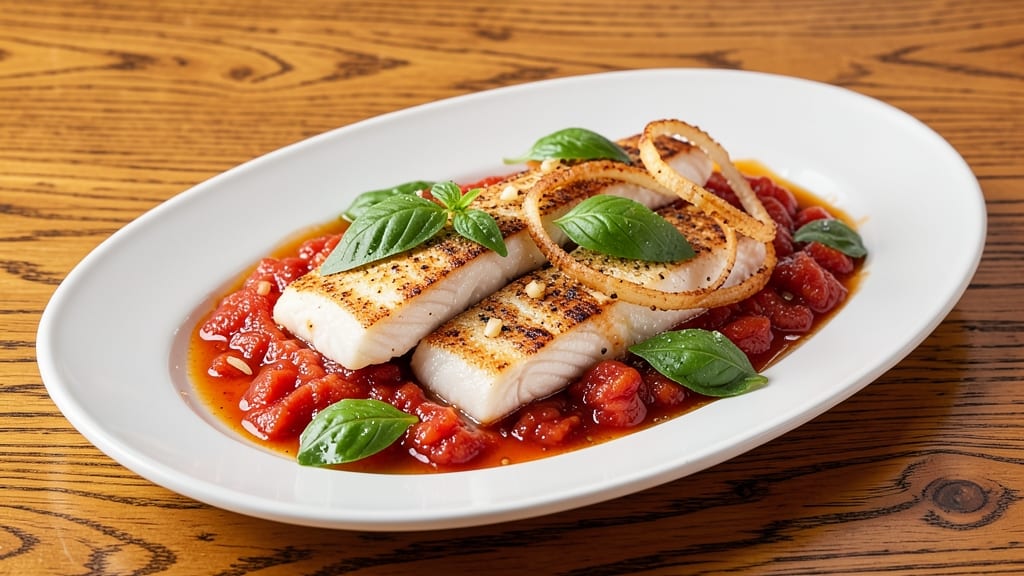
This tomato-basil simmered fish recipe delivers restaurant-quality results with a rich red sauce that perfectly complements tender, juicy fillets. After years of perfecting the balance between acidity and sweetness, I’ve developed a method that ensures the sauce clings to the fish without overpowering its natural flavor.
The secret lies in a slow simmer that builds depth while keeping the fish moist—no dry, rubbery bites here.
The sauce itself is a foolproof blend of crushed tomatoes, aromatic herbs, and a touch of sweetness that rounds out the acidity. I use white wine to deglaze the pan, which adds brightness and complexity without alcohol overpowering the dish.
This recipe works beautifully with firm white fish like cod or halibut, but it’s equally delicious with mild seafood like tilapia or mahi-mahi.
By the time you plate this dish, you’ll have golden-brown fish fillets resting on a vibrant red sauce that’s velvety yet still has a touch of texture from the tomatoes. The basil adds freshness that cuts through the richness, while garlic and onion provide a savory backbone.
It’s the kind of meal that feels special enough for guests but simple enough for a weeknight dinner.
Serve with crusty bread to soak up every last drop of that flavorful sauce, or pair it with a side of roasted vegetables for a balanced plate. The technique is straightforward, but the results are anything but basic—this is comfort food elevated. Let’s get cooking!
Ingredients for red sauce fish
Pantry staples meet fresh seafood for this restaurant-quality tomato-basil fish dish.
| Ingredient | Amount | Notes |
|---|---|---|
| White Fish Fillets 🐟 | 1 ½ lb | Cod, halibut, or tilapia preferred |
| Crushed Tomatoes 🍅 | 1 can | 28 oz can, no salt added |
| Fresh Basil Leaves 🌿 | ½ cup | Packed, stems removed |
| Garlic Cloves 🧄 | 4 cloves | Peeled and minced |
| Yellow Onion 🧅 | 1 whole | Medium, diced |
| Dry White Wine 🍷 | ½ cup | Sauvignon Blanc or Pinot Grigio |
| Olive Oil 🫒 | 2 tbsp | Extra-virgin for richness |
| Unsalted Butter 🧈 | 2 tbsp | Cold, cubed |
| Lemon Juice 🍋 | 2 tbsp | Freshly squeezed |
| Salt 🧂 | 1 tsp | Kosher or sea salt |
| Black Pepper 🌶️ | ½ tsp | Freshly ground |
| Sugar 🍚 | 1 tsp | Granulated, optional |
| All-Purpose Flour 🌾 | 2 tbsp | For dredging fish |
The tomatoes are the heart of this sauce, so grab a 28-oz can of no-salt-added crushed tomatoes—the kind with chunks gives better texture. Trader Joe's and Whole Foods usually carry great options, but any store brand works if it's not watery. Fresh basil is ideal, but if you're using dried, reduce to one-third the amount—it's way more potent. The fish? Cod or halibut holds up best, but tilapia or mahi-mahi work too. Just make sure the fillets are even thickness so they cook uniformly.
No white wine? Fish or vegetable broth with a splash of lemon juice does the trick—same brightness, no alcohol. The butter and olive oil combo gives the sauce that silky texture, but all butter works in a pinch if you're short on olive oil. Sugar is optional here, but it rounds out the acidity—honey works too. For the dredge, cornstarch or arrowroot powder can replace flour if you're avoiding gluten. And if you're worried about the sauce being too heavy, just skim off the excess fat after simmering.
This sauce reheats beautifully—just warm it gently on the stove. The fish itself is best served immediately, but you can reheat gently in a skillet for 2-3 minutes if needed. Store leftovers in the fridge for up to 3 days—the sauce actually gets better overnight as flavors meld. Freeze portions of sauce separately for up to 3 months if you're making a big batch. I always double the sauce recipe because it disappears fast.
Why You'll Love This Recipe
- One-Pot Magic: I swear by this recipe—just toss everything in one pan, and 20 minutes later, you’ve got dinner. No fancy techniques, no extra dishes. The tomatoes and onions soften into that rich, velvety sauce while the fish cooks right in it, soaking up every last bit of flavor.
- Garlic-Basil Bomb: Between us, this sauce is ridiculously good. The garlic sizzles until it’s fragrant but not bitter, and those fresh basil leaves? They add this bright, herby punch that cuts through the richness of the tomatoes. It’s simple, but it’s the kind of flavor that makes you slow down and actually taste your food again.
- Lunchbox Hero: Here’s what sold me—this recipe doubles perfectly for leftovers, and it’s exactly what I pack for work. Cold fish in that tangy tomato sauce? It’s like a fancy picnic in a container. My coworkers always ask for the recipe, and honestly, I don’t blame them.
- Budget Bright Spot: White fish fillets are affordable, and this sauce stretches easily—no need for expensive ingredients. A can of tomatoes, a handful of basil, and a few garlic cloves go a long way, especially when you’re feeding a crowd or just trying to stretch meals. Plus, the leftovers reheat like a dream, so you’re not scrambling for ideas later.
Step-by-step instructions for tomato-basil simmered fish
Here's how to turn simple white fish into melt-in-your-mouth perfection with a bright, tangy tomato-basil sauce.
Sauté the Aromatics for Flavor Foundation
Heat the 2 tablespoons olive oil in a large skillet over medium heat. Add the 1 whole yellow onion and cook for 5-6 minutes until softened and translucent. You'll know it's ready when the onion edges start to turn golden and the raw smell disappears completely.
Add the 4 cloves minced garlic and cook for 30 seconds until fragrant—don't let it brown or it'll turn bitter. Stir in the 1 teaspoon sugar and cook for another 30 seconds, which helps balance the acidity in the tomatoes later. This aromatic base is what makes the whole dish sing.
Build the Sauce with Tomatoes and Wine
Pour in the 1 can crushed tomatoes and stir well to combine with the aromatics. Let the mixture simmer uncovered for 5 minutes to develop the flavors. The tomatoes will thicken slightly and deepen in color.
Add the 0.5 cup dry white wine and cook for 3-4 minutes until the alcohol smell completely evaporates. This step is crucial—it mellows the wine's sharpness and adds depth to the sauce. Taste and adjust seasoning with 1 teaspoon salt and 0.5 teaspoon black pepper. The sauce should be seasoned but not overwhelmingly salty.
Prepare and Dredge the Fish
While the sauce simmers, pat the 1.5 lb white fish fillets dry with paper towels—this ensures a crispy exterior. Place the 2 tablespoons all-purpose flour on a plate and season lightly with salt and pepper. Dredge each fillet by pressing it gently into the flour on both sides.
Don't press too hard or the fillets will fall apart. The light flour coating helps create a delicate crust that seals in juices. Keep the dredged fillets on a plate until ready to cook—don't skip this step if you want that perfect texture.
Cook the Fish in the Sauce
Add the 2 tablespoons unsalted butter to the skillet and let it melt completely. Gently place the dredged fish fillets into the sauce, spooning some sauce over each piece. Cook for 3-4 minutes per side over medium-low heat until the fish is opaque and flakes easily with a fork.
Here's the thing—don't overcrowd the pan or the fish will steam instead of sear. The sauce should bubble gently around the fish, cooking it through while keeping it moist. You want the fish to reach 145°F internally, but it should flake easily before that temperature if it's fresh.
Finish with Basil and Lemon
Once the fish is cooked, carefully remove it to a serving platter and tent loosely with foil to keep warm. Stir the 0.5 cup fresh basil leaves into the sauce and cook for 1 minute just to wilt them slightly. Add the 2 tablespoons lemon juice and simmer for 30 seconds to brighten the flavors.
Spoon the sauce over the fish and serve immediately. The sauce should coat the fish beautifully, with tender basil leaves floating throughout. Each bite should deliver juicy, flaky fish with a vibrant tomato-basil sauce that's perfectly balanced between sweet, tangy, and savory.
Pro Tips For Making Red Sauce Fish
- Sear the Onion First: I learned this the hard way—sautéing onions with garlic right off the bat makes the whole sauce taste raw. Get that onion golden brown (about 5-7 minutes on medium heat) before adding garlic, or you’ll just be masking its flavor instead of building depth.
- Don’t Crowd the Pan: Thin fish fillets? Great. Stacking them like pancakes in the pan turns them soggy. Leave at least an inch between each fillet, and if your pan’s too small, work in batches. You want that crust, not a sad, mushy mess.
- Salt the Tomatoes: Sounds weird, but it works: sprinkle a pinch of salt over the crushed tomatoes before cooking. It draws out moisture, intensifies their flavor, and prevents a watery sauce. Just let them sit for 5 minutes first—no, I won’t judge if you skip it, but the sauce will be noticeably better when you don’t.
- Finish with Raw Basil: Tossing in fresh basil at the very end keeps it bright and peppery, not wilted into oblivion. If you’re using a lot, chop it roughly—whole leaves look pretty, but they’ll float like tiny sails and won’t infuse the sauce as well. (Yes, even if you’re impatient like me, wait until the heat’s off.)
Serving suggestions for this dish
Crusty Bread Pairing
Nothing beats this red sauce fish with warm, crusty bread to soak up every last drop. I love using a baguette-style loaf from Bread Ahead or Sourdough from local bakeries—their crispy crust holds up perfectly.
Toast the bread lightly with garlic butter (mix 2 tbsp softened butter with 1 minced garlic clove and a pinch of salt) for extra flavor. 🥖
Roasted Vegetable Sides
For a balanced plate, roast seasonal vegetables that complement the sauce's acidity. Toss 1 lb baby potatoes, 1 zucchini, and 1 red bell pepper with 2 tbsp olive oil, 1 tsp dried oregano, and ½ tsp salt.
Roast at 425°F for 25 minutes until caramelized. The earthy flavors contrast beautifully with the tomato-basil sauce.
Garlic Green Beans
Sauté 1 lb green beans in 1 tbsp olive oil over medium-high heat for 5 minutes until tender-crisp. Add 2 minced garlic cloves and 1 tbsp lemon juice, then toss with ¼ tsp red pepper flakes.
This bright, garlicky side cuts through the richness of the fish and sauce. 🌿
Lemon-Arugula Salad
A quick arugula salad with lemon vinaigrette adds freshness to the plate. Toss 4 cups baby arugula with 2 tbsp olive oil, 1 tbsp fresh lemon juice, 1 tsp honey, and ½ tsp Dijon mustard.
Top with ¼ cup toasted pine nuts for crunch—it’s the perfect palate cleanser between bites of rich fish.
Polenta as a Base
For a heartier option, serve the fish over creamy polenta. Cook 1 cup polenta with 4 cups chicken broth and 1 tbsp butter until thick and creamy. The mild, buttery texture balances the tangy sauce, and it’s a great way to use up leftovers. 🍲
Garnish Like a Pro
Elevate the presentation with fresh garnishes. Sprinkle the finished dish with extra basil leaves and a pinch of flaky sea salt. A drizzle of high-quality olive oil (like California Olive Ranch) adds a luxurious finish.
For a pop of color, add thinly sliced radishes or cherry tomatoes around the plate.
Nutrition facts
Frequently asked questions
What's the best fish to use for this tomato-basil sauce?
Firm white fish works best—cod, halibut, or mahi-mahi hold up perfectly to the sauce's acidity. Tilapia or snapper are great budget-friendly alternatives. Avoid delicate fish like flounder, which can fall apart in the sauce. For extra flavor, try wild-caught salmon if you want a richer profile.
Can I make this sauce ahead of time?
The sauce actually improves overnight—flavors meld beautifully. Store in an airtight container in the fridge for up to 3 days or freeze for 3 months. Reheat gently on the stove, adding a splash of water if it thickens too much. The fish should always be cooked fresh to maintain texture.
Why did my fish turn out dry?
Overcooking is the #1 culprit—fish cooks in 3-4 minutes per side max. Use a meat thermometer to check for 145°F internal temp. Also, patting the fillets very dry before cooking helps create a better sear. If using frozen fish, thaw it completely in the fridge first—never at room temperature.
How can I make this sauce spicier?
Add ½ teaspoon red pepper flakes when simmering the tomatoes, or stir in 1 tablespoon hot sauce at the end. For heat with depth, try ½ teaspoon smoked paprika with the garlic. Remember—spices build flavor as they cook, so start conservative and adjust to taste.
What if I don't have white wine?
No problem! Use ½ cup fish stock or apple cider vinegar for acidity, or even extra lemon juice (3 tbsp). The key is maintaining the sauce's brightness. If using vinegar, reduce to 1 tbsp and add the remaining 1 tbsp lemon juice at the end for balance.