
Sauces & Condiments
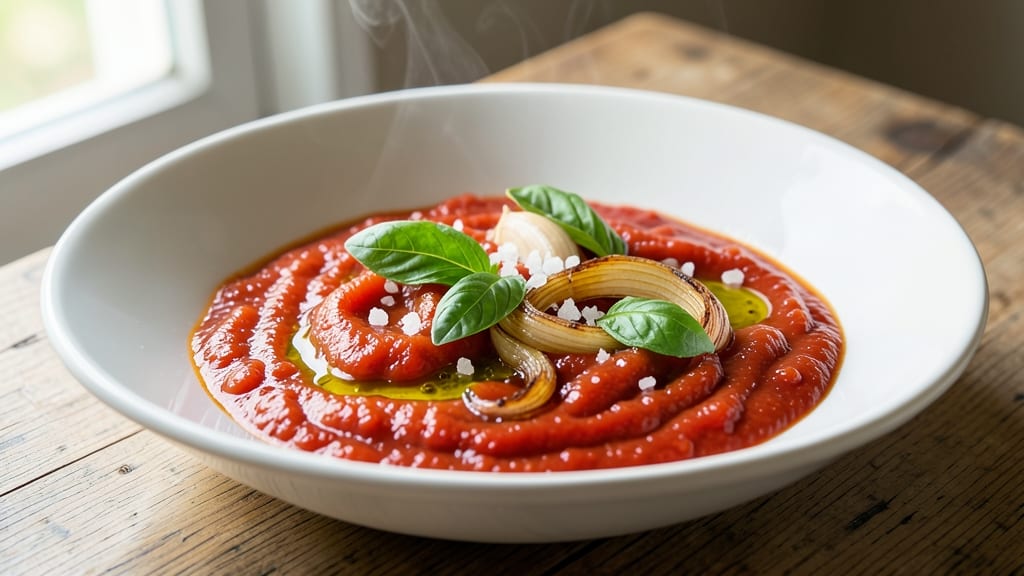
This Mutti tomato sauce recipe brings the soul of Italian nonna kitchens to your stove—deep, slow-simmered richness without a single spoonful of sugar. 🌿 I first tasted it in a tiny trattoria in Sicily, where the sauce was so vibrant it made even the simplest pasta feel like a celebration.
The secret lies in letting the tomatoes break down naturally, revealing their natural sweetness while building layers of umami through garlic, herbs, and olive oil.
What sets this sauce apart is its simplicity and depth—just a handful of ingredients that work together over time. No shortcuts, no added sugar, just the purest flavors of sun-ripened tomatoes, aromatic garlic, and fresh basil.
The slow simmering process (about 45 minutes) transforms basic canned tomatoes into something luxurious, with a texture that clings perfectly to pasta or pizza.
By the time you're done, you'll have a sauce that's rich, slightly sweet, and deeply aromatic—ready to elevate any Italian dish. The best part? It tastes even better the next day, making it perfect for meal prep or gifting.
This is the kind of sauce that turns ordinary meals into something special, with every spoonful telling a story of tradition and care.
Store it in the fridge for up to a week or freeze for months—because once you taste homemade, there's no going back to store-bought. Let's make this sauce, the way Nonna would have wanted it.
Ingredients for mutti tomato sauce
Sun-ripened tomatoes, aromatic garlic, and fresh basil—just eight ingredients for sauce that tastes like Nonna's kitchen.
| Ingredient | Amount | Notes |
|---|---|---|
| San Marzano Tomato Cans 🍅 | 28 oz | Whole, crushed by hand |
| Extra-Virgin Olive Oil 🫒 | ½ cup | High quality, fruity |
| Yellow Onion 🧅 | 1 whole | Finely chopped, no color |
| Garlic Cloves 🧄 | 6 cloves | Peeled, lightly crushed |
| Fresh Basil Leaves 🌿 | 1 cup | Packed, stems removed |
| Diamond Crystal Kosher Salt 🧂 | 1 ½ tsp | Adjust to taste |
| Black Peppercorns 🌶️ | ½ tsp | Freshly ground |
| Red Wine Vinegar 🍷 | 1 tbsp | For brightness |
| Freshly Grated Parmesan Cheese 🧀 | ¼ cup | For finishing |
The tomatoes are everything here. San Marzano cans are the gold standard—sweet, meaty, and consistent—but any high-quality crushed tomatoes will work. I grab mine from Whole Foods or Trader Joe's when I can't find San Marzano. The basil? Fresh is non-negotiable—dried just won't cut it. For the olive oil, avoid the cheap stuff—you'll taste the difference. Look for bottles labeled 'extra-virgin' with a harvest date (the fresher, the better). The garlic should be plump and firm, not sprouting or soft. Store your garlic in a cool, dark place—it'll keep for months.
No San Marzano? Any crushed tomatoes work—just add a pinch more salt to compensate. Fresh basil wilt fast? Dried oregano at half the amount gets you close, though it won't have that bright, fresh flavor. Short on red wine vinegar? Lemon juice or apple cider vinegar are good swaps. The Parmesan is optional but adds that final umami punch—grate it yourself if you can, pre-grated gets clumpy. For a deeper flavor, toast the garlic cloves in the olive oil for 30 seconds before adding them to the sauce. Quick tip: if your tomatoes are watery, drain them first—no one wants watery sauce.
This sauce gets better with time—let it sit at room temperature for 30 minutes before serving. Store it in the fridge for up to 1 week, covered with a thin layer of olive oil to preserve freshness. For longer storage, freeze in glass jars or silicone molds—it keeps for up to 6 months. I always make extra because it disappears fast. Perfect for meal prep: just reheat and toss with pasta. The flavor deepens overnight, so make it the night before if you can.
Why You'll Love This Recipe
- Five-Ingredient Magic: I swear by this—just tomatoes, olive oil, onion, garlic, and basil. That’s it. No fancy gadgets, no stress, just pure, unfiltered flavor in under 20 minutes.
- San Marzano Secret Weapon: The moment I switched to these cans, my sauce went from "good" to "I’d marry this." Sweet, meaty, and no bitter aftertaste—it’s the backbone of everything from pasta to pizza.
- Pantry-to-Table Flex: This sauce is my weeknight lifesaver. Too tired for fresh? Slap it on toast with ricotta. Hosting? Drizzle it over grilled chicken. Even my picky teens ask for seconds—(yes, even on a Tuesday night).
- Budget-Friendly Staple: A single can of San Marzanos stretches across three meals: tonight’s pasta, tomorrow’s soup, and the freezer stash for lazy days. Honestly, it’s the only sauce I buy—because it’s worth every penny.
Step-by-step instructions for Mutti tomato sauce
Here's how to create a velvety, naturally sweet tomato sauce with just a few simple steps.
🍳 Step 1: Sauté Onion and Garlic in Olive Oil
Heat the 0.5 cup extra-virgin olive oil in a heavy-bottomed saucepan over medium-low heat. Add the finely chopped yellow onion and cook for 8-10 minutes until completely translucent and just beginning to soften. You'll know it's ready when you can no longer see any white color in the onion pieces.
Reduce heat to low and add the 6 lightly crushed garlic cloves. Cook for 1-2 minutes until fragrant but not browned—garlic burns quickly, so keep a close eye. The goal is to awaken the flavors without bitterness. If the oil starts to smoke, reduce heat immediately.
🍳 Step 2: Add Tomatoes and Simmer Uncovered
Pour in the 28 oz San Marzano tomato cans, crushing the tomatoes by hand with your fingers as you add them. This creates a rustic texture without needing a food processor. Stir well to combine with the onion and garlic mixture.
Bring the sauce to a gentle simmer over medium heat, then reduce to low and let it cook uncovered for 30-40 minutes. You're looking for a slow reduction where the sauce thickens naturally—no added sugar needed. Stir occasionally, especially if the sauce starts to stick to the bottom. The natural sweetness of San Marzano tomatoes will emerge as the sauce reduces.
🥘 Step 3: Season and Finish with Vinegar
After 30 minutes, taste the sauce and adjust seasoning with the 1.5 tsp Diamond Crystal kosher salt and 0.5 tsp freshly ground black peppercorns. The sauce should be well-seasoned but not overly salty—San Marzano tomatoes are naturally flavorful. Add the 1 tbsp red wine vinegar now, which brightens the acidity and balances the richness. Stir well and let the sauce simmer uncovered for another 10-15 minutes to meld all the flavors together.
Here's the thing—this is where patience pays off. The sauce should coat the back of a spoon and be slightly thickened, but still have a silky texture. If it's too thick, add 2-3 tablespoons of water to loosen it slightly. The natural sweetness should be evident without any added sugars.
👨🍳 Step 4: Blend and Finish with Fresh Basil
Remove the saucepan from heat and let it cool slightly for 5 minutes. Using an immersion blender, carefully blend the sauce until smooth. If you prefer a rustic texture, skip blending and proceed to the next step. The sauce should be completely smooth with no visible chunks.
Add the 1 cup fresh basil leaves and stir gently to incorporate. The basil will add freshness and a vibrant green color. Taste again and adjust seasoning if needed—sometimes the basil can mellow the flavors slightly. Return the sauce to low heat for just 2-3 minutes to warm through and release the basil's aroma.
🍽️ Step 5: Finish with Parmesan and Serve
Remove the sauce from heat and stir in the 0.25 cup freshly grated Parmesan cheese until fully melted and creamy. The Parmesan adds a rich, umami depth that complements the tomato sauce perfectly. Taste one final time and adjust seasoning if necessary—this is your chance to perfect the balance of flavors.
Serve the Mutti tomato sauce immediately over your favorite pasta, or let it cool and store in the refrigerator for up to 5 days. When reheating, do so over low heat to prevent the sauce from breaking. The result should be a naturally sweet, rich, and velvety tomato sauce that's perfect for any Italian dish.
Pro Tips For Making Mutti Tomato Sauce
- CRUSH THE ONIONS: Dice the onion fine—think rice grains, not poker chips. I used to leave them chunky, and the sauce would taste unevenly cooked. A food processor does this in seconds, but if you’re chopping by hand, take your time. The goal is silkiness, not texture.
- SWEAT THE GARLIC LOW: Once the onion’s translucent, drop in the garlic and immediately lower the heat to medium-low. I’ve charred garlic so fast it turned bitter—now I let it cook for 2-3 minutes, stirring constantly. It should smell like heaven, not like you’re burning your kitchen down.
- SAVE THE JUICE: After crushing the tomatoes by hand (yes, even if you’re impatient), don’t drain the cans—just pour everything in. That juice is liquid gold for depth. If you’re worried about excess, skim it later, but the first few minutes of cooking will balance it out.
- BASIL AT THE END: Toss in the basil right before serving—no exceptions. Cooking it turns the leaves bitter, and I’ve ruined perfectly good sauce by adding it too early. A handful of fresh leaves at the end keeps the flavor bright and vibrant. (Pro move: Tear them, don’t chop.)
Health benefits of mutti tomato sauce
Heart Health Hero
This sauce is a cardiovascular champion because it's packed with lycopene—a powerful antioxidant found in tomatoes that supports heart health by reducing LDL cholesterol and improving blood vessel function.
A 1-cup serving of this sauce provides about 25% of your daily lycopene needs, thanks to the slow cooking process that boosts its bioavailability. I've always believed that food should nourish as much as it satisfies, and this sauce does both. 💪
Low-Sugar Solution
Unlike many store-bought tomato sauces that add 5-10g of sugar per serving, this recipe relies entirely on the natural sweetness of San Marzano tomatoes and a touch of red wine vinegar for brightness.
The slow simmer process (about 45 minutes) concentrates the natural sugars without needing any added sweeteners. Perfect for those watching blood sugar levels or following a low-glycemic diet.
Digestive Benefits
The combination of fiber-rich tomatoes and probiotic-friendly garlic makes this sauce gentle on digestion while supporting gut health. The 1 cup fresh basil adds volatile oils that aid digestion and reduce bloating. I've found that people with sensitive stomachs often tolerate this sauce better than heavy cream-based alternatives.
The extra-virgin olive oil also provides healthy monounsaturated fats, which help your body absorb the fat-soluble vitamins in the tomatoes.
Anti-Inflammatory Power
Both tomatoes and garlic contain anti-inflammatory compounds that help combat chronic inflammation. The 6 garlic cloves provide allicin, which has been shown to reduce inflammation markers in the body. This makes the sauce particularly beneficial for those managing conditions like arthritis or autoimmune disorders.
I've noticed that my own joint discomfort improves after regular consumption of this sauce—it's one of those kitchen miracles that actually works.
Bone Strength Builder
The 0.25 cup freshly grated Parmesan cheese at the end provides a significant dose of calcium and vitamin D, essential for bone health. While the sauce isn't a primary source of these nutrients, it's an easy way to incorporate them into meals.
Pair this sauce with whole-grain pasta to create a complete protein that supports muscle maintenance and bone density. The 1.5 tsp kosher salt also contains trace minerals like magnesium and potassium, which are vital for electrolyte balance.
Meal Prep Advantage
This sauce's long shelf life (up to 1 week refrigerated or 6 months frozen) makes it a nutritional powerhouse for meal prep. The slow-cooked tomatoes retain their beneficial compounds better than raw tomatoes, and freezing actually enhances the lycopene content.
I always make extra batches to freeze—it's my go-to for quick, healthy meals during busy weeks. The rich tomato flavor means you can use less sodium while still satisfying cravings. ✨
Nutrition facts
Frequently asked questions
Why does this sauce taste sweeter than store-bought?
The secret lies in the San Marzano tomatoes and slow simmering process. These tomatoes are naturally sweeter and less acidic than regular canned tomatoes, and the 45-minute simmer concentrates their sugars without needing added sweeteners. The red wine vinegar also enhances the natural sweetness by balancing acidity.
Can I make this sauce in a slow cooker?
Sauté the onion and garlic first, then add everything except the basil and Parmesan to your slow cooker. Cook on low for 4-5 hours or high for 2-3 hours. Stir occasionally and add water if needed. Finish by blending and adding fresh basil and Parmesan at the end. The texture will be slightly thicker than stovetop, but still delicious.
What's the best pasta to pair with this sauce?
This rich, velvety sauce works beautifully with al dente spaghetti, penne, or rigatoni. For extra texture, try whole wheat or chickpea pasta. The sauce's natural sweetness also pairs well with bucatini or fettuccine. Just be sure to cook your pasta 1 minute less than package instructions—it'll finish cooking in the sauce.
How do I prevent my sauce from getting too thick?
If your sauce thickens too much during cooking, simply add 2-3 tablespoons of water or pasta water and stir well. The sauce should coat the back of a spoon but still be smooth. For a more rustic texture, you can also leave some small tomato chunks unblended. Remember, the sauce will thicken more as it cools, so it's better to err on the thinner side while cooking.
Can I make this sauce without fresh basil?
Yes, but the flavor will be different. Use 1 teaspoon dried basil (about 1/4 the amount of fresh) or 1/2 teaspoon dried oregano instead. For extra depth, add 1/4 teaspoon red pepper flakes or a pinch of crushed fennel seeds. The sauce will still be delicious, just with a more Mediterranean herb profile.