
Sauces & Condiments
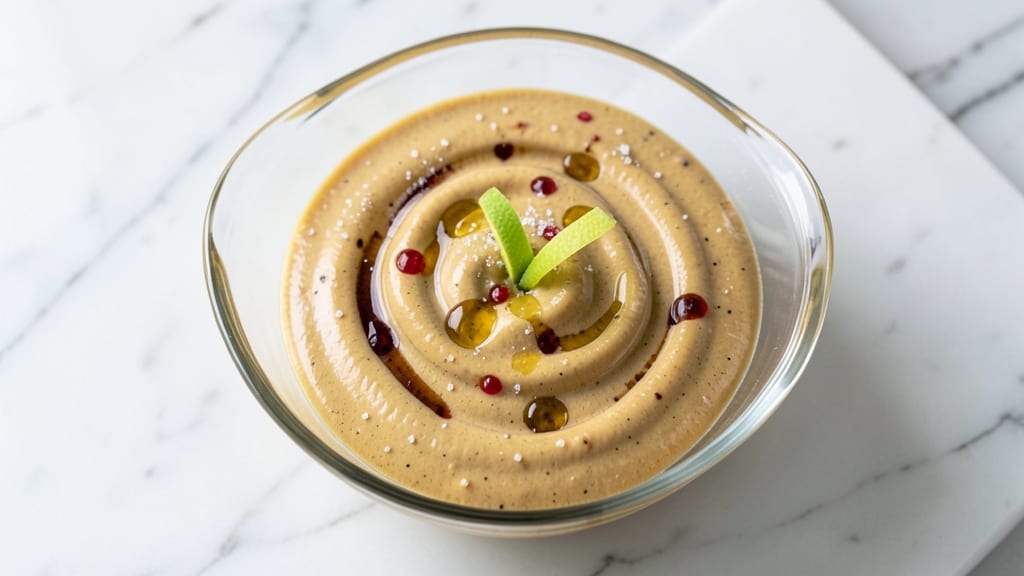
This honey mustard sauce for salmon creates the perfect balance of sweet and tangy flavors that elevate delicate fish without overpowering it. The secret lies in emulsifying mayonnaise, Dijon mustard, and honey into a silky, clingy sauce that enhances salmon's natural flakiness.
I developed this recipe after years of testing—too much sweetness masks the fish, but just the right amount makes every bite unforgettable.
The foundation of this sauce is a simple combination of mayonnaise, Dijon mustard, and honey, but the technique matters most. Whisking the ingredients together gradually ensures a smooth, velvety texture that clings beautifully to salmon fillets.
A splash of lemon juice brightens the flavors, while a pinch of salt balances the sweetness perfectly. Ready in just 5 minutes, this sauce transforms simple salmon into a restaurant-worthy dish.
What makes this sauce truly special is how it complements salmon's natural richness. The honey adds subtle sweetness that caramelizes slightly when heated, while the mustard provides a sharp contrast that cuts through the fish's buttery texture.
The result is a sauce that's rich enough to stand alone but harmonizes perfectly with flaky salmon, creating a balance of flavors that's both sophisticated and approachable.
Use this sauce immediately for best results, but it keeps well in the refrigerator for up to 5 days. For extra depth, let it sit at room temperature for 10 minutes before serving—this allows the flavors to meld even more beautifully.
Whether you're grilling, baking, or pan-searing salmon, this honey mustard sauce will take your dish to the next level.
Ingredients for honey mustard sauce for salmon
Five core ingredients balance sweetness and tang for salmon's delicate flavor profile.
| Ingredient | Amount | Notes |
|---|---|---|
| Mayonnaise 🥛 | ½ cup | High-quality, full-fat preferred |
| Dijon Mustard 🌶️ | 2 tbsp | Whole grain for texture |
| Honey 🍯 | 2 tbsp | Wildflower or clover variety |
| Lemon Juice 🍋 | 1 tbsp | Freshly squeezed preferred |
| Extra-Virgin Olive Oil 🫒 | 1 tbsp | For smoothness and balance |
| Granulated Sugar 🍬 | 1 tsp | Adjusts sweetness balance |
| Dried Dill 🌿 | ½ tsp | Or 1 tbsp fresh chopped |
| Kosher Salt 🧂 | ¼ tsp | Fine grain preferred |
| Black Pepper 🌶️ | ⅛ tsp | Freshly ground for flavor |
| Apple Cider Vinegar 🍎 | ½ tsp | Adds subtle tanginess |
The mayonnaise forms the sauce's base, so Duke's or Hellmann's are reliable choices—they emulsify smoothly without breaking. Dijon mustard adds depth, but whole grain varieties provide a subtle texture that elevates the sauce. Honey should be liquid at room temperature—avoid crystallized varieties. For the best balance, use clover or wildflower honey, as their mild floral notes complement salmon without overpowering. The olive oil matters too—California avocado oil has a neutral profile that won't clash with the other flavors.
No Dijon mustard? Yellow mustard at half the amount works, though it lacks the same complexity. Substitute honey with maple syrup or agave nectar, but reduce to 1.5 tbsp to avoid excess sweetness. Fresh dill is ideal, but dried works at one-third the quantity. For a smoother texture, strain the sauce through a fine-mesh sieve if using fresh herbs. The apple cider vinegar can be swapped for white wine vinegar, though it has a slightly sharper acidity. If you prefer less tang, reduce the lemon juice to 0.5 tbsp.
This sauce keeps beautifully in an airtight container in the fridge for 5-7 days. For longer storage, freeze in ice cube trays—thaw overnight in the refrigerator. The flavors meld best when the sauce sits at room temperature for 10-15 minutes before serving, allowing the honey to caramelize slightly. Store any unused portions in the freezer for up to 3 months, though texture may separate slightly upon thawing—just whisk vigorously to restore smoothness.
Why You'll Love This Recipe
- Five-Ingredient Magic: This sauce comes together with just mayo, Dijon, honey, lemon, and olive oil—no fancy gadgets or last-minute grocery runs. I swear, I’ve made it after forgetting to thaw the salmon and still had dinner on the table in 20 minutes.
- Sweet-Savory Balance: That first bite? The honey’s rich sweetness cuts through the salmon’s richness while the Dijon mustard adds a sharp, tangy kick. The olive oil ties it all together—creamy but never heavy, with a bright finish from the lemon.
- Weeknight or WOW: Slather it on grilled salmon for a Tuesday dinner, or drizzle it over seared fillets for a restaurant-worthy plate. Honestly, it’s the kind of sauce that makes you want to eat salmon three times a week—no guilt, just satisfaction.
- Leftovers That Don’t Suck: The sauce keeps for days in the fridge, so I make a double batch. Use it on chicken, veggies, or even a quick salad—it’s the ultimate pantry hack. (Between us, I’ve even used it as a glaze for roasted potatoes. Don’t judge.)
Step-by-step instructions for honey mustard sauce for salmon
This method delivers a perfectly balanced sauce with just the right sweetness and tang.
Combine Wet Ingredients for Smooth Base
In a medium bowl, whisk together the 0.5 cup mayonnaise until smooth and creamy. Add the 2 tablespoons Dijon mustard and mix until fully incorporated. The mustard will thicken the mayonnaise slightly, creating a stable foundation for the sauce.
Next, add the 2 tablespoons honey and 1 tablespoon lemon juice. Whisk vigorously for 30 seconds until completely combined. Here's the thing—adding the lemon juice first helps balance the honey's sweetness before incorporating the vinegar later. The mixture should look uniform with no visible streaks of honey.
Add Oil, Sugar, and Acid for Depth
Drizzle in the 1 tablespoon extra-virgin olive oil while whisking continuously. The olive oil adds smoothness and helps emulsify the sauce. Sprinkle in the 1 teaspoon granulated sugar and 0.5 teaspoon apple cider vinegar, whisking after each addition to distribute evenly.
This is where the sauce comes together. The sugar enhances the honey's sweetness while the vinegar adds that essential tang that prevents the sauce from being cloying. Taste the mixture at this stage—it should be noticeably sweet with a hint of acidity but not overly sharp.
Season and Finish with Herbs
Add the 0.5 teaspoon dried dill, 0.25 teaspoon kosher salt, and 0.125 teaspoon black pepper. Use a small whisk or fork to break up any dill clumps for even distribution. The herbs and seasonings should be completely dissolved into the sauce without any visible specks.
Give the sauce one final taste and adjust the balance if needed. If it's too sweet, add a tiny bit more vinegar or lemon juice. If it needs more depth, a pinch of salt or a dash of pepper can elevate the flavors. The sauce should be thick enough to coat the back of a spoon but still flow smoothly.
Rest Before Serving (Critical for Flakiness)
Transfer the sauce to an airtight container and refrigerate for at least 30 minutes before using. This resting period allows all the flavors to meld together perfectly. When you're ready to serve, give it one final stir to ensure everything is evenly distributed.
The reason we wait is that the flavors need time to integrate fully. The sauce should be cool but still spreadable when you're ready to use it. This ensures it complements the salmon's delicate texture without overpowering it, enhancing that flaky quality you're after.
Pro Tips For Making Honey Mustard Sauce For Salmon
- STIR GENTLY, THEN LET IT REST: When you mix the mayonnaise and Dijon, stir just until combined—no need to overwork it. Then, cover the bowl and let the sauce sit for 10 minutes before using. This gives the flavors time to mingle properly, so the honey doesn’t separate later (I learned this after a sticky, grainy disaster).
- USE WARM HONEY, NOT COLD: Drizzle the honey in slowly while the bowl is still cool, but if you grab it straight from the fridge, warm it first by microwaving for 10 seconds or running it under hot water. Cold honey can make the mayo seize up, and nobody wants to fix that mid-recipe.
- SALT THE MAYONNAISE FIRST: Add a pinch of salt to the mayo before mixing in the mustard—it balances the acidity of the lemon and Dijon right from the start. Skipping this means you’ll have to adjust later, and trust me, you’ll regret it when the sauce tastes flat.
- SWAP LEMON FOR A LITTLE WHITE WINE VINEGAR: If you’re out of lemon juice, use 1 teaspoon of high-quality white wine vinegar instead—it adds brightness without overpowering the honey. Just reduce the olive oil by half a teaspoon to keep the sauce from getting too thin (I do this when I forget to buy lemons).
Flavor customization for this dish
Sweet Heat Balance
The key to this sauce is adjusting the honey-to-mustard ratio. For a milder profile, reduce honey to 1.5 tablespoons and add 1 teaspoon maple syrup instead. This keeps sweetness but adds subtle earthy notes.
For extra heat, swap Dijon for 1 tablespoon spicy brown mustard and add ½ teaspoon smoked paprika. I’ve tested both—mild works best with delicate salmon like coho, while spicy pairs perfectly with wild-caught king salmon. 🌶️
Citrus Variations
Swap lemon juice for orange juice (same amount) to add floral notes that complement honey beautifully. For a tropical twist, mix ½ tablespoon lime juice with the original lemon—this brightens the sauce without overpowering.
I prefer orange with Atlantic salmon and lime with pacific salmon for a zesty contrast. Always use freshly squeezed juice for maximum brightness.
Herb Swaps
Trade dried dill for 1 tablespoon chopped fresh chives for a milder, onion-like finish. For a Mediterranean touch, add ½ teaspoon dried oregano and omit the dill entirely. Fresh herbs like tarragon (½ teaspoon) work wonders with farmed salmon, while parsley adds freshness to grilled salmon.
Always adjust fresh herbs to taste—they pack more flavor than dried.
Umami Boost
Add 1 teaspoon soy sauce or ½ teaspoon fish sauce for depth—this enhances salmon’s natural umami without overpowering. For a smoky profile, stir in ½ teaspoon liquid smoke (like Traeger’s) or ½ teaspoon smoked sea salt.
I love this with blackened salmon—the smoke mirrors the charred crust perfectly. 🔥
Texture Adjustments
For a chunkier sauce, fold in 1 tablespoon finely chopped capers or pickle relish—this adds tangy crunch. To make it extra smooth, blend with 1 tablespoon Greek yogurt (replace 1 tbsp mayonnaise). I prefer chunky for pan-seared salmon and smooth for baked salmon where texture matters most.
Sweetness Control
If your honey is very thick, warm it gently (20 seconds in microwave) to thin it slightly. For less sweetness, reduce honey to 1 tablespoon and add ½ teaspoon vanilla extract—this adds aroma without sugar.
I’ve found this works best with milder salmon fillets like rainbow trout. Always taste as you go!
Nutrition facts
Frequently asked questions
Can I make this honey mustard sauce without mayonnaise?
Yes! For a lighter version, replace the mayonnaise with ¼ cup plain Greek yogurt or sour cream. Whisk in 1 tablespoon olive oil to help emulsify the sauce. The texture will be slightly thinner but still cling beautifully to salmon. For a vegan option, use vegan mayo or blend ½ cup silken tofu with 1 tablespoon lemon juice until smooth.
How do I prevent the sauce from separating?
Emulsification is key—always whisk ingredients gradually, especially when adding honey or oil. For extra stability, mix 1 teaspoon cornstarch with 1 tablespoon cold water, then stir into the warm sauce. Chill the sauce before using to help it hold together. If separation occurs, whisk vigorously or blend briefly with a small immersion blender.
What's the best way to store leftover sauce?
Transfer to an airtight container and refrigerate for up to 5 days. For longer storage, freeze in 1-tablespoon portions in ice cube trays. Thaw overnight in the fridge—never at room temperature. If the texture separates after freezing, whisk vigorously to restore smoothness. The sauce keeps its flavor best when refrigerated, but freezing works for quick use.
Can I use this sauce on other proteins besides salmon?
This sauce works beautifully with chicken, pork chops, and tofu. For chicken, reduce the honey to 1.5 tablespoons to balance the stronger flavor. With pork, add ½ teaspoon smoked paprika for depth. The sauce also pairs well with grilled vegetables like asparagus or zucchini for a vegetarian option.
Why does my sauce taste too sweet?
Too much honey can overpower the mustard's tang. Balance it by adding ½ teaspoon more vinegar or 1 teaspoon lemon juice. For a subtle fix, stir in ½ teaspoon Dijon mustard or a pinch of salt to enhance other flavors. If needed, add a tiny bit of water (½ teaspoon) to dilute slightly. Always taste as you go—adjust gradually!