
Sauces & Condiments
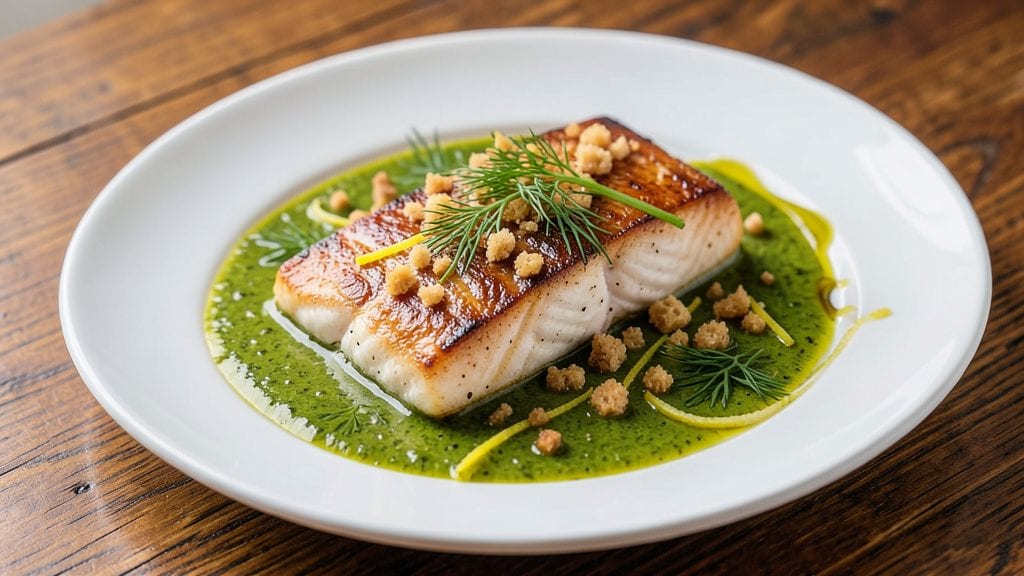
This bright lemon-dill halibut sauce transforms simple halibut into a restaurant-worthy meal with just five ingredients and 10 minutes of prep time. The zesty lemon and fresh dill create a perfect balance that enhances the delicate flavor of the fish while adding a satisfying crunch from toasted breadcrumbs.
I developed this recipe after realizing how often halibut needed something more than just butter to truly shine.
The sauce relies on a simple yet effective technique: combining fresh herbs with a tangy base that won't overpower the fish. A touch of Dijon mustard adds depth, while the breadcrumb topping provides texture that contrasts beautifully with the creamy sauce.
This method ensures you get a sauce that's both elegant and foolproof—no fancy equipment required.
What you'll end up with is a vibrant, herby sauce that's bright enough to complement halibut's natural sweetness while adding complexity. The lemon keeps it fresh and tangy, the dill brings that signature seafood-friendly aroma, and the toasted breadcrumbs add a satisfying crunch that elevates every bite.
It's the kind of sauce that makes even simple preparations feel special.
Use this sauce immediately for maximum freshness, or store it in the refrigerator for up to 5 days—it actually tastes better the next day as the flavors meld. For extra richness, stir in a tablespoon of crème fraîche or Greek yogurt before serving. Let's make this sauce!
Ingredients for halibut sauce
Five vibrant ingredients create this restaurant-worthy halibut sauce with perfect balance and texture.
| Ingredient | Amount | Notes |
|---|---|---|
| Fresh Dill Weeds 🌿 | ½ cup | Finely chopped, stems removed |
| Lemon Zest 🍋 | 1 tbsp | From 1 large organic lemon |
| Extra-Virgin Olive Oil 🫒 | ½ cup | Light, fruity variety preferred |
| Dijon Mustard 🍯 | 1 tbsp | High-quality, smooth texture |
| Fresh Lemon Juice 🍋 | ¼ cup | From 2 large organic lemons |
| Panko Breadcrumbs 🍞 | ¼ cup | Toasted in dry pan first |
| Unsalted Butter 🧈 | 2 tbsp | Cold, cubed for topping |
| Garlic Cloves 🧄 | 2 cloves | Minced, for depth of flavor |
| Kosher Salt 🧂 | ½ tsp | Diamond Crystal preferred |
| Freshly Ground Black Pepper 🌶️ | ¼ tsp | Freshly cracked preferred |
The foundation begins with fresh dill—professional kitchens use organic dill from specialty markets like Whole Foods or Trader Joe's for maximum potency. Lemon zest should come from organic lemons, as conventional varieties often contain bitter white pith. For the olive oil, California extra-virgin brands like Corto or Omni provide the ideal fruity brightness without overpowering. The Dijon mustard acts as a flavor anchor—Maille remains the gold standard, though Amoy offers a slightly more affordable alternative. Toast your breadcrumbs in a dry skillet until golden for optimal crunch, about 2 minutes on medium heat.
Substitutions should maintain the sauce's delicate balance. No fresh dill? Use 1 tsp dried dill, but reduce by one-third to avoid bitterness. No panko? Crushed cornflakes work surprisingly well, though texture will differ. Short on lemon juice? White wine vinegar at half the amount preserves acidity, though flavor will shift slightly. Butter substitutes? Greek yogurt or crème fraîche add richness, though texture will be softer. For a nut-free option, omit the butter entirely and increase olive oil by 1 tbsp—though the sauce will be less velvety. Garlic sensitivity? Reduce to 1 clove or use garlic-infused olive oil instead.
This sauce achieves peak freshness when used immediately, though it develops beautifully overnight. Store in an airtight glass container in the refrigerator for up to 5 days, with flavors deepening as the herbs mellow. For longer storage, freeze in 1-tbsp portions for up to 3 months—thaw gently in the fridge before use. Reheat gently in a saucepan over low heat, stirring occasionally, until warmed through. Never microwave, as this destroys the delicate herb texture. For serving, drizzle over halibut fillets or use as a dip for toasted baguette slices—the contrast of warm bread and chilled sauce is unbeatable.
Why You'll Love This Recipe
- I’ll be real: the ingredients won’t break the bank. Olive oil, mustard, lemons? Stuff I already have. And if you make extra, it keeps for days—perfect for when you’re too lazy to improvise. (Yes, even on a Tuesday night.)
- No Fuss, Big Payoff: I swear, this sauce takes five minutes—just whisk the dill, lemon zest, and mustard into olive oil while the halibut cooks. No chopping, no waiting, just that bright, herby punch you didn’t know you needed.
- Zesty Brightness: Honestly, the lemon zest and fresh juice cut through anything—grilled fish, roasted veggies, even a simple salad. That tangy, herby hit? It’s the kind of flavor that makes you pause mid-bite and go, “Wait, this is how it’s supposed to taste?”
- Weeknight Magic: Between us, this is my go-to when I’m too tired to think. Double the batch, drizzle it over halibut and toss some in the fridge for tomorrow’s lunch. Works for dinner parties or solo nights—no judgment here.
Step-by-step instructions for halibut sauce
This bright, herbaceous sauce delivers a perfect balance of citrus and crunch in under 15 minutes.
Toast the Panko Breadcrumbs
Heat a small dry skillet over medium heat. Add the 0.25 cup Panko Breadcrumbs and toast for 2-3 minutes, stirring constantly, until they turn a light golden color and emit a nutty aroma. This step enhances their texture and prevents a raw, starchy bite in the final sauce.
Remove the breadcrumbs from heat immediately to prevent burning. Transfer them to a small bowl and set aside. The toasted crumbs will add a satisfying crunch that contrasts beautifully with the silky sauce base.
Build the Sauce Base
In a medium saucepan, combine the 0.5 cup Extra-Virgin Olive Oil, 1 tbsp Dijon Mustard, 0.5 tsp Kosher Salt, and 0.25 tsp Freshly Ground Black Pepper. Place the pan over low heat and whisk continuously for 3-4 minutes until the mixture begins to emulsify slightly and becomes slightly thicker.
Add the 2 cloves Garlic Cloves and 1 tbsp Lemon Zest, stirring constantly for 30 seconds until the garlic becomes fragrant but doesn't brown. This step develops the aromatic foundation while preventing bitter garlic flavors. Remove the pan from heat temporarily to avoid overcooking.
Incorporate Citrus and Herbs
Return the pan to low heat and gradually whisk in the 0.25 cup Fresh Lemon Juice. Bring the mixture to a gentle simmer, then reduce heat to maintain a barely bubbling state for 2-3 minutes until slightly thickened. This controlled reduction concentrates the flavors without breaking the emulsion.
Remove the pan from heat and stir in the 0.5 cup Fresh Dill Weeds. Let the sauce steep for 1 minute to allow the dill's vibrant flavor to infuse fully. The bright herbal notes will complement the citrus perfectly, creating a balanced sauce.
Finish with Butter and Crumbs
Return the sauce to low heat and whisk in the 2 tbsp Unsalted Butter, one cube at a time, until fully melted and incorporated. This step adds richness and helps create a glossy, velvety texture. Taste and adjust seasoning if needed, adding a pinch more Kosher Salt or Freshly Ground Black Pepper as necessary.
Remove the pan from heat and stir in the toasted Panko Breadcrumbs just before serving. The contrast between the warm, buttery sauce and cool crunchy crumbs elevates this sauce from ordinary to exceptional. Serve immediately over grilled or pan-seared halibut for optimal flavor and texture.
Pro Tips For Making Halibut Sauce
- Whisk the Mustard First: Stir the Dijon into the olive oil before adding lemon or dill—it emulsifies faster and keeps the sauce from breaking. I learned this the hard way when my sauce split into oily puddles mid-plate.
- Zest, Don’t Juice: Lemon zest adds bright aroma; juice adds acidity. Use a microplane for zest, then save the juice for balancing. Too much juice flattens the dill’s flavor—trust the zest’s punch.
- Pulse the Dill: Roughly chop the dill stems (they’re packed with flavor) and pulse them briefly in a food processor before stirring in. Whole stems sink to the bottom; pulsed dill distributes evenly—no clumps, no wasted flavor.
- Temper the Heat: If using chili flakes or garlic, toast them in the olive oil for 30 seconds before adding lemon. This prevents the sauce from curdling when acid hits hot oil. (Yes, even if you’re impatient like me.)
Pro cooking tips for this recipe
Emulsification Secrets
To create a smooth, velvety sauce, focus on low-and-slow heat during the emulsion phase. Whisk continuously over low heat for 3-4 minutes—this prevents the olive oil from separating. I use a balloon whisk for maximum air incorporation, which helps stabilize the emulsion.
If the sauce starts to break, simply whisk in 1 tsp cold water to re-emulsify. 💡
Herb Infusion Tricks
Fresh dill releases its oils best when added off-heat and allowed to steep for 1-2 minutes. Chop it finely—¼-inch pieces—to maximize surface area. For even more vibrant flavor, pulse the dill in a food processor for 5 seconds before adding.
If using dried dill, toast it in the dry pan for 30 seconds before adding to deepen its aroma.
Butter Timing Matters
Adding butter at the very end ensures it melts completely without curdling the sauce. I cut it into ¼-inch cubes and whisk in gradually—one cube at a time—until fully incorporated.
For extra richness, use European-style butter (like Plugrá) which has a higher fat content. If your sauce seems too thick, whisk in 1 tsp warm water to restore balance.
Crunch Control
Toast your Panko breadcrumbs until they're golden brown—this takes about 2-3 minutes on medium heat. Watch closely to avoid burning, as burnt crumbs will dominate the flavor. For a nut-free crunch, substitute crushed potato chips (like Lay's Classic)—they add a satisfying texture without allergens.
Store extra crumbs in an airtight container for up to 1 week to keep them fresh.
Temperature Precision
Use a kitchen thermometer to monitor the sauce's temperature—it should never exceed 160°F. If you're making this sauce ahead, let it cool completely before refrigerating. When reheating, warm it gently over low heat or in a double boiler to prevent separation.
Never microwave, as this disrupts the emulsion and dulls the herbs. ✨
Flavor Layering
Build depth by adding 1 tsp capers (rinsed) with the dill for a briny contrast, or 1 tsp white wine (like Sauvignon Blanc) when incorporating the lemon juice. For a spicy kick, add ½ tsp smoked paprika when toasting the crumbs.
Always taste as you go—adjusting salt, lemon, or herbs at each stage ensures perfect balance. 🌶️
Nutrition facts
Frequently asked questions
Can I make this sauce without fresh dill?
Yes, but the flavor will be less vibrant. Use 1 teaspoon dried dill instead, but reduce it to ⅓ the amount since dried herbs are more concentrated. For extra flavor, add ½ teaspoon dried tarragon or ¼ teaspoon dried parsley to mimic the complexity of fresh dill. Toast the dried herbs in a dry pan for 30 seconds before adding to deepen their aroma.
How do I fix a broken sauce emulsion?
If your sauce separates, whisk in 1 teaspoon cold water while the pan is off heat. The water helps re-emulsify the oil and mustard. For a smoother texture, add the water gradually while whisking vigorously. If the sauce is too thick after fixing, thin it with ½ teaspoon warm water or 1 teaspoon lemon juice to restore balance.
What’s the best way to store leftover sauce?
Transfer the sauce to an airtight glass container and refrigerate for up to 5 days. The flavors actually improve as the herbs mellow. For longer storage, freeze in 1-tablespoon portions for up to 3 months. Thaw overnight in the fridge and reheat gently over low heat—never microwave, as it can break the emulsion.
Can I use this sauce with other seafood?
This sauce pairs beautifully with cod, sole, or even shrimp. The bright lemon-dill flavor complements delicate fish perfectly. For shellfish, reduce the lemon juice slightly (¼ cup) to avoid overpowering the natural sweetness. The crunchy topping also works well with grilled salmon or seared scallops.
Why does my sauce taste bitter?
Bitter flavors usually come from overcooked garlic or lemon zest. Remove the pan from heat immediately after adding garlic, and avoid browning the zest. If the sauce tastes bitter, balance it with ½ teaspoon honey or 1 teaspoon extra lemon juice. For prevention, use organic lemons and remove all white pith from the zest.