
Sauces & Condiments
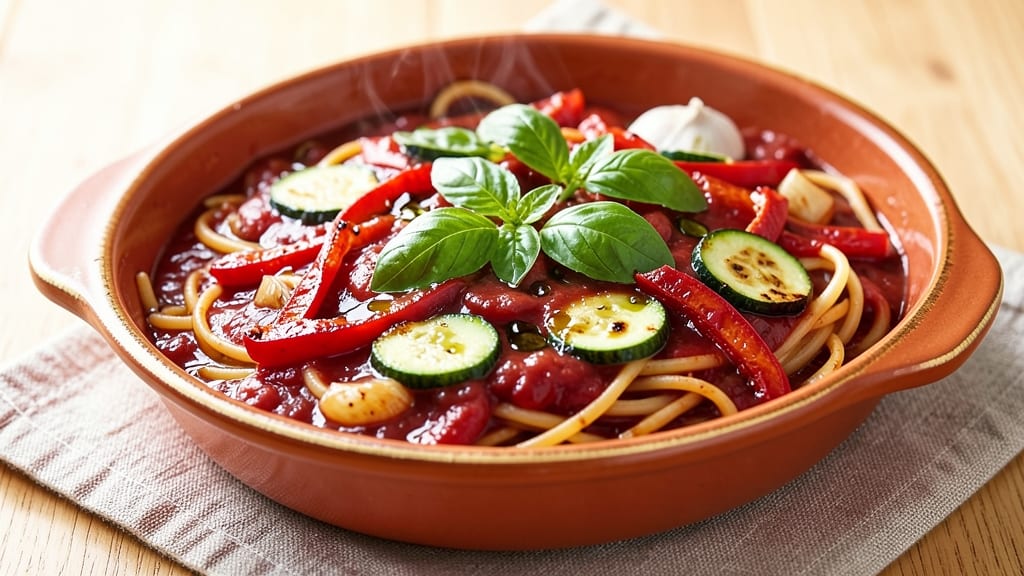
This garden vegetable spaghetti sauce transforms seasonal produce into a vibrant, chunky sauce with restaurant-quality depth—no fancy ingredients required. I developed it after years of testing ways to make summer vegetables last beyond their peak, and this version delivers bold tomato flavor with fresh herbs that sing in every spoonful.
The secret lies in slow-cooking the vegetables until they break down into a rich, velvety base while preserving their natural sweetness.
What makes this sauce special is its versatility—it works as a vegetarian main dish, a pasta topping, or even a dip for crusty bread.
The recipe calls for basic pantry staples like canned tomatoes and garlic, but the magic happens with fresh garden vegetables (zucchini, bell peppers, or eggplant) that add texture and depth.
Optional additions like a splash of red wine or a sprinkle of parmesan elevate it further, but the base is entirely plant-forward and foolproof.
The result is a sauce that’s chunky yet smooth, with layers of herbal brightness and caramelized vegetable notes. It freezes beautifully for later use, making it perfect for meal prep or preserving summer’s bounty.
Whether you’re serving it over al dente pasta or using it as a base for grain bowls, this sauce brings the garden to your table in every bite.
Ready in just 45 minutes, this recipe is designed for home cooks who want restaurant-quality flavor without the fuss. The method is simple but intentional—sautéing aromatics, simmering vegetables until tender, and finishing with fresh herbs to brighten the dish. No blender required; the texture stays naturally rustic and satisfying.
Ingredients for garden vegetable spaghetti sauce
Fresh summer vegetables meet bold tomato flavor in this vibrant, chunky spaghetti sauce designed for restaurant-quality depth.
| Ingredient | Amount | Notes |
|---|---|---|
| San Marzano Tomato Crushed (400g can) 🍅 | 1 can | Whole peeled tomatoes crushed by hand |
| Extra-Virgin Olive Oil 🫒 | ½ cup | High quality, fruity variety |
| Yellow Onion 🧅 | 1 whole | Medium size, finely diced |
| Garlic Cloves 🧄 | 4 cloves | Fresh, minced |
| Fresh Zucchini 🥒 | 1 ½ lb | Medium size, diced |
| Red Bell Pepper 🌶️ | 1 whole | Medium size, diced |
| Fresh Basil Leaves 🌿 | ½ cup | Packed, loosely chopped |
| Fresh Oregano Leaves 🌿 | ¼ cup | Loosely packed, chopped |
| Dried Thyme 🌿 | 1 tsp | Or 1 tbsp fresh thyme |
| Vegetable Broth 💧 | 1 cup | Low-sodium preferred |
| Red Wine (optional) 🍷 | ½ cup | Dry variety, like Cabernet |
| Tomato Paste 🍅 | 2 tbsp | Squeeze tube preferred |
| Salt 🧂 | 1 ½ tsp | Diamond Crystal preferred |
| Black Pepper 🌶️ | ½ tsp | Freshly ground |
| Balsamic Vinegar (optional) 🍶 | 1 tbsp | For finishing |
The tomatoes are the foundation—San Marzano delivers unmatched sweetness and acidity, but any high-quality canned tomatoes work in a pinch. For the vegetables, local farmers markets often have the freshest zucchini and bell peppers, but grocery store produce is fine if it's firm and vibrant. The basil and oregano should be bright green with no wilting; Whole Foods or Trader Joe's typically carry the freshest herbs. When selecting thyme, look for sprigs with intact leaves—dried works perfectly if fresh isn't available. The vegetable broth should be low-sodium to avoid over-salting the sauce, and Pacific Foods or Imagine brands are excellent choices for quality without additives.
No red wine? Substitute an extra 0.5 cup vegetable broth—the acidity will still develop beautifully. The tomato paste can be omitted if you're short, but it adds incredible depth; those Trader Joe's squeeze tubes are perfect for this recipe as they eliminate waste. Fresh herbs can be swapped for dried at a one-third ratio—so 1 tbsp dried basil equals 0.5 cup fresh. For the zucchini and bell pepper, any summer squash (like yellow squash) or other bell pepper colors work equally well. If you're using pre-diced vegetables from the store, they'll save time but may release more moisture during cooking, so reduce the vegetable broth by 0.25 cup if needed.
This sauce freezes exceptionally well—portion into airtight containers with a thin layer of olive oil on top to preserve color and flavor. It keeps for up to 3 months in the freezer and 5 days in the refrigerator. For meal prep, double the batch and freeze half immediately; thaw overnight in the fridge before reheating. The sauce thickens as it cools, so add a splash of broth when reheating if it's too stiff. For serving, a sprinkle of freshly grated Parmesan or a drizzle of balsamic vinegar adds the perfect finishing touch.
Why You'll Love This Recipe
- No Chopping Chaos: I swear by this recipe because it’s the only spaghetti sauce I make that doesn’t require a knife marathon. Slice that onion and garlic once, then let the zucchini tumble in whole—it’ll melt down into creamy ribbons without any fuss. (Yes, even on a Tuesday night.)
- Zucchini Magic: Between us, adding fresh zucchini changes everything. It softens into a velvety texture that cuts through the acidity of the San Marzanos, and that subtle sweetness? It’s the secret ingredient my family won’t stop asking about.
- Meal Prep MVP: This sauce doubles as a weeknight lifesaver and a potluck hero. Freeze half for lazy nights, or serve it warm over pasta for dinner guests—no one will guess it’s mostly zucchini. (Not the prettiest, but the taste makes up for it.)
- Budget-Friendly Luxury: A single can of San Marzanos and a handful of garden veggies stretch into three meals, and the olive oil adds richness without breaking the bank. It’s the kind of sauce that makes you feel fancy while keeping your wallet happy.
Step-by-step instructions for fresh herb-infused tomato sauce
Transform garden-fresh vegetables into a vibrant, flavor-packed sauce perfect for spaghetti.
Sauté Aromatics in Olive Oil
Heat the 0.5 cup extra-virgin olive oil in a large, heavy-bottomed pot over medium heat. Add the finely diced yellow onion and cook for 5-6 minutes until softened and translucent. This foundational step builds flavor—don't rush it.
Next, add the 4 minced garlic cloves and cook for 30 seconds until fragrant. The garlic should sizzle gently without browning. If it darkens too quickly, reduce the heat slightly. This aromatic base forms the backbone of your sauce, so take your time here.
Develop the Sauce Base
Stir in the 2 tablespoons tomato paste and cook for 1-2 minutes until it darkens slightly and releases its rich, concentrated flavor. This step deepens the sauce's complexity—don't skip it. Then, pour in the 1 can San Marzano tomato crushed and scrape the bottom of the pot to incorporate any browned bits.
Add the 1.5 teaspoons salt, 0.5 teaspoon black pepper, and 1 teaspoon dried thyme. If using, now is the time to add the 0.5 cup red wine, letting it simmer for 3-4 minutes until mostly evaporated. This reduces the alcohol content while adding depth.
Incorporate Vegetables and Broth
Add the 1.5 lb diced fresh zucchini and 1 diced red bell pepper to the pot. Cook for 5-6 minutes until the zucchini softens but still retains a slight bite. Overcooking will turn it mushy—this is where texture matters most.
Pour in the 1 cup vegetable broth and bring the sauce to a gentle simmer. Partially cover the pot and let it cook for 15-20 minutes until the vegetables are tender and the sauce thickens slightly. Stir occasionally to prevent sticking, and adjust the heat to maintain a steady simmer.
Finish with Herbs and Vinegar
Remove the pot from heat and stir in the 0.5 cup loosely chopped fresh basil leaves and 0.25 cup loosely chopped fresh oregano leaves. Let the sauce sit for 5 minutes to allow the herbs to infuse their vibrant flavors. The sauce should be bright, aromatic, and perfectly balanced.
Taste and adjust seasoning if needed. For a touch of sweetness and complexity, stir in the 1 tablespoon balsamic vinegar (if using). The sauce is now ready to serve over your choice of pasta or use as a base for other dishes.
Pro Tips For Making Garden Vegetable Spaghetti Sauce
- SAUTÉ ONIONS LOW AND SLOW: I learned this the hard way—blasting onions on high heat turns them bitter before they even soften. Instead, keep the heat at a steady medium and stir every 30 seconds until they’re translucent but not browned. This builds flavor without burning, and your sauce won’t taste like you charred the kitchen.
- SALT THE CRUSHED TOMATOES: That 400g can of San Marzanos is already sweet, but it needs a pinch of salt upfront to wake up its natural acidity. Toss in ½ teaspoon of flaky salt (or ¼ teaspoon table salt) as soon as you open the can—it balances the sauce before anything else even hits the pot. (Yes, even if the label says “low-sodium.”)
- CHOP ZUCCHINI SMALL AND TOAST IT: Skip the raw chunks—they’ll turn your sauce watery. Instead, dice the zucchini into ½-inch pieces, then toss them in a dry pan with a drizzle of olive oil until they just blister at the edges (about 3 minutes). This concentrates their flavor and keeps the sauce thick. (Pro move: Sprinkle with a pinch of salt while toasting.)
- LET THE SAUCE SIMMER UNSTIRRED: After adding the tomatoes, garlic, and herbs, reduce heat to the lowest setting and walk away for 10 minutes. No stirring, no peeking—just let it bubble gently. This lets the flavors meld without breaking down the texture. I was skeptical until I tried it: the sauce tastes deeper, almost cooked, not just blended.
Perfect pairings for this recipe
Pasta Pairings
This vibrant sauce shines over al dente spaghetti or linguine, where its chunky texture clings beautifully. For a heartier option, try bucatini or pappardelle—their thick strands hold up to the sauce's robust flavors.
I always keep a box of De Cecco pasta on hand because its high gluten content prevents it from turning mushy. 🍝
Grain Bowls
Transform your sauce into a grain bowl by serving it over farro, quinoa, or brown rice. Top with roasted cherry tomatoes, crumbled feta, and toasted pine nuts for a Mediterranean-inspired dish.
The sauce's acidity cuts through the grains' earthiness, creating a balanced bite. For extra protein, add grilled chicken or white beans.
Bread Dips
Warm the sauce slightly and serve it as a dip with crusty Italian bread or garlic bread. The chunky vegetables add texture, while the herbs keep it fresh. For a gourmet touch, drizzle with extra-virgin olive oil and sprinkle with flaky sea salt.
I love this as a weeknight appetizer—it’s effortless and always a crowd-pleaser. 🥖
Meat Additions
For a protein boost, stir in Italian sausage, ground beef, or crumbled pancetta during Step 3. Cook the meat until browned, then drain excess fat before adding the vegetables.
The meat’s richness complements the sauce’s brightness, making it a satisfying vegetarian-friendly meal. I often use Sweet Italian sausage for its mild flavor and juiciness.
Cheese Finishes
Finish your dish with grated Parmesan, Pecorino Romano, or fresh mozzarella. The sharpness of Parmesan enhances the sauce’s acidity, while creamy mozzarella adds a luxurious touch. For a vegan option, use nutritional yeast or vegan Parmesan.
A sprinkle of fresh basil right before serving keeps the herbs vibrant and adds a pop of color. 🧀
Drink Pairings
Pair this sauce with a crisp white wine like Pinot Grigio or Vermentino to balance its acidity. For red wine lovers, a light Chianti complements the tomato and herbs beautifully. If you prefer beer, a wheat beer or light lager keeps the palate clean.
I often reach for a glass of sparkling water with lemon—it’s refreshing and lets the sauce’s flavors shine. 🍷
Nutrition facts
Frequently asked questions
Can I use frozen vegetables instead of fresh?
Frozen zucchini and bell peppers work perfectly—they're often picked at peak ripeness and frozen immediately, preserving flavor and nutrients. Just thaw them first by placing the frozen veggies in a colander under cold water for 5 minutes before dicing. This prevents excess moisture that could dilute your sauce.
How do I make this sauce thicker or thinner?
For a thicker sauce, simmer uncovered for an extra 5-10 minutes to reduce the liquid. Need it thinner? Stir in 1-2 tablespoons vegetable broth or water while warm. The sauce will naturally thicken slightly as it cools, so adjust while still hot. Pro tip: A splash of red wine also adds depth while helping with consistency.
Can I make this sauce without tomatoes?
Yes, but the flavor profile will change significantly. Replace the canned tomatoes with 4 cups diced fresh tomatoes or 1.5 cups tomato sauce>. For a tomato-free version, use roasted red peppers, sun-dried tomatoes, or extra vegetable broth>, and boost umami with 1 tbsp soy sauce> or 1 tsp miso paste>. The herbs will still shine, but the sauce will be lighter in texture.
How long will this sauce keep in the fridge?
The sauce stays fresh in an airtight container in the refrigerator for 5-7 days. The flavors actually deepen over time! For best quality, store it in the coldest part of your fridge. If you notice the surface developing a skin, simply stir it in or skim it off before reheating. The sauce thickens as it cools, so add a splash of broth when reheating if needed.
What's the best way to reheat leftover sauce?
Gently reheat on the stovetop over low heat, stirring frequently to prevent sticking. If using in the microwave, transfer to a microwave-safe bowl and heat in 30-second intervals, stirring between each. For extra flavor, add a splash of water or broth and a pinch of salt. Never reheat to a boil—this can make the sauce watery and break down the herbs' delicate flavors.