
Sauces & Condiments
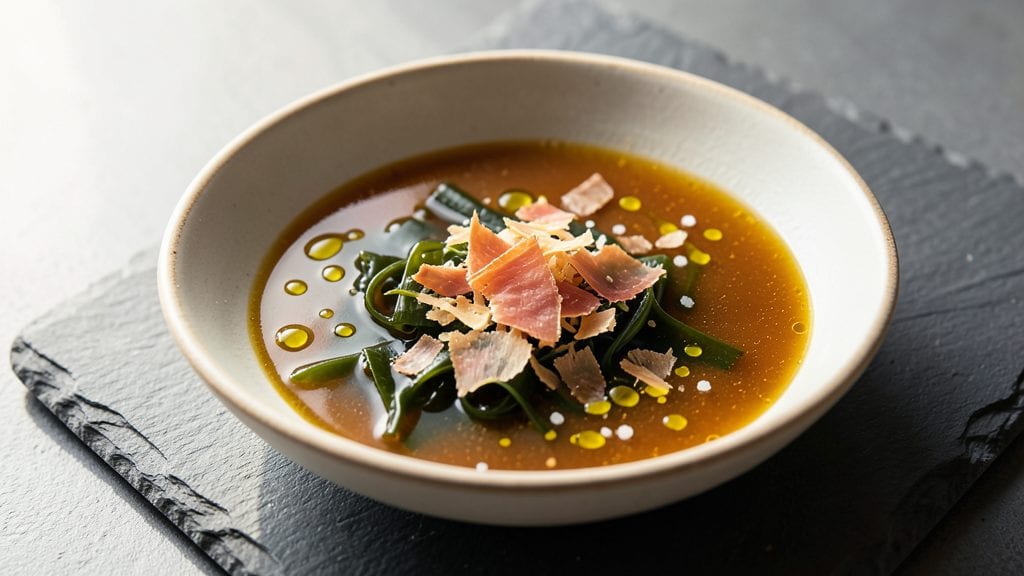
The dashi sauce recipe is the foundation of Japanese cuisine, transforming simple dishes into umami-rich masterpieces. This traditional broth, made with kombu and bonito flakes, carries the essence of Japanese cooking—clean, bright, and deeply flavorful.
I’ve perfected a method that preserves its delicate balance, ensuring every sip delivers that signature oceanic depth.
What sets this dashi apart is its simplicity: just three core ingredients—kombu seaweed, dried bonito flakes, and water—simmered to extract maximum flavor. The key lies in precise timing and gentle heat, which prevents bitterness while unlocking the broth’s complex layers.
Unlike store-bought versions, homemade dashi stays vibrant and fresh for weeks, elevating everything from miso soup to cocktails.
By the end, you’ll have a clear, aromatic broth that’s the secret weapon behind countless Japanese dishes. It’s the difference between a good meal and a memorable one—rich, savory, and impossible to replicate with shortcuts. Ready to master the art of dashi? Let’s begin with the ingredients.
This recipe isn’t just for soups; it’s the backbone of sauces, marinades, and even modern cocktails. Store it properly, and you’ll have a pantry staple that transforms ordinary cooking into extraordinary results. No experience needed—just patience and attention to detail.
Ingredients for dashi sauce
Three core ingredients transform water into umami-rich dashi broth foundation.
| Ingredient | Amount | Notes |
|---|---|---|
| Kombu Seaweed 🍃 | 4 inch | Dried, 1 piece (approx 4-inch) |
| Dried Bonito Flakes 🐟 | ¼ cup | High-grade, premium quality |
| Fresh Water 💧 | 4 cups | Filtered or spring water preferred |
| Fresh Ginger Root 🧄 | ½ inch | Sliced thinly (approx 0.5-inch piece) |
| Diamond Crystal Kosher Salt 🧂 | ½ tsp | For seasoning final broth |
| Extra-Virgin Olive Oil 🫒 | 1 tbsp | For finishing (optional) |
The kombu seaweed must be high-quality, with a deep oceanic aroma and no visible blemishes. Japanese specialty stores carry premium varieties like Matsunoya or Marukome, but the dried sheets at Whole Foods or Asian markets work well too. Avoid pre-cut pieces—the whole sheet releases more flavor. The bonito flakes should be lightly toasted and aromatic, not bitter. Hojicha or premium Japanese brands ensure purity. Fresh ginger adds subtle warmth; opt for organic, firm pieces with no soft spots. The water quality matters—filtered or spring water prevents off-flavors.
No kombu? Dried shiitake mushrooms can substitute at half the amount, though flavor differs slightly. Bonito flakes unavailable? Dried sardine flakes work in a pinch, but reduce to one-third the quantity due to stronger flavor. Fresh ginger missing? Ground ginger at one-quarter the amount suffices, though texture changes. The olive oil finishing is optional but recommended for modern applications like cocktails—use fruity, extra-virgin to complement the broth. For a vegetarian version, replace bonito with shiitake mushrooms entirely.
Store finished dashi in sterilized glass containers with a tight seal. Refrigerated, it remains vibrant for up to 1 week, while freezing extends shelf life to 3 months. For long-term storage, portion into ice cube trays—perfect for single-use applications. Reheat gently over low heat, never boiling, to preserve delicate flavors. The broth intensifies overnight, so make extra for enhanced flavor in subsequent uses.
Why You'll Love This Recipe
- Five-Ingredient Magic: I swear, this is the kind of recipe where you might forget you’re actually cooking. Just kombu, bonito, water, ginger, and salt—no fancy gadgets, no chopping marathon, just steep and savor. My lazy Sundays now include a simmering pot while I sip coffee, and by the time it’s done, the house smells like a Japanese izakaya.
- Umami Bomb: That first sip? Chef’s kiss. The kombu’s deep, briny sweetness marries the bonito’s toasty, fishy richness—it’s like a flavor explosion in your mouth. Honestly, I’ve made it three times this week just to drink it straight from the pot. (Yes, even on a Tuesday night.)
- Pantry Staple Power: This sauce is my secret weapon for everything from ramen to glaze. Need a quick marinade? Done. Elevating store-bought sushi? Boom. Even my picky teen won’t complain when it’s drizzled over grilled fish. Between us, I’ve used the same batch for five different meals without a single repeat of boredom.
- Budget-Friendly Flex: A single batch costs me pennies but lasts for days—freeze what you don’t use, and you’ve got a flavor upgrade ready for next month’s grocery run. I’ll be real: my grocery bill dropped when I started making this instead of buying pre-made stocks. Plus, the ginger adds a little zing that makes even the simplest dish feel special.
Step-by-step instructions for dashi sauce
This method delivers a clean, umami-rich foundation perfect for soups, sauces, and rice dishes.
Prepare the Kombu and Water Base
Place the 4-inch kombu seaweed in a clean, medium saucepan. Add the 4 cups fresh water and bring to a gentle simmer over medium-low heat. The kombu should float just beneath the surface—this ensures proper infusion without breaking apart.
Simmer uncovered for 15-20 minutes, allowing the kombu to release its deep, vegetal umami into the water. You'll notice the water develop a pale golden hue and a subtle oceanic aroma. Avoid boiling, as excessive heat can make the broth bitter. Once simmered, remove the kombu with tongs and discard it—its job is done.
Infuse with Ginger and Season
Add the 0.5-inch fresh ginger root to the simmering kombu broth. Let it steep for 5 minutes to impart a delicate, bright warmth. The ginger should remain whole—no need to slice or grate further.
Next, stir in the 0.5 teaspoon diamond crystal kosher salt and reduce the heat to low. Simmer for an additional 5 minutes, allowing the flavors to meld. The broth should now have a balanced, slightly briny depth without overpowering saltiness.
Add Bonito Flakes for Depth
Remove the saucepan from heat and let the broth cool slightly for 2-3 minutes. This prevents the bonito flakes from cooking too quickly and turning bitter. Sprinkle the 0.25 cup dried bonito flakes evenly over the surface.
Let the flakes sit undisturbed for 5 minutes, allowing them to absorb the broth and release their rich, fishy umami. You'll see the flakes sink gradually as they hydrate. Once fully infused, gently stir the broth to distribute the flavor evenly.
Finish and Strain (Optional)
Return the broth to low heat and simmer for 3-4 minutes to eliminate any raw fishy notes. The broth should now be clear with a bright, clean umami flavor—no sediment or off-aromas.
For a refined finish, strain the broth through a fine-mesh sieve into a clean container. If you prefer a rustic texture, skip straining. Drizzle in the 1 tablespoon extra-virgin olive oil (optional) for a silky mouthfeel and subtle richness. Store in the refrigerator for up to 5 days or freeze for longer preservation.
Pro Tips For Making Dashi Sauce
- Toast the Bonito: I learned this the hard way—skip toasting, and your dashi will taste flat and fishy. Lightly fry the bonito flakes in a dry pan over medium heat until they smell nutty and darken slightly (about 2-3 minutes). This removes bitterness and deepens the umami—trust me, your broth will thank you.
- Rinse the Kombu: Kombu’s salty crust is real, and it’ll overpower your dashi if you don’t rinse it first. Hold the sheet under cold water for 10 seconds, then pat dry with paper towels. This step alone keeps your broth from tasting like a salt lick.
- Simmer, Don’t Boil: After adding the kombu, keep the heat low enough that you barely see bubbles—just tiny ripples. Boiling turns the broth cloudy and bitter, and it’ll make your ginger release too much heat. A gentle simmer (about 15-20 minutes) extracts flavor without wrecking it.
- Strain Twice: First strain through a fine-mesh sieve to catch the bonito bits, then line the sieve with cheesecloth for a second pass. The leftover sediment holds tiny flavor particles—skipping this step leaves your dashi tasting like it’s missing something. (Yes, even if it looks clean the first time.)
Storing and reheating this dashi sauce
Refrigerator Storage
Store your freshly made dashi in sterilized glass containers with airtight lids, leaving ½ inch of headspace for expansion. The broth will continue developing depth overnight—this is normal! Keep it refrigerated at 40°F or below for up to 5-7 days.
I use amber glass jars from Le Parfait to protect the delicate flavors from light exposure. 💧
Freezer Preservation
For long-term storage, freeze dashi in portion-sized ice cube trays or silicone molds—perfect for single-use applications like cocktails or sauces. Once frozen, transfer cubes to a freezer-safe bag and flatten to save space.
Label with the date—it stays vibrant for 3 months. Thaw overnight in the fridge before use. ❄️
Reheating Techniques
Never microwave dashi—it destroys the delicate umami compounds. Instead, reheat gently over low heat on the stovetop, covered, until warmed through (2-3 minutes). Add 1-2 tablespoons of water if the broth thickens during reheating.
For restaurant-quality results, strain through a fine-mesh sieve after reheating to remove any sediment. 🔥
Reviving Stale Broth
If your dashi tastes flat after refrigeration, revive it by simmering 1-2 minutes with a fresh ½-inch kombu strip or 1 tsp bonito flakes. This jumpstarts the umami without overpowering the original flavor.
I also add a pinch of Diamond Crystal salt to restore balance. Discard the kombu after reheating.
Portion Control
Use 1 cup dashi per serving in soups, ½ cup for sauces, and ¼ cup for cocktails. For precise measurements, freeze in 1-ounce portions—just pop out what you need.
The broth intensifies with each use, so save any leftovers for your next dish. I keep a dedicated jar in my fridge for quick access during cooking. ✨
Vegetarian Adaptations
Vegetarian dashi loses the bonito’s depth but still shines. Simmer 4 dried shiitake mushrooms (whole) with kombu for 30 minutes, then strain. Add 1 tsp soy sauce or ½ tsp nori flakes for umami. Store and reheat using the same methods—just expect a milder, earthier profile. 🌱
Nutrition facts
Frequently asked questions
What’s the difference between dashi and regular chicken or vegetable broth?
Dashi is uniquely Japanese, built on umami depth from kombu (seaweed) and bonito flakes, while chicken/vegetable broth relies on meat or vegetable flavors. The result is a cleaner, more aromatic base that enhances dishes without overpowering them—think of it as the "secret weapon" behind miso soup or ramen's signature taste.
Can I make dashi without bonito flakes?
Yes! For a vegetarian version, replace bonito with 4 dried shiitake mushrooms (simmered 30 minutes) or ½ tsp nori flakes. The flavor will be earthier but still rich. Just note: bonito’s deep umami is unmatched—this is why traditional dashi uses both kombu and bonito for balance.
Why does my dashi taste bitter?
Over-simmering or using old kombu/bonito causes bitterness. Keep heat at a gentle simmer (never boil) and remove kombu immediately after 15–20 minutes. For bonito, steep off-heat for 5 minutes—this prevents cooking and preserves its sweet, nutty flavor.
How do I use dashi in cocktails?
Start with ¼ cup dashi per drink (e.g., in a highball or gin fizz). Its clean umami pairs beautifully with citrus or herbs like mint. For a smoky twist, add a dash of shichimi togarashi. Always strain before mixing to avoid sediment—think of it as a liquid seasoning, not a standalone flavor.
Can I make dashi in a slow cooker?
Not ideal—slow cookers can’t control low heat precisely, risking bitterness. Instead, use a stovetop pot and simmer on medium-low for exact timing. For large batches, make small portions (like 4 cups at a time) and store extras—dashi’s flavor peaks fresh, not after hours of slow cooking.