
Sauces & Condiments
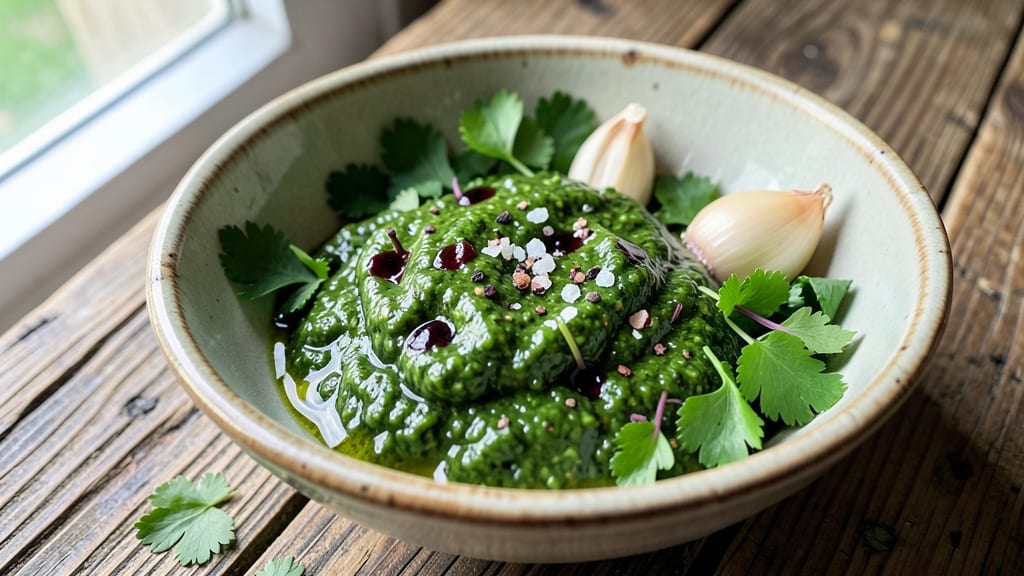
This chimchurri sauce recipe transforms grilled meats into restaurant-quality masterpieces with just a handful of fresh ingredients. The vibrant green sauce balances bright parsley, sharp garlic, and tangy red wine vinegar—creating a flavor profile that elevates every bite.
I developed this version after years of experimenting with Argentine-inspired sauces, refining it to be foolproof yet deeply flavorful.
The secret lies in the proper ratio of herbs to oil and the technique of finely chopping ingredients to create a paste-like consistency. Unlike traditional chimchurri that relies on dried oregano, this version uses fresh parsley for a brighter, more aromatic experience.
Ready in just 10 minutes, it's perfect for marinating steaks, drizzling over grilled chicken, or serving as a condiment with charred vegetables.
What you'll achieve is a sauce that's bold yet balanced—herby enough to stand out but never overpowering. The acidity cuts through rich meats while the olive oil adds richness, creating a perfect harmony of flavors.
This isn't just a sauce; it's a game-changer for any grilling session, transforming simple proteins into unforgettable meals.
The best part? It keeps well in the refrigerator for up to 5 days, allowing you to make a big batch for multiple meals. Whether you're grilling for a crowd or treating yourself to a special dinner, this chimchurri sauce will become your new go-to condiment.
Let's get started on making it!
Ingredients for chimchurri sauce
Six fresh ingredients transform into vibrant chimchurri that'll make your grilled meats unforgettable.
| Ingredient | Amount | Notes |
|---|---|---|
| Fresh Flat-Leaf Parsley 🌿 | 1 ½ cups | Stems removed, tightly packed |
| Extra-Virgin Olive Oil 🫒 | ¾ cup | High-quality, fruity variety |
| Red Wine Vinegar 🍷 | ⅓ cup | Balsamic works in a pinch |
| Garlic Cloves 🧄 | 6 cloves | Peeled, roughly chopped |
| Kosher Salt 🧂 | 1 ½ tsp | Diamond Crystal preferred |
| Ground Black Pepper 🌶️ | ½ tsp | Freshly cracked preferred |
| Red Chili Flakes 🔥 | ½ tsp | Adjust for heat preference |
| Fresh Oregano Leaves 🍃 | ¼ cup | Optional but adds depth |
The parsley is non-negotiable—bright green, fresh leaves make all the difference. Whole Foods or local farmers markets have the best quality, but don't stress if your grocery store parsley is fresh enough. The garlic should be plump and firm, not sprouting. For the olive oil, California Extra Virgin brands like Corto or Lucini elevate the sauce—skip the cheap stuff. The red wine vinegar adds that signature tang, so avoid white vinegar substitutes. Pro tip: If you can't find fresh oregano, dried oregano at half the amount works in a pinch, though fresh is ideal for that authentic Argentine flavor profile.
No red wine vinegar? Substitute lemon juice for brightness, though it'll alter the flavor slightly. Want extra heat? Add cayenne pepper or hot sauce to taste. The chili flakes are optional but worth including for that signature kick. If you're prepping ahead, store the dry ingredients separately until ready to mix—they'll keep for months, while the parsley should be added fresh. For a vegetarian version, simply omit the meat and use it as a dip for roasted vegetables or grilled halloumi. The key is the proper herb-to-oil ratio, so don't skimp on either.
This sauce is a grilling game-changer—makes 2 cups, perfect for 4 servings. Store in an airtight container with a thin layer of olive oil on top to preserve freshness. Keeps 5 days in the fridge and freezes beautifully for up to 3 months. I always double the batch—one for immediate use, one to freeze for future grilling sessions. The flavors actually deepen overnight, so making it ahead is ideal. Just give it a good stir before serving to redistribute the oil.
Why You'll Love This Recipe
- Five-Ingredient Magic: I swear by this—just parsley, olive oil, vinegar, garlic, and salt. That’s it. No fancy gadgets, no hidden steps. The only real work is chopping a handful of herbs, and honestly? My kids do that part now while I stir.
- Bright, Tangy Kick: The red wine vinegar cuts through everything, while the garlic and parsley add that fresh, herby punch. It’s bright but not overpowering—like a sunny afternoon in a jar. Drizzle it on grilled steak, and suddenly, you’re eating like you’re at that one restaurant you love.
- Weeknight to Party Fix: I keep a jar in my fridge for quick tacos, but it also shines at dinner parties. Toss it with roasted veggies or use it as a marinade—it’s the kind of sauce that makes even simple meals feel special. No last-minute shopping needed; just grab what’s already there.
- Lasts All Week: This stuff doesn’t spoil. I’ve had jars for nearly 10 days, and it’s still bold and fresh. Make a big batch, store it in the fridge, and thank me later when you’re not scrambling to make sauce at 7 p.m. on a Wednesday. (Yes, even on a Tuesday night.)
Step-by-step instructions for chimchurri sauce
This vibrant sauce comes together in minutes with just a few simple techniques.
Prepare the Herb Base
In a food processor, combine the 1.5 cups fresh flat-leaf parsley and 0.25 cup fresh oregano leaves. Pulse until you achieve a finely chopped consistency—think of it as a rough herb paste rather than a puree. You want visible texture but nothing too chunky. The oregano adds that distinctive South American depth, so don't skip it if you have it.
Here's the thing—if you're using a blender instead, pulse in short bursts to avoid turning it into a paste. You're aiming for a texture that still has visible herb flecks, not a smooth green sauce. This texture is what gives chimchurri its signature bite and visual appeal when drizzled over grilled meats.
Incorporate Aromatics and Vinegar
Add the 6 cloves garlic cloves and 0.33 cup red wine vinegar to the food processor. Pulse again until the garlic is finely minced but still visible. The vinegar will start to emulsify with the herbs immediately—you'll notice the mixture becoming slightly more cohesive. This is when the sauce begins its transformation from raw ingredients to something truly special.
Don't worry if it looks uneven at this stage. The olive oil will come next and bind everything together beautifully. I like to give it a quick taste at this point—you should notice the bright acidity of the vinegar and the sharpness of the garlic cutting through the fresh herbs. This is the flavor foundation you're building.
Finish with Oil and Seasonings
With the processor running, slowly drizzle in the 0.75 cup extra-virgin olive oil. This is where the magic happens—the oil should be added gradually to allow proper emulsification. You'll see the mixture transform from a loose herb-vinegar blend into a thick, vibrant green sauce. Stop when all the oil is incorporated and the sauce has a thick, creamy consistency.
Transfer the chimchurri to a bowl and stir in the 1.5 teaspoons kosher salt, 0.5 teaspoon ground black pepper, and 0.5 teaspoon red chili flakes. Taste and adjust the seasoning—you might want to add a splash more vinegar if it needs more brightness, or a touch more salt if the flavors feel muted. The chili flakes should add just a hint of heat, not overwhelming spice. Let it sit for 10 minutes at room temperature before serving—this allows all the flavors to meld completely.
Rest and Serve
The sauce will thicken slightly as it rests, which is actually ideal for drizzling over hot grilled meats. Chimchurri tastes best when served immediately after making, but you can prepare it up to 24 hours ahead if stored in an airtight container in the refrigerator. Give it a good stir before using, as the flavors continue to develop and the texture may separate slightly.
This sauce is incredibly versatile—drizzle it over grilled steaks, chicken, or even fish. The perfect chimchurri should balance bright acidity, fresh herbs, and rich olive oil with just enough garlic and chili heat to make every bite exciting. The texture should be thick enough to cling to meat but still flow when drizzled. That's when you know you've nailed it.
Pro Tips For Making Chimchurri Sauce
- Wash Parsley Properly: Dump the parsley into a colander and give it a thorough rinse under cold water—this removes dirt without crushing the leaves. Pat it very dry with a towel or paper towels afterward, or the sauce will turn into a sad, watery mess. (Yes, I’ve learned this the hard way.)
- Pulse Garlic Lightly: Don’t mince the garlic—pulse it in a food processor with the parsley until it’s just broken down, not paste. Over-processing turns chimchurri into a thick, garlicky sludge. You want texture, not a sauce that tastes like a garlic press exploded.
- Add Oil Slowly: Start with half the olive oil, mix it in, then add the rest. This lets the vinegar and garlic mellow out instead of hitting you with a harsh punch. (Your taste buds will thank you—trust me.)
- Rest Before Serving: Let the chimchurri sit for at least 10 minutes after mixing. The flavors meld like a lazy Sunday brunch, and the acidity softens just enough to make it actually nice on grilled meats. Skipping this step is like serving coffee before the creamer’s even opened.
Serving suggestions for this dish
Grilled Meat Pairings
This chimchurri transforms grilled steaks into showstoppers—especially ribeye or skirt steak—by cutting through the richness with its bright acidity. I like to marinate 1.5-inch thick cuts for 30-60 minutes before grilling to infuse maximum flavor.
For chicken, use it as a finishing sauce over grilled chicken thighs or as a marinade for skewers. The sauce also elevates grilled lamb chops beautifully, balancing their gamey richness. 🔥
Vegetarian Applications
Don't let the meat-centric reputation fool you—chimchurri shines with vegetables too! Drizzle it over grilled eggplant slices, charred zucchini ribbons, or as a dip for roasted red pepper hummus.
I love serving it with grilled halloumi cheese> on a crusty baguette for a quick appetizer. The acidity brightens even the most delicate vegetables, making it a fantastic summer sauce.
Bread and Cheese
Chimchurri makes an unexpected but delicious dipping sauce> for warm crusty bread. I recommend using sourdough or ciabatta>, lightly toasted to soak up the herby goodness.
For a decadent twist, spread it on brie or goat cheese> before baking until bubbly—this creates a perfect balance of creamy cheese and vibrant herbs. The contrast of textures and temperatures is pure magic.
Salad Topper
Add a spoonful to your favorite grilled vegetable salads>—think roasted bell peppers, cherry tomatoes, and avocado. The sauce's acidity cuts through the richness while adding a fresh herbal note. I often toss it with arugula and shaved fennel> for a bright, refreshing salad that still feels hearty.
The key is to add it just before serving to maintain its vibrant color and texture.
Breakfast Twist
Yes, you read that right—chimchurri works beautifully with breakfast! Drizzle it over grilled breakfast sausages> or smoked salmon> on an everything bagel. The herby brightness cuts through the richness of fried eggs or avocado toast.
For a savory pancake topping, mix a spoonful into whipped cream cheese and spread it on warm pancakes. It's a flavor profile you won't find in most breakfast menus! 💫
Nutrition facts
Frequently asked questions
Can I make chimichurri without a food processor?
For a knife-chopped version, finely mince the parsley and oregano on a cutting board using a sharp chef's knife. Add garlic and vinegar, then pulse in a mortar and pestle to break down ingredients. Finally, whisk in olive oil gradually until emulsified. The texture will be slightly chunkier but still delicious.
How long can I store chimichurri in the fridge?
This vibrant green sauce keeps well for up to 5 days when stored in an airtight container. For longer storage, freeze for 3 months—just thaw in the refrigerator overnight. To preserve freshness, always keep a thin layer of olive oil on top before sealing. The flavors actually improve after 24 hours of resting!
What's the best way to use chimichurri with different meats?
For steak or lamb, marinate for 30-60 minutes before grilling. With chicken or fish, use it as a finishing sauce after cooking. The acidity works best when applied to hot, charred surfaces. For extra flavor, let the sauce sit on the meat for 2-3 minutes before serving.
Can I substitute ingredients if I don't have fresh parsley?
If fresh parsley is unavailable, use cilantro or basil for a different but still vibrant flavor. For a traditional taste, dried parsley works at half the amount, but fresh is ideal. You can also add 1 teaspoon dried oregano if fresh isn't available. The key is maintaining the herb-to-oil ratio for proper texture.
Why did my chimichurri separate?
Separation happens when oil and vinegar aren't properly emulsified. Fix it by whisking vigorously or using an immersion blender to recombine. For prevention, add oil very slowly while processing. If storing, keep the container sealed tightly and stir before using. The sauce should be thick but pourable—never watery.