
Sauces & Condiments
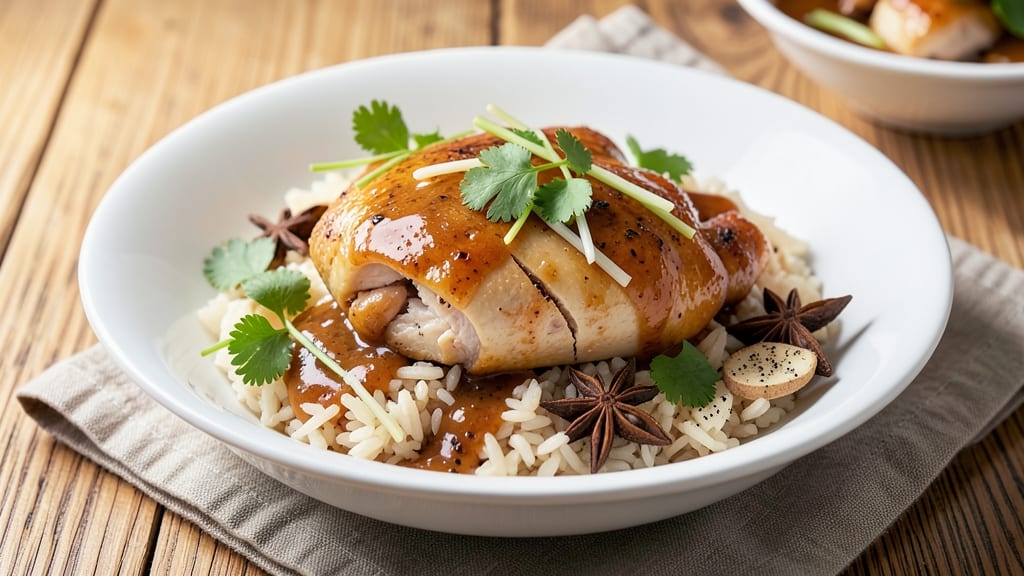
This chicken rice sauce recipe transforms simple ingredients into a fragrant, savory blend that elevates every dish it touches. The secret lies in balancing umami-rich soy sauce with bright rice vinegar, aromatic star anise, and fresh ginger—creating a sauce that’s rich yet light, perfect for dipping, stir-fries, or marinades.
It’s the kind of sauce that turns ordinary meals into something extraordinary with just a few spoonfuls.
The beauty of this recipe is its simplicity: just 10 minutes of simmering brings together chicken broth, garlic, and a touch of sugar to create a sauce that’s deeply flavorful without being overpowering.
The star anise and ginger infuse warmth and complexity, while a splash of sesame oil adds depth at the end. It’s a sauce that builds layers of flavor, making it versatile enough for weeknight dinners or special occasions.
What makes this sauce truly special is how it enhances other dishes. Use it as a dipping sauce for spring rolls or dumplings, a quick marinade for grilled chicken, or a stir-fry sauce that clings perfectly to vegetables and protein.
The best part? It keeps well in the fridge for up to a week or freezes beautifully for months, so you can always have this flavorful base on hand.
Once you taste the balance of savory, sweet, and aromatic notes, you’ll find yourself reaching for this sauce again and again. Let’s get started—your taste buds will thank you.
Ingredients for chicken rice sauce
Nine simple ingredients create this aromatic, versatile sauce that works magic on any dish.
| Ingredient | Amount | Notes |
|---|---|---|
| Chicken Broth 🍗 | 2 cups | Low-sodium preferred for balance |
| Light Soy Sauce 🥄 | ½ cup | Kikkoman brand recommended |
| Rice Vinegar 🍶 | ¼ cup | Seasoned or plain works |
| Fresh Ginger 🧄 | 2 tbsp | Finely grated, skin on |
| Star Anise 🌟 | 2 whole | Crushed lightly for flavor |
| Garlic Cloves 🧄 | 4 cloves | Minced or finely chopped |
| Granulated Sugar 🍚 | 1 tbsp | White or brown sugar |
| Sesame Oil 🌱 | 1 tbsp | Toasted for aroma |
| Cornstarch 🌾 | 1 tsp | For thickening (optional) |
| Water 💧 | 1 tbsp | For cornstarch slurry |
The star anise and ginger are non-negotiable—they bring that signature warmth and depth. Look for whole star anise pods at Asian markets or the international aisle of your grocery store; they keep for months in a cool, dark place. Fresh ginger? Trader Joe's and Whole Foods have the best quality, but any bright, firm ginger works. The soy sauce makes or breaks this—Kikkoman light soy is my go-to, but La Choy or San-J are solid budget picks. Skip the reduced-sodium versions unless you're adding extra salt later.
No star anise? One cinnamon stick or 1/2 tsp ground cinnamon adds warmth, though it won't be identical. Running low on rice vinegar? Apple cider vinegar at half the amount works in a pinch, but the flavor profile shifts slightly. The cornstarch is optional—if you prefer a thinner sauce, just skip it. For extra richness, add 1 tbsp of peanut butter at the end (trust me, it’s amazing). And if you’ve got leftover sesame oil, toast it in a dry pan first to deepen the nutty flavor before adding it to the sauce.
This sauce keeps for 1 week in the fridge, sealed tightly in a jar. The flavors actually improve over time as everything melds together. For longer storage, freeze in ice cube trays—just thaw and stir. It reheats beautifully, though I usually enjoy it at room temperature. Double the batch—you’ll want it on hand for everything from stir-fries to noodles. The cornstarch version thickens when chilled, so give it a stir before using if it’s been refrigerated.
Why You'll Love This Recipe
- Pantry Magic: I swear by this sauce when I forget to meal prep—just broth, soy, vinegar, and a few pantry staples. No fancy shopping trips, no last-minute ingredient hunts.
- Umami Bomb: That ginger-star anise combo? It’s the secret weapon—bright, warm, and just salty enough to make your taste buds sing. Honestly, I keep doubling the recipe now.
- Leftovers That Shine: Make a big batch and drizzle it over rice bowls, noodles, or even grilled chicken for days. My lunchbox never looks the same twice, and neither does my wallet.
- Weeknight Hero: Simmer it while you chop veggies or toss a salad—no babysitting required. Between us, this is the sauce that saved my Tuesday dinners when takeout felt like too much effort.
Step-by-step instructions for chicken rice sauce
This aromatic sauce comes together quickly with simple techniques—just follow the order carefully.
Build the Aromatic Base
In a medium saucepan, combine the 2 cups chicken broth, 0.5 cup light soy sauce, 0.25 cup rice vinegar, 1 tablespoon granulated sugar, and the 2 whole star anise. Bring to a gentle boil over medium-high heat while stirring occasionally. The star anise will infuse the broth with its distinctive licorice-like aroma—let it simmer uncovered for 5 minutes until you notice the broth reduces slightly and the scent becomes more pronounced.
Here's the thing—don't skip the star anise. It's what gives this sauce its signature depth. If you're using whole spices, crush them lightly with the side of a knife before adding to release more flavor. The sugar helps balance the acidity from the rice vinegar while adding subtle sweetness that rounds out the sauce.
Add Ginger and Garlic
Reduce the heat to medium-low and stir in the 2 tablespoons finely grated fresh ginger and 4 minced garlic cloves. Let the mixture simmer gently for 3-4 minutes until the garlic becomes fragrant and the ginger softens slightly—you'll know it's ready when you can smell that warm, spicy aroma filling your kitchen.
I like to add the ginger first so it has time to mellow out. If you add garlic too early, it can burn before the other flavors meld. Watch the pan carefully—ginger burns faster than you might expect. If the sauce starts to darken too much, reduce the heat immediately or remove it from the burner for 30 seconds to cool slightly.
Incorporate Sesame Oil and Thicken
Remove the pan from heat and stir in the 1 tablespoon sesame oil. This step is crucial—it adds that nutty aroma that makes this sauce truly special. Let the mixture sit off the heat for 1 minute to allow the flavors to meld together completely. You'll notice the oil disperses and the sauce takes on a richer, more complex aroma.
For thickening (if desired), whisk together the 1 teaspoon cornstarch with the 1 tablespoon water in a small bowl until smooth. Slowly pour this slurry back into the saucepan while stirring constantly over low heat for 1-2 minutes until the sauce reaches your preferred consistency. The sauce should coat the back of a spoon but still be pourable—not gluey. If it thickens too much, thin with a splash of hot chicken broth.
Strain and Finish
Line a fine-mesh strainer with cheesecloth or a coffee filter if you want an ultra-smooth sauce, then carefully strain the mixture to remove the star anise and any large ginger pieces. This step ensures a silky texture without compromising flavor. Taste and adjust seasoning—you might want to add a pinch more salt or a splash of rice vinegar if needed.
The sauce is now ready to use immediately or can be stored in an airtight container in the refrigerator for up to 5 days. I like to use it as a dipping sauce for dumplings, a marinade for grilled chicken, or a flavorful addition to stir-fries. The balance of sweet, salty, tangy, and umami makes it incredibly versatile—don't be afraid to experiment!
Pro Tips For Making Chicken Rice Sauce
- CRUSH THE STAR ANISE: Toss the whole pod in a hot, dry skillet for 30 seconds first—just until it fragrant. That burst of aroma straight into your sauce is what makes the difference between "meh" and "wow." (And yes, you can reuse the pod if you’re feeling fancy.)
- SIMMER LOW AND SLOW: This isn’t a race. After adding the ginger and soy, keep the heat at a bare simmer—think tiny bubbles, not rolling. I used to rush it, and the sauce ended up thin and one-dimensional. Patience here means depth.
- JULIENNE THE GINGER: Skip the minced ginger—it burns faster than you’d think. Thin, matchstick slices (about 1/8-inch thick) infuse flavor without turning bitter. Remove them after 5 minutes; you only need their essence, not their texture.
- SALT THE BROTH FIRST: Taste that raw chicken broth? Add soy sauce after you’ve adjusted the salt to taste—maybe even a pinch of sugar to balance. I learned this the hard way when my sauce tasted flat because the soy got drowned out by unsalted broth.
Pro cooking tips for this recipe
Heat Control Mastery
This sauce thrives on gentle heat—never let it boil vigorously after adding ginger and garlic. I keep my burner at medium-low once the broth starts simmering to prevent burning. If you see bubbles forming rapidly, immediately reduce to low heat or remove the pan for 30 seconds to cool.
The goal is to let flavors meld without developing bitter notes from overcooking the aromatics. 🌡️
Star Anise Infusion
Crushing the star anise pods lightly with a knife before adding releases their essential oils, intensifying the licorice flavor. Simmer them for exactly 5 minutes—any longer risks bitterness.
For extra depth, toast the whole pods in a dry pan for 10 seconds before adding to the broth. This step transforms the sauce from good to extraordinary.
Ginger Timing Trick
Add the fresh ginger first, then the garlic, with 3-4 minutes between them. This staggered approach prevents the garlic from burning while allowing the ginger to soften and release its warmth.
If your ginger is particularly fibrous, pulse it in a food processor for 3 seconds before grating to ensure even distribution.
Sesame Oil Finish
Always add the sesame oil off the heat—this preserves its delicate aroma. Let it sit for 1 full minute before stirring to allow the oil's nutty notes to infuse the sauce.
For a restaurant-quality touch, toast 1/2 teaspoon of sesame seeds in a dry pan until golden, then sprinkle them over the finished sauce just before serving. 💫
Thickening Secrets
If using cornstarch, whisk it with cold water first to prevent lumps. Add the slurry slowly while stirring constantly over low heat—this creates a glossy, restaurant-style finish.
For a thinner sauce, reduce the cornstarch to 1/2 teaspoon or omit it entirely. The sauce will still taste amazing while remaining perfect for drizzling.
Flavor Balancing
Taste as you go! If the sauce tastes too salty, add 1 tablespoon of rice vinegar. Too sweet? A splash of light soy sauce evens it out. The ideal ratio should be 2 parts umami (soy), 1 part tang (vinegar), and 1 part sweetness (sugar).
Adjust gradually—you can always add more, but you can't take it away once it's in there.
Nutrition facts
Frequently asked questions
Can I make this sauce without star anise?
Yes! For a similar depth, substitute with 1 cinnamon stick or ½ teaspoon ground cinnamon. If you're avoiding warm spices entirely, add ½ teaspoon five-spice powder instead. The sauce will still taste amazing—just slightly different in aroma.
How long does this sauce keep in the fridge?
This aromatic sauce stays fresh for 5-7 days when stored in an airtight container. The flavors actually improve over time as the ingredients meld together. For longer storage, freeze in ice cube trays—thaw and stir before using. It reheats beautifully while maintaining its rich texture.
Can I use this sauce as a marinade?
This sauce makes an excellent marinade for chicken or tofu. For best results, marinate for 30 minutes to 2 hours in the refrigerator before cooking. The balance of soy, vinegar, and ginger tenderizes while adding incredible flavor. Just avoid marinating for too long with delicate proteins like fish.
Why does my sauce look cloudy after straining?
Cloudiness usually means some of the cornstarch or ginger particles didn't fully dissolve. For a smoother texture, strain through a fine-mesh sieve lined with cheesecloth. If you prefer a rustic look, leave it slightly cloudy—the flavor won't be affected.
What's the best way to use up leftover sauce?
Try these versatile ideas: drizzle over steamed rice for instant flavor, use as a dipping sauce for spring rolls or dumplings, or toss with stir-fried vegetables and noodles. It also works perfectly as a glaze for grilled chicken skewers. The possibilities are endless—don't let it go to waste!