
Sauces & Condiments
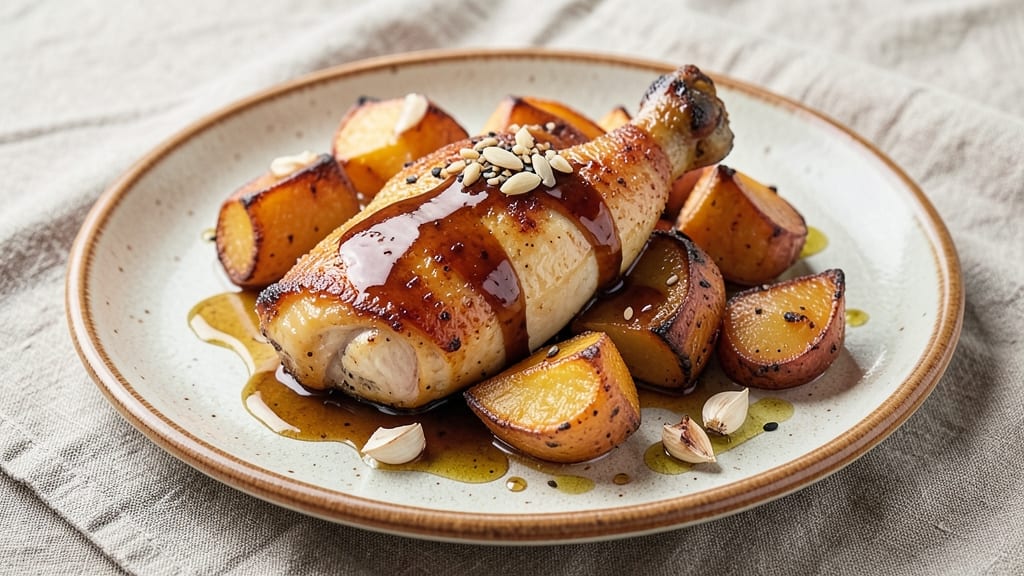
This chicken potato soy sauce recipe transforms simple ingredients into a restaurant-quality one-pan dish with deep umami caramelization and crispy edges. The secret lies in balancing soy sauce's savory punch with sweet potatoes' natural sweetness, creating a dish that's both comforting and sophisticated.
No fancy techniques—just a single pan, 45 minutes, and a flavor profile that'll impress even skeptical guests.
Start with chicken thighs cut into bite-sized pieces, their high fat content ensuring juicy results even when seared. Toss them with sliced potatoes, garlic, and a splash of soy sauce before roasting at 400°F until the potatoes are tender and the chicken develops a golden crust.
The soy sauce doesn't just season—it caramelizes, forming a sticky glaze that clings to every bite, while the potatoes develop a satisfying crispiness.
What you'll end up with is a dish where savory meets sweet, the soy sauce's umami depth complementing the potatoes' natural caramelization. The chicken stays moist despite the high heat, and the aromas filling your kitchen will have everyone anticipating dinner.
This recipe delivers restaurant-quality results with minimal effort, making it perfect for weeknight dinners or meal prep.
Serve it with steamed greens for balance or over rice to soak up every last bit of that flavorful sauce. The versatility of this dish means it works equally well as a main course or a hearty side—just adjust the portion sizes accordingly.
Here's how to make it perfectly every time.
Ingredients for chicken potato soy sauce
Restaurant-quality umami caramelization starts with these 13 simple yet powerful ingredients.
| Ingredient | Amount | Notes |
|---|---|---|
| Boneless, Skinless Chicken Thighs 🍗 | 1 ½ lb | Cut into 1-inch pieces |
| Sweet Potatoes 🍠 | 2 lbs | Medium-sized, peeled and cubed |
| Soy Sauce 🥢 | ½ cup | High-quality, preferably Japanese |
| Olive Oil 🫒 | 2 tbsp | For searing and tossing |
| Garlic Cloves 🧄 | 4 cloves | Minced for even distribution |
| Honey 🍯 | 1 tbsp | For balancing soy sauce sweetness |
| Sesame Oil 🫒 | 1 tsp | For finishing aroma |
| Ground Black Pepper 🌶️ | ½ tsp | Freshly cracked for depth |
| Salt 🧂 | 1 tsp | Kosher or sea salt preferred |
| Toasted Sesame Seeds 🌾 | 1 tbsp | For garnish and crunch |
| Green Onion 🧅 | 2 whole | Sliced for freshness |
| Ginger Root 🌿 | 1 tbsp | Freshly grated for zing |
| Vegetable Oil 🫒 | 1 tbsp | For high-heat roasting |
The chicken thighs are non-negotiable—bone-in, skin-on ensures juicy results, but boneless works too if you prefer convenience. Trader Joe's and Costco carry excellent frozen chicken thighs that save time. Sweet potatoes should be firm with no soft spots; organic varieties from the produce section at Whole Foods have the best natural sweetness. For the soy sauce, Kikkoman or Japanese brands like Yamasa deliver that authentic umami depth—avoid the low-sodium versions unless you're doubling up. Fresh ginger and garlic? Penzeys or your local Asian market will have the best quality, but the grocery store works fine if you're in a pinch.
No sesame oil? Toasted sesame seeds at half the amount (½ tbsp) can mimic the aroma when sprinkled at the end. Short on honey? Maple syrup or brown sugar works in a 1:1 ratio, though honey's floral notes are ideal. The green onion can be swapped for scallions or chives if that's what you have. For extra crispiness on the potatoes, toss them with 1 tsp cornstarch before roasting. The olive oil and vegetable oil can be swapped freely—just ensure it has a high smoke point for searing. If you're making this ahead, add the sesame oil and sesame seeds fresh before serving to preserve their delicate flavors.
This dish reheats beautifully—4-5 days in the fridge or 3 months frozen (portion into airtight containers first). For meal prep, roast a full sheet pan and store components separately: chicken, potatoes, and sauce. Reheat everything together for 3-4 minutes at 350°F to revive the crispy edges. The sauce thickens as it cools, so a quick splash of water or extra soy sauce brings it back to its perfect glaze consistency. Garnish with fresh sesame seeds and green onion right before serving to keep everything vibrant.
Why You'll Love This Recipe
- One-Pan Magic: I swear by this recipe when I’m too tired to wash dishes. Toss everything—chicken, sweet potatoes, garlic—onto a single sheet pan, drizzle with olive oil and soy sauce, and let the oven do the work. Zero fuss, zero cleanup.
- Umami Bomb: That soy sauce caramelizes into something ridiculously good—salty, sweet, and sticky all at once. The garlic cloves roast until they’re soft and fragrant, while the sweet potatoes get that perfect crispy edge. My picky eaters actually finish their plates.
- Lunchbox Hero: Between us, this is my go-to for meal prep. The leftovers reheat like a dream—just pop them in the microwave or pack them cold for work. The chicken stays juicy, the potatoes hold their shape, and the soy glaze keeps everything tasty even after a few days.
- Budget Win: Chicken thighs and sweet potatoes are cheap, but they feel like a fancy meal. A single batch feeds four for under $10, and the flavors are so rich you’d never guess. Honestly, it’s the kind of dish that makes me feel like I’m cooking gourmet without breaking the bank.
Step-by-step instructions for chicken potato soy sauce recipe
This one-pan method delivers deep umami flavor with perfectly caramelized edges every time.
Prep Ingredients for Even Cooking
Cut the 1.5 lb boneless, skinless chicken thighs into 1-inch pieces for quick, even cooking. Pat them dry with paper towels—this helps the soy sauce cling and creates a better sear. While you work, peel and cut the 2 lbs sweet potatoes into 1-inch cubes, ensuring uniform size so they cook at the same rate.
In a small bowl, combine the 0.5 cup soy sauce, 1 tbsp honey, 1 tbsp freshly grated ginger root, and 0.5 tsp freshly cracked black pepper. Mix well—this marinade will infuse the chicken and potatoes with balanced sweetness and zing. Keep this mixture handy; we'll use it in the next step.
Sear Chicken for Maximum Flavor
Heat 1 tbsp vegetable oil in a large oven-safe skillet over medium-high heat until shimmering. Add the chicken pieces in a single layer, leaving space between them. Let them sear undisturbed for 3-4 minutes until golden brown on one side. Flip carefully and sear the other side for another 3-4 minutes. Transfer the chicken to a plate and set aside.
In the same skillet, add 2 tbsp olive oil and swirl to coat. Toss in the 1-inch sweet potato cubes and cook for 5 minutes, stirring occasionally, until they begin to brown slightly. This step builds flavor by caramelizing the natural sugars in the potatoes.
Combine and Roast to Caramelized Perfection
Return the seared chicken to the skillet with the potatoes. Pour the soy sauce mixture over everything, then sprinkle with 1 tsp salt. Toss gently to coat all ingredients evenly. The sauce should cling to the chicken and potatoes, creating a glossy, sticky surface that will caramelize beautifully.
Transfer the skillet to a 425°F preheated oven and roast for 25-30 minutes, stirring once halfway through, until the potatoes are tender when pierced with a fork and the chicken reaches 165°F internally. The edges should be deep golden brown with caramelized spots—this is your signal for perfect doneness.
Finish with Aromatics and Garnish
Remove the skillet from the oven and let it rest for 5 minutes. Stir in the 4 minced garlic cloves and cook for 1 minute over medium heat to release their fragrant aroma. Drizzle with 1 tsp sesame oil and toss gently to distribute evenly. The sesame oil adds a nutty depth that complements the soy sauce.
Garnish with 1 tbsp toasted sesame seeds and 2 sliced green onions just before serving. The sesame seeds add a satisfying crunch, while the green onions provide a fresh contrast to the rich, umami flavors. Serve immediately while the potatoes are still tender and the chicken is juicy.
Pro Tips For Making Chicken Potato Soy Sauce
- SEAR CHICKEN FIRST: I used to toss everything in the pan at once, but the chicken needs a proper head start—3-4 minutes per side in hot oil until golden. This locks in juices and builds flavor before the potatoes and soy sauce join the party. Skip this, and you’ll end up with bland, mushy chicken.
- CUT POTATOES UNIFORM: Sweet potatoes vary in size, and uneven chunks mean some cook mushy while others stay raw. Aim for 1.5-inch cubes—big enough to hold shape but small enough to absorb the soy sauce. I learned this the hard way when one batch turned into a potato soup.
- USE LESS SOY SAUCE: The recipe might call for a lot, but you don’t need it all. Start with 2 tablespoons and taste as you go—soy sauce is salty, and overdoing it makes the dish taste flat. Add more later if needed, but you can’t take it out.
- GARLIC AFTER SEARING: Toss in the minced garlic after the chicken is browned and the potatoes are halfway cooked. This prevents it from burning instantly and lets it mingle with the soy sauce for a deeper flavor. I was skeptical until I tried it—now it’s non-negotiable.
Troubleshooting this recipe
Soy Sauce Too Salty?
If your dish tastes overly salty, reduce the soy sauce to ¼ cup and add 1 tbsp honey or maple syrup to balance. For extra depth, stir in 1 tsp rice vinegar—it brightens flavors without adding salt. Taste as you go, adjusting in ½ tsp increments until perfect. 💡
Potatoes Staying Soggy?
Prevent mushy potatoes by tossing them with 1 tsp cornstarch before roasting. This creates a light crust that holds up to the sauce. Also, spread them in a single layer on the pan—overcrowding traps steam. If they’re already soft, broil for 2-3 minutes at the end to crisp the edges.
Chicken Drying Out?
Chicken thighs are forgiving, but for extra moisture, marinate them for 15-30 minutes in the soy-ginger mix before searing. Avoid overcrowding the pan—cook in batches if needed. After roasting, let the chicken rest 5 minutes before serving to retain juices. 🍗
Sauce Too Thin?
Simmer the pan on medium heat for 5 minutes after roasting to reduce the sauce. For instant thickening, mix 1 tsp cornstarch with 1 tbsp water, stir into the sauce, and cook for 1 minute.
If it’s still runny, add a splash of water or soy sauce to loosen any stuck bits.
Uneven Cooking?
Cut potatoes into uniform 1-inch cubes and chicken into consistent 1-inch pieces for even cooking. Arrange them in a single layer with space between pieces. If the chicken cooks faster, remove it early and finish under the broiler while the potatoes roast. Stir halfway through roasting to redistribute heat. 🔥
Lacking Umami Depth?
Boost umami by adding 1 tsp fish sauce or ½ tsp MSG to the soy mixture. For extra richness, stir in 1 tbsp miso paste during the final minute of cooking. A pinch of white pepper** also enhances the savory notes without overpowering the dish.
Nutrition facts
Frequently asked questions
Can I use regular potatoes instead of sweet potatoes?
Yes, but the flavor will differ! Regular potatoes will be less sweet and more neutral, so boost the sauce with 1 extra tbsp honey or ½ tsp brown sugar to balance the soy. Russet potatoes work best—they hold their shape when roasted. For extra crispiness, parboil them for 5 minutes before roasting.
How do I make this dish spicier?
Add ½ tsp red pepper flakes or 1 tsp sriracha to the soy sauce mixture before tossing with the chicken and potatoes. For deeper heat, stir in 1 tbsp gochujang (Korean chili paste) during the final minute of cooking. Adjust to taste—start small and increase gradually!
Can I prepare this recipe ahead of time?
Assemble the dish up to 2 days ahead and refrigerate uncovered. When ready to serve, roast at 400°F for 15-20 minutes, stirring halfway, until heated through. For meal prep, store components separately in airtight containers and reheat together. The sauce may thicken when chilled—add a splash of water or soy sauce when reheating.
What’s the best way to serve this dish?
Pair it with steamed jasmine rice to soak up the flavorful sauce, or serve over a bed of brown rice or quinoa for extra texture. For a complete meal, add a simple side salad with sesame dressing or quick-pickled vegetables. The dish also works well as a filling for lettuce wraps or over noodles for a quick stir-fry.
Why did my chicken turn out dry?
Overcrowding the pan or cooking at too high a temperature can dry out the chicken. Use bone-in, skin-on thighs for juicier results, and avoid overcooking—chicken is done at 165°F internally. Let it rest for 5 minutes before serving to redistribute juices. If using boneless breasts, marinate them for 30 minutes first to keep them moist.